

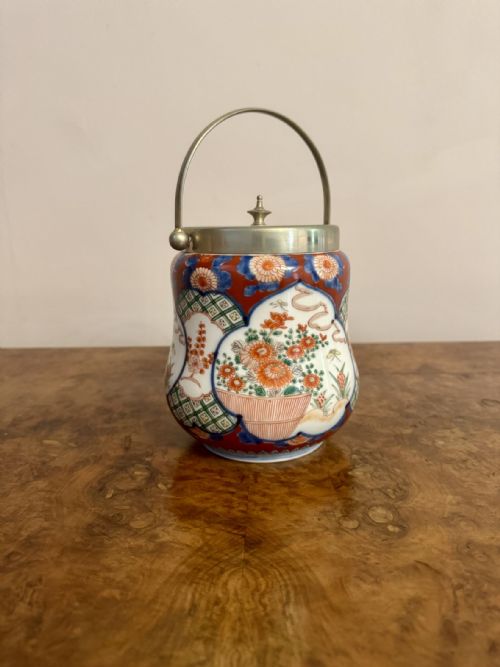
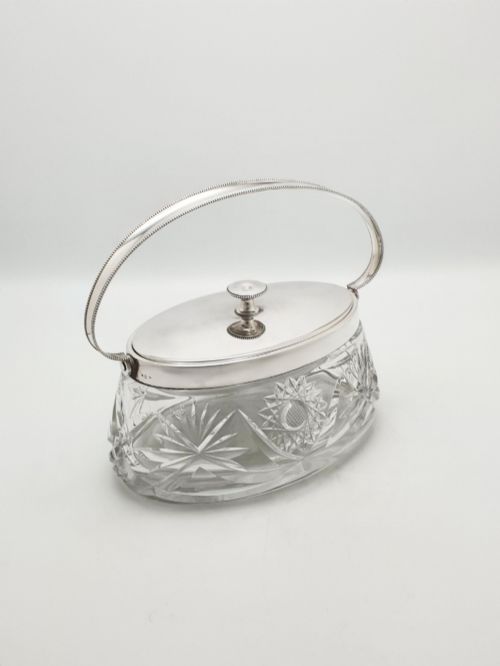

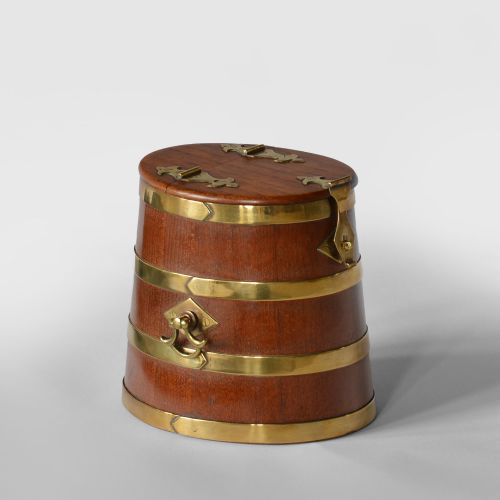
Antique Barrel Jar
An antique barrel jar serves table and parlour with domestic storage, bringing ceramic, glass and metal craft from the Victorian era onward into modern rooms.
Antique Barrel Jar
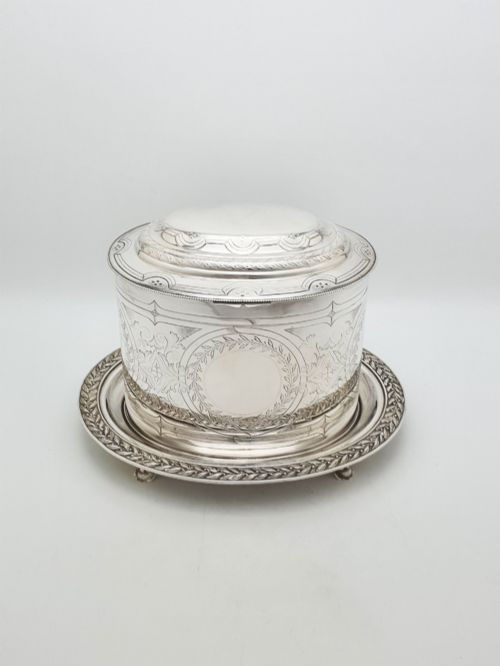
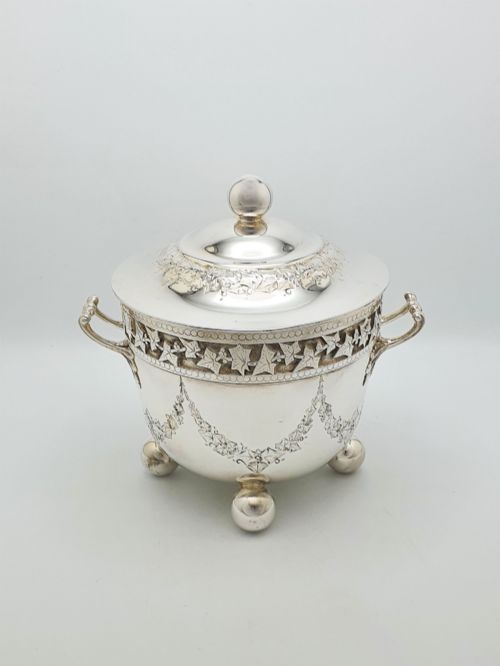
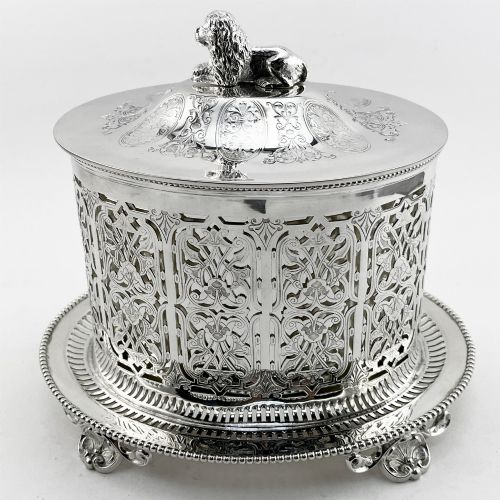
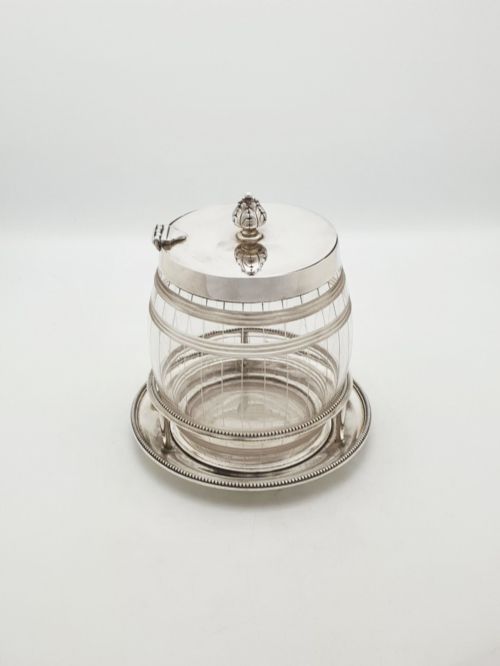
An antique barrel jar most frequently takes the form of a biscuit barrel or biscuit box produced across the Victorian, Edwardian and Georgian periods. These containers served to keep dry goods crisp in the drawing room or dining parlour.
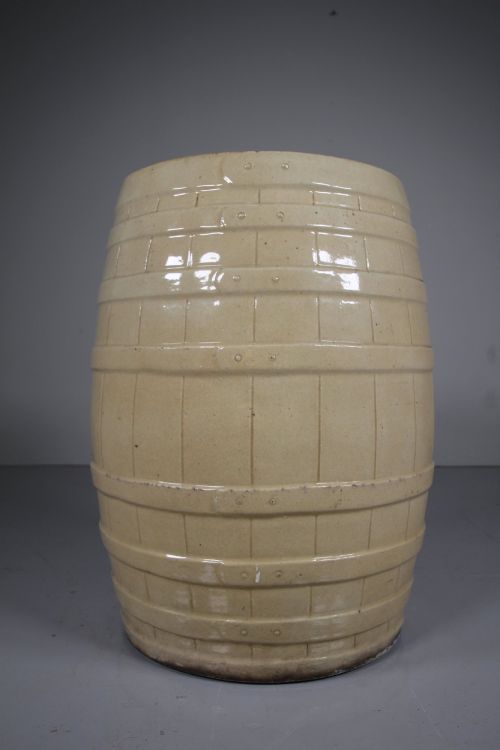
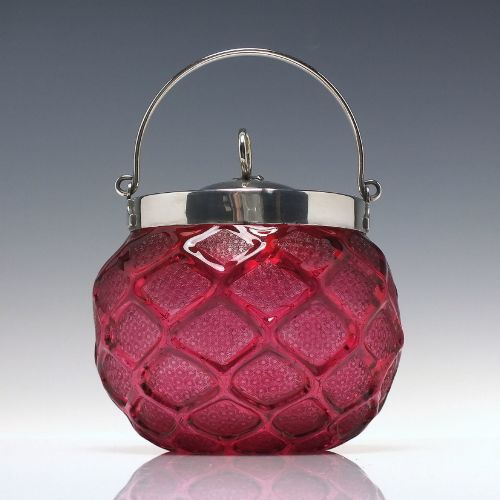
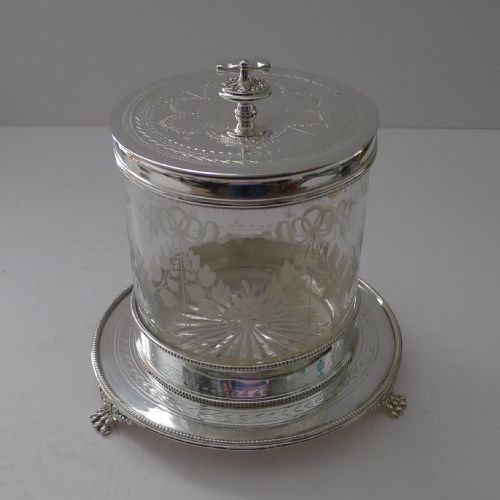
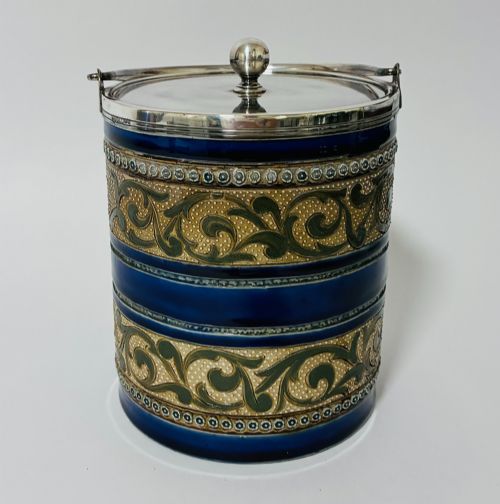
Makers shaped these vessels from stoneware, earthenware such as jasperware, cut glass, cranberry glass and oak, mounting them in silver plate, brass or sterling silver. The cylindrical or coopered profile mimics traditional cask construction on a domestic scale.
Pieces span ceramic bodies with flow blue transfer print, enamel decoration, and novelty forms including melons, weights and spirit dispensers. Origins range from English potteries to continental silver workshops.
Materials and construction methods
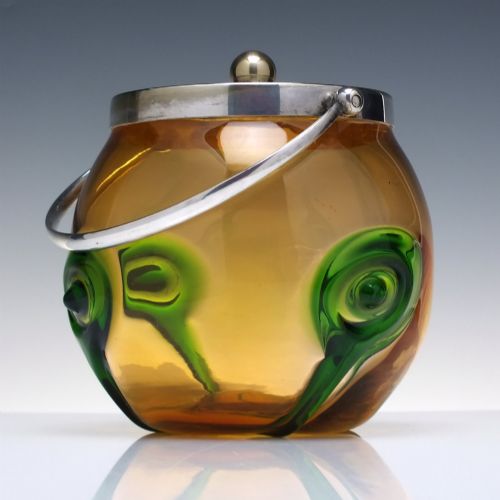
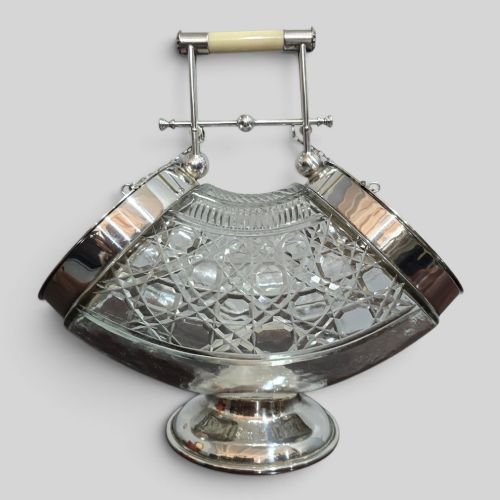
Makers combined blown or cut glass liners and bodies with electroplated or sterling silver mounts, swing handles and hinged lids. Glass was frequently hobnail cut, acid etched or overlaid with cranberry hues.
Ceramic examples utilised stoneware, earthenware and porcelain, shaped on the wheel or in moulds before receiving salt glaze, enamel painting or applied jasperware sprigging. Wooden iterations employed coopered staves bound with brass or silver plate hoops.
Metal components involved casting, piercing, engraving and gold leaf application. Maker marks and hallmarks stamped into the silver plate or sterling silver provide direct evidence of silversmithing techniques.
Antique Barrel Jar Retail Price Guide 2026
Typical asking prices for barrel jar among the pieces listed under this phrase on Sellingantiques today, from the lower quarter to the upper quarter. They describe what is for sale here now, not the wider market.
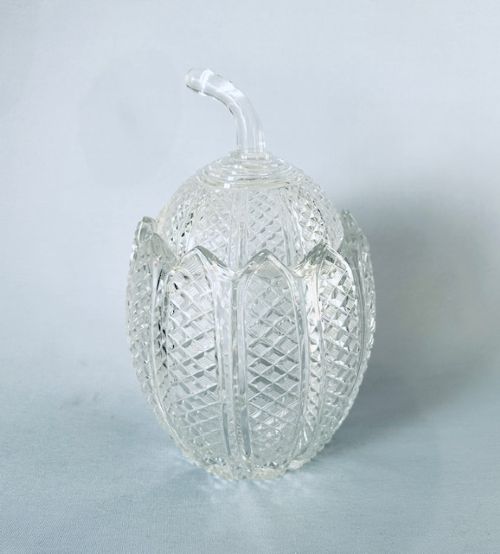
Some biscuit barrels disguised themselves as other objects entirely, taking the surprising physical form of a heavy metal weight or a textured melon.
Distinctions in craftsmanship
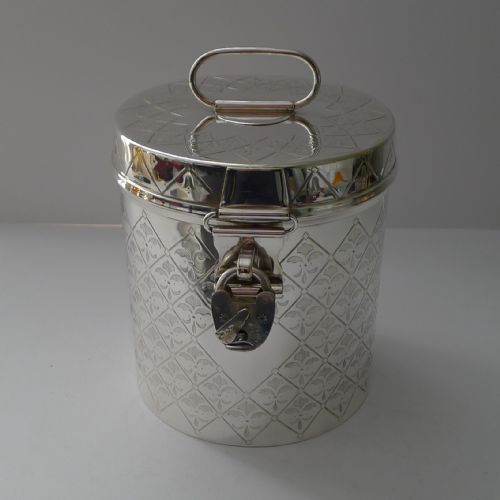
The sophistication of the mounting hardware and the crispness of the glass cutting separate standard utility items from top-tier exhibition pieces. Heavy gauge silver plating and fully articulated locking mechanisms indicate superior workshop output.
Ceramic quality rests on the precision of the moulding, the depth of jasperware relief and the stability of enamel or flow blue pigments under the glaze. Hand-painted botanical or heraldic details show greater artisan investment than mass transfer printing.
Material integration defines the overall standard, where lids, collars and handles fit flush to the ceramic or glass body without excessive solder or play in the hinges.
Stuart and Sons·Mappin and Webb·Doulton Lambeth·Elkington·WMF·Crown Devon·Carlton Ware·Wedgwood
The Antique Barrel Jar Glossary
- Biscuit barrel
- A covered ceramic, glass or wooden vessel designed for storing dry biscuits on the dining or drawing room table. They typically feature a metal swing handle and hinged lid.
- Jasperware
- A type of unglazed stoneware pioneered by Wedgwood, characterised by a coloured clay body with contrasting white relief figures applied in sprig moulds.
- Cranberry glass
- A rich red transparent glass coloured with gold chloride during production, popular in Victorian tableware for its distinct jewel tone.
- Silver plate
- A base metal, often copper or white metal, coated with a thin layer of silver through electroplating or old Sheffield plating techniques.
- Coopered
- Constructed from wooden staves fitted together side by side and bound by metal hoops, mirroring the traditional method of making casks and barrels.
Antique Barrel Jar: Frequently Asked Questions
What were antique barrel jars used for?
These vessels functioned primarily as biscuit boxes to keep baked goods fresh on the Victorian or Edwardian sideboard. Households also utilised them as tobacco jars, spirit dispensers and general decorative containers.
Their presence in the entertaining rooms of the house meant they combined practical storage with decorative display, often accompanied by matching tongs or stands.
How do I date an antique barrel jar?
Dating relies on a combination of material styles, maker marks, registration numbers and hallmarked metals. Victorian and Edwardian examples often display specific aesthetic movements such as Art Nouveau or Arts and Crafts.
Silver mounts carry date letters and hallmarks that trace the exact year of assay, while ceramic bodies show period-specific glazes and transfer print patterns.
Are all biscuit barrels made of glass?
Materials vary widely across the inventory, encompassing cut glass, cranberry glass, stoneware, earthenware, oak and solid silver. Many pieces pair a ceramic or glass body with silver plated metal mounts.
Wooden coopered variants and novelty ceramic shapes, such as melons or weighted forms, demonstrate the diversity of production beyond standard glass vessels.
How should I clean an antique silver plated mount?
Maintain silver plated mounts with a soft cloth and a gentle, non-abrasive silver cleaner formulated to preserve thin electroplate layers. Avoid harsh scrubbing that strips the plating from the underlying base metal.
Keep cleaning agents away from porous ceramic bodies, enamel decorations and unsealed wooden staves to prevent surface damage.