


Antique Asian Pottery Figures
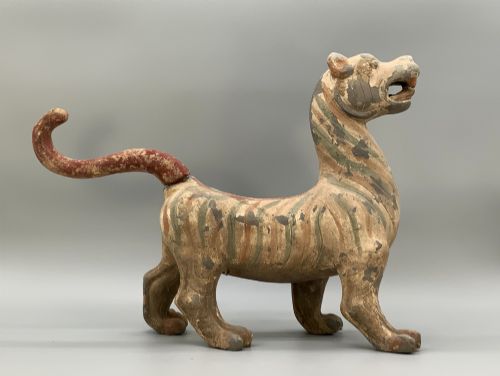
Antique asian pottery figures bring centuries of distant craftsmanship into a room, spanning from Han dynasty guardians to Meiji period okimono.
Antique Asian Pottery Figures
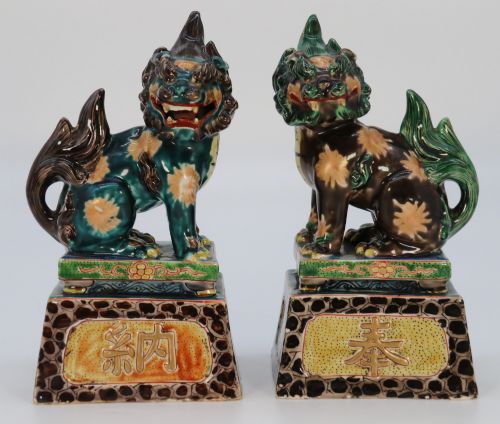
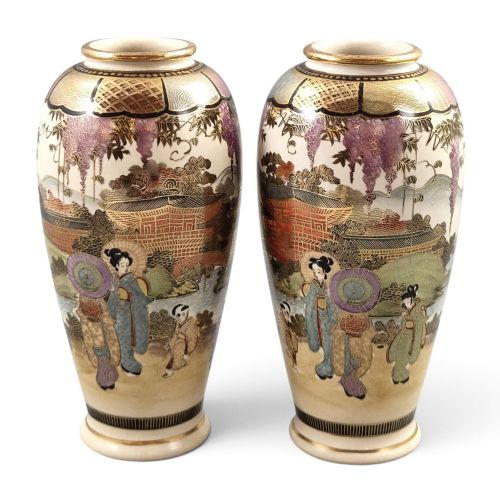
When searching for antique asian pottery figures, collectors encounter a diverse range of objects crossing Chinese and Japanese traditions. The selection includes earthenware guardian beasts from early dynasties alongside intricate Satsuma and Sumida Gawa ceramics from the nineteenth and early twentieth centuries.
Figurines, okimono, and vessels featuring applied figures dominate the selection. Pieces from the Meiji and Taisho periods sit alongside earlier Qing dynasty works and older funerary figures.
Materials and Techniques
Pottery, porcelain, and terracotta form the structural foundation of these pieces, shaped by hand or thrown on the wheel. Artisans applied glazes, enamels, and gold leaf to decorate surfaces, frequently adding figures in high relief.
Firing techniques varied from low-temperature earthenware kilns to high-fired porcelain production. Specialised workshops utilised cobalt blue, turquoise glazes, and detailed hand-painting to finish each object.
Listings feature Japanese Meiji period ceramics alongside Chinese pieces from the Han and Qing dynasties.
Assessing Quality
The precision of the modelling and the fineness of the hand-painted details dictate the standing of a piece. Works bearing signatures from recognised makers or specific kilns demonstrate superior execution in glaze application and relief work.
The complexity of the composition, particularly in pieces featuring multiple figures or dragons, separates standard production items from masterworks. Preservation of the original enamel and gold leaf finish remains a primary factor in distinguishing better examples.
Inoue Ryosai·Kinkozan Kyoto·Tokyo Taizan·Shozan·Gao Hengsheng
The Antique Asian Pottery Figures Glossary
- Okimono
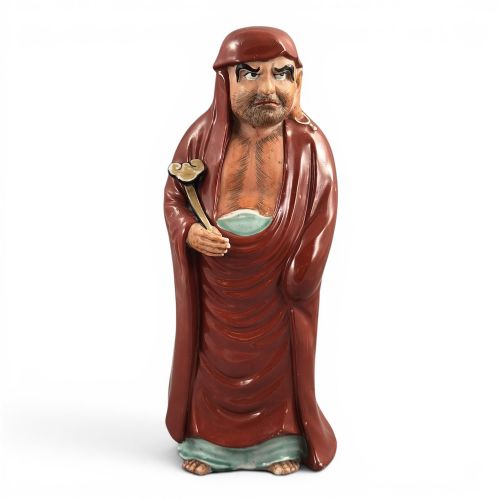
- A Japanese decorative figurine designed for display on a shelf or in a tokonoma alcove. These sculptures depict deities, figures, and animals.
- Satsuma
- A type of Japanese earthenware featuring a crackled ivory glaze decorated with polychrome enamels and gilding. Production centred on the Satsuma province and Kyoto.
- Sumida Gawa
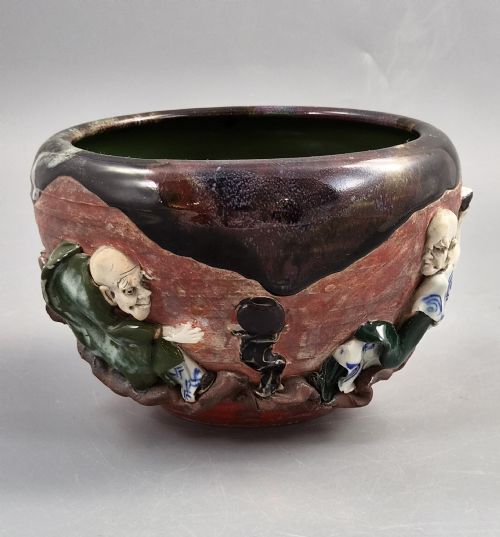
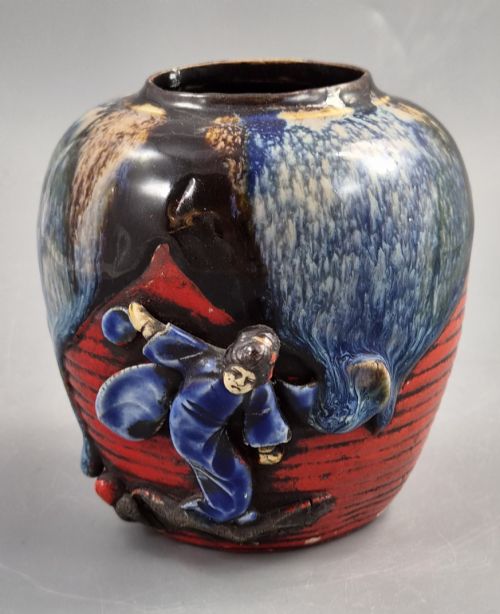
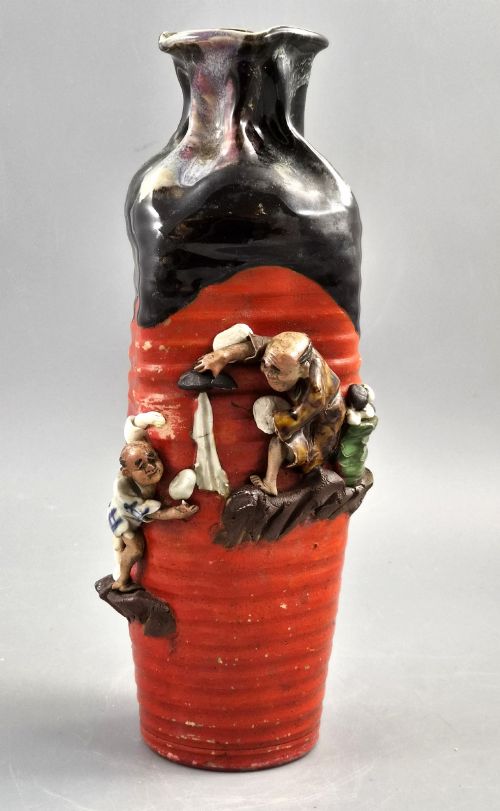
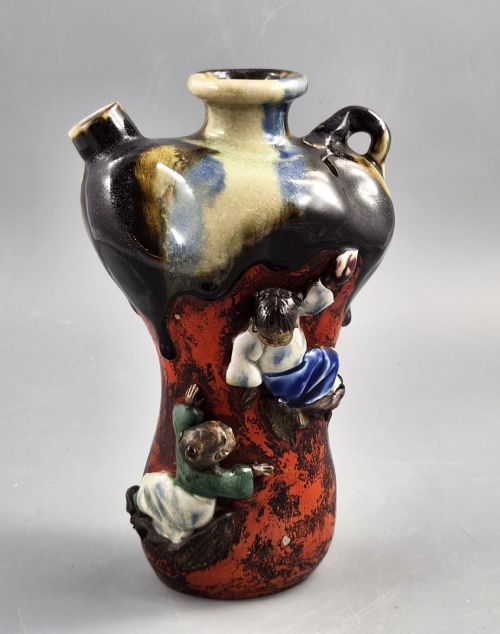
- Japanese ceramics characterised by heavy glazes, rough unglazed patches, and figures modelled in high relief. The style emerged from workshops near the Sumida River.
- Kutani
- Japanese porcelain and pottery known for bold colour palettes, predominantly reds and greens, often enhanced with gold. Production dates back to the seventeenth century and saw a major revival in the Meiji period.
Antique Asian Pottery Figures: Frequently Asked Questions
What are antique asian pottery figures?
These objects comprise sculpted ceramic figures, vessels with applied characters, and decorative ceramics originating from China and Japan. They include functional wares featuring human or mythical subjects alongside standalone display sculptures.
Materials range from early earthenware and terracotta to nineteenth-century porcelain and Satsuma ware. Each item reflects the artistic conventions and firing techniques of its specific period.
How do I identify Satsuma ware?
Satsuma pieces typically display a characteristic fine, cream-coloured crackle glaze underneath intricate hand-painted enamel designs and gold leaf details. They often portray historical figures, deities, and court scenes.
Many pieces carry artist or kiln signatures on the base. The pottery body is generally earthenware rather than hard-paste porcelain.
Where were Sumida Gawa ceramics made?
Sumida Gawa wares originated from workshops operating near the Sumida River in Tokyo during the late nineteenth and early twentieth centuries. Artisans applied thick, dripping flambe glazes alongside distinct hand-modelled figures climbing across the vessels.
These pieces break from traditional restrained aesthetics through their tactile, sculptural surfaces. Many examples bear signatures from prominent makers associated with the tradition.
How should I display pottery figures?
Place figures on stable surfaces away from direct sunlight to protect delicate enamels and gold leaf decorations. Ensure adequate clearance around protruding relief elements on pieces like Sumida Gawa vases.
Display them at eye level or slightly below to fully appreciate the facial expressions and hand-painted details. Keep them away from areas with high humidity or frequent temperature shifts.