
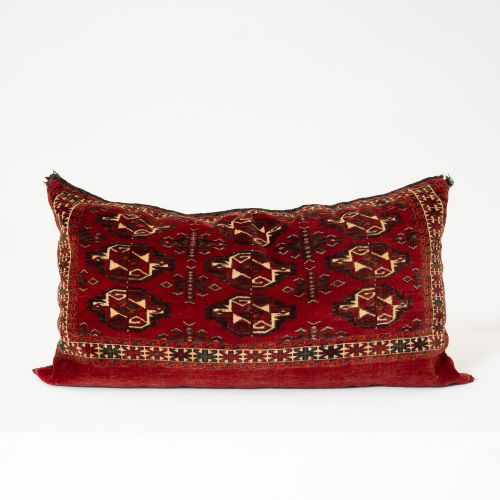


Antique Asian Pillow
An antique asian pillow brings tactile tribal warmth or carved structural form into a room, offering genuine historical craft.
Antique Asian Pillow
When you search for an antique asian pillow, you encounter two distinct forms spanning textiles and rigid supports. The textile examples comprise Turkmen tribal weavings such as chuvals, torbas, and mafrash faces, while the rigid forms consist of Chinese carved bamboo head rests and hard stone objects.
The textile pieces originate primarily from Central Asian nomadic traditions dating from the late nineteenth and early twentieth centuries. These storage bags and cushions display traditional guls and flatweave designs, often retaining original plain weave backs and tassels.
The rigid examples draw from Chinese regional craftsmanship, utilising bamboo and hard stone from the nineteenth century and earlier. These headrests provide sculptural presence alongside their functional origins.
How they were made
The textile pieces utilise wool woven in traditional tribal structures, featuring banded flatweave designs and detailed gul motifs. Artisans constructed these storage bags and cushion faces to withstand nomadic daily life using durable animal fibres.
The rigid examples involve intricate woodworking in bamboo and detailed carving in hardstone such as jadeite and serpentine. Craftsmen shaped these materials into folding structures and solid head rests with fitted boxes.
Nomadic weavers packed their chuvals full of bedding by day, leaving us with cushions designed to survive a camel ride.
What varies in quality
Quality in the textile pieces rests upon the crispness of the tribal weaving, the complexity of the gul design, and the survival of original backs and tassels. Finer examples display balanced proportions and tight knotting or flatweaving.
In the carved wooden and stone objects, standard depends upon the depth and precision of the carving. Superior execution shows clean lines in the bamboo hinges or smooth polish across the hardstone surfaces.
The Antique Asian Pillow Glossary
- Chuval
- A large Turkmen tent storage bag used for bedding and household goods. These often survive as decorative cushion faces.
- Torba
- A smaller Turkmen storage bag traditionally hung on the lattice walls of a yurt. They display intricate geometric guls.
- Gul
- A repeating primary medallion motif found in Central Asian tribal rugs and torbas. Each pattern relates to specific tribal groups.
- Flatweave
- A textile constructed without pile by interlocking warp and weft threads together. This technique creates a smooth, durable fabric surface.
- Serpentine
- A group of green silicate minerals often carved into decorative objects and head rests. It resembles jade in appearance and polish.
Antique Asian Pillow: Frequently Asked Questions
What is an antique asian pillow?
An antique asian pillow encompasses Central Asian tribal wool storage bags used as cushions and Chinese carved bamboo or hard stone headrests.
These objects span the nineteenth and early twentieth centuries, reflecting the distinct domestic traditions of nomadic weavers and regional craftsmen.
How were torbas used?
Torbas functioned as practical storage bags inside nomadic tents, hung securely against the interior lattice walls.
Over time, many of these textile pieces transition into decorative cushions within modern interiors while retaining their structural integrity.
How do I date a Turkmen chuval?
Dating relies on examining the wool quality, natural dye palette, and traditional tribal gul motifs characteristic of specific periods.
Earlier nineteenth-century examples often display finer weaving structures and specific regional wool preparation methods compared to later pieces.
Are bamboo headrests functional?
Chinese bamboo headrests served as firm neck supports in warmer climates, often constructed with folding mechanisms for portability.
Today they function primarily as sculptural decorative objects that display historical woodworking techniques.