
Antique Artwork with Horses
These antique artwork with horses capture rural toil, coaching scenes and thoroughbred racing across the nineteenth and seventeenth centuries.
Antique Artwork with Horses
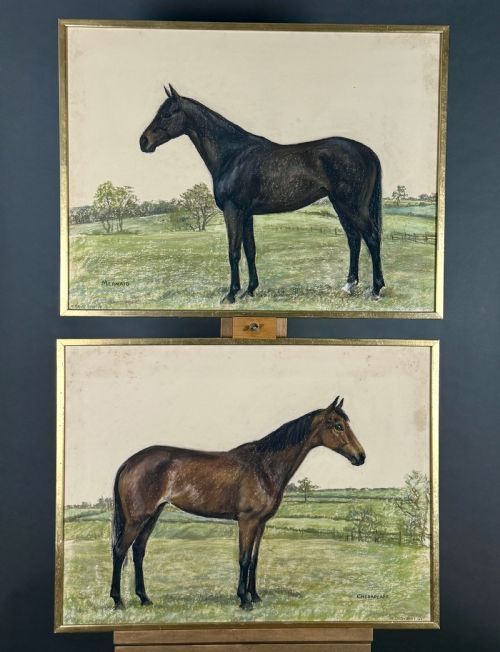
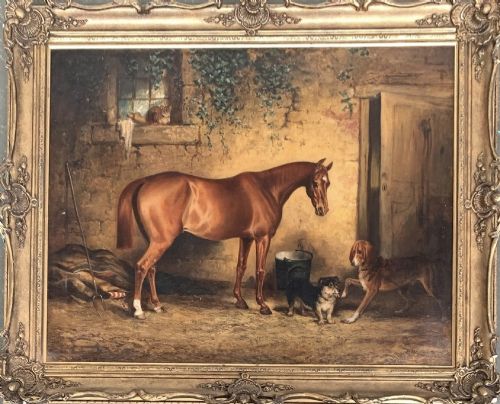
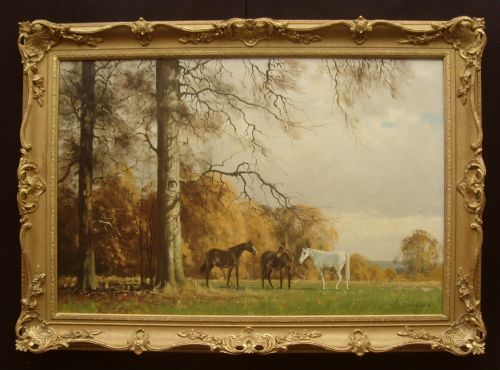
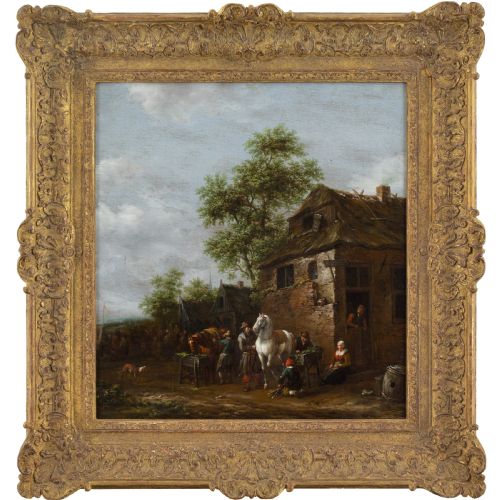
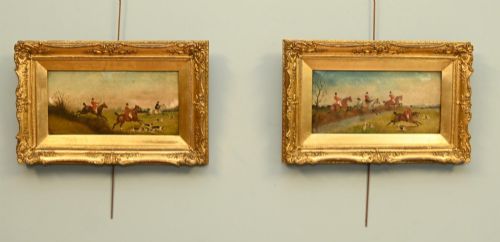
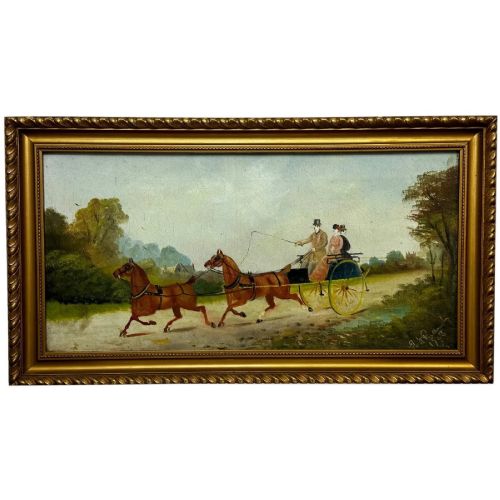
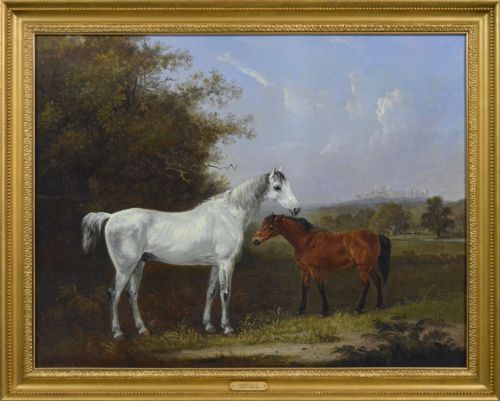
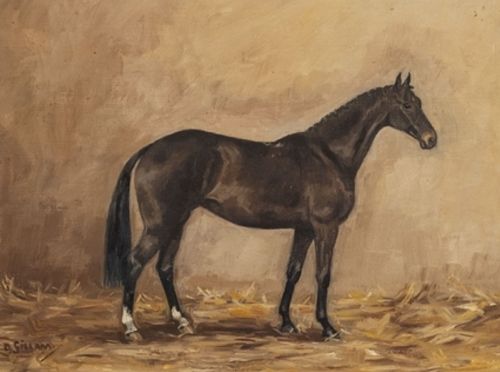
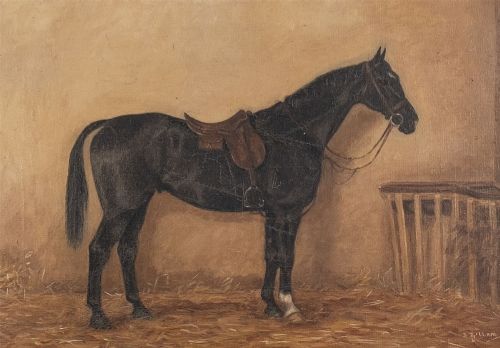
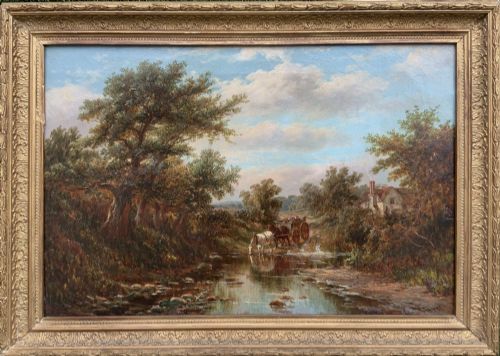
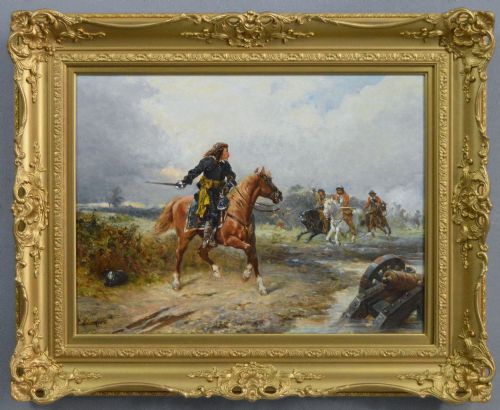
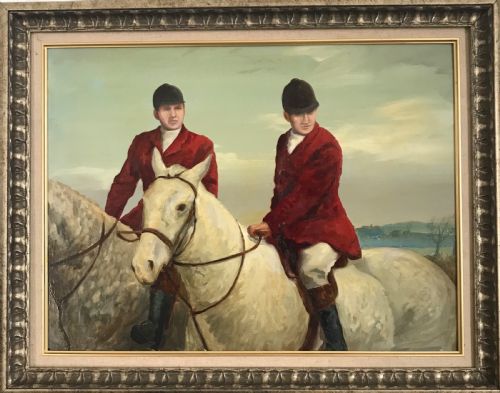
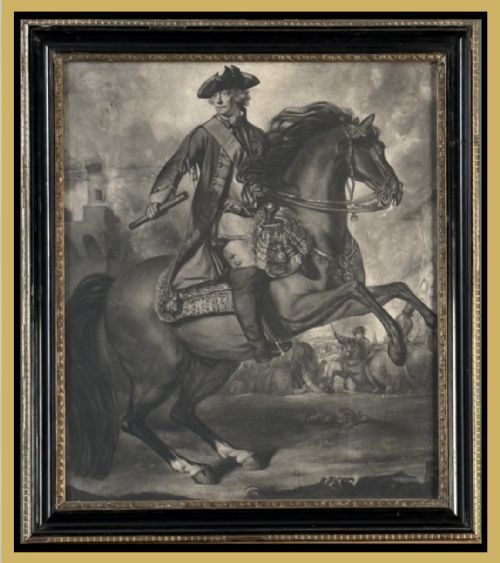
Antique artwork with horses spans detailed oil paintings and delicate watercolours created during the nineteenth century, alongside earlier seventeenth-century landscapes. The selection on this page leans heavily towards Victorian equestrian portraits, rural realism and coaching scenes featuring working shires, farm animals and famous racehorses.
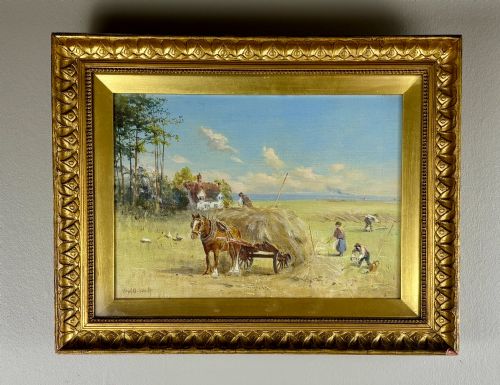
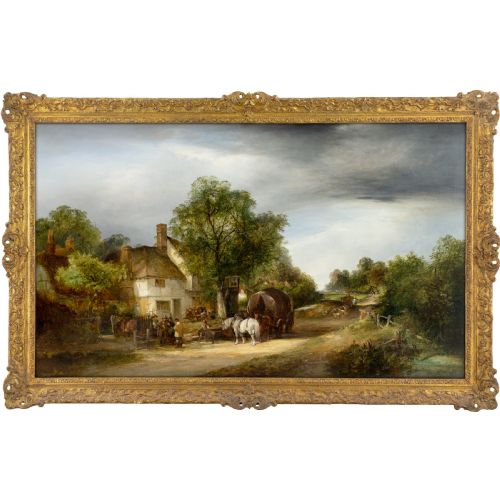
Buyers encounter rural genres showing labourers resting with carthorses, coastal paths with smugglers, and farmyards populated by poultry and pigs alongside ponies. Works range from quiet watercolours of tethered ponies to large canvas portraits of royal thoroughbreds with their jockeys.
The origins stretch across English and continental schools, capturing specific historical animals such as the racehorses Diamond Jubilee and Persimmon. These pieces serve as historical records of agricultural labour, transport and sporting traditions.
Materials and technique
Artists painted primarily with oil paint on canvas, building up rich layers to render the musculature of horses and the texture of rural landscapes. Watercolour on paper appears in lighter, more intimate works, often capturing domestic or sporting moments with swift brushwork.
Substantial pieces rely on traditional wooden stretchers and often feature period giltwood frames that complement the depth of the painted scenes. The combination of durable canvas and oil pigment allowed these historical works to survive across centuries in stable condition.
A mail coach makes its way through a snowy drift while the coachman leaves to seek assistance.
What varies in quality
Quality rests upon the anatomical precision of the animals and the artist's ability to render light across a landscape or coat. Works by recognised nineteenth-century specialists display superior command of proportion, capturing the distinct build of a shire horse or the tension of a racehorse at pace.
The depth of the surrounding composition distinguishes superior examples from routine studio output. Pieces that integrate figures, architecture and livestock into a coherent narrative demonstrate greater compositional mastery than isolated animal studies.
Augustin Edouart·Abraham Cooper RA·Edward Priestley·John Frederick Herring Jnr·Léon Joseph Voirin·John Frederick Herring·John Linnell·Helena Maguire·John Alfred Wheeler·Alfred Wheeler·Paul Jones·Will Anderson·Thomas Blinks·George Cole·Frank Giggs·William Edward Millner·James Pollard
The Antique Artwork with Horses Glossary
- Canvas
- A heavy woven fabric stretched across a wooden frame to serve as a support for oil paintings. It provides a flexible yet durable surface that holds layered pigment well.
- Giltwood
- Wood carved and covered with a thin layer of gold leaf or metallic gilt. This finish is typical of traditional frames housing nineteenth-century oil paintings.
- Watercolour
- A painting method where fine pigment is suspended in a water-based solution on paper. It creates transparent washes and delicate tonal shifts.
- Genre painting
- Artwork depicting scenes from ordinary life, often involving figures working in fields or farmyards. These works provide social history alongside animal subjects.
- Equestrian portrait
- A painting or watercolour focused specifically on a horse, frequently paired with a rider, groom or trainer. Such pieces often record named animals and historic sporting figures.
Antique Artwork with Horses: Frequently Asked Questions
What subjects do these horse artworks show?
The works depict a range of subjects including royal racehorses with their jockeys, farmyard scenes with shires and carthorses, and mail coaches navigating snow drifts. Other pieces capture rural labourers, coastal smugglers and quiet domestic portraits of ponies with children.
These subjects reflect the central role of horses in nineteenth-century transport, agriculture and sport.
How do I care for antique oil paintings?
Keep canvas artworks away from direct sunlight and sources of extreme heat to prevent the oil paint from cracking or fading. Hang them in rooms with stable humidity and dust the surface gently with a dry, soft cloth.
Avoid using water or chemical cleaners on either the canvas or the period frame.
Are these watercolours framed?
The selection includes works presented under glass within period frames that protect the delicate paper surface. Framing styles vary from simple wooden mounts to ornate decorative borders appropriate to the period of creation.
Checking individual descriptions confirms whether a specific piece retains its original framing.
How are nineteenth-century horse paintings dated?
Dates rely on artist biography records, inscribed signatures on the canvas or paper, and stylistic clues within the clothing and equipment depicted. Coach designs, military uniforms and agricultural machinery help narrow down the decade of execution.
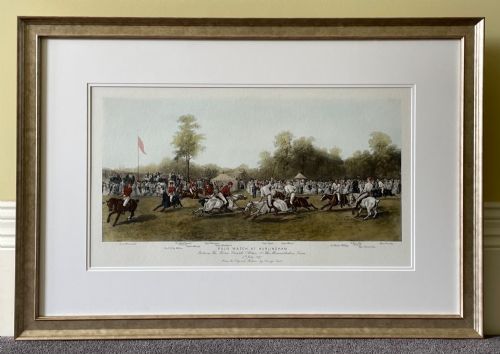
Many works include specific historical references, such as named racehorses or documented sporting events.