




Antique Artist Table
An antique artist table provides a purposeful workspace, uniting practical design with the character of past creative endeavours.
Antique Artist Table
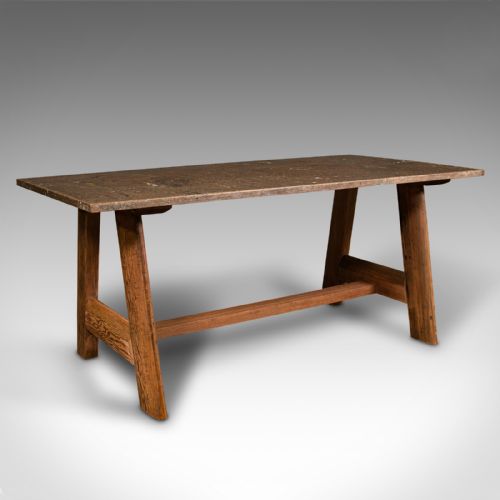
An antique artist table encompasses dedicated writing desks, architects' tables, and folding work surfaces designed for creative work. These pieces emerge from periods including the Georgian era, the Victorian epoch, and the Edwardian years.
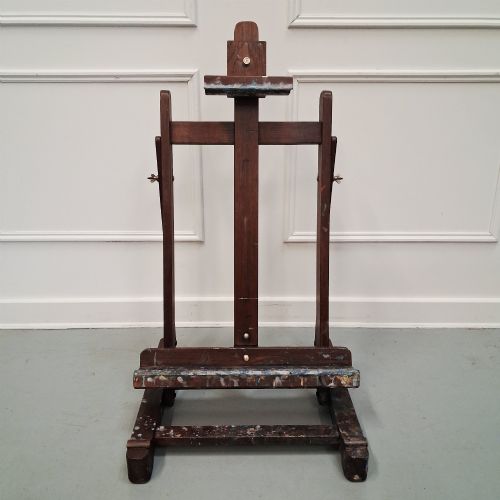
Buyers will encounter specific variations such as Hatherleys patent folding tables, adjustable oak easels, and mahogany desks fitted with brass bounds. The selection frequently includes portable boxes and sculptor stands alongside standard studio benches.
Origins span English workshops and French provincial ateliers, reflecting the diverse practical needs of painters, draughters, and sculptors throughout the eighteenth, nineteenth, and early twentieth centuries.
Materials and construction methods
Construction relies heavily on robust timbers such as oak, mahogany, beech, teak, and pitch pine, selected for durability in working environments. Patent folding mechanisms and adjustable rests incorporate brass hardware and iron fittings to withstand daily studio use.
Joinery techniques focus on functional stability, accommodating hinged supports, sliding components, and folding frames. Surfaces often display the natural grain of the wood, finished with patinated polish or left utilitarian for practical studio tasks.
The inventory spans the Georgian period, the Victorian era, the Edwardian years, and the early twentieth century.
Assessing quality in studio furniture
Quality rests upon the integrity of mechanical adjustments, such as the smooth operation of Hatherleys patent folding actions or the secure positioning of brass-bound reading ledges. Superior examples maintain structural soundness despite heavy historical use.
The choice of materials and the finesse of the timber grain differentiate standard utility pieces from finer architectural desks. Maker provenance, evidenced by stamps from firms like Roberson and Co, adds a distinct layer of historical distinction.
Roberson & Co·Hatherleys
The Antique Artist Table Glossary
- Hatherleys Patent
- A specific folding mechanism used on nineteenth and early twentieth-century wooden stands and tables. This design allows the furniture to collapse flat for portability.
- Architects Desk
- A specialised form of writing table featuring an adjustable sloping top. These surfaces facilitated drafting, drawing, and painting.
- Tabletop Easel
- A compact support designed to hold a canvas or panel upon a table. They frequently incorporate adjustable ledges and storage compartments.
- Brass Bound
- Furniture edges or corners reinforced with brass strips and protective brackets. This treatment offered durability for portable artist boxes and campaign pieces.
- Sculptor Stand
- A heavy pedestal or revolving table used for supporting clay models or stone blocks during sculpting. They prioritize stability and height adjustment.
Antique Artist Table: Frequently Asked Questions
How do I use an architects desk today?
An architects desk serves as a versatile modern writing or drawing desk thanks to its adjustable sloping surface. The built-in ledges hold papers, books, or tablets securely at various angles.
Position the table near a natural light source to replicate its original studio purpose, using the surface for sketching or reading.
Are these tables suitable for small spaces?
Many artist tables and folding stands are designed with compact footprints or collapsible frames that suit modest rooms. Portable boxes and tabletop easels require minimal floor space entirely.
Their utilitarian origins mean they prioritize efficient design without sacrificing workspace area.
How do I date an antique artist table?
Dating relies on examining the timber species, hardware materials, and construction techniques visible in the frame. Georgian pieces often display figured mahogany, while Edwardian examples frequently use teak or pitch pine.
Patent marks, maker stamps from firms like Roberson and Co, and brass-bound corners help narrow the decade of manufacture.