

Antique Armoire Closet
An antique armoire closet offers substantial storage while anchoring a room with period presence, spanning French provincial oak to British walnut designs.
Antique Armoire Closet
When you search for an antique armoire closet, you are looking at large freestanding storage furniture designed for garments, encompassing both British wardrobes and Continental armoires. These pieces originate from periods ranging from the eighteenth century through the Art Deco era.
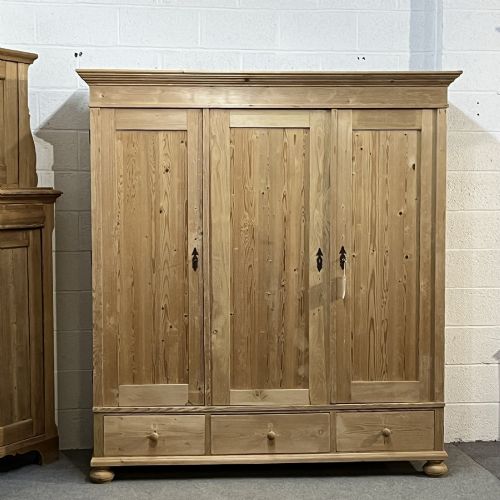
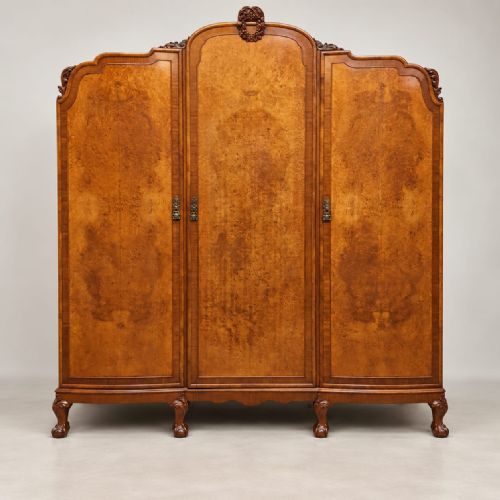
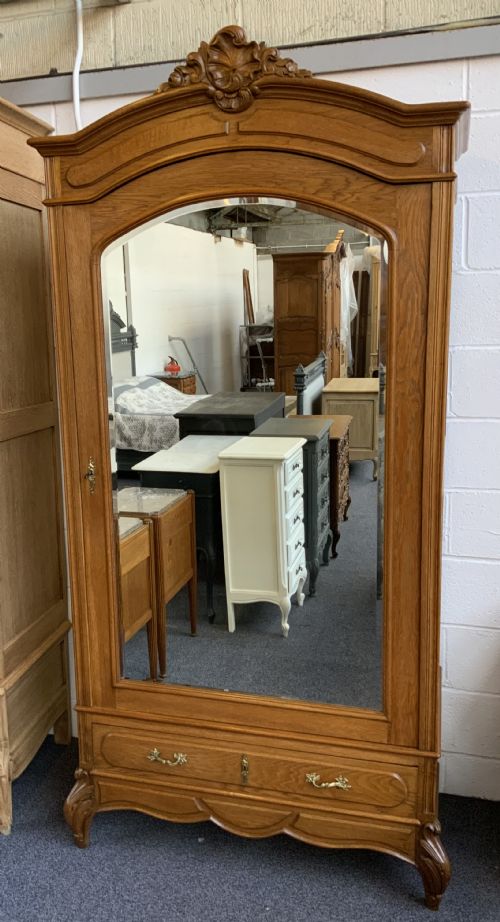
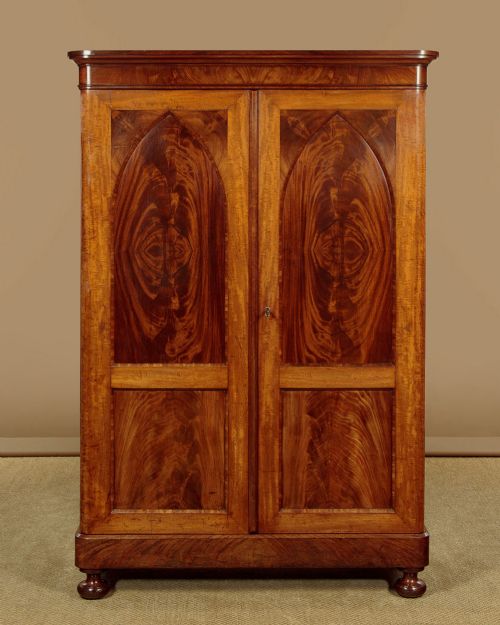
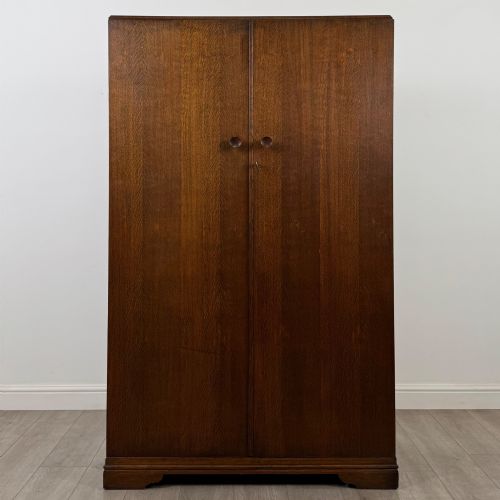
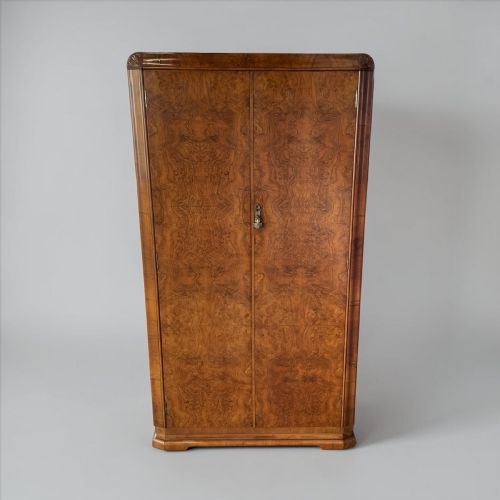
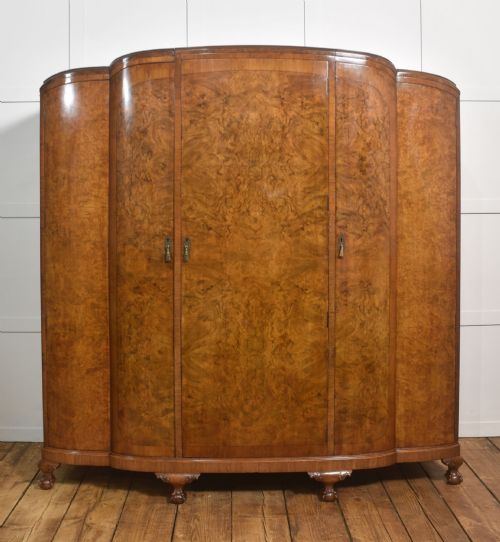
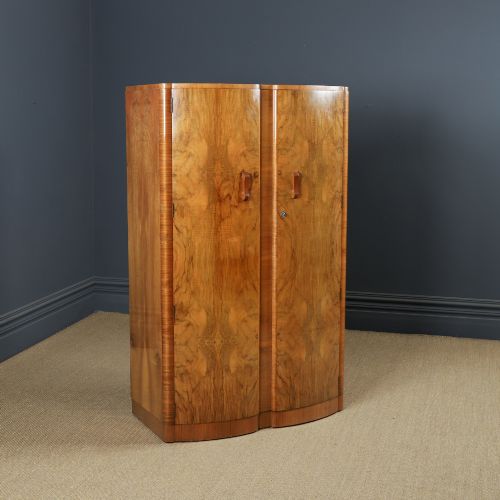
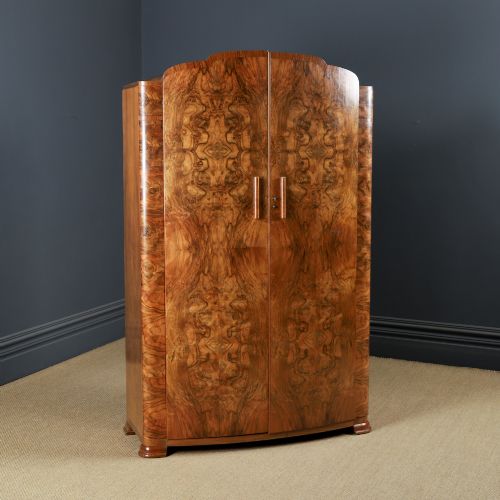
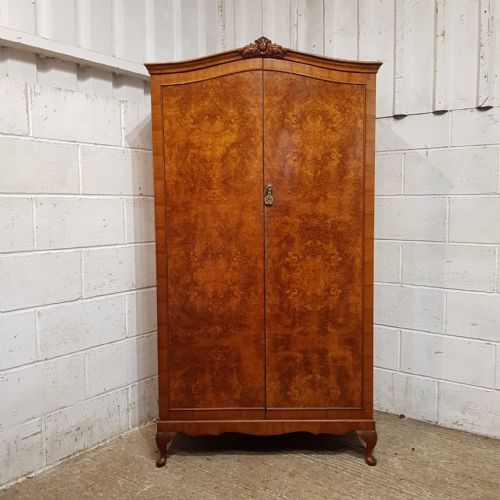
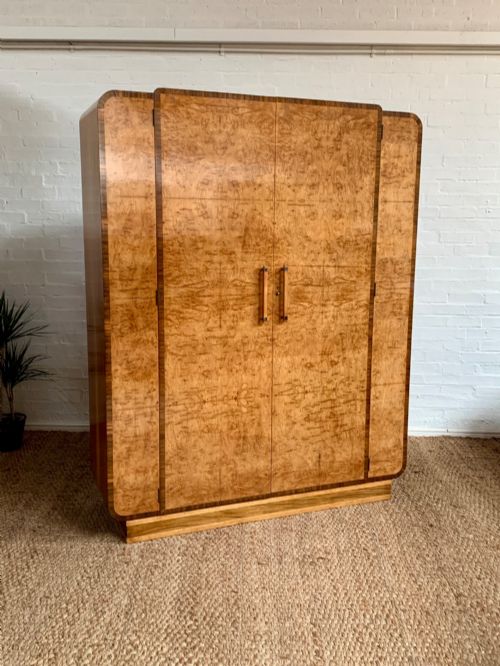
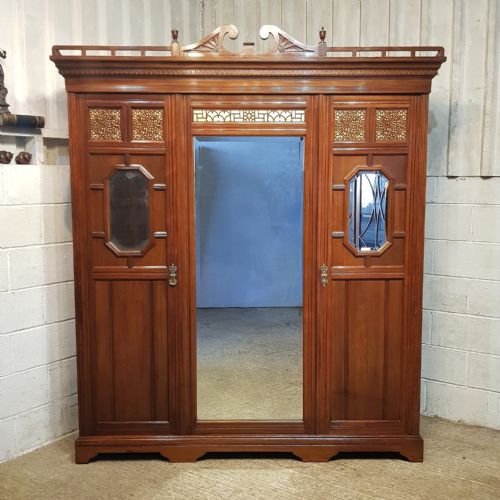
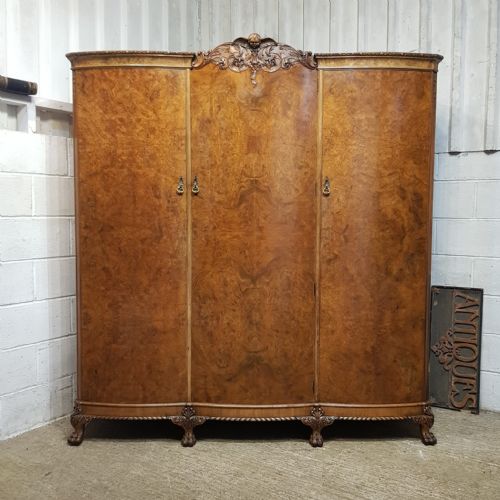
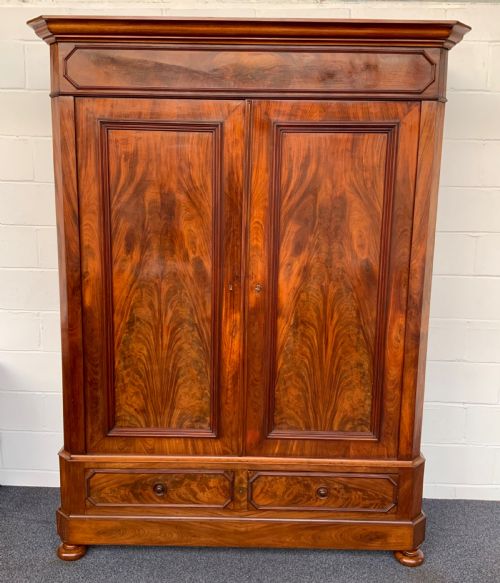
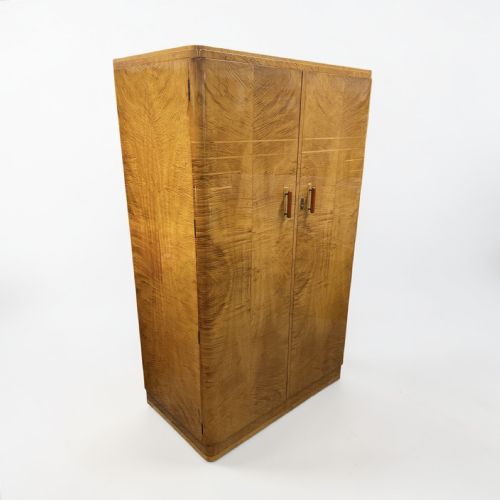
The most common examples on this page are walnut and mahogany wardrobes from the Victorian, Edwardian, and 1920s eras, alongside French oak and painted armoires. Forms vary from single door units and compact bow fronts to expansive triple wardrobes and breakfront designs.
Makers such as Waring & Gillow and Harry and Lou Epstein appear alongside French pieces featuring carved details and brass hardware. Buyers also encounter architectural elements like individual cabinet doors salvaged from larger armoires.
How they were made
Cabinet makers utilised dense hardwoods such as oak, mahogany, and walnut, frequently applying burr walnut and flame mahogany veneers to visible surfaces. Solid timbers provided structural integrity for large door frames and cornices.
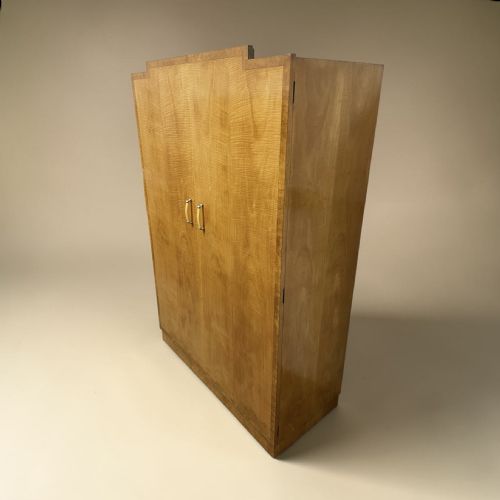
Decoration relied on skilled hand carving, marquetry inlays, and applied brass detailing. French pieces often display regional carving styles, while British pieces from the Art Deco period showcase geometric wood grains and fitted interiors.
Antique Armoire Closet Retail Price Guide 2026
Typical asking prices for armoire closet among the pieces listed under this phrase on Sellingantiques today, from the lower quarter to the upper quarter. They describe what is for sale here now, not the wider market.
Listings feature oak, mahogany, walnut, and ash timbers, spanning the Georgian, Victorian, Edwardian, and Art Deco periods.
What varies in quality
The standard of an antique armoire closet rests on the selection of timber veneers and the precision of the joinery. Finely matched burr walnut and flame mahogany panels distinguish superior pieces from plain constructions.
Original fitted interiors, working brass locks, and intact glass mirrors elevate a piece beyond standard utility. The fluidity of hand carvings on oak armoires and the execution of marquetry details also mark the distinction between workshops.
Waring and Gillow·Harry and Lou Epstein·Jean Faure
The Antique Armoire Closet Glossary
- Armoire
- A large freestanding cupboard or wardrobe, traditionally of French origin. These pieces often feature double doors and deep internal storage.
- Breakfront
- A cabinet design where the central section projects forward from the flanking wings. This configuration appears frequently in larger wardrobes from the Art Deco period.
- Burr walnut
- A prized wood grain obtained from the gnarled growths of walnut trees, creating swirling patterns. Cabinet makers utilised these veneers on doors and drawer fronts.
- Marquetry
- The art of applying pieces of veneer to a structure to form decorative patterns. Dutch and French makers employed this technique using various contrasting woods.
- Combination wardrobe
- A piece of furniture combining hanging space with drawers and shelving units. Edwardian makers produced these versatile items in oak and ash.
Antique Armoire Closet: Frequently Asked Questions
How do I fit an armoire in a modern bedroom?
Measure your ceiling height and floor space carefully, remembering that antique wardrobes often possess heavy cornices that extend beyond the main body.
Consider models that dismantle into modular sections, as many large Victorian and Edwardian wardrobes were constructed to be assembled on site.
What is the difference between an armoire and a wardrobe?
Armoire traditionally refers to Continental European cupboards, typically featuring pegged wooden doors and regional carved motifs.
Wardrobe generally describes British storage furniture from the nineteenth and twentieth centuries, which evolved to include internal hanging rails and mirrored doors.
How do I care for burr walnut veneer?
Keep wooden furniture away from direct sunlight and heat sources to prevent the delicate walnut veneers from drying out and lifting.
Apply a traditional beeswax polish sparingly to maintain the lustre of the grain without building up a heavy residue.
Are these cabinets difficult to move?
Large triple wardrobes and breakfront units are exceptionally heavy and require specialist antique movers to transport them safely.
Many French armoires and modular British wardrobes can be partially disassembled by removing the doors and crown moulding.