

Antique Armed Chair
These antique armed chairs offer centuries of traditional seating, combining sturdy timber frames with upholstered comfort for daily use.
Antique Armed Chair
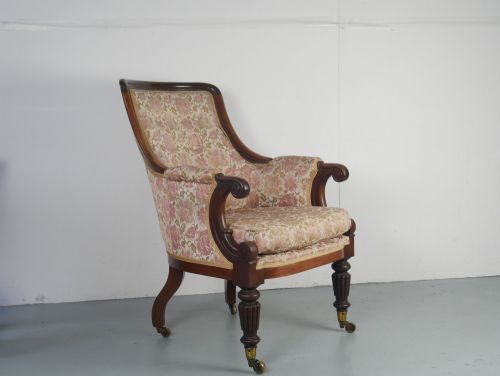
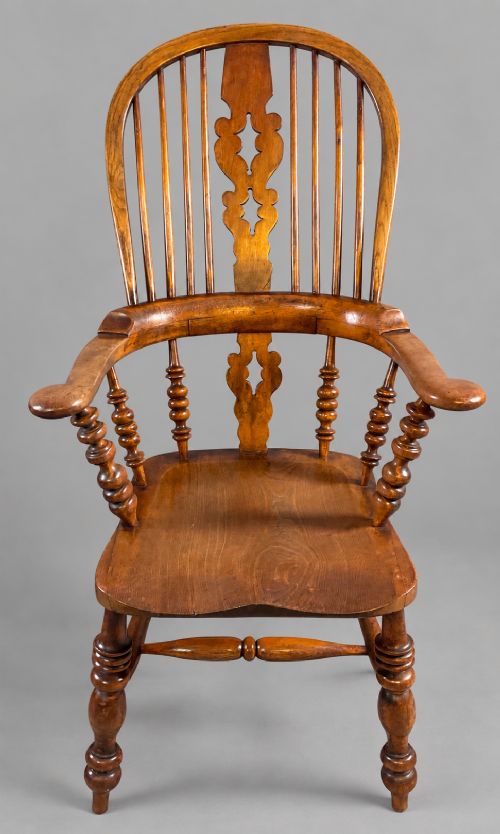
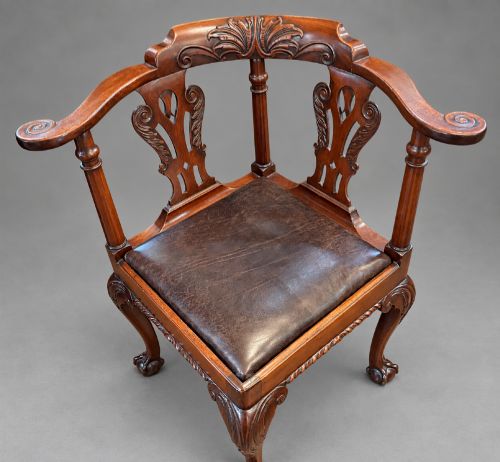
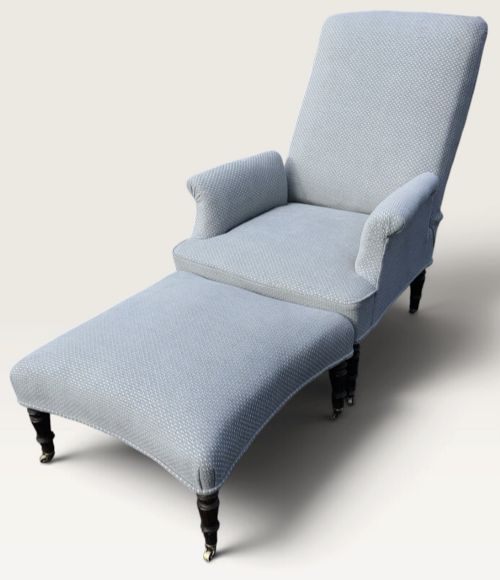
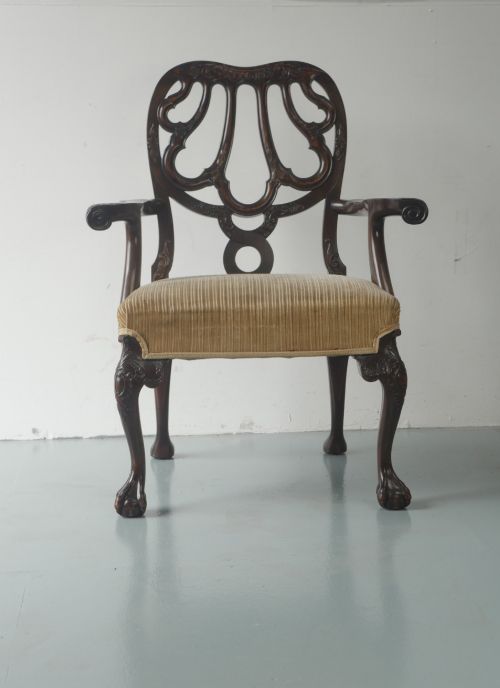
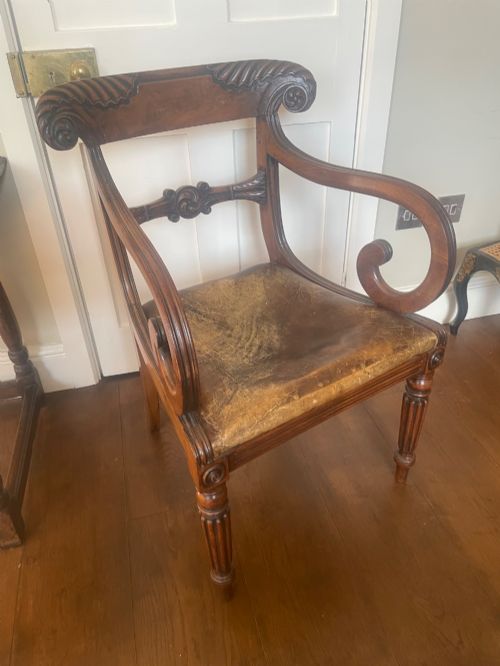
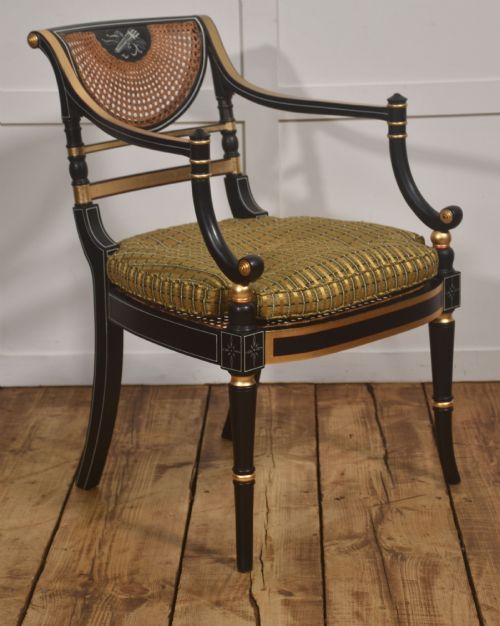
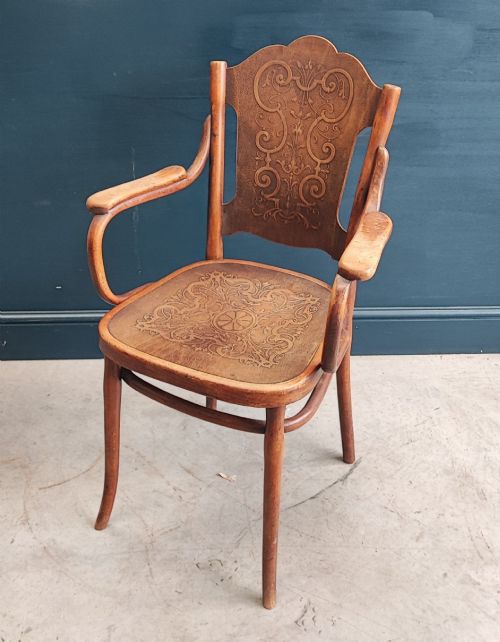
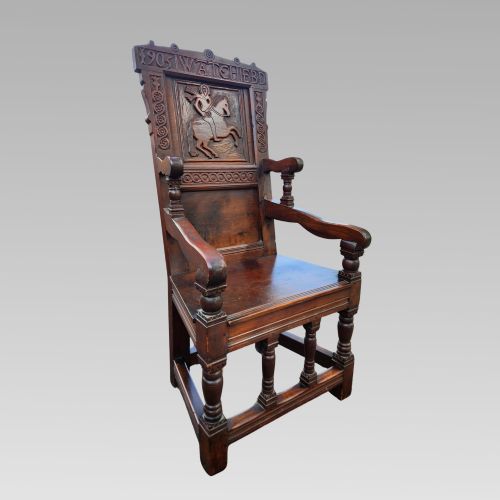
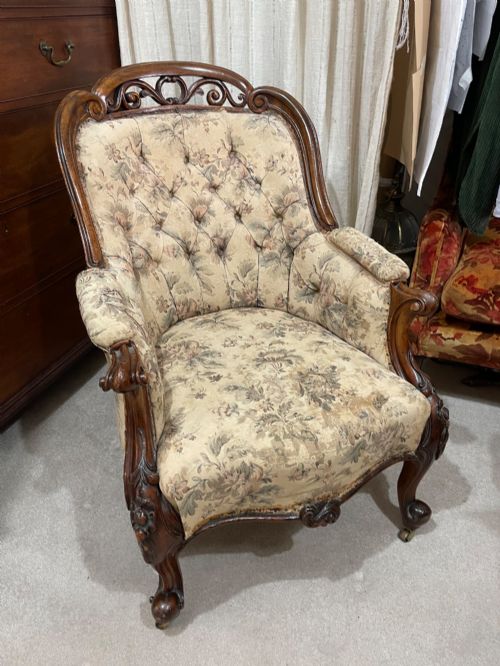
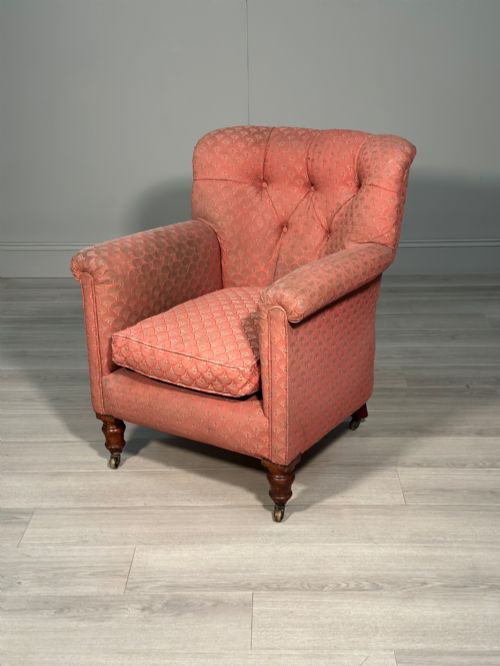
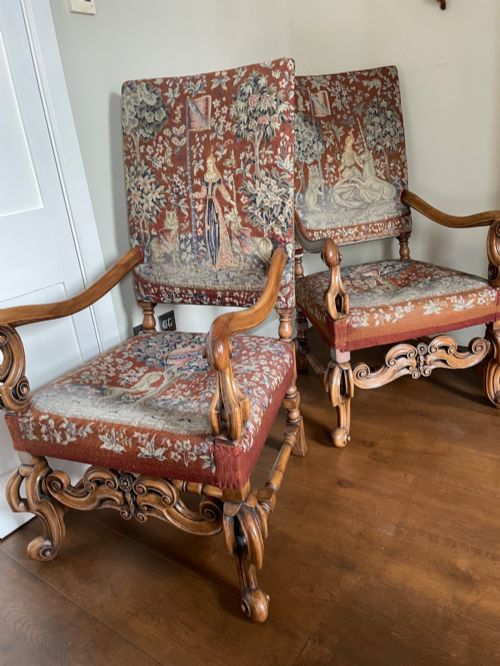
An antique armed chair spans a wide variety of domestic forms, including library armchairs, Windsor chairs, desk chairs, and carvers designed for the dining room. You will frequently encounter examples from the Georgian, Regency, and Victorian periods, alongside sturdy oak vernacular pieces from the eighteenth and nineteenth centuries.
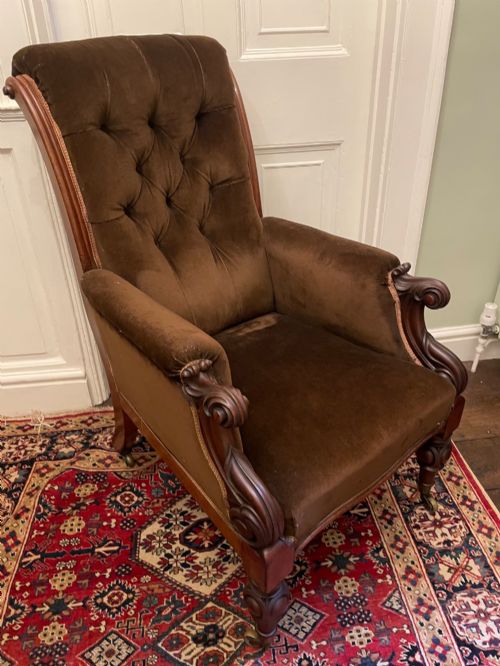
The selection ranges from robust elm and ash Windsor models to formal mahogany and walnut library chairs upholstered in leather or velvet. These seats served distinct household roles, from office work and fireside reading to formal dining and children's nurseries.
Materials and construction methods
Frames rely heavily on timbers such as mahogany, oak, elm, and walnut, shaped through turning, carving, and steam-bending depending on the regional tradition. Brass fittings, leather upholstery, and woven fabrics provide functional and decorative elements across different styles.
Joinery techniques reflect the period, utilising mortise and tenon joints in earlier country models and sophisticated cabinetry in formal nineteenth-century library and desk chairs.
Antique Armed Chair Retail Price Guide 2026
Typical asking prices for armed chair among the pieces listed under this phrase on Sellingantiques today, from the lower quarter to the upper quarter. They describe what is for sale here now, not the wider market.
Some nineteenth-century Windsor chairs feature arms broad enough to double as writing ledges for a quiet morning letter.
Assessing craftsmanship and proportion
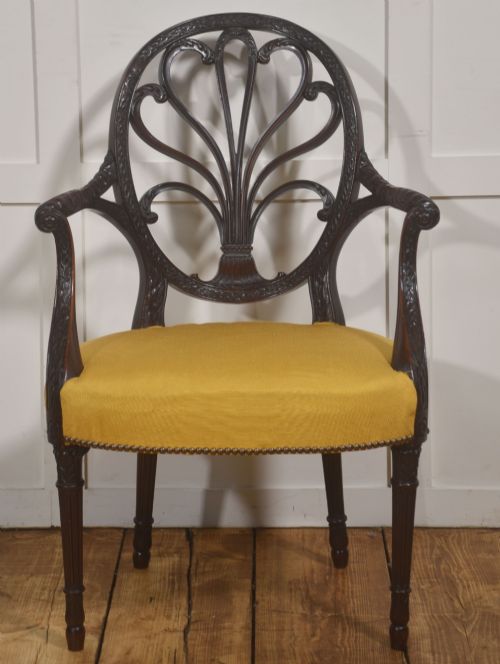
Quality rests in the crispness of the timber carving, the integrity of the frame construction, and the balance of the proportions. Finer examples display carefully selected grain patterns in woods like mahogany and rosewood, alongside thoughtful integration of arms and backrests.
The distinction between standard utility furniture and superior pieces often lies in the depth of hand-detailing, such as pierced splats, turned spindles, and the original harmony of the wood and upholstery materials.
Howard and Sons·Jacob and Josef Kohn
The Antique Armed Chair Glossary
- Carver
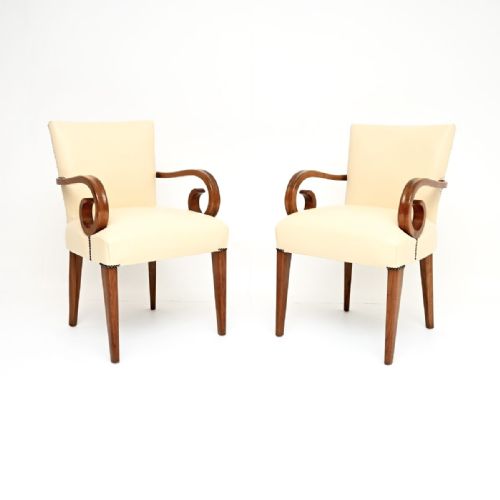
- An armchair designed to match a set of dining chairs, usually placed at the head of the table. These often feature open arms and matching back splats.
- Windsor
- A traditional wooden chair constructed with a solid shaped seat into which the legs and back spindles are wedged directly. They often utilise ash and elm.
- Splats
- The vertical wooden strip down the centre of a chair back. Pierced examples show decorative cut-out patterns typical of Georgian and Regency designs.
- Tub armchair
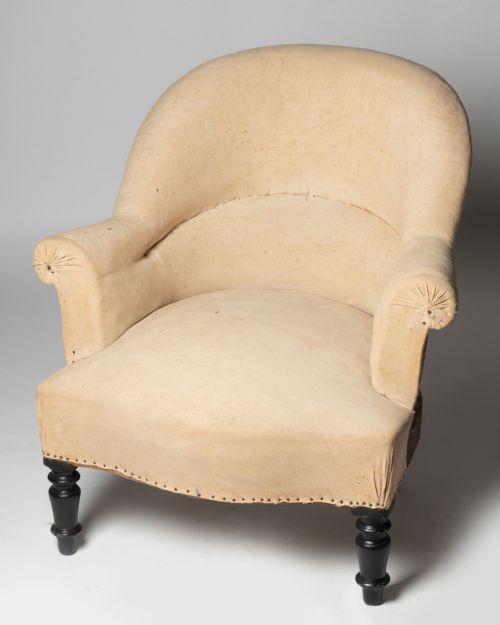
- A chair with a rounded, enclosing back that curves seamlessly into low arms. These appear frequently in nineteenth-century library settings.
- Library chair
- A heavy, substantial armchair designed for reading rooms, frequently upholstered in leather and sometimes fitted with a revolving mechanism for desks.
Antique Armed Chair: Frequently Asked Questions
How do I identify a Georgian armed chair?
Georgian armed chairs typically display solid mahogany frames with restrained carving, often featuring cabriole legs or straight stretchers depending on the exact decade of origin.
Look closely at the joinery and the shaping of the arm supports, which reflect the changing stylistic preferences through the eighteenth century.
Were Windsor chairs used at dining tables?
Windsor chairs were primarily utilised as sturdy seating in kitchens, country houses, and writing alcoves rather than formal dining spaces. Their robust construction made them ideal for everyday utilitarian tasks.
The combination of ash and elm provided the necessary flexibility and strength for daily household use.
How do I care for antique leather upholstery?
Maintain antique leather by keeping it away from direct sunlight and heat sources that cause drying and cracking. Gentle dusting and occasional professional conditioning preserve the surface.
Avoid modern chemical cleaners, as older leathers respond best to traditional conservation methods.
What is the difference between a carver and an armchair?
A carver is specifically constructed to match a set of dining chairs, featuring a slightly wider frame and open arms to accommodate formal clothing. General armchairs are standalone seating designed for studies, libraries, and parlours.
Dining carvers remain lighter in proportion compared to heavy library or club armchairs.