




Antique Aristocracy Portrait
An antique aristocracy portrait captures the likeness of nobles and courtiers in oil on canvas, offering a direct window into historical power and fashion.
Antique Aristocracy Portrait
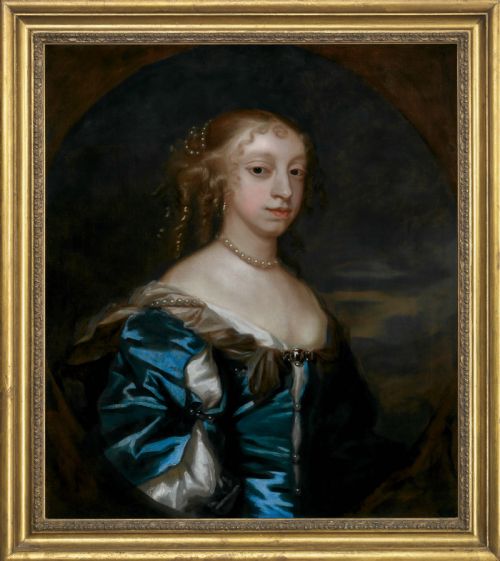
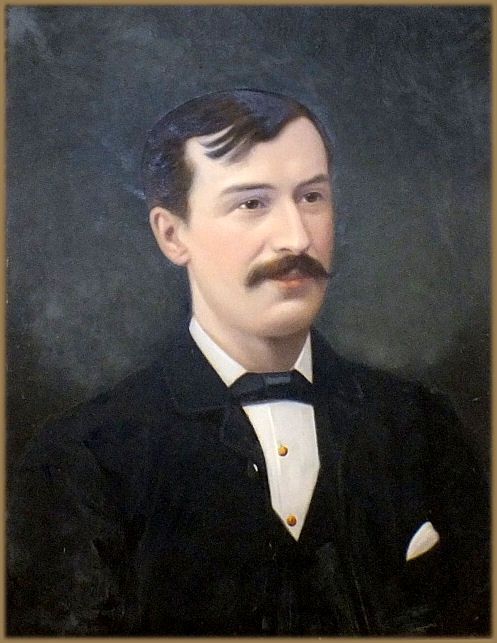
An antique aristocracy portrait depicts figures of high social standing, ranging from duchesses and earls to dukes and barons, rendered during periods spanning the seventeenth to the nineteenth century. These works capture notable subjects such as Lady Diana Bruce and the Earl of Offaly, serving as enduring records of lineage and elite status.
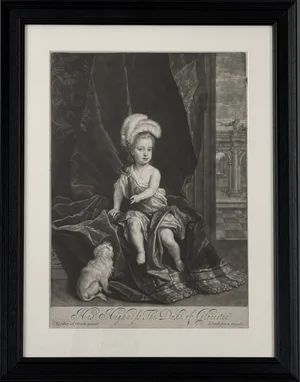
The pieces available on this page encompass oil paintings on canvas as well as mezzotint prints, representing diverse aesthetics from the Baroque and Georgian eras to Regency and Victorian fine art. Collectors will encounter works originating from English schools and continental workshops, reflecting the broad reach of aristocratic portraiture.
Materials and Technique
Painters of these works utilised oil paint applied to canvas, often supported by wood frames and enhanced with gold leaf and giltwood surrounds. These traditional materials allowed artists to build rich textures in fabrics such as blue silk and fur trim.
Printmakers employed techniques like mezzotint on paper to replicate painted likenesses for wider circulation. Frames frequently feature carved gilt wood, complementing the opulence of the subjects portrayed.
Courtiers take afternoon tea in a Versailles interior scene while aristocrats pose in heavy blue robes.
Assessing Quality
Quality in these portraits rests upon the skill of the brushwork and the precision with which fabric, skin tones, and facial expressions are rendered by the artist or circle. Works attributed to established painters or their close circles often display superior anatomical accuracy and psychological depth.
The preservation of the original canvas and the integrity of the period frame contribute significantly to the standing of a piece. Finer examples maintain their original pigment vibrancy and structural support without intrusive modern restorations.
Robert Byng·John Smith·Sir Godfrey Kneller·Sir Anthony Van Dyck·Thomas Murray·William Aikman·William Robinson·George Hamilton Barrable·Sir Henry Raeburn
The Antique Aristocracy Portrait Glossary
- Baroque
- A style of art prevalent in the seventeenth century characterised by drama, rich colour, and grand scale. This aesthetic emphasises movement and deep shadow.
- Mezzotint
- A printmaking process where the copper plate is roughened to achieve tones and gradients rather than simple lines. This technique allows for subtle tonal gradations in portraits.
- Giltwood
- Wood carved and coated with gold leaf or a gold-coloured finish. This material is standard for high-status picture frames from the seventeenth century onwards.
- Circle of
- A term used when a work is not signed by a master but displays the distinct style and technique of their workshop. It denotes proximity to a prominent artist's output.
- Regency
- A British stylistic period spanning the early nineteenth century defined by neoclassical elegance and refined portraiture. Pieces from this era often feature restrained yet sophisticated palettes.
Antique Aristocracy Portrait: Frequently Asked Questions
What is an antique aristocracy portrait?
An antique aristocracy portrait is a painting or print depicting a member of the nobility, such as a duke, duchess, or earl, produced during historical periods like the seventeenth or eighteenth century.
These works were commissioned to record lineage, power, and personal wealth, often displaying the subject in formal attire or rich interiors.
How were these portraits displayed?
Historically, these portraits hung in the grand reception rooms, galleries, and private chambers of country houses and town mansions to impress visitors and reinforce family status.
Today, they function as striking focal points in domestic interiors, pairing well with traditional or eclectic room schemes.
How do I identify the period?
Dating relies on stylistic clues such as the sitter's costume, the hairstyle, the framing technique, and the handling of the oil paint.
Eras like the Baroque, Georgian, and Regency each carry distinct artistic conventions and fashion trends that help narrow down the creation date.
What does circle of mean?
The term circle of indicates that an artist worked closely alongside or under the direct influence of a major master without necessarily being the primary hand.
Such works capture the exact aesthetic and technical standards of well-known painters from the period.