
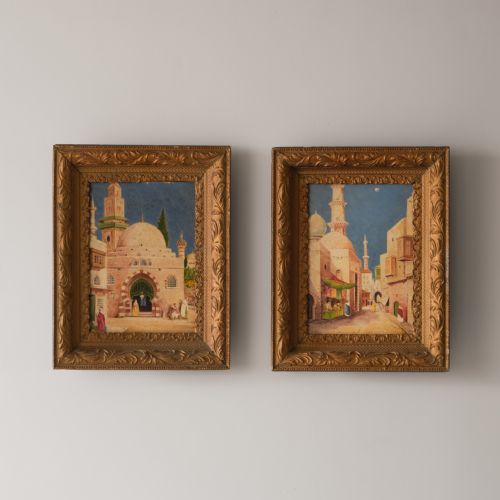
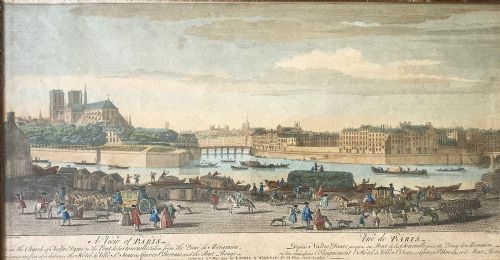
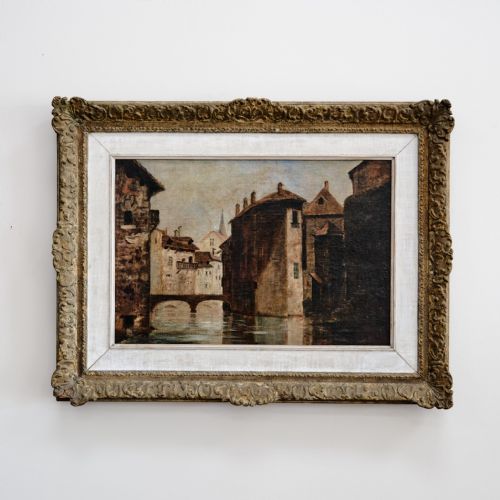
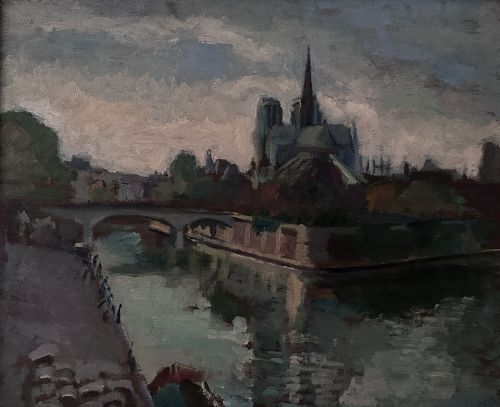



Antique Architectural View
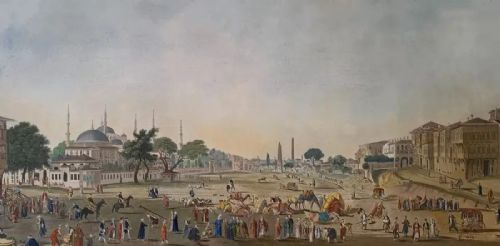
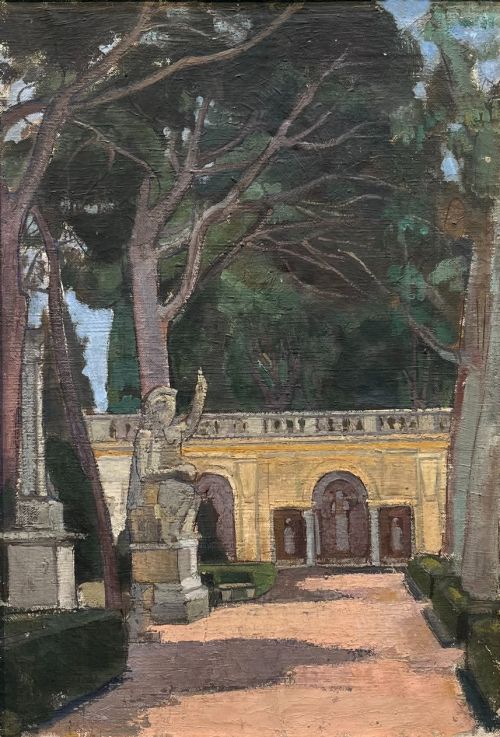
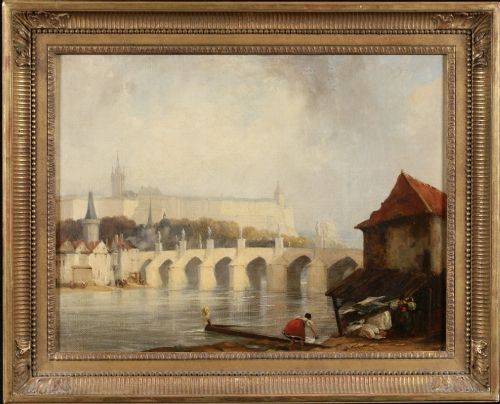
An antique architectural view captures the grand facades, streets, and monuments of past centuries through oil, watercolour, and print.
Antique Architectural View
An antique architectural view represents buildings, cityscapes, and historic landmarks, capturing the urban and structural forms recorded by artists across centuries. When searching for an antique architectural view, buyers encounter everything from large oil paintings of Venetian canals to intimate watercolours of English churches and detailed 18th-century engravings of cathedrals.
The selections span significant periods including the Georgian and Edwardian eras, stretching through the 19th century and into the early decades of the 20th century. These works document specific locations such as Paris, Rome, London, and Constantinople, offering a tangible window into urban development and historic topography.
Forms vary widely between delicate works on paper and substantial canvas pieces. Buyers find framed prints, engravings, drypoint etchings, and hand-coloured lithographs alongside original oils and watercolours depicting city streets, grand bridges, and interior rooms.
How They Were Made
Artists created these works utilising oil on canvas, watercolour, and ink, frequently applying original hand colouring to printed engravings and lithographs. Paper and wood form the basis for many prints and paintings, whilst gilt wood frames often enclose the larger canvas works.
Printmakers employed copper plates for detailed engravings and drypoint etchings, producing sharp lines that captured intricate masonry and perspective. Watercolourists built translucent washes upon paper sheets, whereas oil painters layered pigments to achieve depth in their depictions of European capitals and architectural landmarks.
The listings feature works executed in oil on canvas, watercolour, ink, and gold leaf, spanning the 18th, 19th, and early 20th centuries.
What Varies in Quality
Quality rests upon the precision of the draughtsmanship and the artist's command of perspective when rendering complex masonry and urban layouts. Finer examples display meticulous attention to architectural detail, capturing the exact proportions of facades, arches, and capitals.
The handling of medium also dictates the calibre of the piece, whether through the vibrancy and preservation of original hand colouring on an 18th-century engraving or the confident brushwork in an oil painting. Condition of the paper or canvas, alongside the appropriateness of the framing, influences the overall integrity of the work.
Anton Ignaz Melling·William George Meadows·Lewis J Wood·Hercules Brabazon Brabazon·David Small·Noel Harry Leaver·Francis Dodd·Ettore Ascenzi·Peter Tillemans·William Marlow·John Thistle
The Antique Architectural View Glossary
- Drypoint etching
- A printmaking process where the artist scratches an image directly onto a metal plate with a sharp needle. This technique creates a characteristic rich, velvety burr along the lines.
- Lithography
- A planographic printing method based on the mutual repulsion of oil and water. Artists draw upon a limestone slab or metal plate to produce multiple impressions.
- Engraving
- A technique where an artist cuts lines directly into a metal plate using a hardened steel tool called a burin. The resulting incisions hold ink to create crisp linear details.
- Naive art
- Work produced by artists without formal academic training, often characterised by a childlike perspective and direct charm. These pieces focus on subject matter with honest simplicity rather than strict adherence to academic rules.
- Gilt wood
- Wood that has been coated with a thin layer of gold leaf or metallic powder. It frequently appears on the decorative frames enclosing period paintings and mirrors.
Antique Architectural View: Frequently Asked Questions
What is an architectural view?
An architectural view is a painting, drawing, or print depicting buildings, streetscapes, monuments, or interior rooms. These works range from precise topographical records to atmospheric artistic interpretations of historic cities.
Artists across the 18th, 19th, and early 20th centuries documented urban landscapes, capturing the changing faces of locations like London, Paris, Venice, and Rome.
How do I care for antique works on paper?
Works on paper require protection from direct sunlight to prevent the fading of watercolours, inks, and hand colouring. Keeping them away from damp environments ensures the paper and pigments remain stable over time.
Framing with acid-free mounts and UV-filtered glass safeguards delicate engravings, watercolours, and lithographs from environmental degradation.
What subjects appear in these views?
Subjects include famous European landmarks, cathedrals, bridges, canals, and urban street scenes. Notable examples feature views of the Thames, Notre Dame, the Grand Canal in Venice, and various historic English country houses.
Both exterior cityscapes and detailed interior rooms of great houses are represented among the paintings and prints.
How can I tell a print from an original painting?
Examining the surface under magnification reveals whether an image consists of printed ink dots or lines, or applied paint. Original watercolours and oils show brush texture and pigment layering, whilst prints display uniform ink transfer within plate marks.
Engravings and lithographs often exhibit characteristic indentation lines in the paper where the printing plate pressed down.