
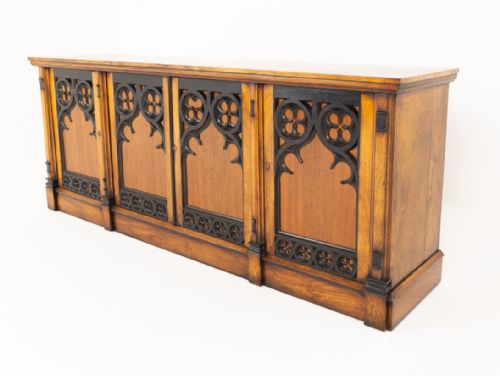
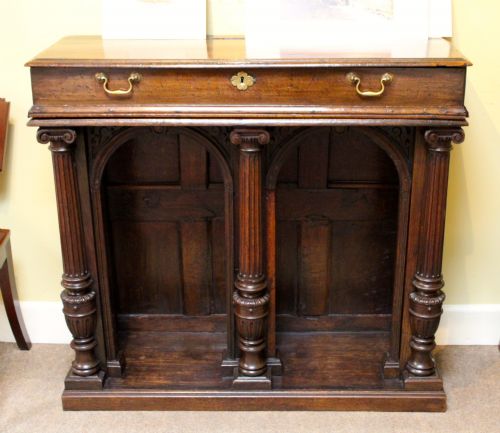
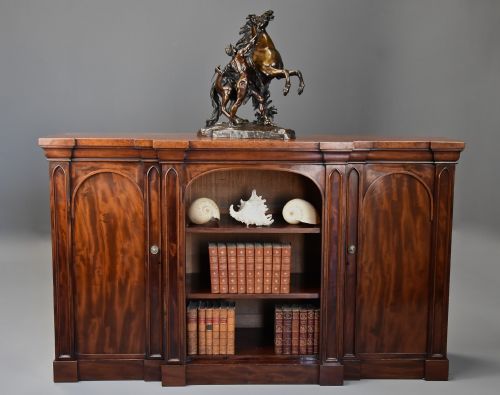


Antique Arched Sideboard
An antique arched sideboard brings domestic timber storage into formal rooms, offering deep cupboards and broad display surfaces shaped by centuries of cabinet-making.
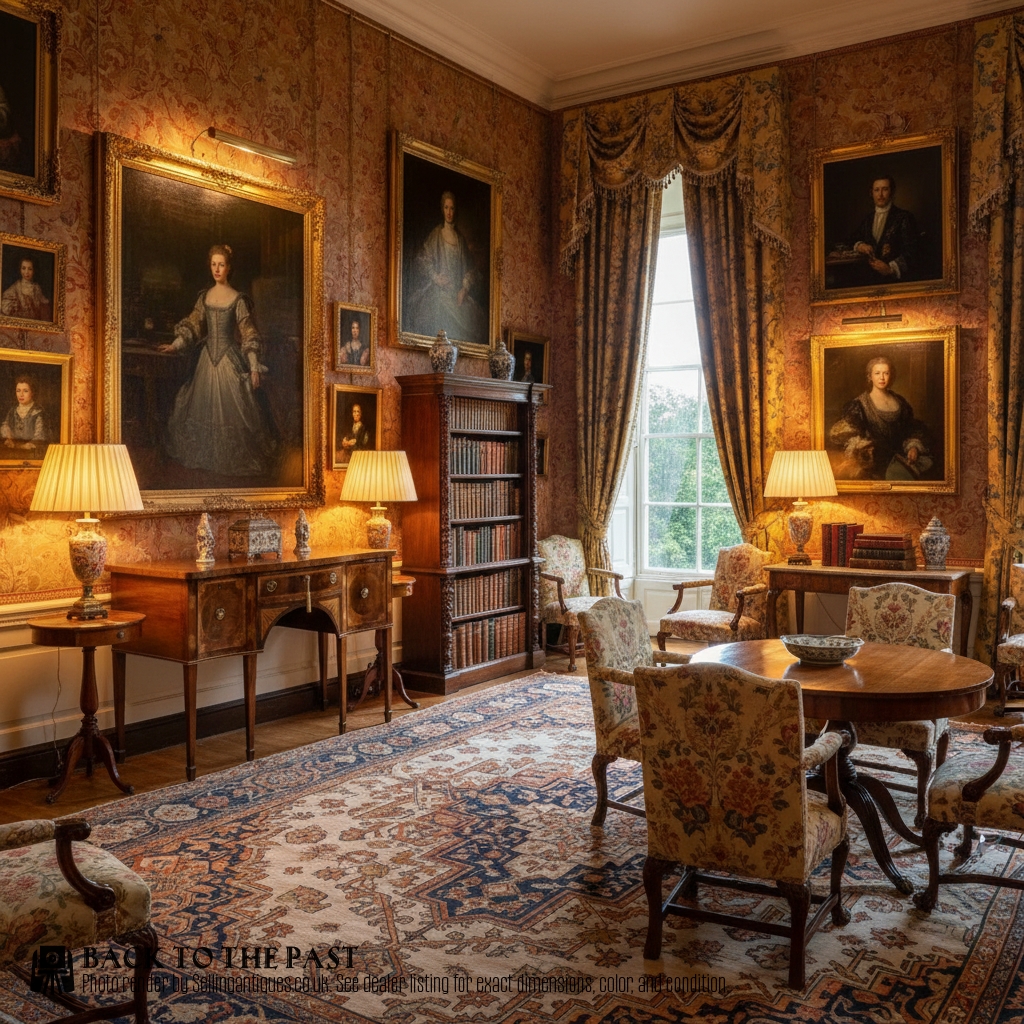
Antique Arched Sideboard
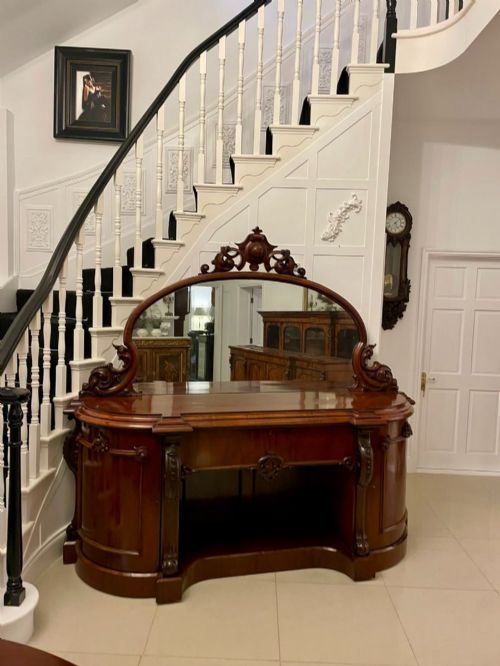
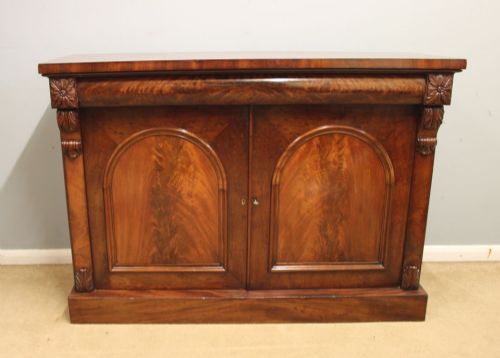
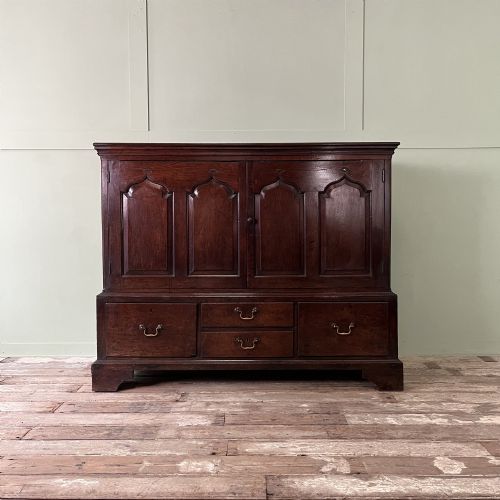
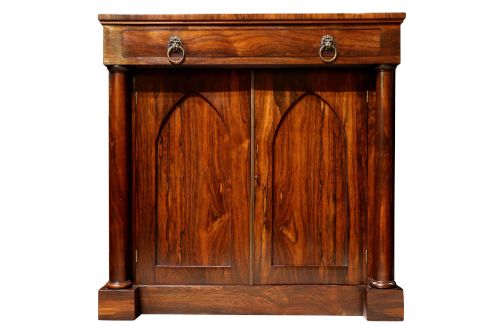
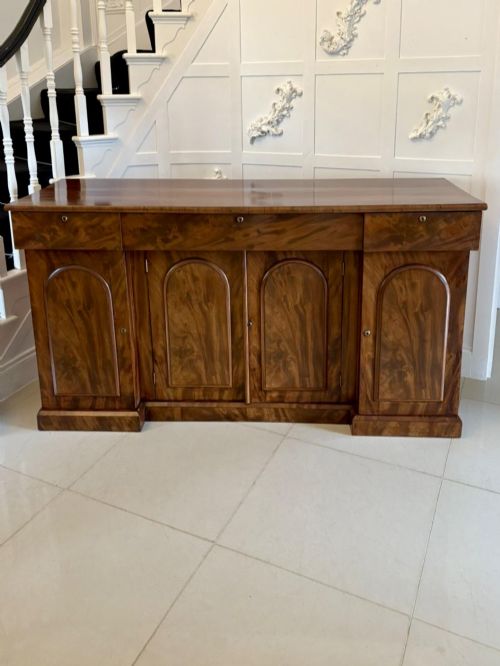
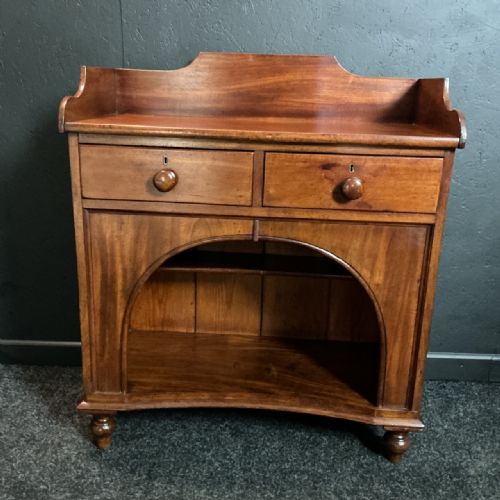
The antique arched sideboard category covers substantial dining room and hallway timber furniture designed to store tableware and serve food. These pieces emerge primarily in mahogany, oak, and rosewood across the eighteenth and nineteenth centuries.
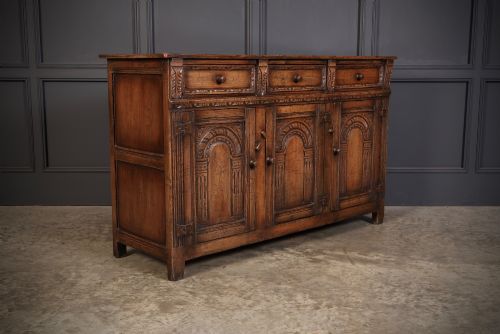
Buyers meet variations spanning Georgian serpentine servers, Victorian chiffoniers, and heavy oak dresser bases. Forms range from compact side cabinets to breakfront bookcases and carved mirror-back sideboards.
How they were made
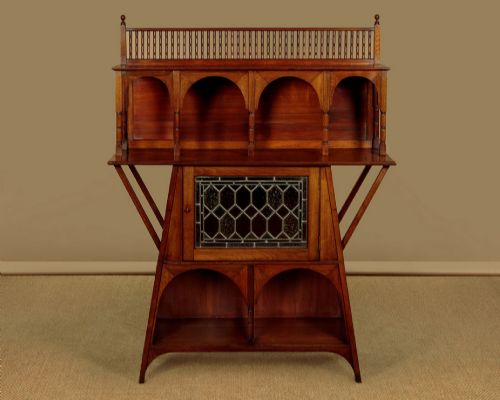
Cabinet-makers constructed these items using solid hardwoods like mahogany and oak, frequently applying flame mahogany veneer to primary display surfaces. Workshops incorporated brass hardware, iron fittings, and glass panels for doors and bookcases.
Techniques involved panelled door construction, delicate Tunbridgeware inlay, and deep carving. Structural joints relied on traditional framing methods suited to heavy domestic service.
Storage forms span low linen presses, sacristy cabinets, and dog kennel dressers.
What varies in quality
Quality rests upon timber selection and the precision of the cabinet work, particularly in figured veneer matching and carved detail. Finer pieces demonstrate restraint in ornament and structural integrity across large timber expanses.
Makers achieved distinction through balanced proportions and material harmony, whereas lesser examples rely on heavier, unrefined timber application without the same depth of finish.
Liberty & Co.
The Antique Arched Sideboard Glossary
- Chiffonier
- A low sideboard or cabinet featuring enclosed shelving, popular during the nineteenth century. This form often includes a raised back or mirrored superstructure.
- Breakfront
- A cabinet design where the central section projects forward from the flanking wings. This architectural arrangement creates depth and visual variety on large sideboards.
- Dresser base
- The lower section of a kitchen or dining room storage unit fitted with cupboards and drawers. These low pieces function independently as sideboards.
- Tunbridgeware
- A form of decorative woodwork using minute mosaic tiles of naturally coloured timbers to create geometric pictures. It appears as banding and inlay on nineteenth-century cabinets.
- Pedestal cabinet
- A standalone vertical storage unit designed to sit alongside larger furniture groupings. Pairs of these cabinets often accompany sideboard installations.
Antique Arched Sideboard: Frequently Asked Questions
How do I date an antique sideboard?
Dating relies on timber choice, construction methods, and stylistic cues such as Georgian serpentine lines or Victorian mirror backs. Secondary woods inside drawers help confirm the manufacturing period.
Hardware placement and joinery techniques provide further physical evidence for assigning a decade or century to the piece.
Where were sideboards used in the home?
These pieces served primarily in dining rooms for holding serving dishes, cutlery, and glassware during meals. Hallways and drawing rooms also accommodated smaller chiffoniers and side cabinets.
Their substantial storage capacity made them central furniture items for organising domestic service items.
What is the difference between a sideboard and a chiffonier?
A sideboard generally offers a longer, lower surface intended specifically for dining room service and large-scale storage. A chiffonier is typically more compact and often incorporates a raised shelf or mirror.
Both handle similar storage tasks, but chiffoniers suit slightly smaller domestic rooms.
How do I care for mahogany veneer?
Maintain mahogany surfaces by dusting with a soft cloth and avoiding direct sunlight or excessive heat. Natural wax feeds the timber and preserves the sheen on veneered panels.
Keep humidity levels stable to prevent the underlying timber and thin veneer layers from splitting.