


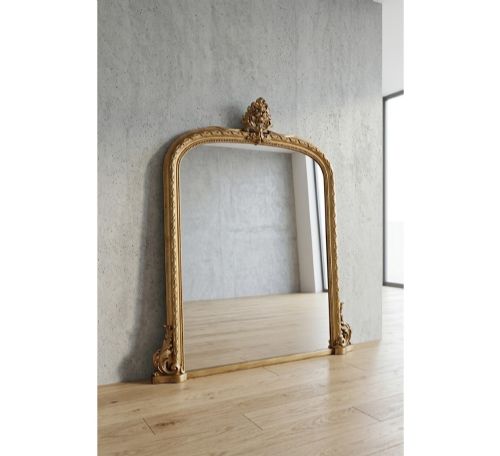
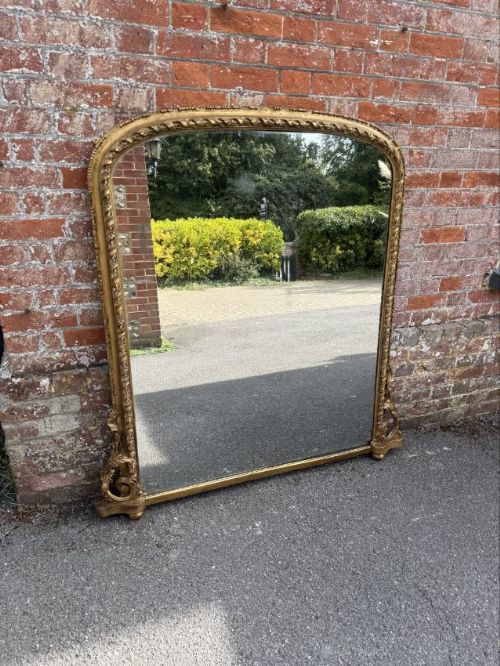
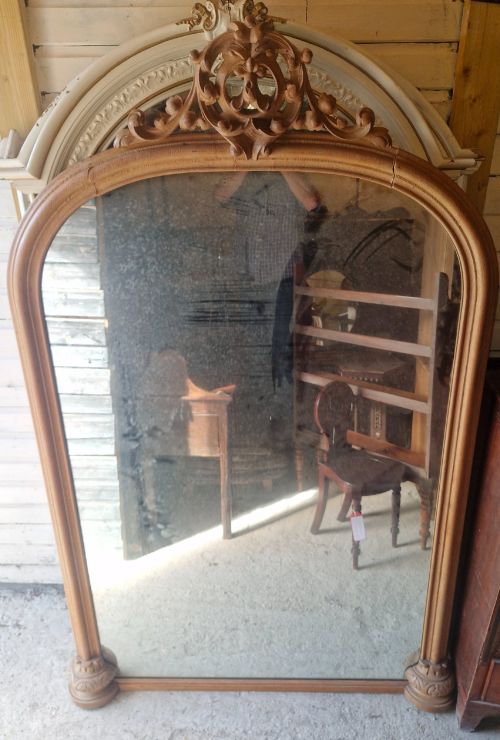
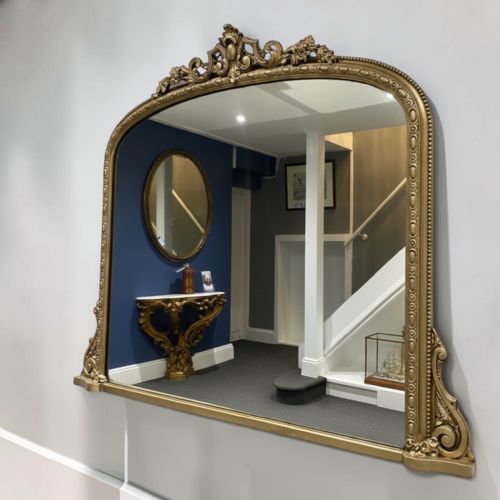
Antique Arched Mantle Glass
These large antique arched mantle glass pieces are substantial architectural mirrors designed to sit above a fireplace, bringing depth and period character to a room.
Antique Arched Mantle Glass
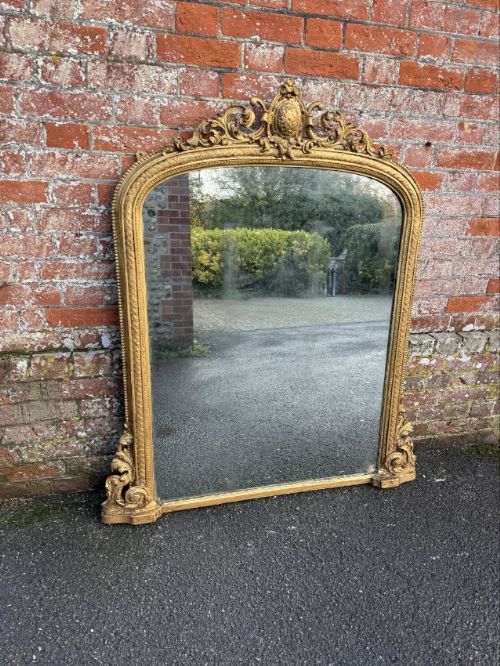
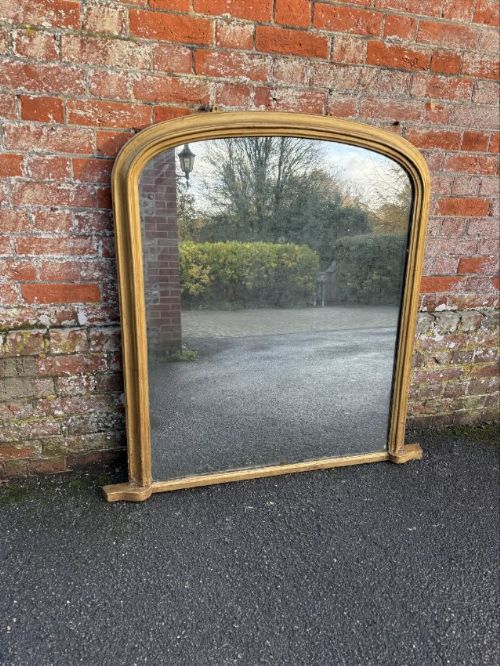
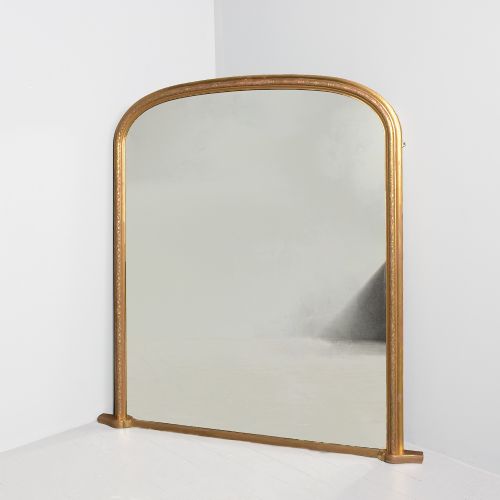
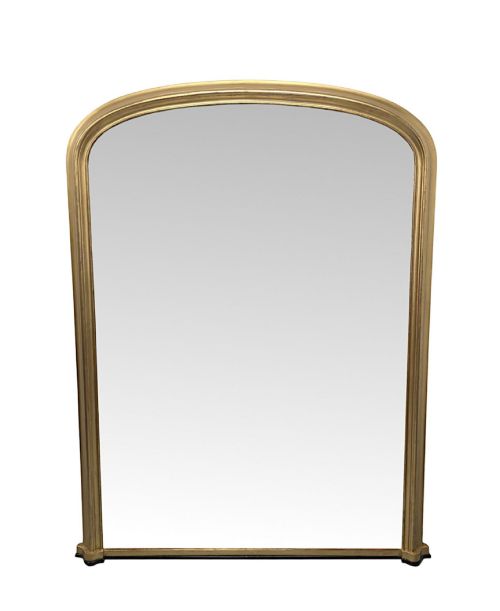
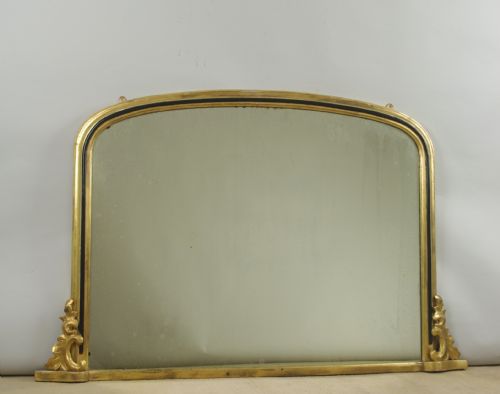
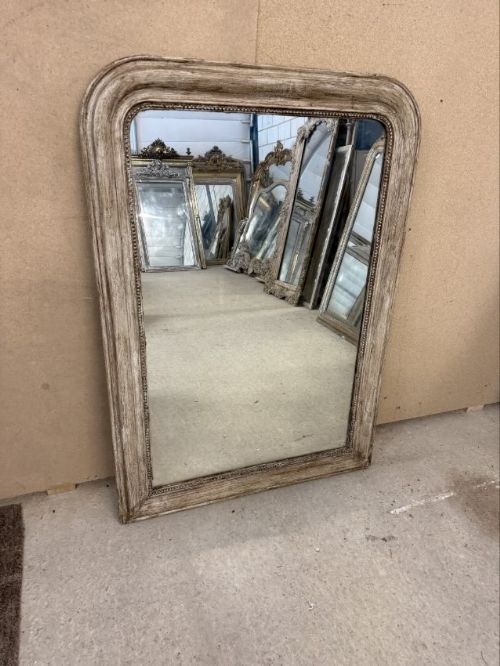
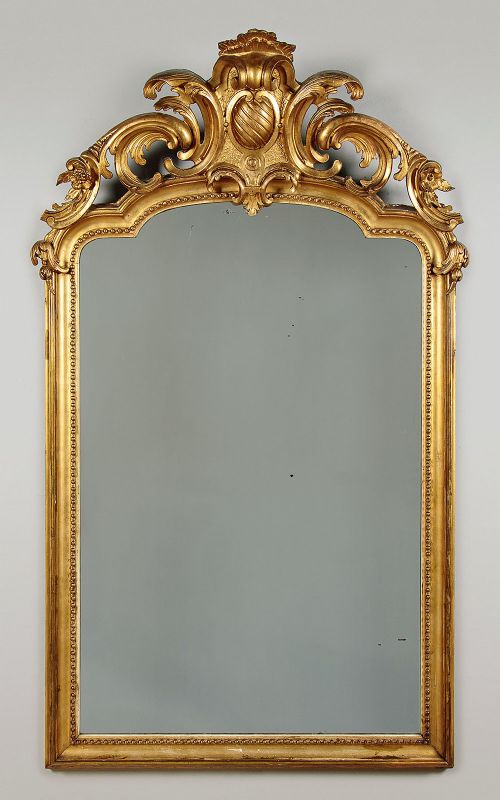
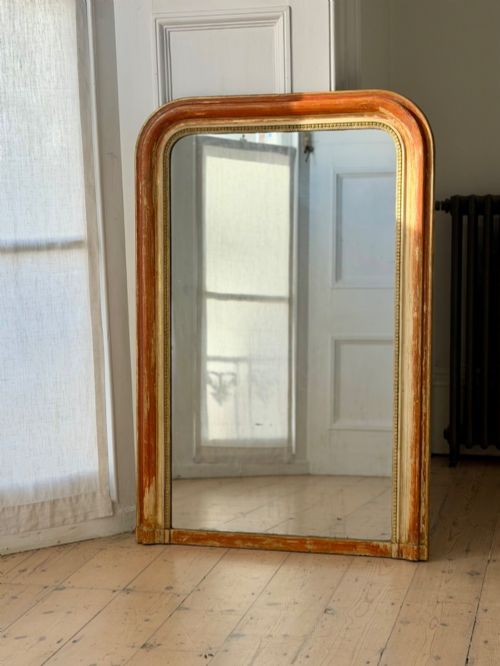
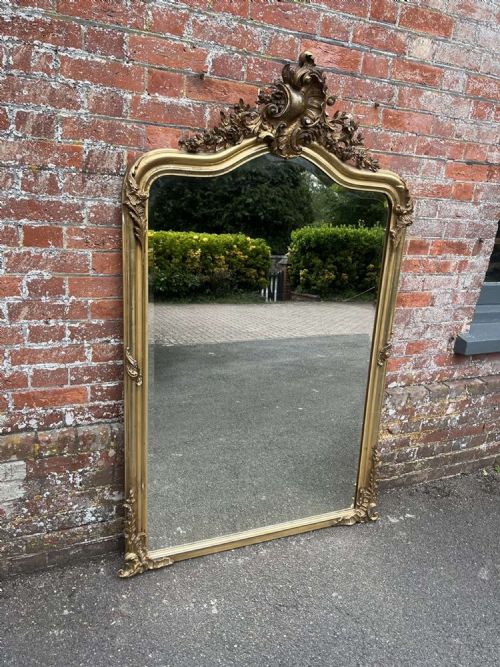
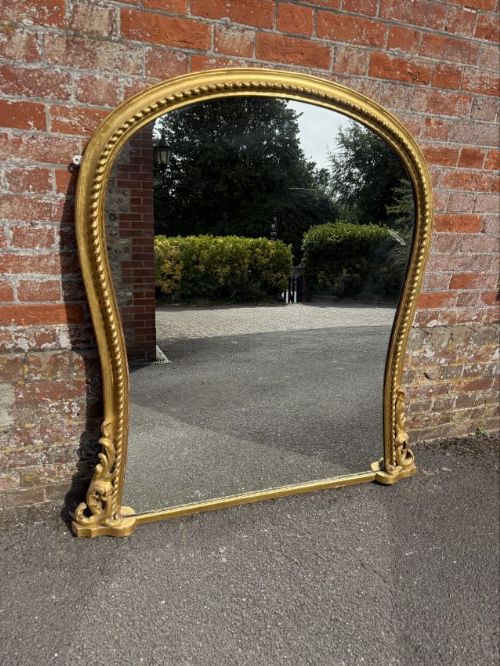
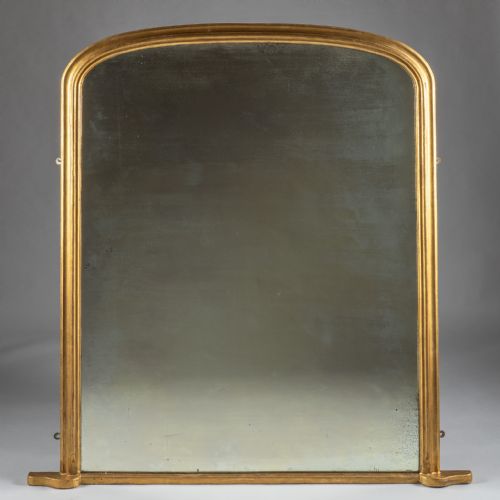
When searching for an antique arched mantle glass, one encounters grand mirrors built predominantly during the nineteenth century, including Victorian and French Louis Philippe examples. These pieces typically take the form of overmantel mirrors, shaped with curved crests designed to anchor the space above a hearth.
The selection ranges from heavily carved English giltwood frames to simpler oak structures and painted French designs. Most examples found here serve as major focal points, originally scaled to mirror the proportions of period chimney breasts.
Materials and construction methods
Carpenters constructed the structural frames of these mirrors using timber such as oak, walnut, and African mahogany, often applying layers of gesso to build up intricate relief decoration. Artisans then gilded these surfaces with gold leaf or silver leaf, while other pieces received painted or parcel-gilt finishes.
The glazing utilised original mirror glass or mercury glass, secured into the wooden rebates at the back. Carved details like rope twist motifs, floral embossed patterns, and elaborate crests were shaped by hand before finishing.
Antique Arched Mantle Glass Retail Price Guide 2026
Typical asking prices for arched mantle glass among the pieces listed under this phrase on Sellingantiques today, from the lower quarter to the upper quarter. They describe what is for sale here now, not the wider market.
Distinctions in quality and execution
The division between standard and superior pieces rests on the crispness of the carved wood and gesso ornamentation. Deeply undercut carving and well-preserved original gilding demonstrate superior craftsmanship compared to softer, shallower relief work.
The integrity of the mirror plate itself dictates the tier of the piece. Retaining original mercury glass or untouched mirror plates provides historical depth, whereas replaced glass alters the character of the reflection.
The Antique Arched Mantle Glass Glossary
- Overmantel mirror
- A large mirror specifically proportioned to hang on the wall directly above a mantelpiece or fireplace. These pieces often feature arched tops to follow the architectural lines of the chimney breast.
- Gesso
- A plaster-like mixture applied to wooden frame substrates to create a smooth surface for gilding or painting. Artisans mould and carve this material to form elaborate decorative motifs.
- Mercury glass
- An early type of mirror plate produced by pouring a mercury and tin amalgam behind glass. It creates a characteristic mottled, dark reflection prized by collectors.
- Louis Philippe
- A mid-nineteenth-century French style characterised by understated elegance, simple arched frames, and restrained ornamentation. These pieces avoid the heavier excess of earlier baroque revivals.
- Parcel-gilt
- A decorative treatment where only specific portions of a wooden or gesso frame are gilded with gold leaf, leaving the painted or polished wood visible elsewhere.
Antique Arched Mantle Glass: Frequently Asked Questions
How do I hang a heavy overmantel mirror?
These large frames require secure fixing directly into solid masonry or substantial wall studs using heavy-duty brackets. Professional installation is essential due to the combined weight of the timber, gesso, and thick glass.
Weight distribution must be calculated carefully across the structure of the frame rather than relying on a single central fixing point.
Where should an arched mirror be placed?
Traditionally positioned above a fireplace mantel, an arched mirror also functions effectively on a principal reception room wall. Placing it opposite a window will maximise natural light and create a sense of expanded space.
Ensure the scale of the wall matches the large dimensions typical of these nineteenth-century pieces.
Are the mirror plates original?
Many surviving examples retain their original mirror glass or mercury glass plates, which often display light foxing and age spots. These natural signs of ageing confirm the historical integrity of the piece.
Listings specify whether the glass and wooden backs are original to the frame.
How do I clean antique mirror glass?
Use a soft, dry microfiber cloth to gently remove dust from the glass surface and the carved frame. Avoid spraying liquids directly onto the mirror, as moisture can seep behind the plate and damage the silvering.
Keep chemical cleaners away from gilded and painted gesso surfaces to preserve the finish.