

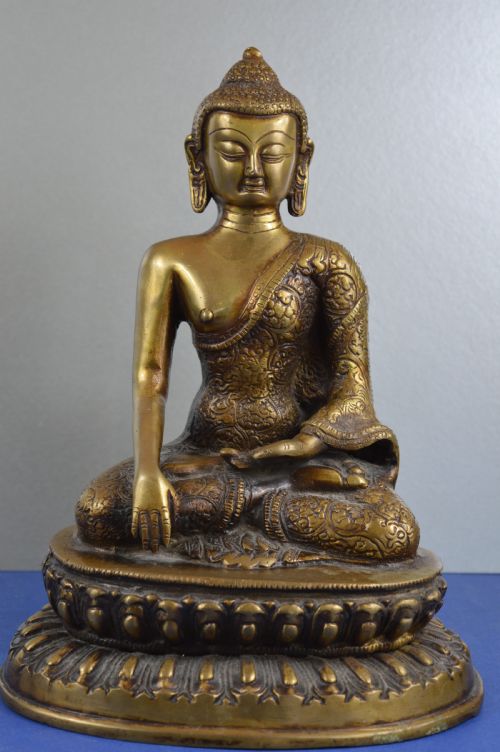
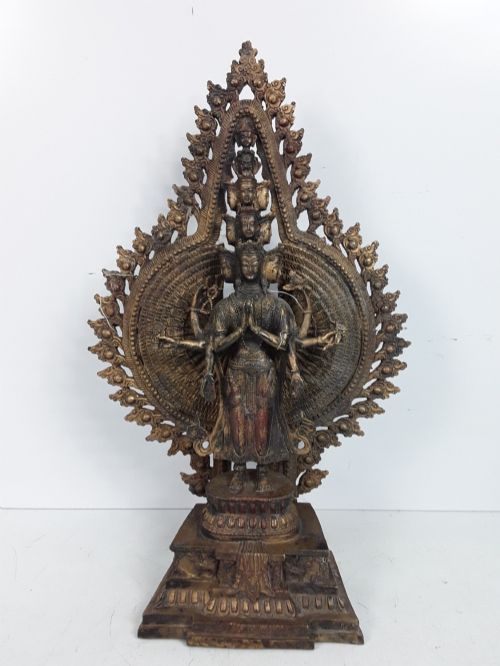
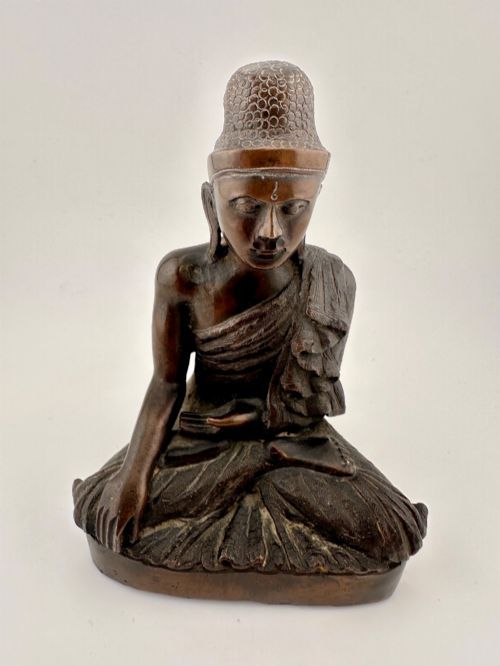
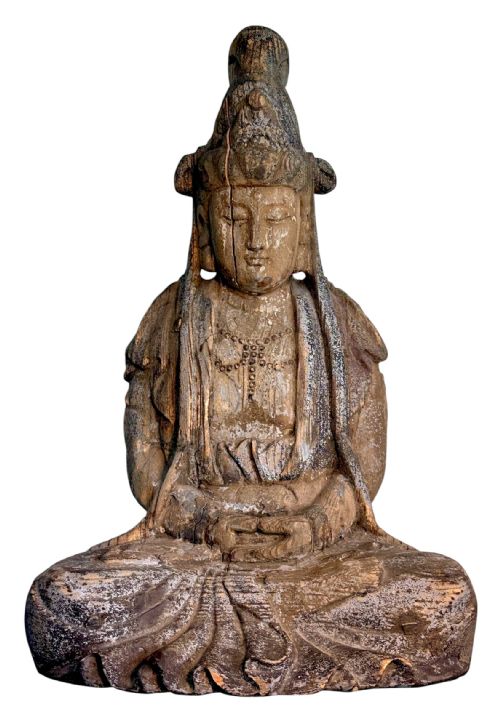






Antique Altar Figure
An antique altar figure brings centuries of devotion into a room, taking the form of cast bronze deities and carved wooden saints.
Antique Altar Figure
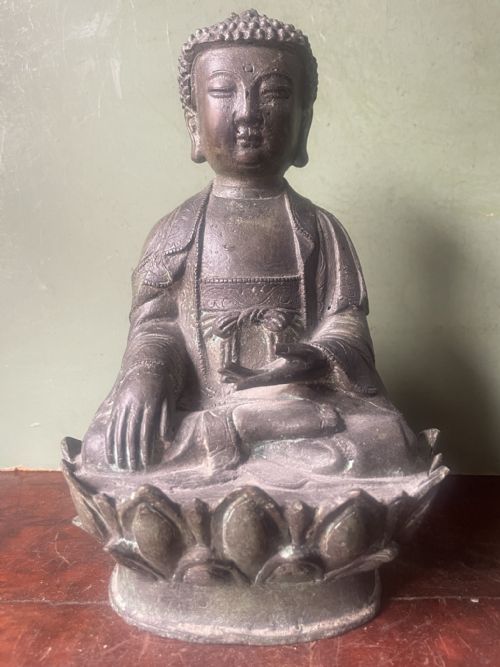
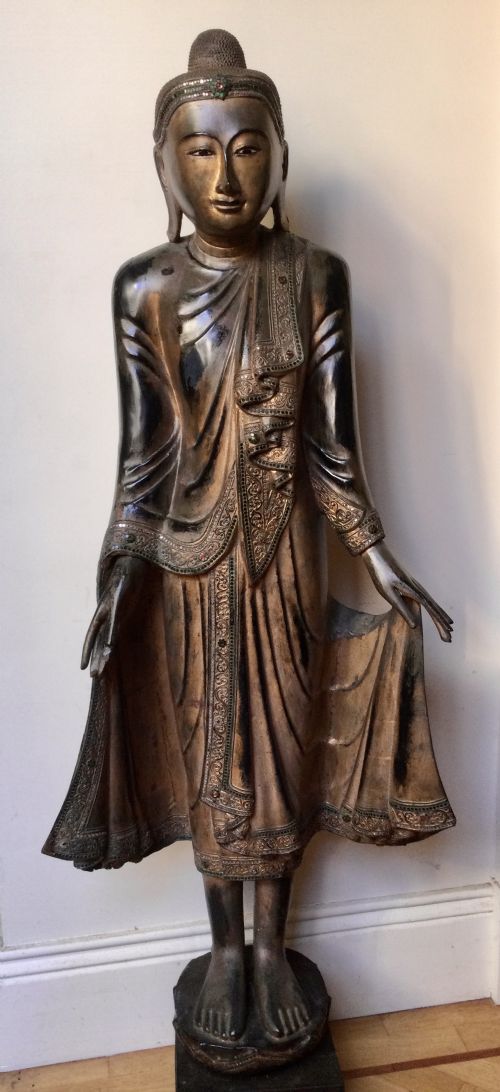
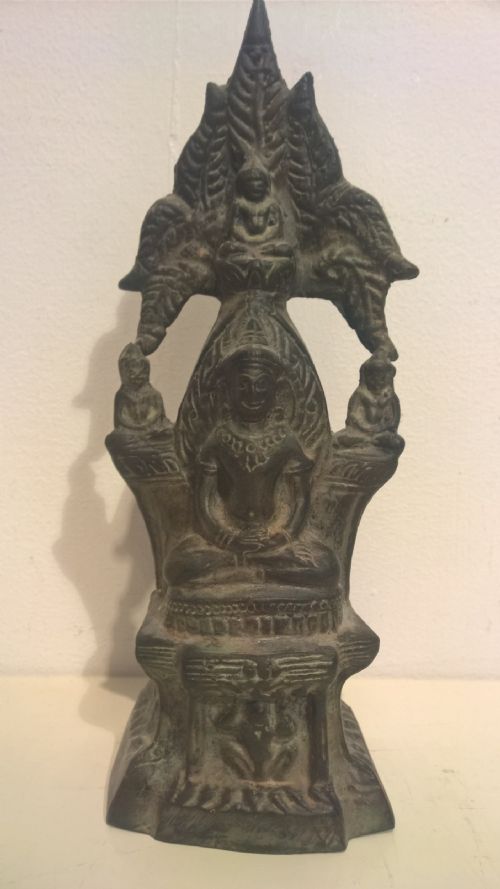
The most common examples include bronze Buddhist deities originating from Tibet, Nepal, and South Asia, alongside European wooden santos figures and Italian baroque angels. These objects range from small devotional bronzes to large carved wooden figures finished with polychrome paint and gold leaf.
Materials and construction
Makers shaped these pieces primarily from carved wood, cast bronze, and copper alloy, often enhancing the surfaces with gold leaf, lacquer, and polychrome paint. Wood carvers worked with timbers such as lime wood, applying gesso and pigments to achieve lifelike skin tones and garments.
Metalworkers utilised lost-wax casting techniques for bronze figures, producing intricate details on deities and religious icons. Additional ornamentation includes glass inlay and parcel-gilt highlights that catch candlelight within shrines and temples.
Antique Altar Figure Retail Price Guide 2026
Typical asking prices for altar figure among the pieces listed under this phrase on Sellingantiques today, from the lower quarter to the upper quarter. They describe what is for sale here now, not the wider market.
Listings feature 19th Century and Edwardian pieces alongside earlier works, constructed from carved wood, bronze, and copper alloy.
Assessing quality
The degree of wear tells a story of genuine ritual use, where handling over generations softens sharp edges without obscuring the maker's intent. Greater depth in drapery folds and more refined tool marks distinguish masterworks from simpler folk art interpretations.
The Antique Altar Figure Glossary
- Polychrome Paint
- Pigments applied in multiple colours to decorate wood or stone sculptures. This finish often degrades naturally over centuries of exposure to incense and candle smoke.
- Santos Figure
- A devotional statue representing a Christian saint or holy person, traditionally utilised in home or church altars particularly in Spanish and Italian traditions.
- Lost-Wax Casting
- A metalworking process where a molten metal is poured into a mould that has been created by means of a wax model. This technique allows for complex shapes and fine surface textures on bronze figures.
- Gold Leaf
- Extremely thin sheets of beaten gold applied to wooden or stone surfaces to impart a radiant finish. It remains a hallmark of high-status religious icons.
- Green Tara
- A female bodhisattva in Tibetan Buddhism associated with protection and virtuous accomplishment. Statues depicting this deity often feature specific hand gestures and lotus pedestals.
Antique Altar Figure: Frequently Asked Questions
How were these figures used originally?
These sculptures served as focal points for prayer, meditation, and offerings within temples, home shrines, and churches. Worshippers lit candles and burned incense near them daily.
Over time, this devotional context shaped the patina and wear patterns visible on the surfaces today.
Where should I place an altar figure at home?
Many collectors position these pieces on low tables, mantels, or within dedicated display niches where lighting highlights their sculptural forms.
Keeping them away from direct heat sources helps preserve vulnerable materials like wood, gesso, and gold leaf.
How do I tell bronze figures apart by region?
Himalayan and South Asian bronzes often display distinct iconographic details, such as lotus bases and specific hand mudras associated with Buddhist and Hindu traditions. European bronze and brass pieces generally reflect Christian iconography or secular decorative motifs.
Examining the casting style and alloy composition provides further clues to geographic origin.
What maintenance do antique wooden figures require?
Wooden sculptures require stable indoor humidity levels to prevent the wood from cracking and to protect fragile polychrome or gilt surfaces. Dusting should be done gently with a soft, dry brush.
Avoid using liquid cleaners or polishes that might strip historic finishes.