

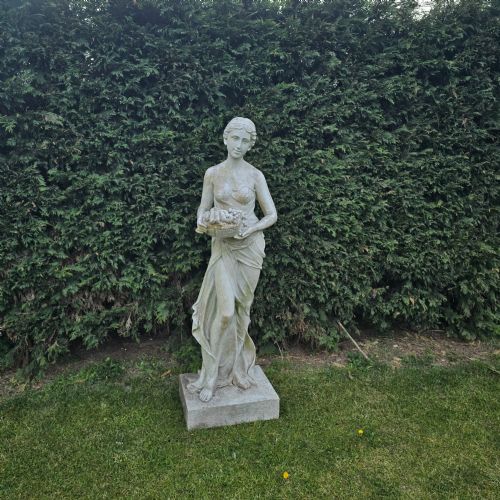


Antique Allegorical Sculpture
Antique allegorical sculpture represents abstract ideas in human form, offering a physical embodiment of seasons, elements, and virtues through enduring materials.
Antique Allegorical Sculpture
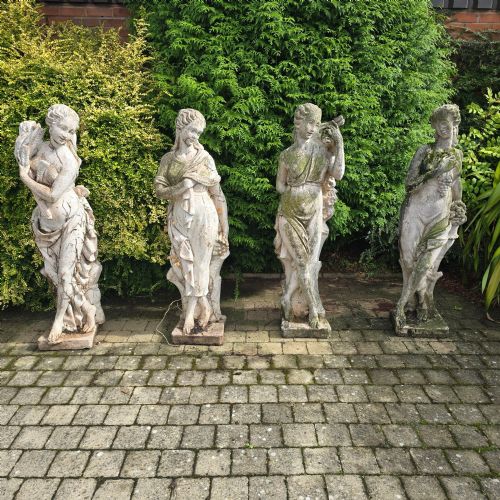
When you search for antique allegorical sculpture, you encounter figures personifying concepts such as the four seasons, elements, peace, or labour. These representations draw heavily on classical mythology and personification, translating philosophical ideas into tangible forms.
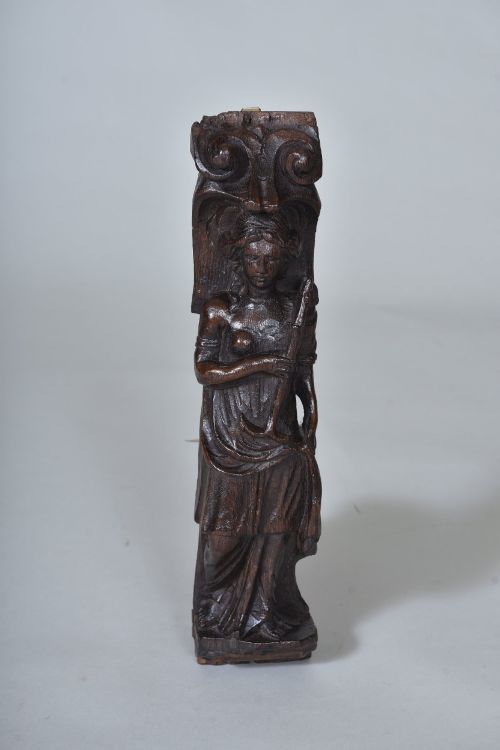
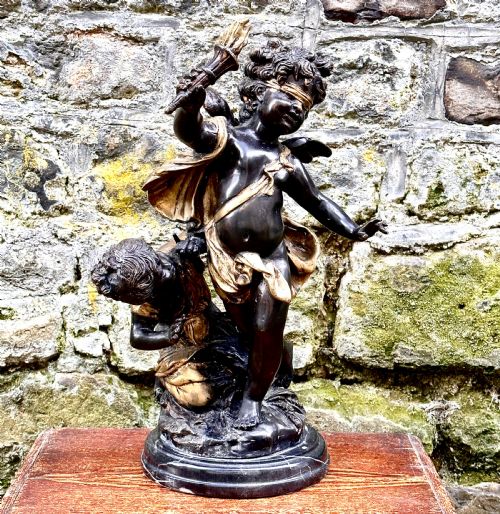
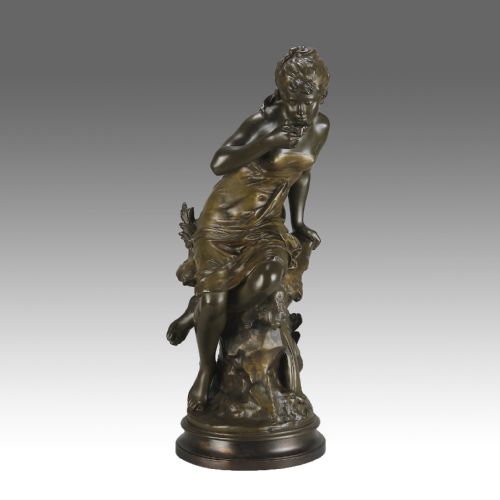
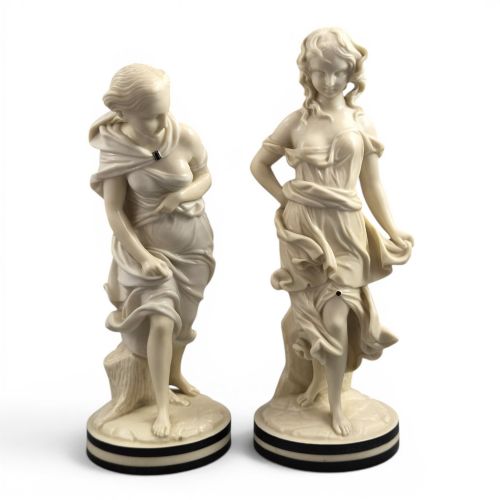
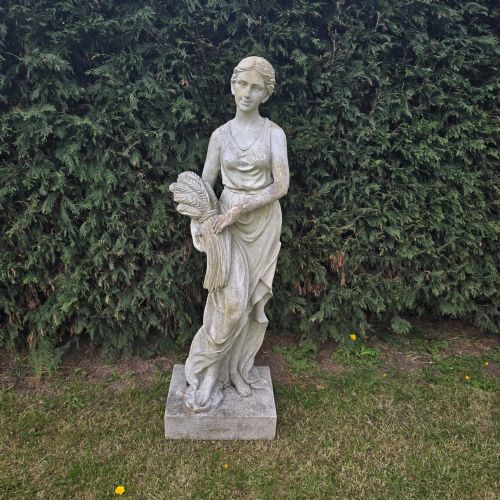
The versions you are most likely to meet on this page include French bronze castings from the nineteenth century, English porcelain figures, and carved wooden panels. They range from small mantel clock ornaments to life-sized garden statues and wall reliefs.
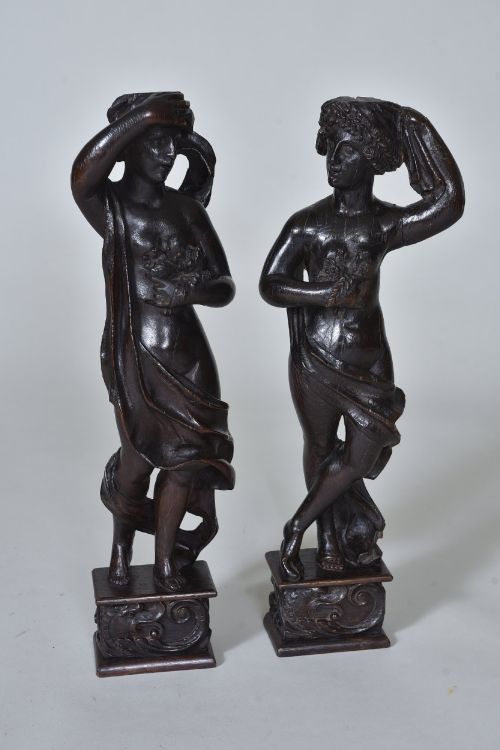
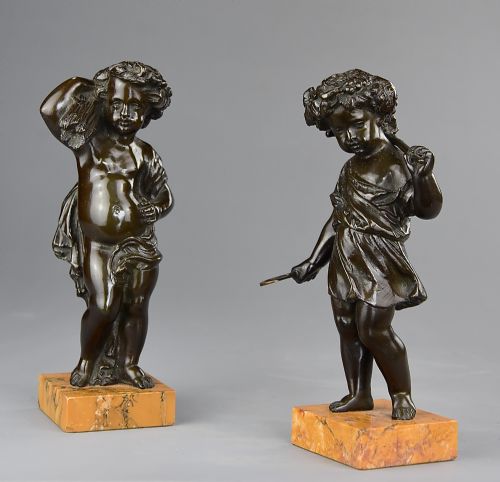
Many of these pieces reference specific themes like harvest putti, classical deities, or seasonal representations. They appear across several eras, spanning seventeenth-century wood carvings through to twentieth-century stone and marble works.
Materials and construction methods
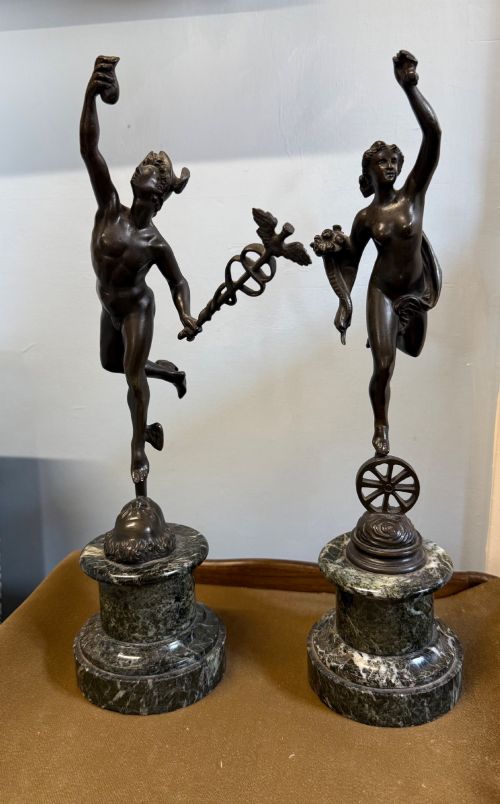
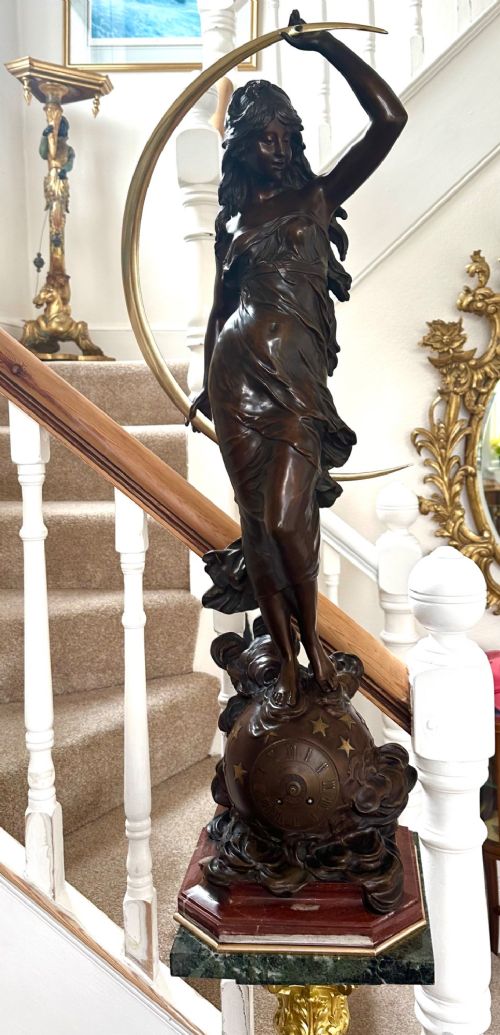
Bronze casting forms a substantial part of these listings, often utilising the lost-wax method to capture intricate details in human drapery and expression. These bronzes frequently rest upon fitted marble bases or incorporate gilt or patinated finishes.
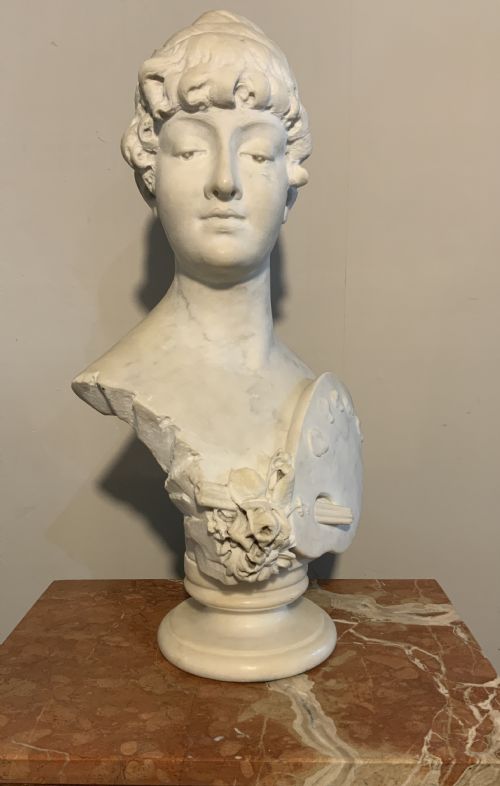
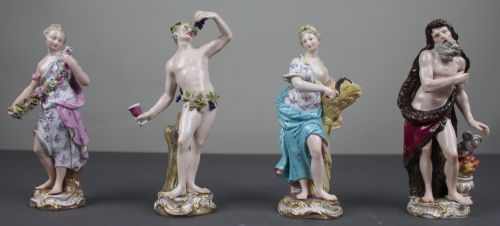
Porcelain works from factories such as Bow, Derby, Meissen, and Volkstedt rely on intricate mould-making and manual application of enamel colours and gold leaf. Sculptors also employed Carrara and alabaster marble, solid oak, terracotta, and spelter for freestanding figures and architectural reliefs.
Father Time occasionally visits this collection to clip Cupid's wings in mid-flight.
Distinctions in craftsmanship and design
Quality separates through the crispness of the chasing on bronze castings, the subtlety of hand-painted enamel on porcelain figures, and the depth of undercut detail in wood or marble carvings. Superior pieces retain their original patination and show anatomical precision without stiffness.
The reputation of the foundry, such as Barbedienne, or the renown of the modeller influences the desirability of a bronze. Similarly, early porcelain editions display sharper mould definition and more delicate modelling than later recasts or derivative factory pieces.
Auguste Moreau·Mathurin Moreau·Emile Louis Picault·Barbedienne·Victor Paillard
The Antique Allegorical Sculpture Glossary
- Spelter
- An alloy of zinc and copper used as an economical alternative to bronze. It is often painted or bronze-plated to simulate heavier metal.
- Putto
- A figure of a small chubby male child, frequently winged, common in allegorical art representing seasons or playful mythological scenes.
- Patination
- The surface coloration and sheen acquired by bronze through age or chemical treatment. Original patination preserves the intended aesthetic of the caster.
- Ormolu
- Gilt bronze produced by applying a finely ground high-carat gold mercury amalgam to a bronze object. This technique was widely utilised in French decorative arts.
Antique Allegorical Sculpture: Frequently Asked Questions
What do allegorical sculptures typically depict?
These sculptures represent abstract concepts, virtues, seasons, or natural elements through human figures and classical iconography. Common subjects include personifications of water, earth, harvest, art, and peace.
Artists used familiar mythological symbols, such as Father Time or seasonal putti, to make these intangible ideas visually recognizable and narratively rich.
How can I distinguish bronze from spelter?
Bronze is heavier, colder to the touch, and rings with a clear tone when tapped, whereas spelter is softer and more brittle. Spelter pieces often show a greyish or flaky metal underneath worn painted surfaces.
Foundry marks and the crispness of fine details like hair and drapery also help differentiate the superior density of cast bronze from softer alloy alternatives.
Where were porcelain allegorical figures made?
Major European porcelain manufactories such as Meissen in Germany, Bow and Derby in England, and Volkstedt produced these figurative groups. Each factory utilised distinct paste compositions and glaze formulas.
These pieces often served as table centerpieces or mantel decorations for wealthy households, capturing contemporary neoclassical tastes in fragile ceramic form.