


Antique Allegorical Picture
An antique allegorical picture brings symbolic narrative to a wall, offering classical figures and seasons captured across centuries in oil, glass, and print.
Antique Allegorical Picture
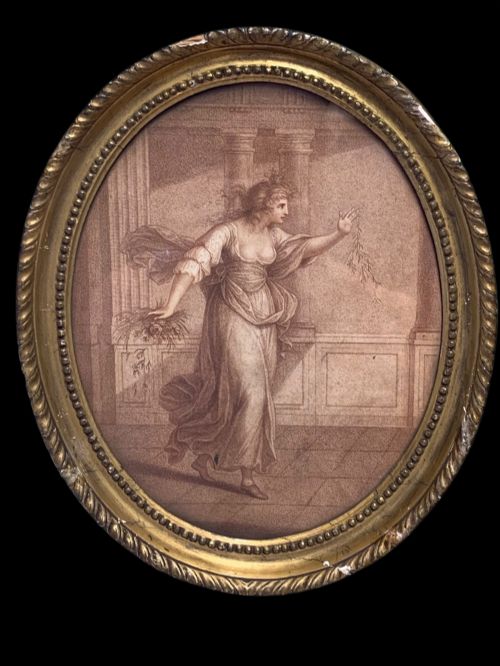
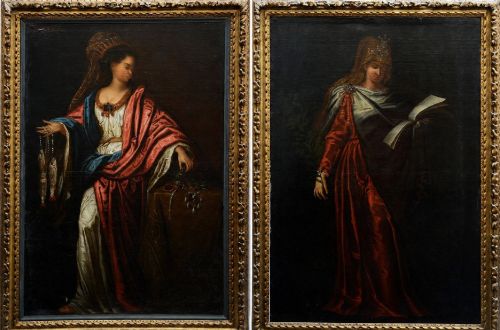
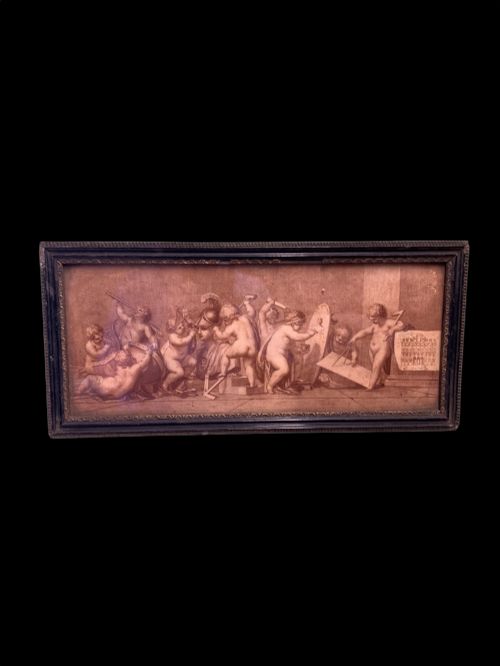
An antique allegorical picture presents symbolic subjects ranging from cupids and the Siblys to personifications of seasons and artistic creation. These works emerge from several distinct periods, with eighteenth-century pieces and Georgian examples appearing alongside Regency, nineteenth-century, and early twentieth-century interpretations.
The assortment spans diverse forms including oil paintings on canvas and board, stipple engravings, collotype prints, and reverse glass prints. Many of these artworks are housed in period frames, particularly giltwood surrounds that complement their classical and Neoclassical themes.
Materials and construction
Makers utilised traditional artistic media such as oil paint applied to canvas and board, alongside delicate paper prints and reverse glass techniques. These surface materials are paired with timber supports and ornate gilt or giltwood frames that protect and elevate the imagery.
Techniques range from fine brushwork in oil paintings to stipple engraving and collotype printing methods. The physical assembly frequently combines layered glass plates with backing paper or heavy board to preserve the detailed compositions.
Listings feature works spanning the eighteenth century to the 1920s, utilising oil paint, glass, paper, and giltwood frames.
Distinctions in quality
Quality rests upon the precision of the draughtsmanship and the expressive depth of the figures, whether depicting mythological seers or woodland bathers. Superior examples demonstrate confident handling of pigment or ink, capturing intricate detail in facial expressions and drapery.
The integrity of the frame often indicates the overall standard of the piece, with original giltwood surrounds enhancing historical value. Condition of delicate surfaces like reverse glass or paper prints also dictates the standing of an individual work.
The Antique Allegorical Picture Glossary
- Allegory
- A symbolic representation where physical figures convey abstract ideas or moral qualities. Such works frequently draw upon classical mythology or seasonal motifs.
- Reverse glass print
- An image applied to the rear surface of a glass sheet, viewed from the front to create a luminous finish. This technique was particularly popular during the Georgian and Regency periods.
- Collotype
- A planographic printing process using gelatin, capable of producing highly detailed photographic reproductions. It found favour in the early twentieth century for fine art prints.
- Stipple engraving
- A printmaking technique using dots to build up tonal gradations and forms. Eighteenth-century artisans employed this method for subtle texture.
- Giltwood
- Timber that has been coated with gold leaf or a gold-coloured finish. This material defines many period frames associated with fine artworks.
Antique Allegorical Picture: Frequently Asked Questions
What is an allegorical picture?
An allegorical picture uses symbolic figures, such as mythological characters or personified seasons, to communicate deeper meanings or abstract concepts. These artworks convey narratives beyond their literal subjects.
They serve as decorative wall art that brings historical themes and classical iconography into domestic interiors.
How do I care for reverse glass prints?
Reverse glass prints require careful placement away from direct sunlight and moisture to prevent the delicate pigments and backing from deteriorating. Gentle dusting with a dry cloth is sufficient for maintenance.
Because the image sits behind the glass, the painted surface itself is protected from direct atmospheric contact.
What periods do these pictures span?
The available selection covers multiple eras, beginning in the eighteenth century and extending through the Georgian, Regency, and Victorian periods into the early twentieth century. Each era brings distinct aesthetic approaches to symbolic subjects.
Stylistic influences range from French Baroque and classical Neoclassicism to Art Nouveau and Art Deco.
Are these artworks framed?
Many of these pieces retain their period frames, including ornate giltwood surrounds that complement the classical subject matter. Original frames contribute significantly to the historical character of the artwork.
Framing materials vary from simple timber mouldings to elaborate gilded designs suited to formal reception rooms.