



Antique Agricultural Landscape
An antique agricultural landscape captures the heavy working life of the nineteenth and early twentieth-century countryside through fields, livestock, and labourers.
Antique Agricultural Landscape
An antique agricultural landscape records rural life, farming scenes, and working animals across the Victorian and Edwardian eras. Buyers encounter framed oils on canvas, watercolours on paper, and original etchings depicting haymaking, ploughing teams, and farmyard animals.
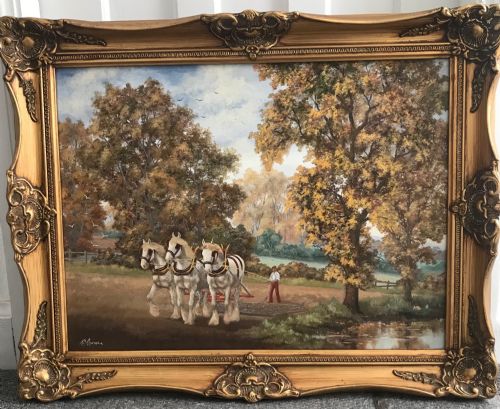
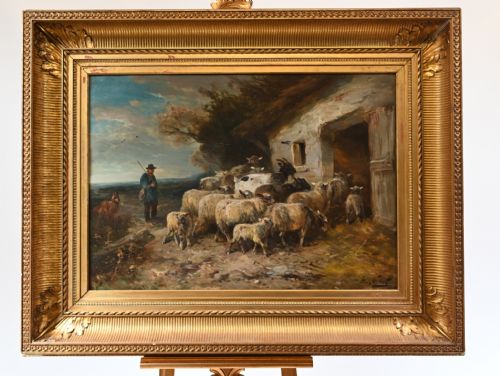
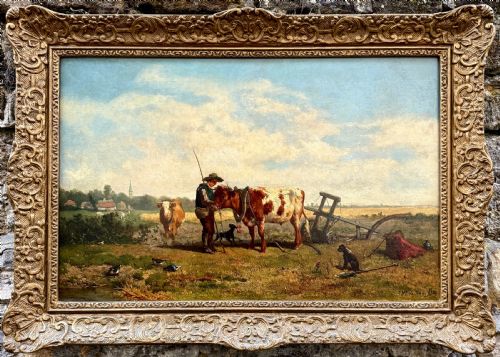
The pieces on this page span from the late nineteenth century into the 1930s, reflecting British realism, pastoral scenes, and continental rural painting. Common subjects include heavy shire horses, cattle, farmhands at harvest, and rustic barns.
How they were made
Artists worked primarily in oil paint on canvas or applied watercolour to paper, occasionally utilising gesso grounds on wooden panels or frames. Brushwork ranges from tight Victorian academic detail to the freer application seen in British Impressionism.
Etchings on paper provide a linear, tonal record of rural subjects through inked metal plates pressed under pressure. Original watercolours rely on pigment washes over pencil lines, whilst oils build up texture and depth through layered pigments.
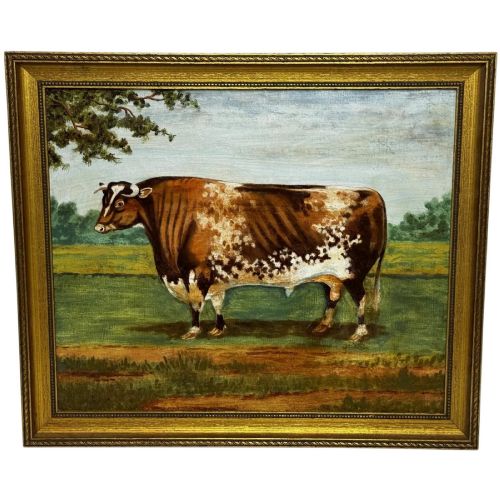
Shire horses and prize bulls dominate these fields, occasionally upstaging the farmers who tended them.
What varies in quality
Quality rests in the draughtsmanship of the figures and animals, particularly the accurate anatomy of working horses and livestock. Strong compositions capture light and atmospheric weather conditions rather than relying on stiff, formulaic arrangements of farm machinery.
The handling of the medium distinguishes accomplished painters from lesser artisans, seen in the confident sweep of a hay cart wheel or the subtle rendering of an open sky. Signatures from established regional painters and academic exhibitors elevate the standing of a canvas.
Henry Schouten·Johannes de Haas·A M Gauci·Herbert Dicksee·Oswald Garside·Raimond Louis Lecourt·James William Booth·Henry Bailey·Herbert Royle·Percival Glenfern·J.C. Grey·George Soper·Arthur Winter Shaw·Arthur Charles Dodd·Vernon Stokes·Rowland Henry Hill·Joseph Kirkpatrick·W.A. Clark·Joseph Paulman·J L Van Leemputten·Frederick William Jackson·John Percy Cooke·W E Millner·Arthur Claude Strachan·Ernest Higgins Rigg
The Antique Agricultural Landscape Glossary
- Canvas
- A heavy woven fabric stretched across a wooden frame to serve as a support for oil painting. It provides a flexible, textured surface that absorbs layered paint.
- Etch
- A printmaking method where acid bites lines into a metal plate to hold ink for transfer onto paper. This technique produces fine, detailed lines ideal for atmospheric rural scenes.
- Pastoral
- An artistic style celebrating rural life, shepherds, and agricultural labour in an idealized natural setting. These works focus on the quiet rhythm of the countryside.
- Genre painting
- The depiction of subjects from everyday life, such as farmhands and domestic animals at work. These scenes offer a record of social history and agricultural customs.
Antique Agricultural Landscape: Frequently Asked Questions
What periods do these paintings cover?
The listings span from the late nineteenth century through the Victorian and Edwardian eras up to the 1930s. Artists captured the changing face of rural labour and farming practices during these decades.
Most pieces date from the height of traditional agriculture before mechanisation transformed the countryside.
How do I care for an oil on canvas?
Keep paintings away from direct sunlight, excessive moisture, and rapid temperature changes that can warp canvas or crack oil paint. Dust the surface gently with a soft, dry brush without applying pressure.
Avoid using water or chemical cleaners on the paint surface or antique gesso frames.
What is the difference between an oil and a watercolour?
Oils use pigment suspended in drying oils on canvas or wood, allowing for thick textures and deep, reworkable layers of colour. Watercolours use water-soluble pigments on paper, creating translucent washes of light.
Watercolours require protective glass framing to prevent moisture damage, whereas canvases breathe.
Are these works signed by the artists?
Many of the paintings and watercolours feature artist signatures or monograms, often accompanied by dates or location notes. Signed works offer a clear attribution to regional painters of the period.
Unsigned pieces are usually attributed to period schools or provincial artists working within the British tradition.