




Antique Afghan Tribal Weaving
Antique afghan tribal weaving comprises hand-knotted carpets, flatweaves, and utilitarian bags made by nomadic and village makers across the region.
Antique Afghan Tribal Weaving
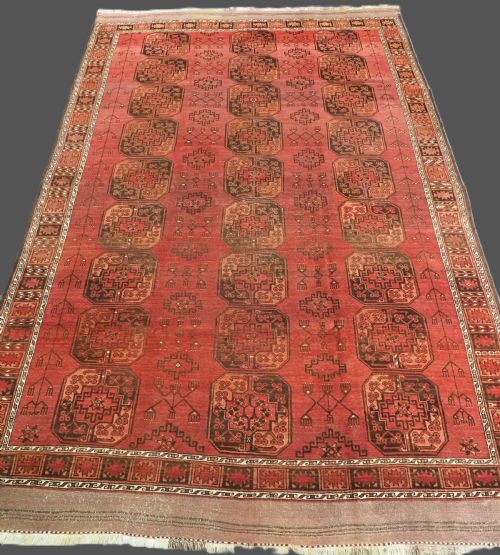
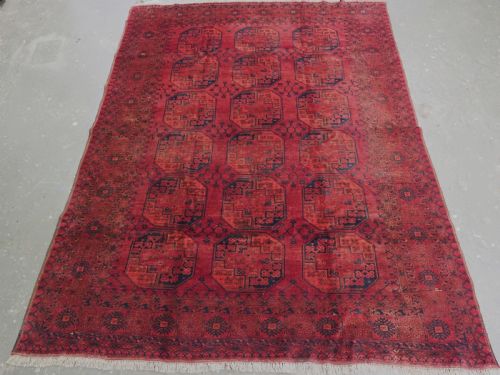
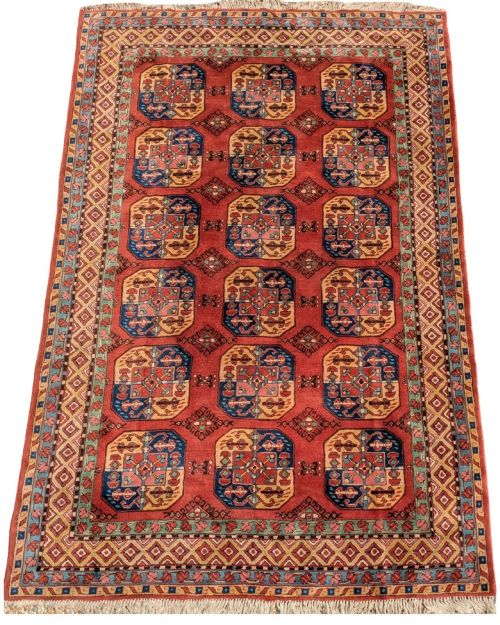
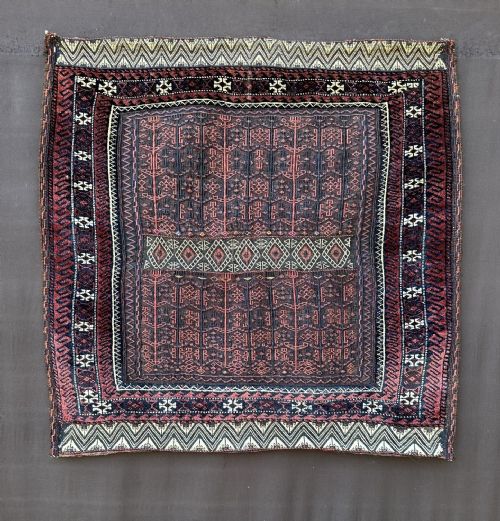
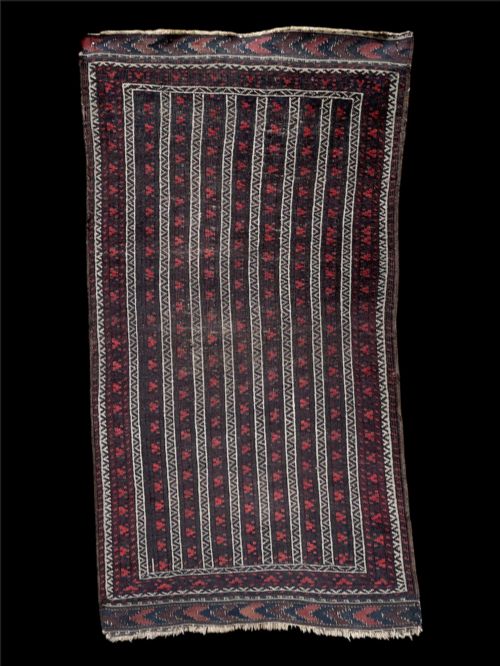
Antique afghan tribal weaving encompasses floor coverings, tent trappings, and household storage pieces produced across Afghanistan from the late nineteenth century into the early twentieth century. Buyers seeking these items encounter regional nomadic works, including Baluch, Timuri, and Turkmen pieces such as Ersari and Kizil Ayak carpets.
These items reflect the specific tribal heritage and visual traditions of makers working in northern, western, and south-west Afghanistan. Each piece serves as a physical record of domestic life and nomadic craft traditions spanning the 1870s to the 1930s.
How They Were Made
Weavers relied primarily on hand-spun wool for pile and foundation structures, occasionally incorporating goat hair, camel hair, or horsehair into foundations for added durability. Natural dyes provided the deep reds, soft golds, and rich dark tones characteristic of these regional textiles.
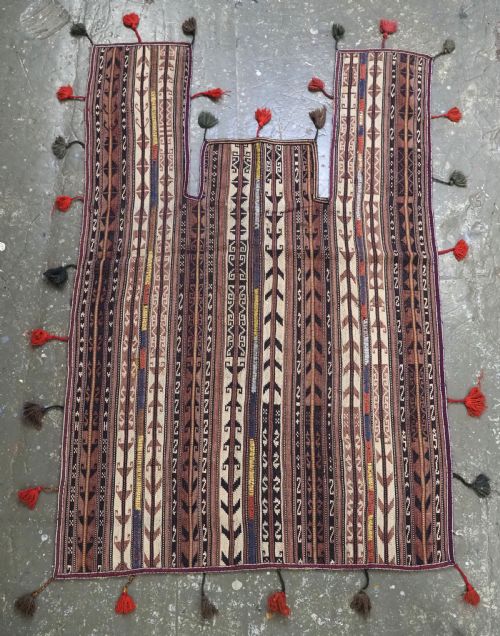
Techniques varied between piled knotting for main carpets and prayer rugs, and flatwoven methods for kilims and eating cloths. Artisans constructed certain storage bags and larger kilims in separate parts before joining them into finished household objects.
Listings feature wool, cotton, goat hair, camel hair, and natural dyes across pieces dated from the 1870s to the 1930s.
What Varies in Quality
Quality in antique afghan tribal weaving relates directly to the handle of the wool, the depth and saturation of the natural dyestuffs, and the precision of the tribal design execution. Superior examples display tightly packed foundations and resilient pile that retain their structural integrity.
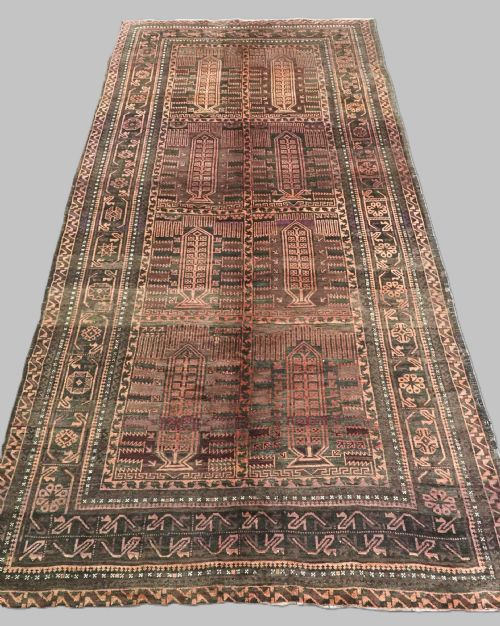
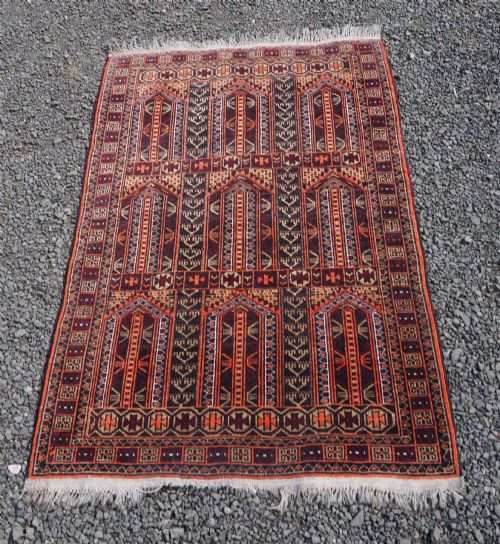
The complexity and clarity of traditional motifs, such as classic guls or pencil box patterns, distinguish standard regional output from more accomplished workshop or tribal pieces. Preservation of original selvedges and complete end finishes also elevates the standing of individual textiles.
The Antique Afghan Tribal Weaving Glossary
- Sofreh
- A flatwoven textile used for spreading meals or handling bread dough. These utility cloths often feature bands of weftwork decoration.
- Kapunuk
- A decorative tent hanging placed around the entrance frame of a nomadic dwelling. These items originate primarily from Turkmen weaving traditions.
- Seh Mihrab
- A prayer rug design featuring three distinct arch motifs. This layout appears frequently in Baluch and regional Afghan devotional textiles.
- Balisht
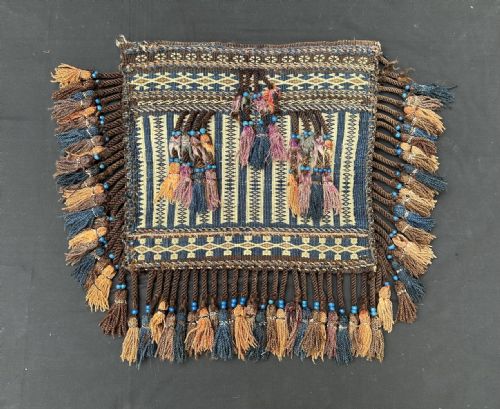
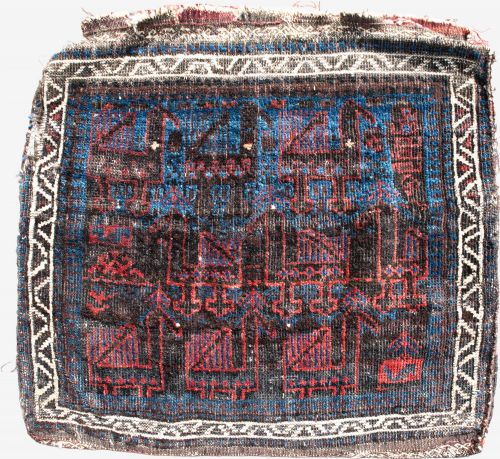
- A traditional storage or grain bag produced by tribal weavers. They typically combine a piled face with a plain weave back.
- Gul
- A medallion motif repeated across carpet fields. The term translates as flower or rose and identifies specific tribal groups.
Antique Afghan Tribal Weaving: Frequently Asked Questions
How were tribal bags used?
Nomadic families utilised these woven pouches for storing grain, bedding, and household possessions inside tents.
Their sturdy construction protected contents from damp ground and dust during seasonal migrations.
What is a pencil box design?
This pattern consists of stacked geometric compartments resembling small rectangular boxes.
It occurs frequently in Timuri and Baluch carpets from western Afghanistan.
How do I care for wool rugs?
Vacuum these textiles gently without using rotating brush attachments to protect the pile.
Keep them out of direct sunlight to prevent natural dye fading over time.
Why are some kilims woven in parts?
Weavers produced narrow vertical strips on portable looms for easier transport during travel.
They subsequently stitched these sections together to form larger floor coverings or tent dividers.