

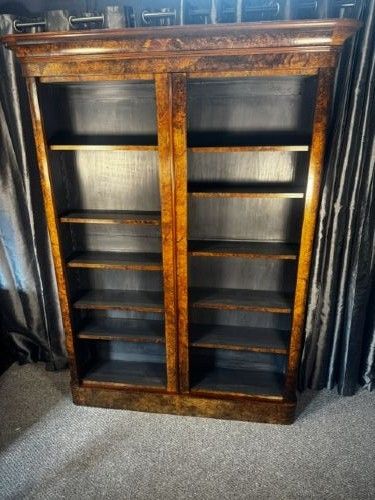
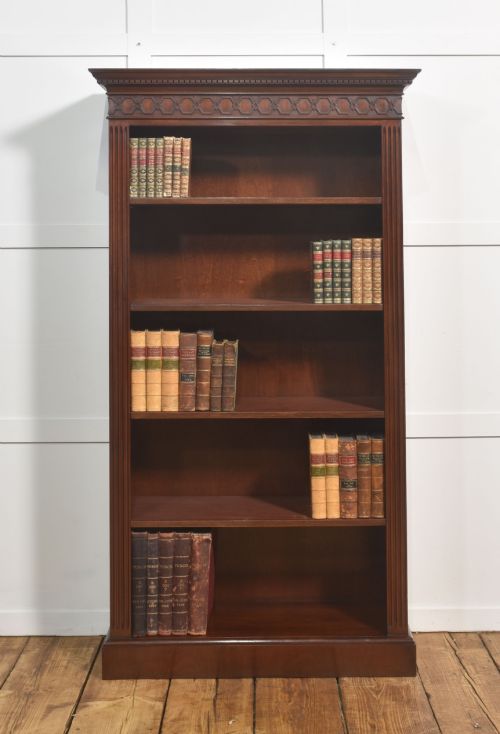
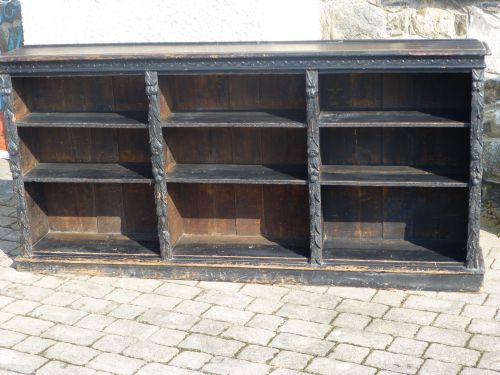
Antique Adjustable Shelf Bookcase
An antique adjustable shelf bookcase offers versatile library storage, with flexible timber tiers tailored for changing collections.
Antique Adjustable Shelf Bookcase
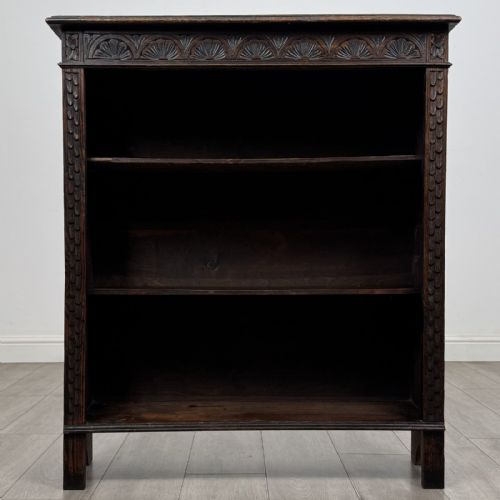
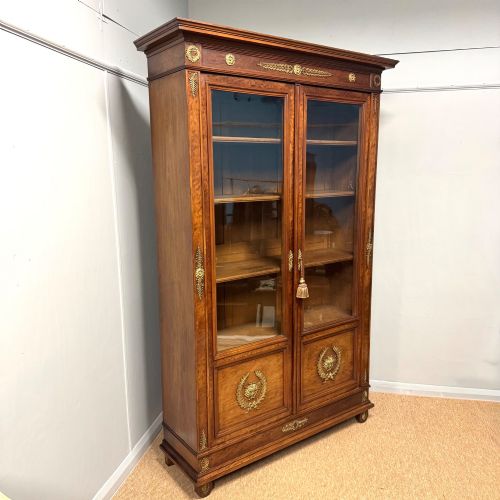
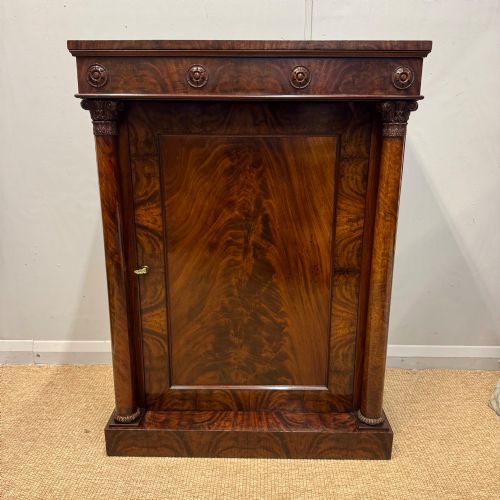
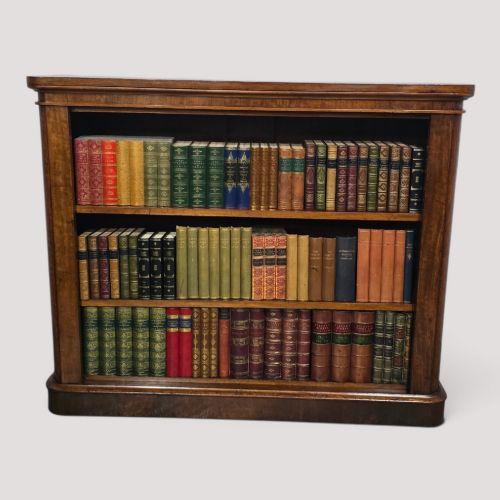
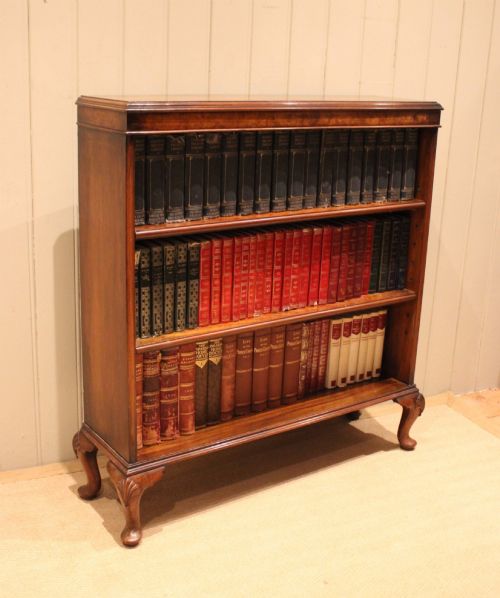
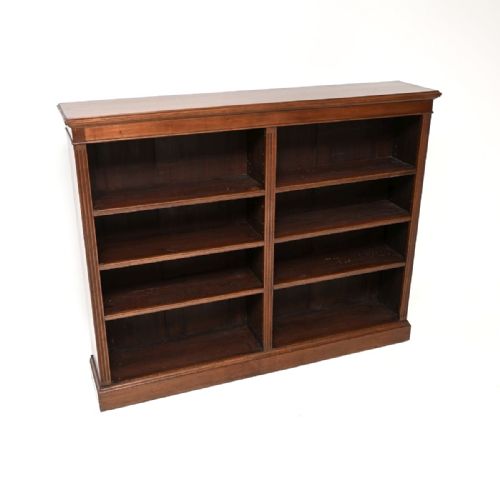
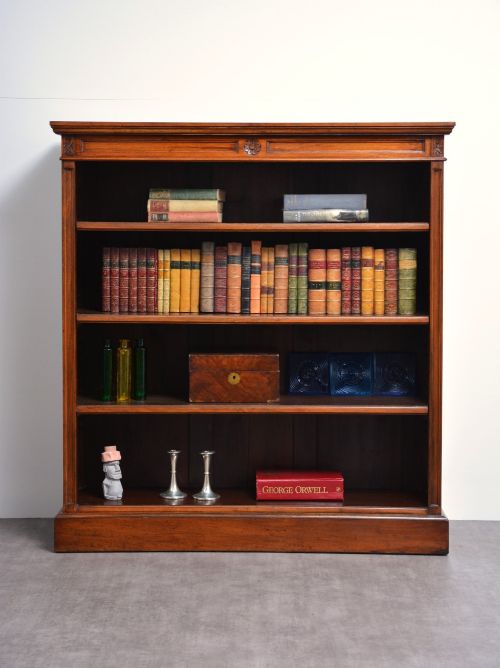
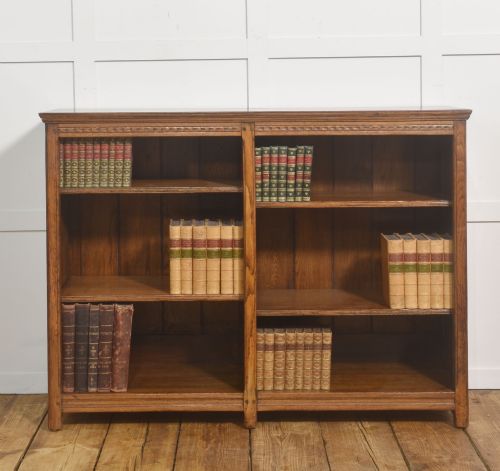
An antique adjustable shelf bookcase provides adaptable storage for growing libraries, utilising movable tiers supported by traditional ratchets, brass pegs or wooden notches. The pieces seen here span the Victorian, Edwardian and Regency periods, stretching across the nineteenth and early twentieth centuries.
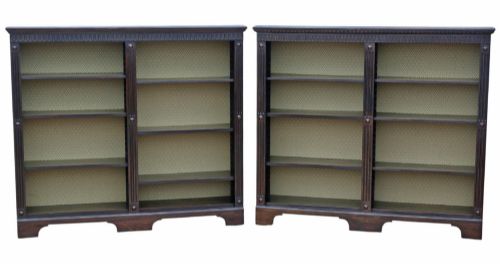
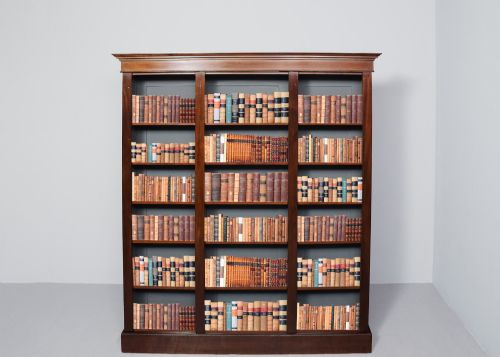
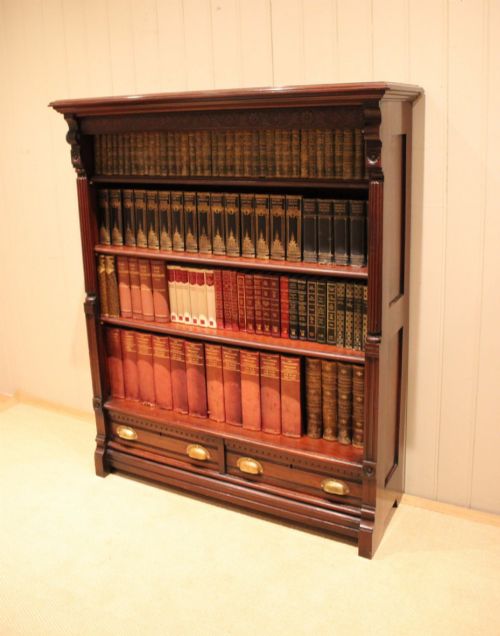
Open front designs dominate the selection, alongside glazed cabinets and breakfront forms in two or three sections. These items function as functional furniture for studies and libraries, accommodating volumes of varying heights with ease.
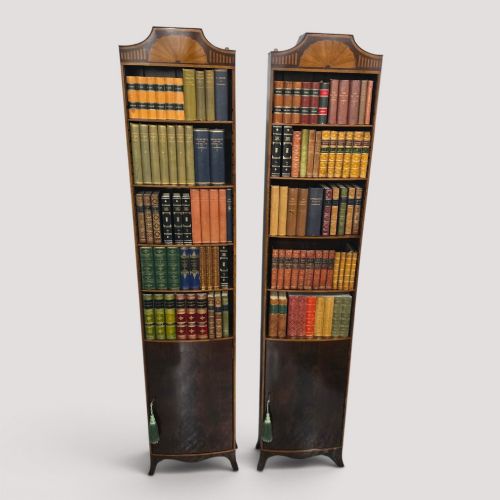
Mahogany and oak appear frequently, joined by walnut, burr walnut, pine and ebonised timber. Styles range from plain utilitarian pine to elaborate Sheraton Revival inlay, French Empire elegance and carved Jacobean Revival pieces.
Materials and Construction
Cabinet makers utilised dense hardwoods such as mahogany, oak and walnut for durable carcases and sturdy uprights. Softer timbers like pine served for simpler pieces, while decorative veneers including burr walnut and inlaid mahogany added visual texture.
Internal mechanisms for movable shelves relied on brass stud supports, wooden toothed ratchets or vertical slots. Glass panels featured in glazed variants, housed in timber doors alongside brass hardware.
Some nineteenth-century readers apparently owned books of such odd heights they necessitated the invention of the green man low open dwarf bookcase.
Distinctions in Standard
The grade of timber selection dictates the initial visual impact, moving from utilitarian softwood to finely figured burr walnut and solid mahogany. Cabinet work demonstrates differing levels of joinery ambition, from straightforward open frames to breakfront multi-section libraries with intricate carving.
Hardware execution and the sophistication of the shelf support mechanism separate standard utilitarian items from workshop-attributed productions. Original glass, balanced proportions and harmonious secondary timbers complete the distinction between ordinary and superior examples.
Bowman Brothers·Waring and Gillows
The Antique Adjustable Shelf Bookcase Glossary
- Breakfront
- A cabinet design where the central section projects forward from the flanking wings. This format creates depth and visual rhythm in larger library pieces.
- Pier cabinet
- A low or narrow cabinet designed to fit the wall space between windows. These often feature glazed doors or open shelving.
- Ebonised
- Timber treated with a dark stain or finish to imitate ebony. This technique gained popularity during the nineteenth century for dramatic contrast.
- Sheraton Revival
- A late nineteenth-century style drawing inspiration from late eighteenth-century neoclassical designs. It frequently incorporates delicate inlay and satinwood banding.
- Gothic Arts and Crafts
- A design movement emphasising handcrafted construction and medieval motifs. Pieces in this style display robust joinery and structural honesty.
Antique Adjustable Shelf Bookcase: Frequently Asked Questions
How do adjustable shelves work?
Internal shelf supports typically rely on brass pins resting in vertical rows of holes, wooden ratchets fixed to the sides, or slotted uprights. These systems allow users to reposition tiers at varying heights.
Older mechanisms require simple manual adjustment of the shelf boards, letting collectors fit folios and smaller octavos into the same cabinet without wasting vertical space.
Where should I place an open bookcase?
Open front bookcases suit studies, living rooms and home libraries where dry ambient conditions prevail. Positioning them away from direct sunlight protects both the bindings of your books and the polished timber surface.
Ensure adequate room around multi-section breakfront units, as these larger pieces command considerable wall space and anchor the proportions of a room.
How do I date a Victorian bookcase?
Dating relies on timber choice, construction methods and stylistic revival cues. Earlier Victorian pieces often employ solid mahogany or burr walnut with heavy proportions, while later examples incorporate inlaid Sheraton Revival details or ebonised finishes.
Examine the backboards and shelf support systems, as machine-sawn timber and stamped brass hardware generally point towards the late nineteenth or early twentieth century.
Are pine bookcases sturdy enough for heavy books?
Antique pine bookshelves provide robust utility, particularly waxed or polished pieces intended for heavy domestic service. Softwood carcases handle substantial volumes reliably when timber thicknesses are generous.
Check the thickness of the individual shelf boards to ensure they resist bowing under the weight of dense historical texts or complete sets.