




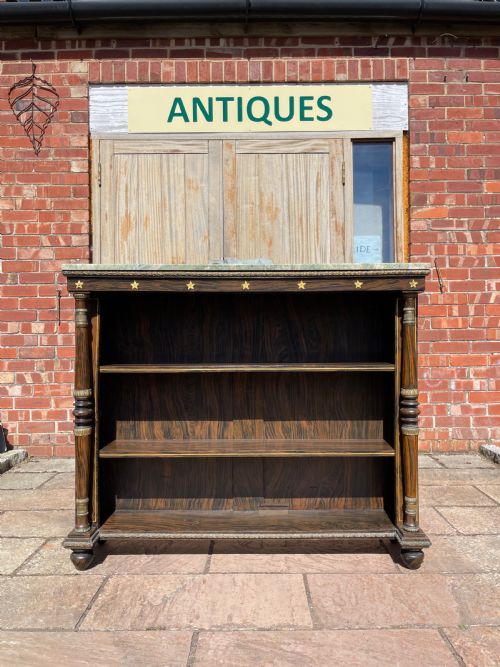

Empire Style Display Cabinet
An empire style display cabinet brings architectural order and gilt-metal brilliance to a room, offering glazed storage for prized collections.
Empire Style Display Cabinet
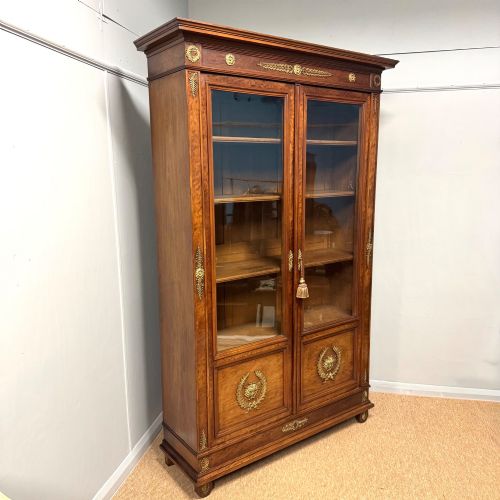
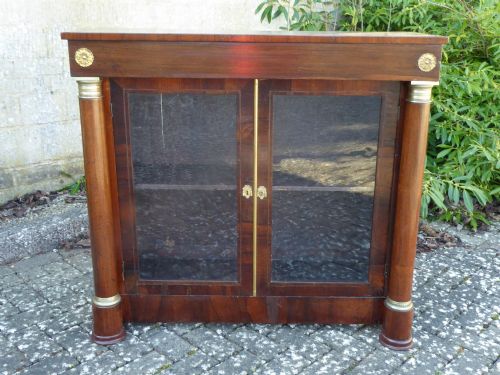
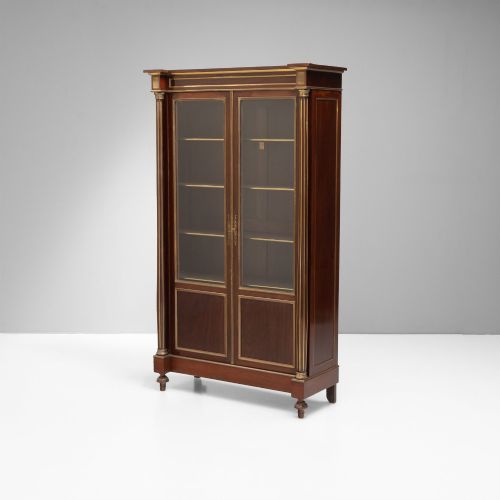
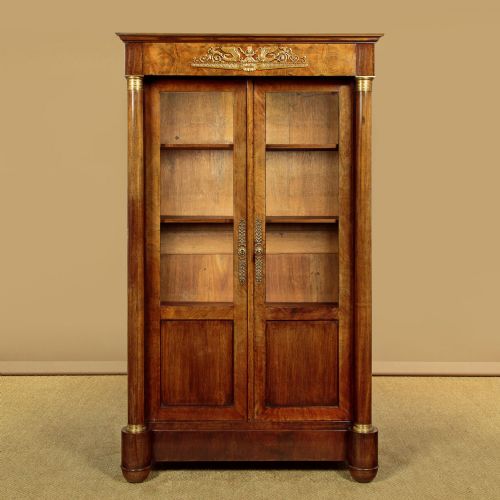
When you search for an empire style display cabinet, you enter a category defined by formal neoclassical lines, rich timbers, and classical mounts. These pieces function primarily as tall bookcases or glazed storage cabinets designed to showcase books and porcelain.
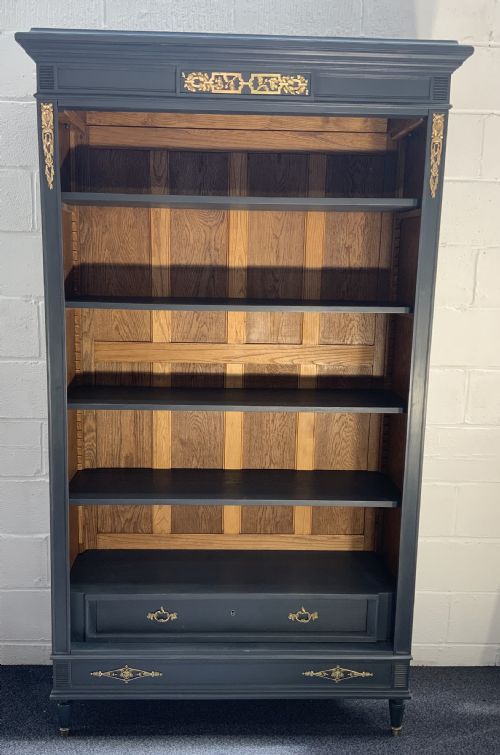
The versions most commonly met here stem from the nineteenth century, including pieces built during the original empire period alongside later revival iterations. Makers often worked in mahogany, rosewood, or ebonised wood, pairing dark timber with bright metal.
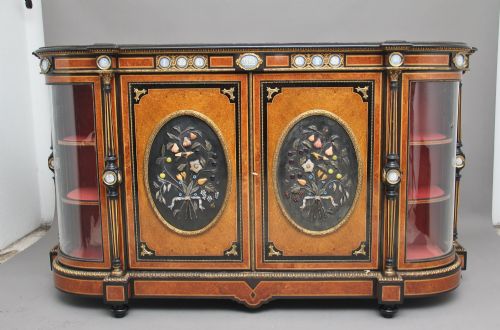
Forms range from upright two-door bookcases to credenzas and open shelving units. Many examples integrate glazed doors to protect contents while maintaining visual access to the shelves within.
Materials and construction methods
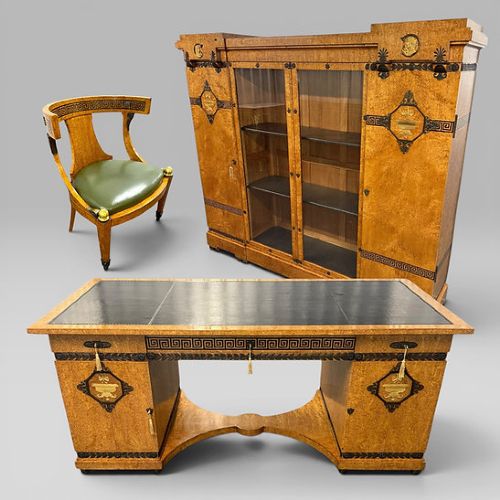
Cabinetmakers relied on dense hardwoods like mahogany, rosewood, and birch as structural foundations, frequently selecting figured veneers to create striking grain patterns across large flat surfaces. Ebonised finishes and simulated paint also appeared, offering alternative surface textures.
Gilt bronze and ormolu mounts provided the characteristic metallic contrast, bolted to the corners, friezes, and column capitals of the cabinetry. Brass embellishments and porcelain plaques occasionally supplemented these bronze elements.
Glazing framed in timber kept dust from entering the main chamber, while adjustable shelving allowed owners to reconfigure the interior space for volumes of varied heights.
Some nineteenth-century makers hid secret compartments behind neoclassical columns, ensuring secret letters remained as secure as the library books.
Distinguishing quality across the range
Quality reveals itself first in the choice of timber and the precision of the veneer matching across the doors and panels. Finer examples utilise highly figured timbers such as burr maple or plum pudding mahogany, laid down with absolute symmetry.
The execution of the cast metal mounts separates standard production from superior work. Crisply chased ormolu with sharp definition in the classical motifs denotes a higher workshop standard than flat, unchased brass stampings.
Structural integrity, smooth door alignment, and the retention of original glass panes indicate how well a cabinet has survived. Subtle details like working locks with matching keys and refined interior linings elevate a piece further.
Mercier Frères
The Empire Style Display Cabinet Glossary
- Ormolu
- Gilded bronze used for decorative mounts on furniture. The technique involves applying a mercury and gold amalgam to cast bronze before heating.
- Credenza
- A low cabinet, often featuring doors and glazed sections, suited for display and storage. It developed from a sixteenth-century sideboard concept into nineteenth-century drawing room furniture.
- Neoclassical
- A style drawing inspiration from classical antiquity, focusing on symmetry, straight lines, and ancient architectural motifs. It heavily influenced empire design.
- Burr maple
- Timber taken from a tree growth featuring intricate, swirling grain patterns. Cabinetmakers sliced it into veneers for decorative cabinet fronts.
- Sevres style
- Ceramic decoration mimicking the soft paste porcelain produced at the famous French factory. These plaques were frequently inset into nineteenth-century furniture.
Empire Style Display Cabinet: Frequently Asked Questions
What is an empire style display cabinet?
An empire style display cabinet is a piece of case furniture characterised by classical architectural proportions, dark wood veneers, and gilt-metal mounts.
They emerged from nineteenth-century European design movements influenced by ancient Rome and Greece, serving as formal storage for books and ornaments.
How do I style one in a modern home?
Place the cabinet against a plain wall where its vertical lines and metallic mounts can catch the light without competing with surrounding patterns.
Fill the interior shelves with a curated selection of books or ceramics, allowing some empty space to maintain the clean visual balance inherent to the style.
How do I tell an original empire piece from a revival?
Distinguishing original pieces from later revivals requires examining construction techniques, timber ageing, and the cast quality of the ormolu mounts.
Nineteenth-century revival pieces often display machine-made elements or different secondary woods compared to their earlier counterparts, though both share a design vocabulary.
What woods were used for these cabinets?
Cabinetmakers predominantly used mahogany, rosewood, and birch, often choosing highly figured veneers for the exterior surfaces.
Ebonised wood and simulated paint finishes were also employed to achieve specific dark or uniform surface appearances.