


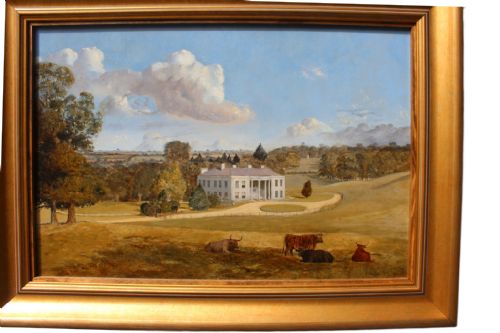


Antique Abbey Painting
An antique abbey painting captures historic monastic ruins and coastal Yorkshire landmarks across watercolours and oils from the Georgian era to the early twentieth century.
Antique Abbey Painting
An antique abbey painting depicts historic ecclesiastical sites, most frequently ruined Yorkshire structures such as Whitby, Fountains, Bolton and Rievaulx, often framed by surrounding landscapes, rivers or coastal harbours.
The works span the eighteenth, nineteenth and early twentieth centuries, encompassing Victorian and Edwardian periods alongside earlier Georgian depictions.
Buyers encounter both intimate watercolours on paper and larger oil paintings on canvas or board, reflecting changing artistic approaches to picturesque architecture over two centuries.
Materials and methods
Artists employed watercolour pigments on paper, occasionally utilising grisaille techniques or pencil underdrawings to define architectural details of stone arches and masonry.
Oil painters worked on stretched canvas, wooden panels or millboard, building up the composition with layered oil paint to capture atmospheric effects such as moonlight or coastal fog.
Many surviving examples retain their original gilt wood frames and protective glass, preserving the surface media from environmental degradation.
Monks rested here centuries ago, but today these quiet ruins merely host painters dodging Yorkshire rain.
Distinctions in execution
The strength of an antique abbey painting lies in the precision of the architectural draughtsmanship and the artist's handling of natural light upon stone surfaces.
Superior examples integrate landscape elements, such as figures, cattle or river reflections, with balanced composition rather than treating the ruin as a rigid topographical record.
The integrity of the medium, whether watercolour pigment retention or stable oil paint on canvas, preserves the visual impact intended by the period artist.
Alfred George Morgan·William Mellor·Tom Clough·George Weatherill·Herbert Royle·James Thomas Watts·Albert Robert Quinton·John Sowden·William Samuel Horton·William Bradley·Harry Wanless·Walter Emsley·Frank Rousse·Walter John Bayes·Rowland Henry Hill·Donald Wood·Tom Dudley·Everett Watson Mellor·Julius Ceaser Ibbetson·Thomas Miles Richardson·William Henry Williamson·William James Boddy·John Wynne Williams·John Daniel Bond·John G Atkinson
The Antique Abbey Painting Glossary
- Watercolour
- A painting method where fine pigment is suspended in a water-soluble binder applied to paper. It allows for translucent washes that capture changing atmospheric conditions.
- Grisaille
- A painting executed entirely in shades of grey or neutral monochrome. This technique often served preparatory or reproductive purposes before the application of full colour.
- Gilt Wood
- Timber carved and surfaced with a thin layer of gold leaf. Frames finished in this manner were standard for framing fine art in the nineteenth century.
- Oil on Canvas
- Pigment mixed with drying oil applied to a woven fabric support stretched across a wooden frame. This combination allows for rich colour blending and durable surfaces.
- Provenance
- The documented history of ownership of a work of art. It establishes authenticity and traces the chain of custody from the artist onward.
Antique Abbey Painting: Frequently Asked Questions
What subjects appear in these paintings?
The works primarily depict historic monastic ruins across Britain, with a high concentration of Yorkshire subjects such as Whitby Abbey, Fountains Abbey and Bolton Abbey.
Artists frequently placed these stone structures within surrounding landscapes, coastal views, river valleys or town settings.
How do watercolours and oils differ?
Watercolours utilise pigment on paper, often protected beneath glass, offering a lighter and more translucent rendering of light and weather.
Oil paintings utilise viscous paint on canvas or board, providing deeper tones and heavier impasto texture for scenes set at dusk or moonlight.
How can I date an abbey painting?
Dating relies on stylistic clues, artists' active working periods, framing materials and any inscriptions or signatures recorded on the reverse of the work.
Victorian and Edwardian pieces often display specific mount styles and signatures that align with documented exhibition records.
Where were these artists active?
Many painters belonged to regional British schools or travelled specifically to picturesque monastic sites to sketch architectural antiquities.
Locales such as Whitby, Kirkstall and Rievaulx attracted artists recording both the dramatic coastline and the medieval ruins.