






Anglo Indian Shelves
Anglo Indian shelves bring tactile warmth and intricate colonial craftsmanship into a room.
Anglo Indian Shelves
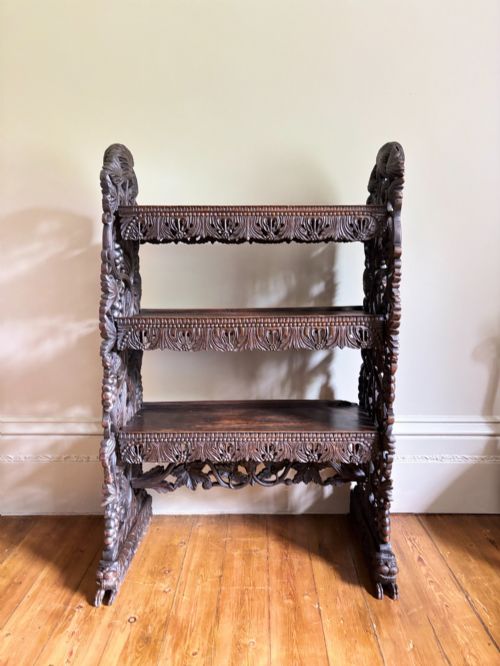
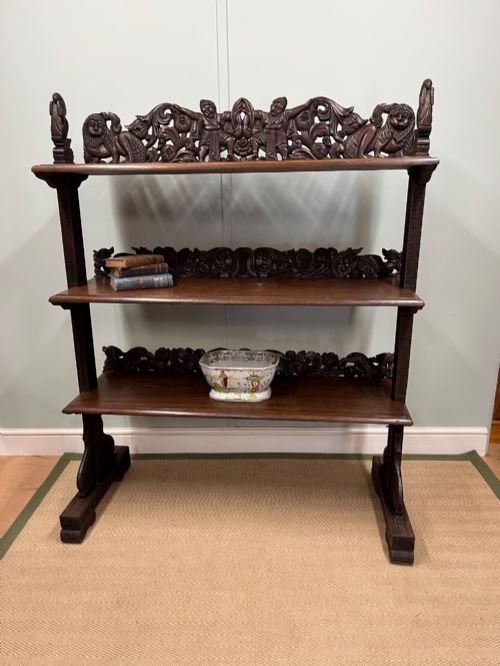
When you search for Anglo Indian shelves, you encounter pieces that merge traditional British furniture forms with elaborate South Asian and Burmese carving traditions. These items span the nineteenth century and encompass tiered whatnots, side cabinets, wall brackets, and open bookcases.
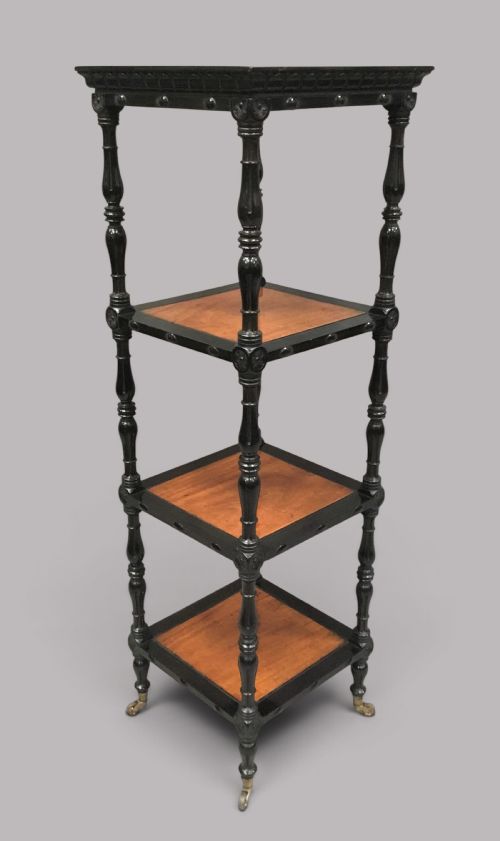
The version you are most likely to meet on this page is a multi-tiered wooden whatnot or open shelf unit fashioned from dense timbers like teak, padauk, and rosewood. These tiered structures often feature pierced carving, turned supports, and compact footprints designed for display and storage.
How they were made
The makers utilised dense tropical hardwoods such as teak, padauk, rosewood, and satinwood, which provided the structural stability needed for elaborate open shelving. These timbers were selected for their fine grain and deep natural tones, then seasoned to withstand varying climates.
Joinery was paired with intricate hand carving, often featuring foliage, geometric patterns, and pierced fretwork details. Metal elements like brass fixtures occasionally appear to secure joints or mount wall brackets safely.
Anglo Indian Shelves Retail Price Guide 2026
Typical asking prices for anglo indian shelves among the pieces listed under this phrase on Sellingantiques today, from the lower quarter to the upper quarter. They describe what is for sale here now, not the wider market.
What varies in quality
Quality rests upon the depth and crispness of the hand carving, where superior examples exhibit sharp relief and balanced symmetry across the tiers or brackets. Lesser pieces feature shallow, repetitive stamping or machine-finished details that lack individual character.
The choice and figuring of the timber also dictate the standing of a piece, with richly grained satinwood or substantial padauk commanding greater presence than plainer secondary woods.
The Anglo Indian Shelves Glossary
- Whatnot
- An open set of tiered shelves designed for displaying ornaments, books, or small objects. They became popular in the nineteenth century for drawing rooms and parlours.
- Étagère
- A French term for a piece of furniture consisting of a set of open shelves for holding trinkets or books. It is largely synonymous with a whatnot.
- Padauk
- A heavy, durable tropical hardwood with a distinctive reddish-orange hue that darkens with age to a deep brown. It was favoured for fine nineteenth-century colonial furniture.
- Fretwork
- Ornamental perforated woodwork created by cutting patterns through thin boards. This technique appears frequently on nineteenth-century brackets and side cabinets.
Anglo Indian Shelves: Frequently Asked Questions
Where should I place wall brackets?
Wall brackets work best mounted at eye level in hallways, studies, or living rooms to display small ceramics or treasured items without cluttering floor space.
Ensure the wall construction can support the weight of dense tropical hardwoods like teak or padauk before installation.
How do I clean carved shelves?
Dust intricate carvings regularly with a soft-bristled brush to prevent dirt from settling into the recesses of the woodwork.
Avoid heavy liquid polishes that build up in the carved details, opting instead for a dry, clean cloth.
What rooms suit a whatnot?
Whatnots fit neatly into corners or against blank walls in sitting rooms, bedrooms, or libraries where vertical display space is useful.
Their open tiers keep a room feeling spacious while offering practical surfaces for books and decorative objects.
Are these shelves sturdy?
The dense tropical hardwoods used in these pieces provide inherent strength, making them remarkably solid for everyday display use.
Heavier items should be placed on the lower tiers to maintain balance, particularly on tall three-tier or four-tier structures.