





Anglo Indian Carvings
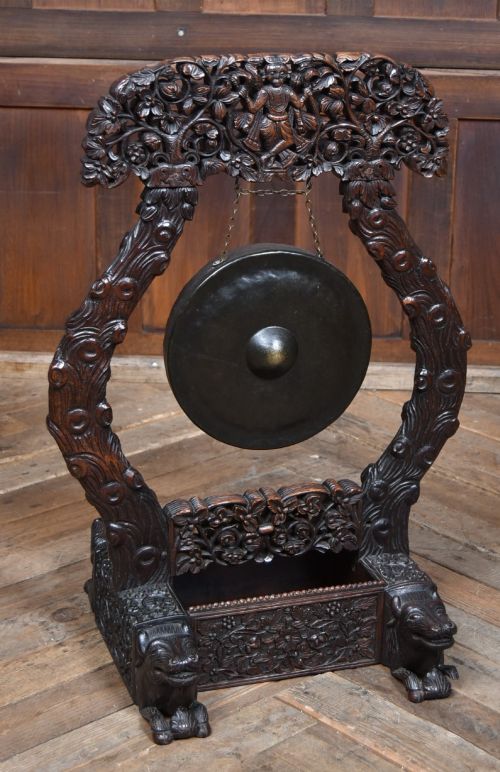
These anglo indian carvings bring dense, intricate floral motifs and substantial period presence directly into a room.
Anglo Indian Carvings
When you search for anglo indian carvings, you encounter sculptural works, furniture, and decorative objects produced during the colonial era. These pieces blend traditional South Asian craftsmanship with European forms tailored for the British market.
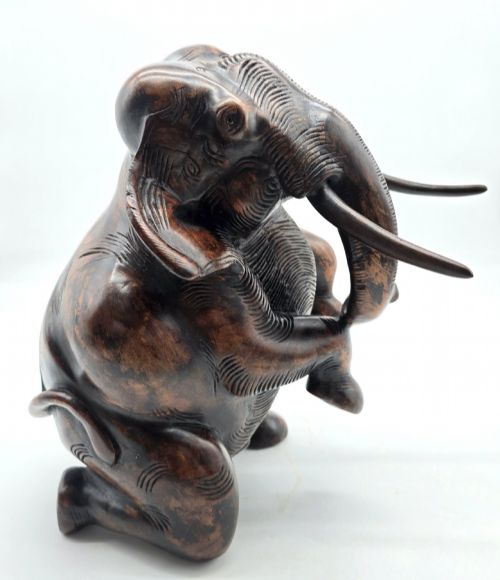
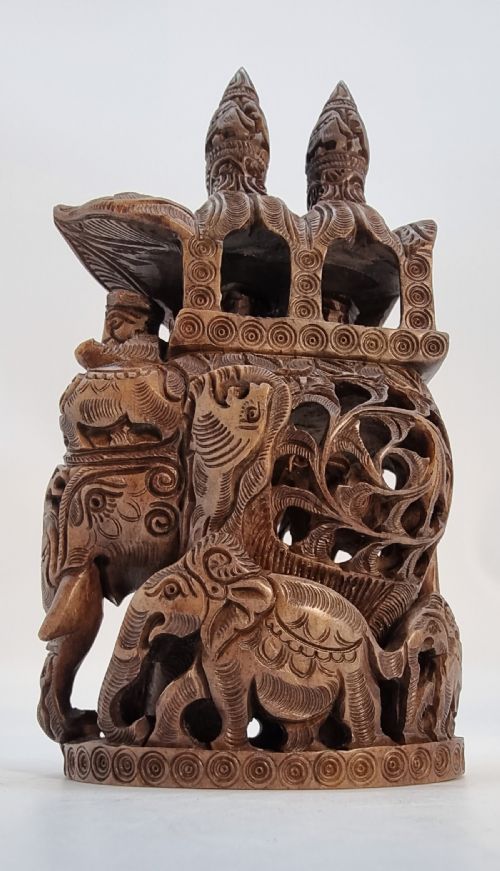
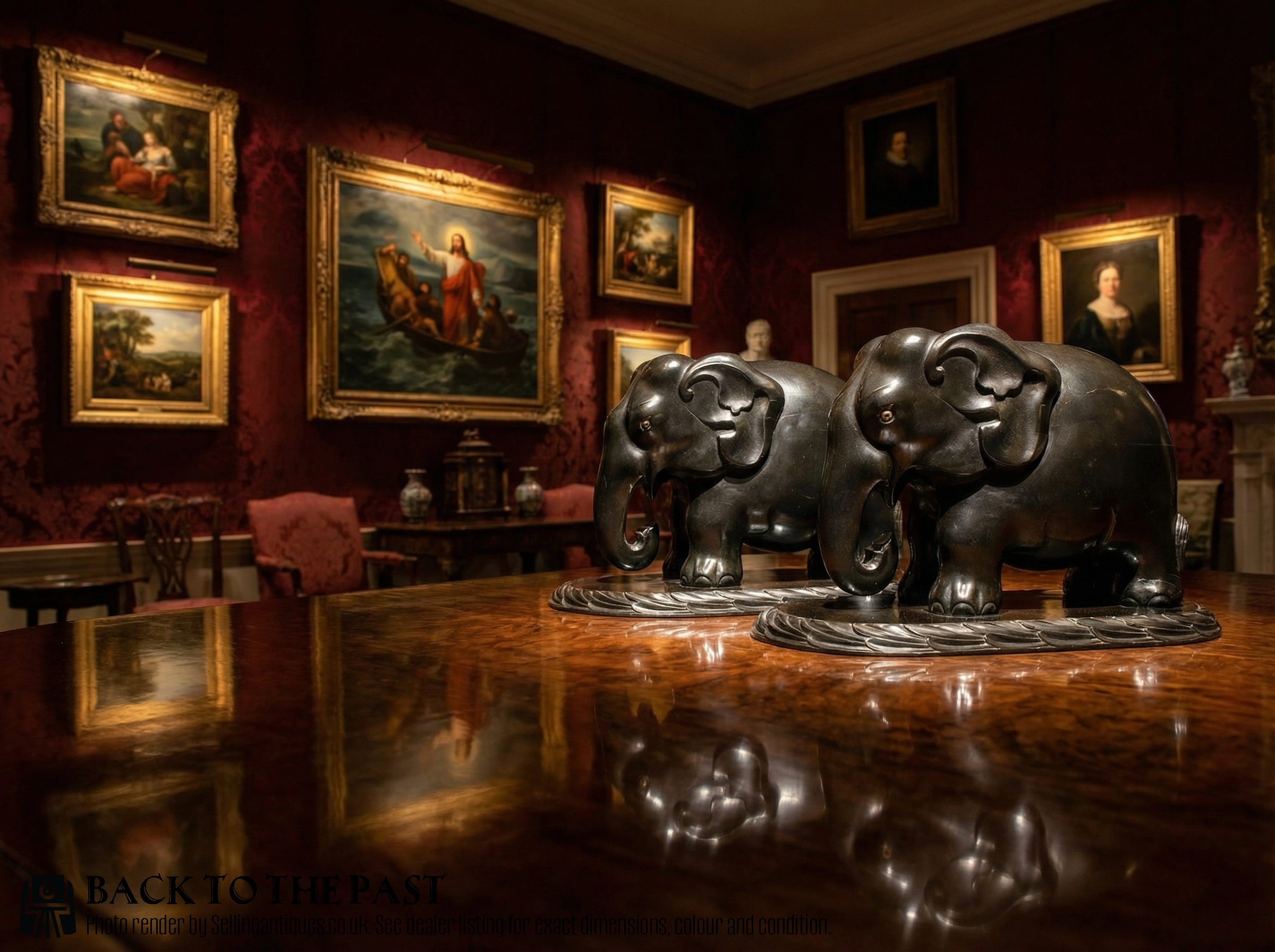
The items seen here span the nineteenth and early twentieth centuries, encompassing the Victorian and Raj periods. Animal studies, particularly elephants, alongside cabinets, trays, and wall panels, dominate the selection.
Regional variations appear frequently, including Kashmiri walnut items and Burmese works. Each piece reflects the complex cultural exchange of the period through detailed hand-worked surfaces.
How they were made
Artisans utilised dense timbers suited for intricate chiselling and deep relief work. Hardwood, teak, ebony, and walnut provide the heavy foundations for these elaborate compositions.
Makers integrated contrasting media into the wood structures. Bone and soapstone details frequently appear, adding pale highlights to dark ebony and hardwood surfaces.
Hand carving remains the defining technique across the entire group. Artisans worked without modern power tools, producing deep undercuts and meticulous surface textures by hand.
Anglo Indian Carvings Retail Price Guide 2026
Typical asking prices for anglo indian carvings among the pieces listed under this phrase on Sellingantiques today, from the lower quarter to the upper quarter. They describe what is for sale here now, not the wider market.
Among the stately elephants and formal cabinets, an unexpected carved iguana watches the room.
What varies in quality
The depth and crispness of the chisel work distinguish superior examples from standard output. High-grade pieces exhibit sharp undercuts and confident modelling, particularly in animal anatomy and facial expressions.
Material selection marks another clear division in quality. Dense, heavy woods like ebony and finely figured walnut command attention over softer or more plain timbers.
Completeness and structural integrity define the preservation of these objects. Original bases, matching pairs, and undamaged relief panels indicate careful historical curation.
The Anglo Indian Carvings Glossary
- Raj period
- The era of British crown rule in the Indian subcontinent, spanning from eighteen fifty-eight to nineteen forty-seven. This timeframe produces much of the decorative woodwork found in these collections.
- Hardwood
- Timber derived from broad-leaved trees, offering the density required for fine carving. These woods resist easy denting and take a dark, polished finish.
- Soapstone
- A talc-schist mineral soft enough to carve with simple tools. Artisans utilised this stone for small animal studies and decorative figures.
- Treen
- Small handmade wooden household objects and utilitarian items. The term covers architectural fragments and small decorative carvings produced in colonial workshops.
- Deep relief
- A sculptural technique where elements project far from the background plane. This method creates strong shadow lines and dramatic three-dimensional depth on wall panels and furniture.
Anglo Indian Carvings: Frequently Asked Questions
What periods do these carvings date from?
The pieces span the nineteenth and early twentieth centuries, clustering heavily around the Victorian era and the Raj period. Production dates range from around eighteen hundred through to nineteen twenty.
Specific decades appear in many titles, pointing to the height of British colonial manufacturing and export. Nineteenth-century examples form the core of the available selection.
Which woods were used for these pieces?
Artisans worked primarily with dense tropical timbers native to the region. Ebony, teak, and general hardwood provide the dark, heavy foundations for most sculptures and furniture.
Walnut also appears frequently, particularly in regional items originating from Kashmir. These materials were chosen for their ability to hold extremely sharp chisel details.
How do I identify a Raj period piece?
Raj period items typically combine traditional South Asian motifs with forms familiar to British homes, such as bookends, cabinets, and trays. Animal studies, particularly ceremonial elephants with caparisons, are especially characteristic.
The carving style merges local decorative traditions with Victorian taste. Deep relief panels and architectural elements often bear the distinct mark of colonial workshops.
How should I care for ebony and hardwood carvings?
Keep these items away from direct sunlight and sudden temperature shifts to prevent the wood from splitting. Dust them gently with a soft, dry brush to protect the deep crevices of the carving.
A light application of appropriate wood wax helps maintain the lustre of dense timbers like ebony and walnut over time. Avoid using liquid polishes that can build up in the intricate relief work.