



Carved Wooden Elephant Pair
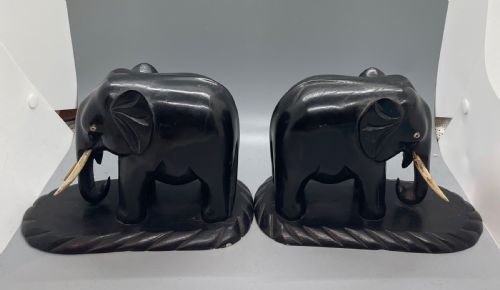
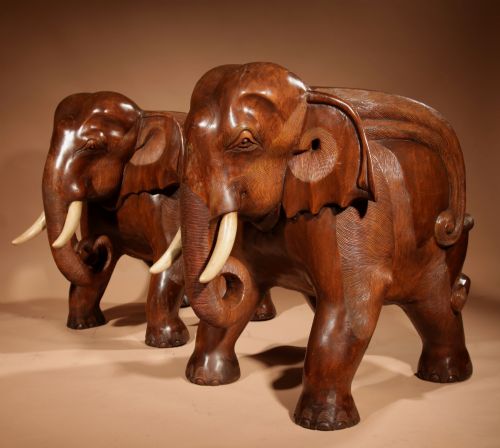
These carved wooden elephant pair objects bring a striking sculptural presence to a room, ranging from functional library supports to decorative seating.
Carved Wooden Elephant Pair
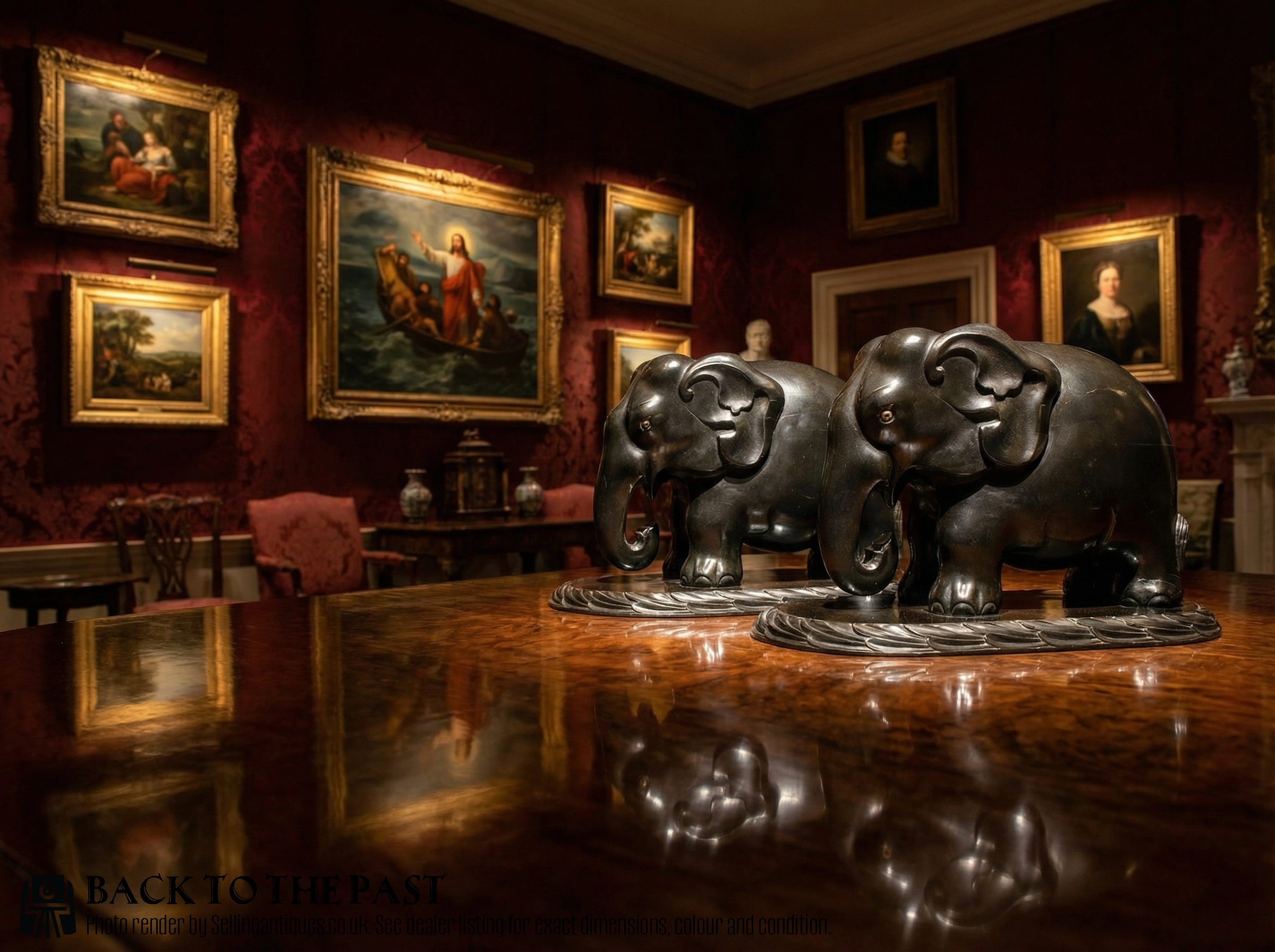
When you search for a carved wooden elephant pair, you encounter a diverse gathering of decorative objects spanning the Victorian era through the Art Deco period. The selections on this page encompass practical items like bookends and book rests alongside larger decorative sculptures, statues, seats, stools, and armchairs.
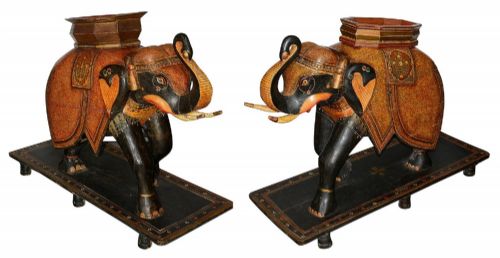
Geographic origins and stylistic influences cross several distinct traditions including Anglo-Indian and Colonial Raj designs, Chinese Qing Dynasty hardwood pieces, European Black Forest carving, and Asian folk art. These items frequently display regional characteristics such as lacquered finishes or inlaid bone tusks.
Most examples date from the nineteenth and early twentieth centuries, reflecting the Victorian penchant for exotic animal motifs in the home. They appear in forms intended both for display and for functional domestic utility.
How they were made
The makers utilised a variety of dense timbers including ebony, teak, coromandel, and general hardwood, shaping the material with hand chisels and carving tools. These woods provided the necessary weight and durability for items subjected to regular handling like bookends and armchairs.
Surface treatments range from natural polished grain to applied gesso, pigment, and lacquer, particularly on Kashmiri and Asian folk art items. Details such as tusks were occasionally fashioned from contrasting bone to highlight the carving.
Carved Wooden Elephant Pair Retail Price Guide 2026
Typical asking prices for carved wooden elephant pair among the pieces listed under this phrase on Sellingantiques today, from the lower quarter to the upper quarter. They describe what is for sale here now, not the wider market.
Several elephants double as seating or hold up your books while wearing traditional ceremonial garb.
What varies in quality
Material selection also defines the tier of the piece, with dense tropical hardwoods like ebony and coromandel commanding greater presence than softer woods requiring painted or lacquered surfaces to conceal the grain.
The Carved Wooden Elephant Pair Glossary
- Anglo-Indian
- A style describing decorative objects and furniture produced in India during the British Raj, often combining local craftsmanship with European forms. These pieces frequently incorporate native timbers and intricate surface ornamentation.
- Black Forest
- A term for carvings originating from the mountainous region of central Europe, renowned for realistic depictions of animals and foliage. Such works typically employ lime wood or other native European species.
- Coromandel
- A dense, dark hardwood valued for its rich grain and weight, suitable for detailed carving and polished finishes. It appears frequently in nineteenth-century decorative objects and book rests.
- Gesso
- A plaster-like mixture applied to wooden surfaces to prepare them for painting, gilding, or lacquering. It provides a smooth base for fine polychrome decoration.
Carved Wooden Elephant Pair: Frequently Asked Questions
What were carved elephant bookends used for?
These bookends supported rows of volumes in nineteenth-century and early twentieth-century libraries and studies. Their substantial weight helped keep heavy books upright on shelves.
Beyond simple utility, they served as decorative conversation pieces reflecting an interest in global exploration and natural history during the Victorian and Edwardian eras.
How do I identify a Victorian piece?
Victorian examples often display the dense hardwoods, dark patination, and detailed hand-carving characteristic of nineteenth-century production. Look for Anglo-Indian or domestic English styles recorded in the period.
Construction methods typical of the era, such as hand-cut joints and aged timber shrinkage, help distinguish these older items from later twentieth-century interpretations.
Are these items made of solid wood?
The listings show pieces fashioned from solid timbers such as ebony, teak, coromandel, and general hardwood. These materials provided the structural integrity needed for sculptural forms and functional seating.
Some objects incorporate surface media like gesso, pigment, or lacquer over the wooden core to achieve specific decorative finishes.
Where were these carvings produced?
Origin locations span multiple regions including India, China, and European centres like the Black Forest. Each region imparted distinct cultural motifs and material choices to the work.
Colonial trade and travel routes facilitated the movement of these decorative items into British and European homes during the nineteenth and early twentieth centuries.