


Anglo Indian Campaign Trunk
An anglo indian campaign trunk is a sturdy travel chest built for colonial officers, prized for rich timber and robust brass binding.
Anglo Indian Campaign Trunk
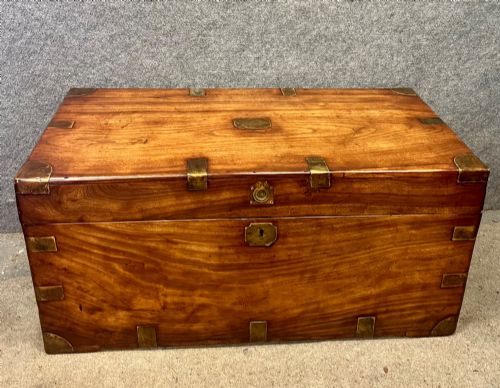
When you search for an anglo indian campaign trunk, you are looking at substantial wooden storage chests constructed for travel during the nineteenth century. These pieces served officers and merchants across the British Empire, designed to withstand arduous journeys by land and sea.
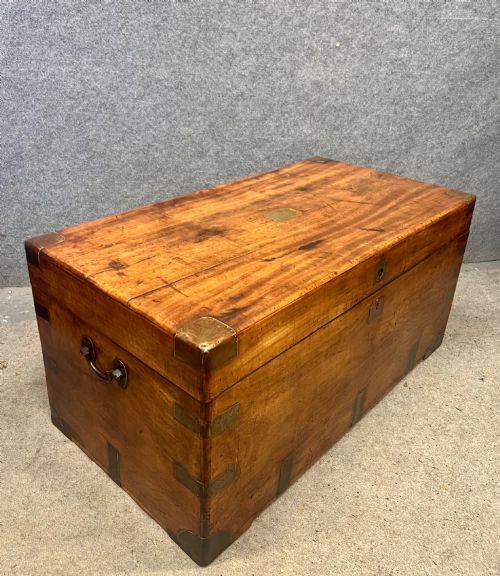
The version you are most likely to meet on this page is a rectangular chest fashioned from dense tropical hardwoods such as teak or camphor wood. Many examples date from the Victorian era and feature heavy metal reinforcements to protect corners and edges during transit.
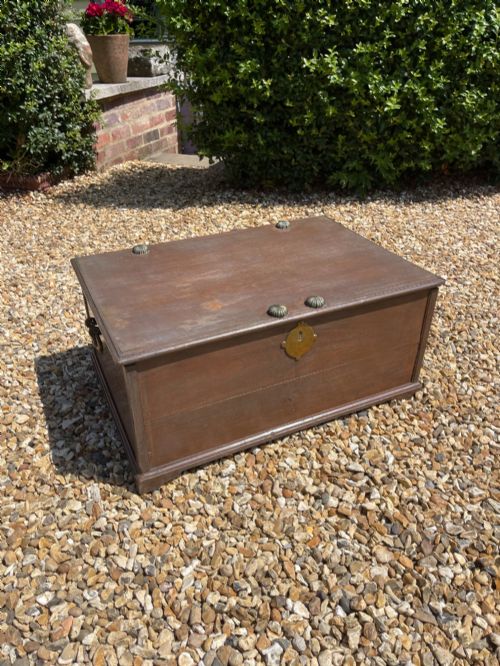
Makers often divided these chests into sections or fitted them with recessed carrying handles to aid portability. Alongside standard trunks, you will encounter merchants chests, deed boxes, and low chests of drawers adapted for colonial service.
How they were made
Cabinetmakers utilised durable regional timbers including teak, camphor wood, padouk, and ebony to resist warping in humid climates. These woods were selected for both their resilience and their striking natural grain.
Workshops reinforced the corners, edges, and lids with brass or iron strapping, secured by numerous small screws or rivets. Recessed brass handles and flush locks prevented snagging during loading and transport.
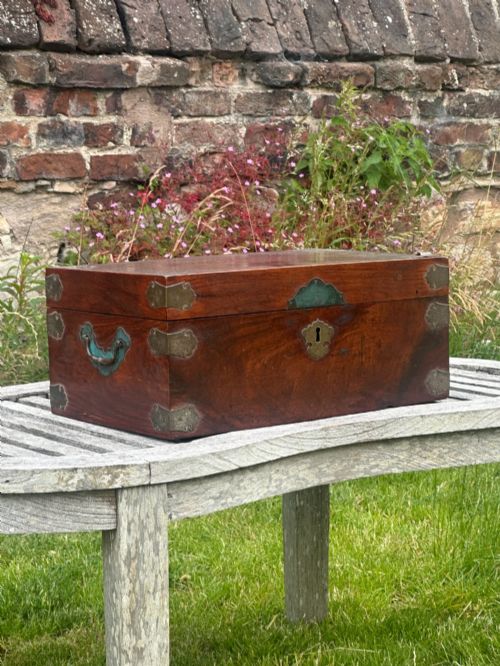
Listings feature nineteenth-century pieces constructed from teak, camphor wood, padouk, and iron-bound mahogany.
What varies in quality
Quality rests primarily on the choice of timber and the precision of the metalwork. Dense hardwoods with rich figuring mark the upper end of the range, while heavier iron bindings often indicate utility grades built strictly for hard service.
The integrity of the internal construction and the retention of original fittings dictate value. Pieces that retain working locks, flush drop handles, and uncompromised internal compartments stand apart from examples altered or stripped of their hardware.
The Anglo Indian Campaign Trunk Glossary
- Campaign trunk
- A portable chest constructed in the nineteenth century for military officers or colonial administrators on the move. These pieces typically incorporate dismantling sections or reinforced edges.
- Camphor wood
- An aromatic timber frequently utilised for colonial trunks to deter insects and protect stored textiles. The wood possesses a distinct fragrance and a warm, variegated grain.
- Padouk
- A heavy, dense tropical hardwood showing reddish-brown tones, often selected for high-status campaign furniture. It takes a fine polish and resists wear.
- Brass bound
- A method of reinforcing structural corners and joints with metal sheeting and straps. This protected the timber from impacts during transit.
- Recessed handle
- A grip inlet flush into the side of a chest so it does not project beyond the wooden surface. This prevented damage and allowed tight packing in transit.
Anglo Indian Campaign Trunk: Frequently Asked Questions
What is an anglo indian campaign trunk?
An anglo indian campaign trunk is a robust wooden chest made during the nineteenth century for use by officials and travellers in the colonies. They were built to endure long journeys while protecting uniforms, documents, and personal belongings.
These pieces combine utilitarian strength with the rich appearance of tropical timbers like teak and camphor wood. Their defining characteristic is the integration of metal binding and flush hardware designed for efficient packing.
How were these trunks used?
Owners used these trunks to transport clothing, books, and valuables across vast distances by ship, train, and pack animal. Once the traveller reached a destination, the chest doubled as a functional table, desk, or bedside storage unit.
The sturdy construction allowed them to serve as packing cases that could be loaded repeatedly without failing. Inside, compartments kept smaller items organised during transit.
How do I care for camphor wood?
Camphor wood requires minimal maintenance beyond dusting with a dry or slightly damp cloth. Avoid placing the chest in direct sunlight or near direct heat sources to prevent the wood from drying out.
The natural oils within the timber help preserve the surface and maintain the characteristic aroma over time. Harsh chemical polishes should be avoided to protect the finish.
How can I tell the period?
Dating relies on examining the construction methods, the style of the brass hardware, and the specific timber used. Pieces associated with the Victorian era often feature standardised brass strapping and recessed drop handles.
Earlier examples from around eighteen hundred tend to show simpler iron mounts or distinct joinery details. Comparing the locks, hinges, and wood patination helps narrow down the decade of manufacture.