
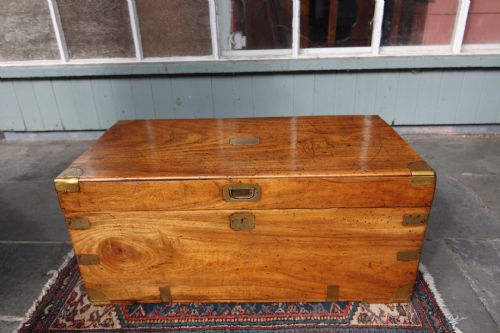
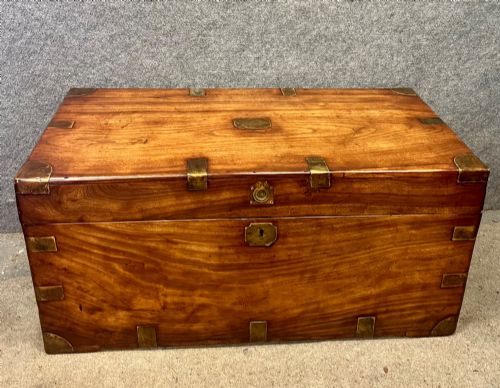
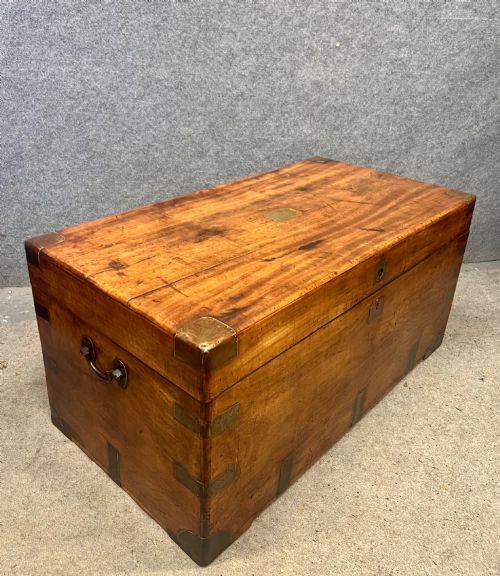
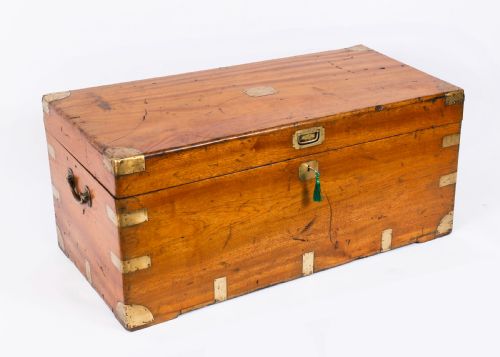



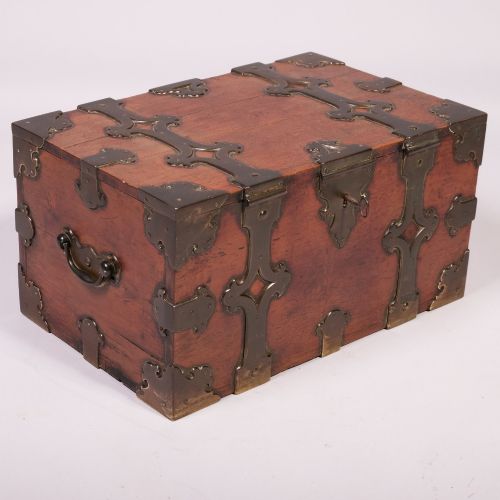
Brass Bound Campaign Trunk
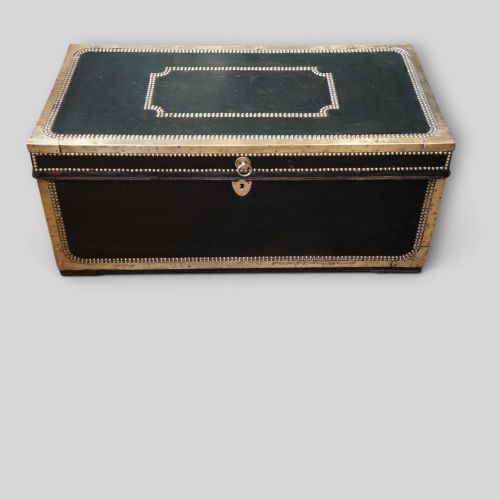
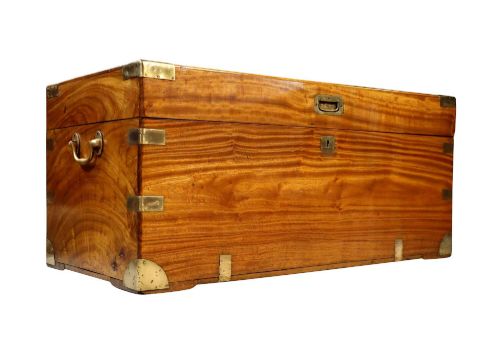
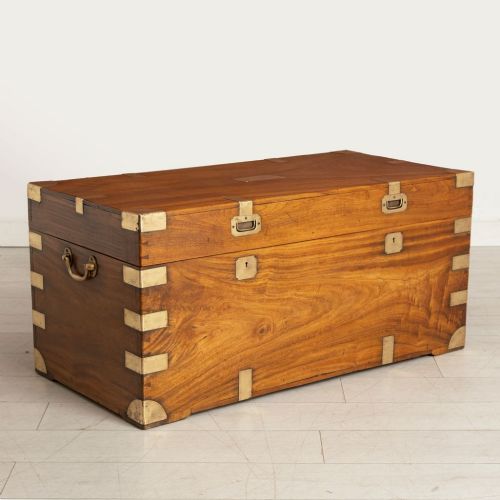
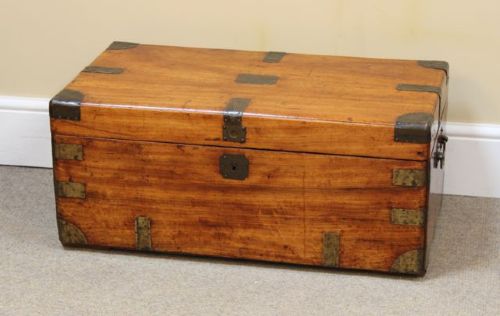
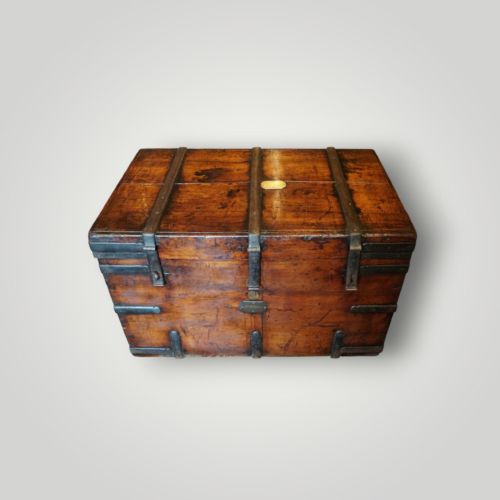
A brass bound campaign trunk is a sturdy travelling box built for officers on the move, prized for its robust construction and rich timber.
Brass Bound Campaign Trunk
When you search for a brass bound campaign trunk, you encounter rugged storage boxes designed to withstand military transit across continents during the Georgian and Victorian eras. These pieces originated to serve officers who required secure portable storage for uniforms, documents and personal belongings during arduous campaigns.
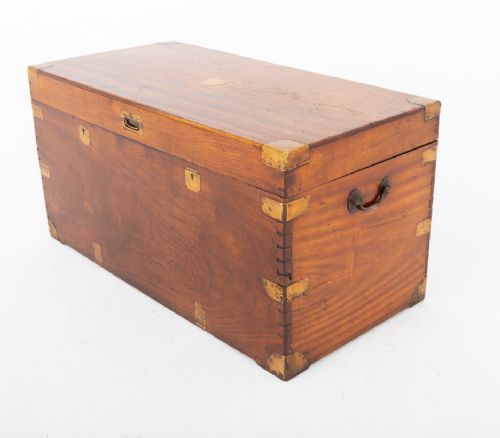
The versions most commonly met on this page include solid camphor wood and teak chests reinforced with heavy brass corners, straps and flush-fitting drop handles. Many examples separate into two distinct sections to facilitate loading onto pack animals or ships, reflecting their practical military origins.
How they were made
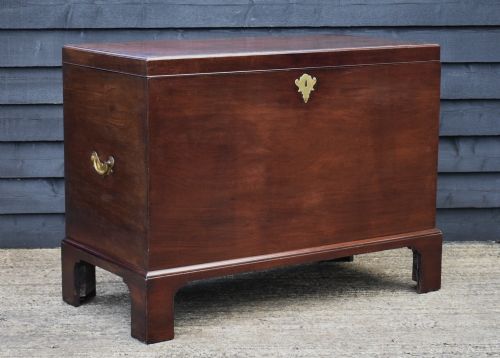
Cabinet makers utilised dense, resilient timbers such as camphor wood, teak and mahogany to resist tropical humidity and insects. These heavy woods were joined with robust construction methods to endure the constant shocks of military travel.
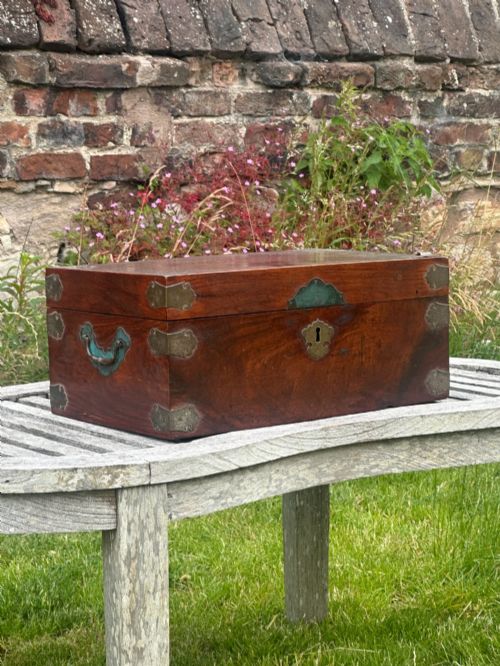
External reinforcement relied on heavy brass plates, corner brackets and straps screwed securely to the timber to protect edges from impacts. Recessed brass handles and flush escutcheons ensured no projections caught on ropes or canvas during transit.
Listings feature items built from 18th Century to Victorian periods, utilising camphor wood, teak, mahogany, and leather.
What varies in quality
The grade of a brass bound campaign trunk depends heavily upon the density of the timber and the weight of the brass hardware employed by the maker. Superior examples feature thick gauge brass plates secured by numerous original countersunk screws rather than light metal sheets.
Fine craftsmanship shows in the precision of the dovetail joints, the inclusion of internal compartmentalisation, and the survival of original working locks with matching keys. Lesser examples often display replaced hardware or utilitarian secondary woods used in less visible areas.
Samuel Pratt·Chapple & Sons·Seabrook of St.Pauls
The Brass Bound Campaign Trunk Glossary
- Campaign trunk
- A portable chest constructed for military officers on active service overseas. These trunks typically feature protective metal corners and recessed carrying handles.
- Camphor wood
- An aromatic hardwood native to Asia, frequently utilised for campaign furniture. Its strong natural scent repelled insects and protected stored woollens.
- Recessed handle
- A folding handle set into a shallow cavity carved flush with the wood surface. This design prevents snagging and allows multiple chests to be stacked tightly.
- Two-part chest
- A modular storage unit built in stacked upper and lower sections. This configuration made heavy loads manageable for transport during nineteenth-century military expeditions.
Brass Bound Campaign Trunk: Frequently Asked Questions
Why do these trunks smell strongly?
The distinct aroma arises from the natural camphor wood used to construct the interior and exterior body of the trunk. This timber was specifically chosen by nineteenth-century makers because its aromatic oils naturally deter moths and other pests.
Over decades, the wood retains these oils, which become more noticeable when the lid is opened. Allowing the interior to air in a dry room often softens the scent without harming the antique timber.
Were these chests actually used in battle?
Many of these trunks accompanied military personnel, diplomats and colonial administrators on overseas postings during the Georgian and Victorian periods. Their heavy brass reinforcement and sturdy timber construction were engineered to survive rough handling on ships and wagons.
While some served senior officers in permanent garrison quarters, others endured the dust and moisture of active campaigns across the British Empire.
How do I care for a camphor wood chest?
Keep the wood away from direct heat sources and sudden humidity changes to prevent the timber from splitting or warping. Dust the surface regularly with a soft, dry cloth and avoid applying modern silicone polishes.
If the timber appears dry, a light application of traditional beeswax helps nourish the grain while preserving the historic patina of the surface.
How can I tell an older trunk from a later one?
Earlier eighteenth and early nineteenth-century examples often feature hand-cut dovetails, thick gauge brasswork, and secondary woods appropriate to their regional origin. The style of the brass handles and the method of construction evolve noticeably from the Georgian period into the late Victorian era.
Examining the interior linings, lock mechanisms, and the type of screws used to secure the metal fittings provides reliable clues regarding the date of manufacture.