



Amethyst Brooch Pin
These amethyst brooch pin pieces bring together rich purple gems and gold, silver, or pearl work from Georgian days to the mid-twentieth century.
Amethyst Brooch Pin
When you search for an amethyst brooch pin, you encounter a jewellery form that spans from the Georgian era through Victorian and Edwardian times up to mid-century modern design. These pieces serve primarily as dress ornaments, fastening garments while displaying prominent purple quartz stones.
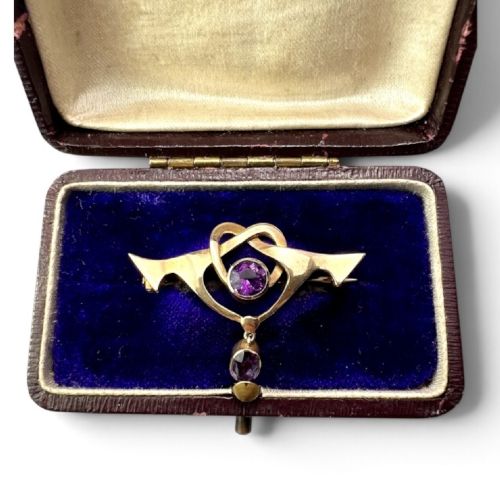
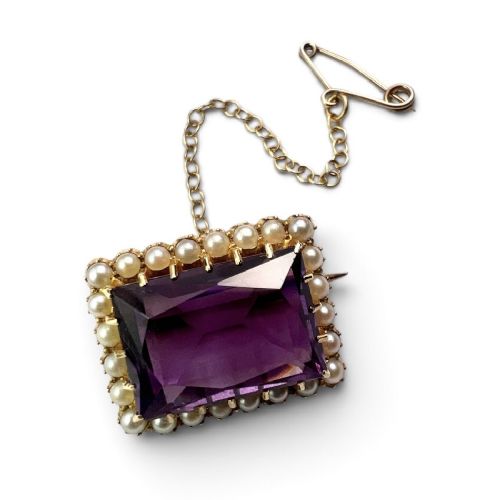
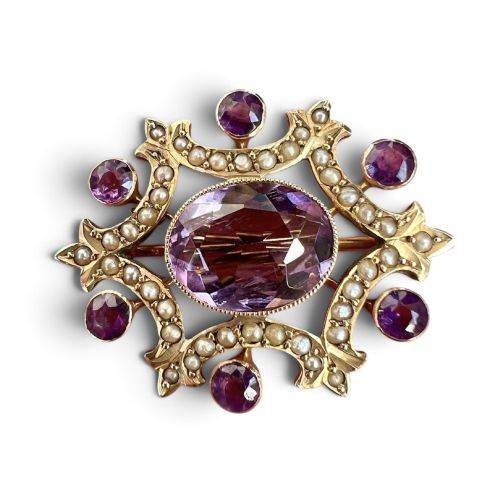
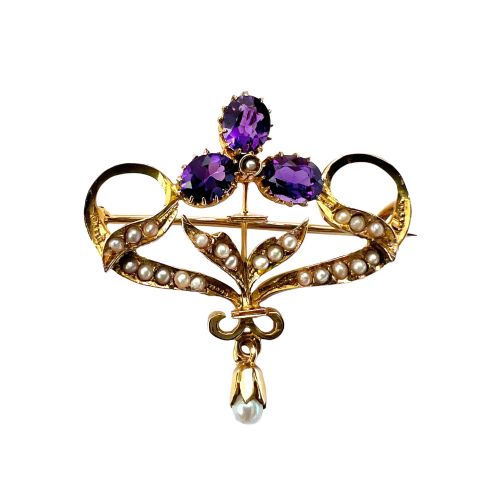
The version you are most likely to meet on this page is the Edwardian nine-carat gold or Victorian gold piece, frequently framed by seed pearls or arranged in cluster and halo formations. Examples range from heart-shaped motifs and target designs to French yellow gold creations and Mexican silver work.
Object types on offer include dedicated brooches, pendant combinations with drops, and matched sets combining earrings with the main pin. Materials stretch from basic silver and nine-carat or fifteen-carat gold to eighteen-carat gold, diamond accents, chalcedony, and natural pearls.
Materials and Technique
Goldsmiths and jewellers shaped these items using yellow gold, nine-carat gold, fifteen-carat gold, eighteen-carat gold, and silver as the structural foundation for the central stones. Stones include step-cut amethysts alongside rose diamonds, rubies, and chalcedony.
Setting techniques integrate seed pearls and natural pearls around the main purple gems, often arranged in halo, cluster, or target configurations. Makers such as Deakin and Francis utilised secure metal settings to mount the amethysts within boxed or pendant formats.
Amethyst Brooch Pin Retail Price Guide 2026
Typical asking prices for amethyst brooch pin among the pieces listed under this phrase on Sellingantiques today, from the lower quarter to the upper quarter. They describe what is for sale here now, not the wider market.
Listings incorporate items from the Victorian, Edwardian, and mid-century periods, utilising amethysts set in gold, silver, and pearl.
Evaluating the Range
Lower tiers utilise nine-carat gold or silver foundations, sometimes paired with cultured seed pearls rather than natural counterparts. The complexity of the design, whether a simple heart motif or a double cluster with pendant drops, dictates the distinction across the range.
Deakin and Francis·Beto
The Amethyst Brooch Pin Glossary
- Amethyst
- A purple variety of quartz used prominently as the central gemstone in these jewels. Its depth of colour varies from pale lilac to dark violet.
- Seed Pearl
- A very small natural or cultured pearl, frequently drilled and strung or set in clusters around a larger stone. They are typical of Victorian and Edwardian pieces.
- Halo Brooch
- A jewellery design where a central stone is encircled by a ring of smaller gems, such as pearls or diamonds. This arrangement enhances the visual impact of the main amethyst.
- Target Brooch
- A circular brooch featuring concentric rings of stones or coloured enamel radiating from a central gem. The pattern draws the eye inward toward the amethyst.
- Step Cut
- A gemstone cutting style featuring rectangular facets arranged in parallel rows. This cut is utilised on large stones to showcase clarity and depth of colour.
Amethyst Brooch Pin: Frequently Asked Questions
How do I wear an antique brooch pin today?
Pin these pieces onto the lapel of a coat, the front of a heavy woollen jumper, or near the collar of a blouse. Their substantial weight requires sturdy fabrics to support the gold and gemstone settings.
For items featuring a pendant drop or loop, you can occasionally suspend them from a suitable chain as well as fastening them directly to garments.
What periods do these brooches come from?
The selection spans multiple eras, including Georgian, Victorian, Edwardian, and mid-century twentieth century. Each period brings distinct metalwork styles and stone arrangements.
Victorian and Edwardian examples predominate, whilst pieces by Mexican modernists and French makers represent other distinct manufacturing traditions.
How do I identify an Edwardian amethyst brooch?
Edwardian items often utilise nine-carat yellow gold combined with delicate seed pearls framing the central amethyst. The overall aesthetic tends toward lighter, airier openwork designs.
Maker marks and boxed presentations, such as those from firms like Deakin and Francis, help confirm the period context.
Can these brooches be worn as pendants?
Certain designs include integrated loops or drops that allow the piece to function as both a brooch and a pendant. Check the reverse of the setting for a hinged bail or loop.
When converting a pin for pendant use, ensure the clasp remains secure so the garment fastening does not catch during wear.