




Amboyna Inlay Cabinet
An amboyna inlay cabinet brings richly figured exotic timber and precise contrast into a room.
Amboyna Inlay Cabinet
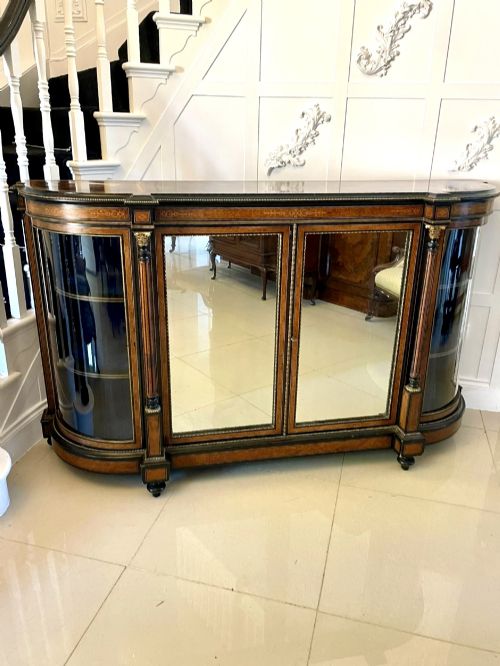
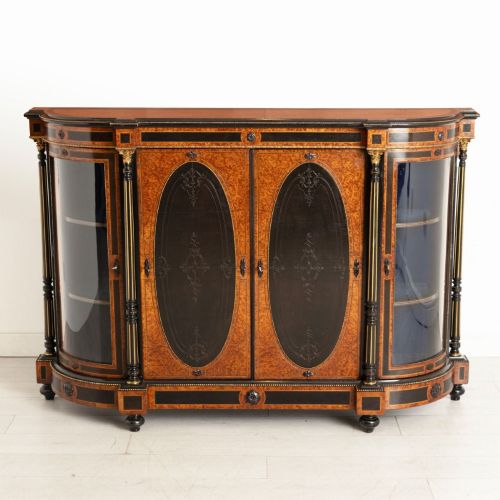
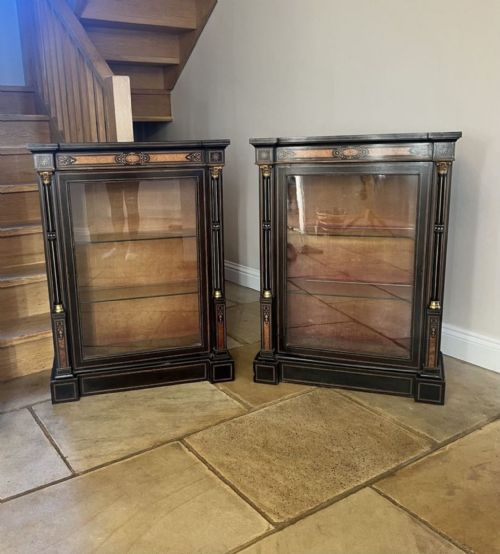
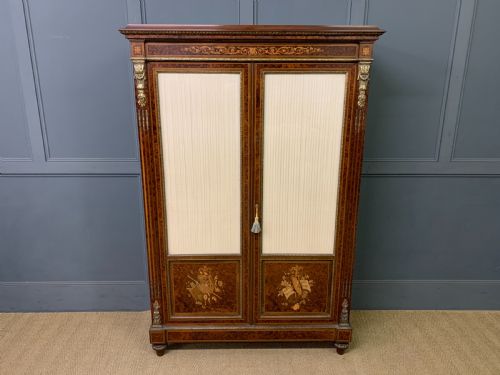
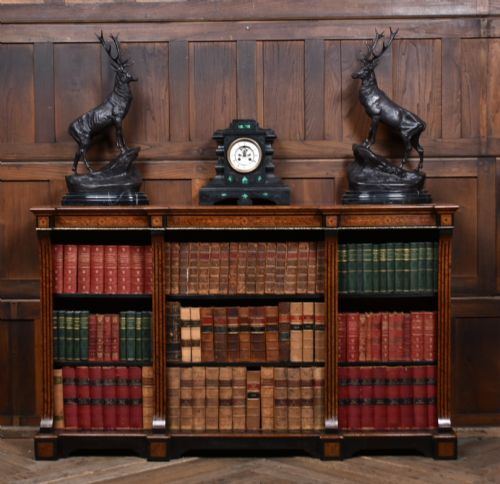
When you search for an amboyna inlay cabinet, you encounter display cabinets, side cabinets, credenzas, and bookcases dating from the Victorian period, alongside Regency and 19th Century French examples. These pieces serve as focal points for storing books or displaying treasured objects, utilising distinctive figured wood.
The versions most frequently met on this page include Victorian ebonised and amboyna inlaid side cabinets, breakfront credenzas, and open bookcases from around 1860 to 1880. Makers and cabinetmakers applied rich veneers to forms ranging from large three-door breakfronts to miniature chests of drawers and bedside tables.
Originating from British workshops and French ateliers, these cabinets combine architectural presence with refined surface decoration. The stylistic influences span Aesthetic Movement taste, Victorian Louis XVI Revival, and French Neoclassical design.
Materials and construction methods
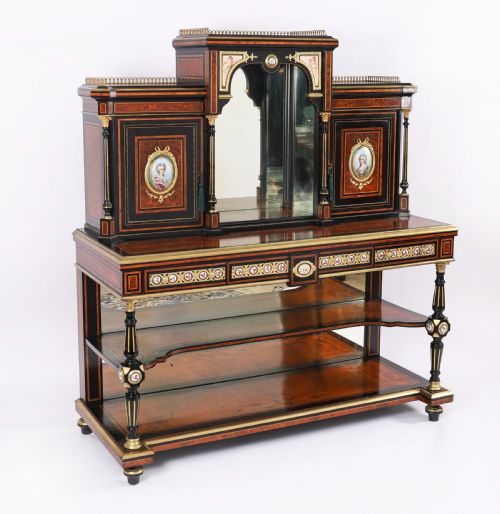
Craftsmen applied amboyna veneer and burr walnut over foundational timber carcasses, pairing the warm, mottled grain with ebonised wood to create sharp visual contrast. Ormolu, gilt metal, and brass mounts further accentuate the dark framing and lighter inlay panels.
Makers integrated glass panels into doors for display cabinets and bookcases, while interior configurations accommodate storage or shelving. Surface finishing techniques highlight the natural eyes and swirls of the amboyna grain.
Amboyna Inlay Cabinet Retail Price Guide 2026
Typical asking prices for amboyna inlay cabinet among the pieces listed under this phrase on Sellingantiques today, from the lower quarter to the upper quarter. They describe what is for sale here now, not the wider market.
Listings feature Victorian and 19th-century pieces, spanning materials from amboyna and ebonised wood to burr walnut, brass, and glass.
Differentiating quality across pieces
The distinction between standard production and the finest work lies in the selection of the amboyna veneer and the precision of the inlay. Richly figured burr timbers and intricate metal mounts elevate the visual depth of a credenza or cabinet.
Structural complexity also separates the tiers, seen in breakfront silhouettes, multi-door configurations, and the integration of ebonised framing with contrasting gilt details. Superior examples exhibit harmonious proportions and meticulous attention to secondary timbers.
The Amboyna Inlay Cabinet Glossary
- Amboyna
- A highly prized exotic wood known for its mottled, swirling grain and warm golden-brown colour, frequently used as a veneer on 19th-century furniture. It appears extensively across Victorian and French side cabinets.
- Ebonised
- Wood treated with a black finish to imitate ebony, providing a dark contrast against lighter amboyna inlay. This technique defines many Aesthetic Movement and Victorian pieces.
- Credenza
- A low-standing cabinet or sideboard, often featuring glass doors and gilt mounts, designed for display and storage. Victorian examples frequently incorporate amboyna veneer.
- Ormolu
- Gilded bronze mounts and decorative trimmings applied to furniture frames. These metal elements highlight architectural breaks and door surrounds.
- Breakfront
- A cabinet design where the central section projects forward from the flanking wings. This form adds depth and structural presence to large bookcases and credenzas.
Amboyna Inlay Cabinet: Frequently Asked Questions
What is amboyna wood?
Amboyna is an exotic timber harvested from the narra tree, celebrated for its intense, speckled grain and warm tones.
Cabinetmakers utilised it as a high-status veneer on luxury furniture during the 19th century.
How do I clean an amboyna cabinet?
Maintain the polished surface using a soft, dry cloth to remove dust without disturbing the veneer.
Avoid chemical polishes and keep the timber away from direct sunlight and moisture.
Are these cabinets English or French?
The selection includes both British Victorian pieces and 19th-century French examples.
French workshops often favored ormolu mounts and Neoclassical styling, while British makers produced robust credenzas and bookcases.
What is an ebonised finish?
Ebonising is the process of staining timber to achieve the deep black appearance of ebony.
In 19th-century design, this dark finish creates a striking contrast against golden amboyna and brass inlay.
Where should I place a credenza?
A credenza suits principal reception rooms or hallways where its low profile allows items to be displayed on top.
Ensure the room maintains stable humidity to protect the antique veneer.