

Amber Art Glass
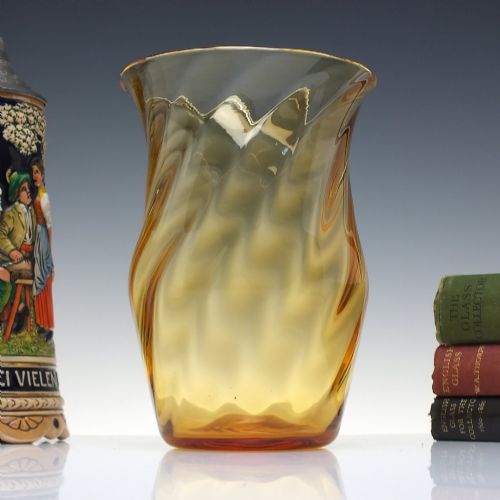
Amber art glass brings a warm, rich tone to interiors through pieces spanning the Victorian period to Art Deco.
Amber Art Glass
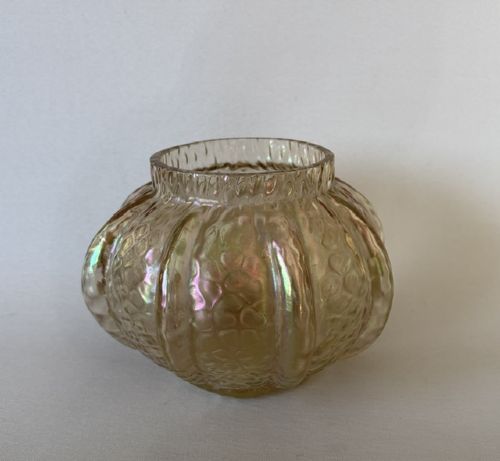
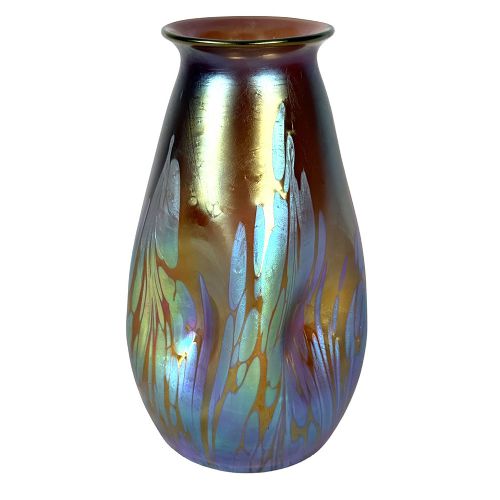
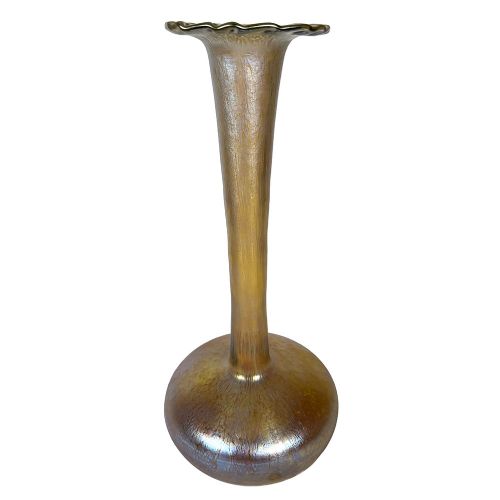
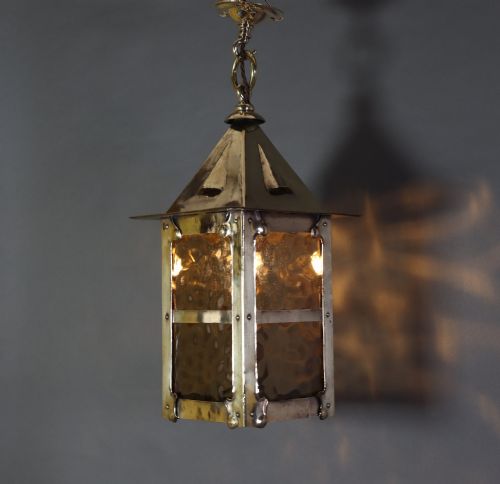
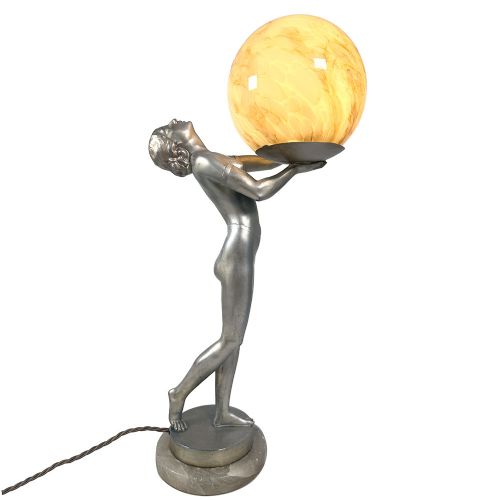
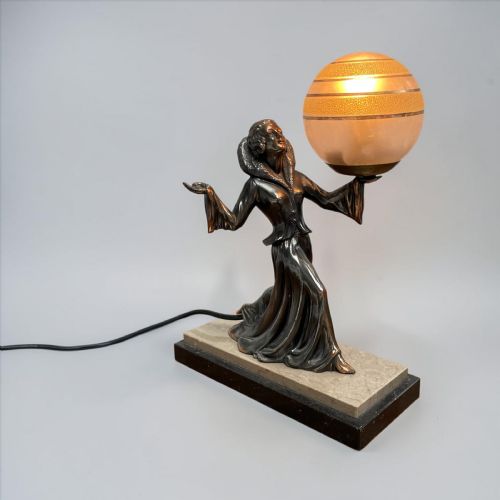
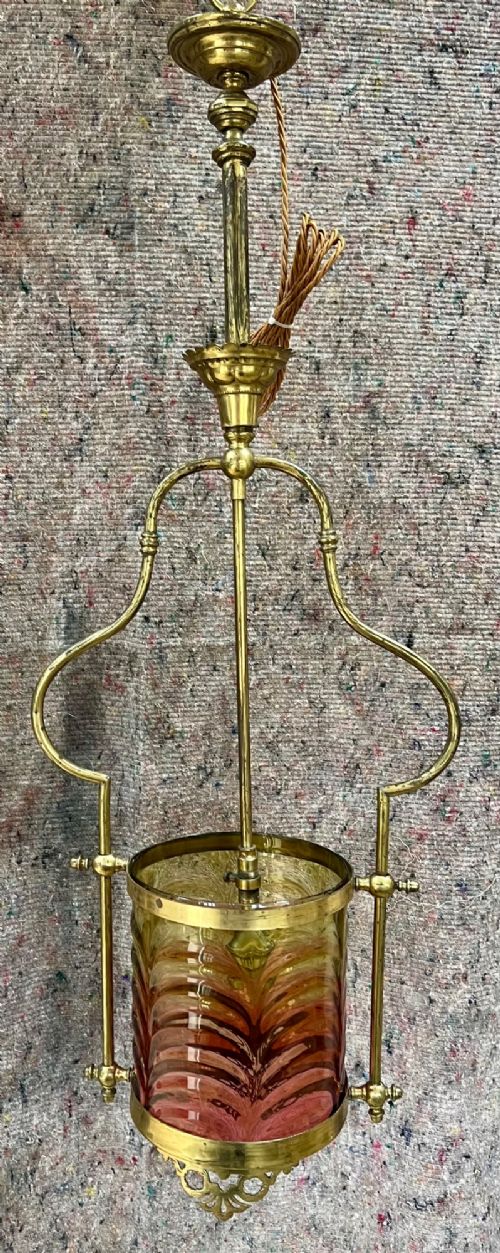
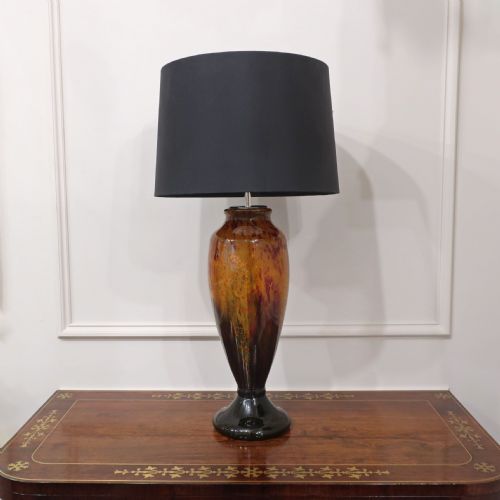
Amber art glass encompasses decorative objects and lighting unified by warm yellow-brown hues. When searching for amber art glass, buyers encounter diverse forms ranging from vases and table lamps to wall sconces and pendant lights. The listings on this page draw predominantly from the Art Nouveau, Art Deco, and Edwardian periods, reflecting the height of creative glass production.
Vases and lighting fixtures dominate the selection, often incorporating metal mounts or specialised surface treatments. Pieces from the early twentieth century sit alongside Victorian examples, showing how glassmakers adapted the colour to changing tastes. The selection spans domestic lighting, decorative vessels, and architectural elements like stained glass windows.
Materials and Techniques
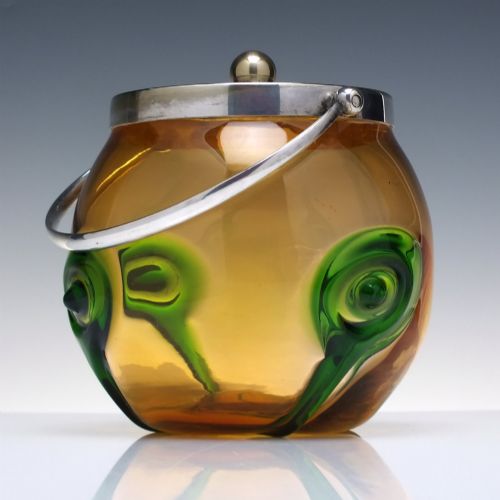
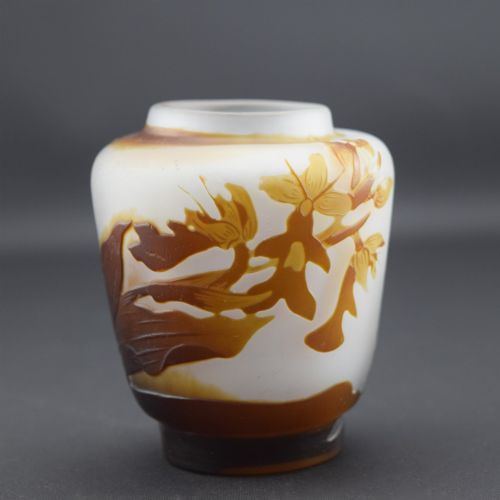
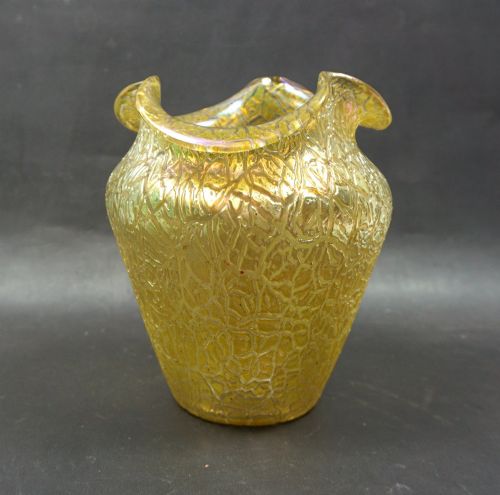
Makers utilised glass combined with brass, bronze, spelter, iron, and silver mounts to support and display the material. Acid-etched glass and cameo glass techniques created layered surface designs that revealed contrasting depths of colour. Iridescent treatments gave surfaces a metallic sheen, while enamelling added opaque painted details directly onto the vessel.
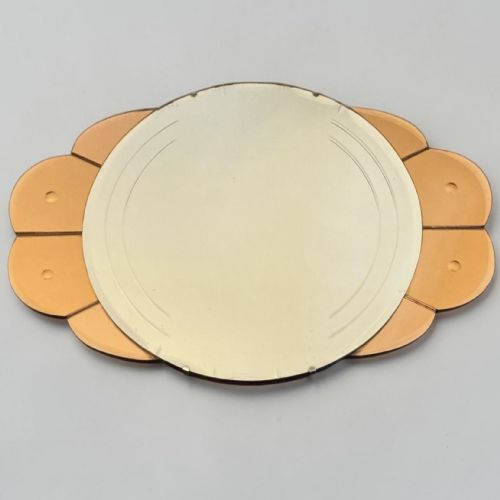
Techniques such as the Martele method and acid-cutting allowed workshops to achieve textured finishes on vases and lamps. Lead and wood also appear as structural or decorative components in lanterns and mirrored furniture. These methods relied on precise temperature control during blowing and cooling to fix the characteristic amber shade within the vitreous body.
Amber Art Glass Retail Price Guide 2026
Typical asking prices for amber art glass among the pieces listed under this phrase on Sellingantiques today, from the lower quarter to the upper quarter. They describe what is for sale here now, not the wider market.
Listings feature items from the Victorian period through the Art Deco era, incorporating brass, bronze, and cameo glass.
Distinctions in Quality
Quality rests on the complexity of the glass manipulation and the precision of surface decoration. Pieces featuring multi-layered cameo carving or intricate iridescent effects demand higher skill than plain blown vessels. The integration of metalwork, such as patinated brass mounts or wrought iron frames, influences the overall standard of execution.
Design attribution to notable makers or documented decors elevates a piece above anonymous production. The clarity of the glass matrix and the deliberate control of shading within the amber tone separate standard commercial outputs from exceptional studio creations.
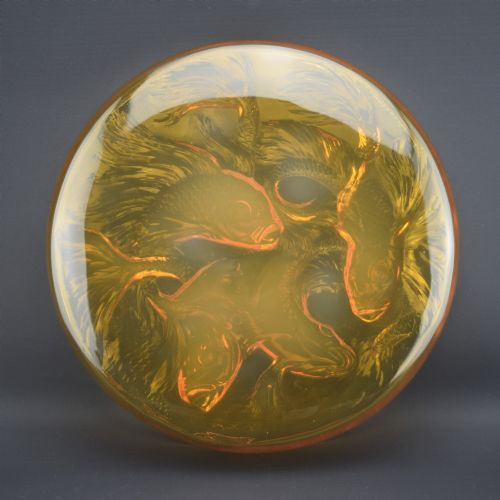
Kralik·Loetz·R Lalique·Charles Schneider·Daum Frerès·Gallé·Val St. Lambert
The Amber Art Glass Glossary
- Cameo Glass
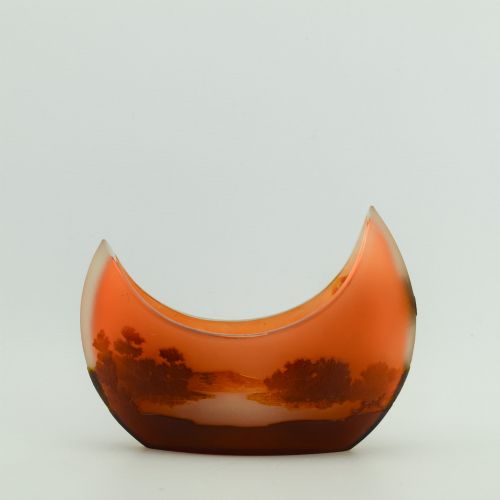
- A technique involving multiple layers of coloured glass fused together and carved away to create a raised design. Acid etching is frequently utilised to achieve this layered effect.
- Iridescent Glass
- Glass treated with metallic salts during cooling to produce a rainbow sheen across the surface. This finish was widely favoured by Art Nouveau workshops.
- Slip Shade
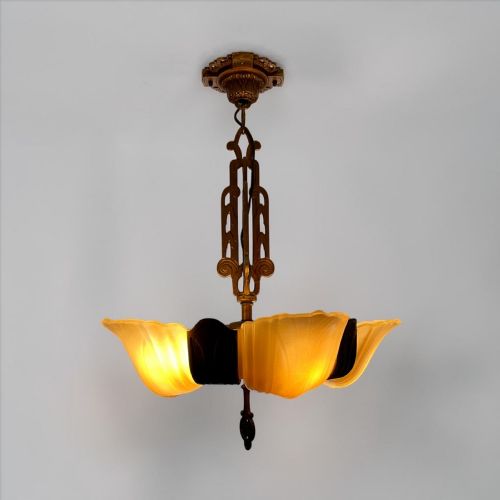
- A moulded glass shade designed to fit into a metal frame, commonly found on Art Deco ceiling lights and wall sconces. These shades diffuse light evenly through tinted glass.
- Martele
- A manufacturing process that creates a hammered or textured finish on the surface of the glass or metal mount. It adds tactile depth to the object.
- Nailsea Type
- Glass characterised by looped or threaded patterns trailing across the surface, often associated with nineteenth-century British production.
Amber Art Glass: Frequently Asked Questions
What is amber art glass?
Amber art glass refers to decorative glass objects and lighting produced in various shades of yellow-brown. The category includes vases, lamps, and architectural elements created during the late nineteenth and early twentieth centuries.
These pieces utilise techniques such as cameo carving, acid-etching, and iridescent surface treatments to enhance their visual depth. Makers ranged from prominent French glasshouses to Bohemian workshops.
How were amber glass lamps used?
Amber glass lamps served as functional interior lighting designed to cast a warm, diffused glow across a room. Table lamps, wall sconces, and hanging lanterns were placed in hallways, living spaces, and dining areas.
The tinted glass softened the electric or gas illumination of the period, creating a welcoming atmosphere within the home.
How do I care for antique glass?
Antique glass requires gentle cleaning with lukewarm water and a soft cloth to avoid scratching the surface or damaging delicate metal mounts. Harsh chemical cleaners should be avoided, especially on pieces with enamel or iridescent finishes.
Display pieces away from direct sunlight to preserve the integrity of the amber colour and any applied patination on attached metalwork.