
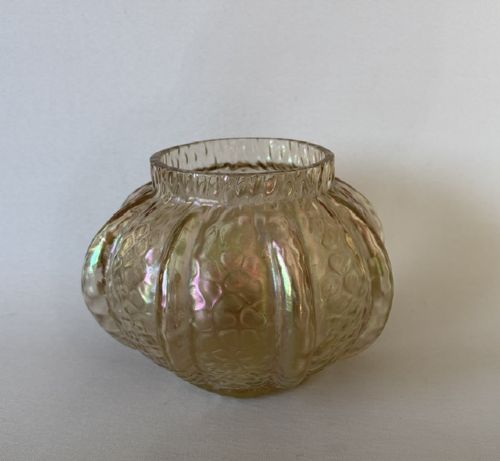
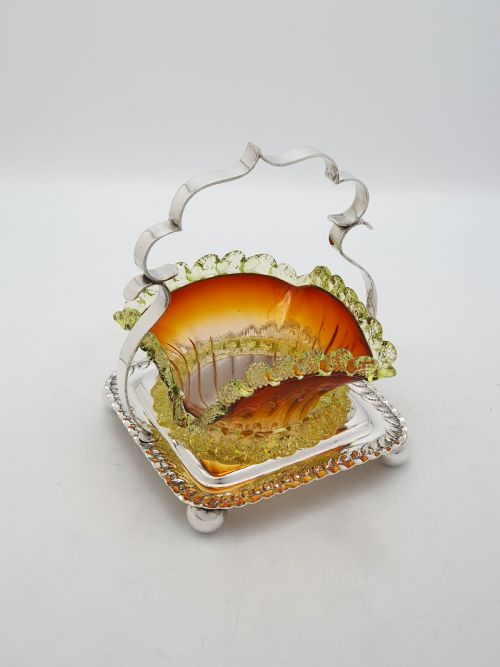


Amber Art Glass Bowl
These amber art glass bowls capture rich warmth and exceptional craftsmanship, bringing striking colour and historic design straight into your home.
Amber Art Glass Bowl
The selections available here showcase significant stylistic movements, most notably Art Nouveau, Art Deco, and Japonisme. Makers utilised techniques ranging from pressed glass to iridescent and aventurine finishes to create depth and texture within the amber palette.
Buyers encounter origins spanning from Venice to Bohemia and France, demonstrating international skill in glass production. Each piece offers a tangible connection to historical workshops that defined decorative glassware during their respective eras.
How they were made
Makers shaped these vessels using hot glass techniques, introducing metallic oxides to achieve the characteristic amber colour throughout the material. Artisans frequently employed press-moulding or free-blowing methods to establish the primary form of each bowl.
Surface decoration often involved sophisticated additions such as iridescent coatings, frosted textures, or inclusions of aventurine and latticino glass. Some early twentieth-century examples integrated silver-plated mounts, combining metalwork directly with the glass body.
Listings feature amber glassware produced across diverse stylistic eras, including Art Nouveau, Art Deco, Victorian, and Edwardian periods.
What varies in quality
Quality rests in the depth of colour distribution and the intentionality behind surface treatments like iridescence or frosting. Superior examples display crisp definition in moulded or carved details, showing precise control over the hot material during shaping.
The complexity of the design and the reputation of the producing workshop heavily influence the standing of an item. Pieces retaining original metal mounts or complex internal glass effects represent the higher end of the spectrum.
Rene Lalique·François-Eugène Rousseau·Baccarat·Paul Nicolas
The Amber Art Glass Bowl Glossary
- Iridescent glass
- Glass treated with metallic salts to produce a rainbow sheen over the amber base. This finish catches the light dynamically from different angles.
- Aventurine glass
- Glass containing suspended reflective copper or mineral crystals that sparkle beneath the surface. It adds considerable visual depth to the material.
- Latticino glass
- Traditional Venetian technique featuring fine opaque white glass threads twisted within the clear or coloured matrix. It creates delicate linear patterns inside the vessel.
- Frosted glass
- Glass treated by acid-etching or sandblasting to achieve a matte, non-reflective surface. This technique contrasts effectively with polished amber areas.
- Pressed glass
- Molten glass shaped by being pressed into a metal mould using a plunger. This method allowed for consistent production of intricate patterns during the nineteenth and twentieth centuries.
Amber Art Glass Bowl: Frequently Asked Questions
How do I clean an amber art glass bowl?
Wash the glass gently using lukewarm water and a mild, non-abrasive soap to protect any delicate surface finishes. Avoid harsh chemical cleaners or submersion in very hot water, which can stress antique material.
Dry the vessel thoroughly with a soft, lint-free cloth to prevent water spots. Take extra care if the piece includes silver-plated mounts, keeping moisture away from metal joints.
How can I tell the period of my bowl?
Examine the stylistic cues, such as flowing organic lines typical of Art Nouveau or geometric symmetry characteristic of Art Deco design. Maker signatures, pontil marks on the base, and manufacturing techniques also provide clear indicators of age.
Compare the specific shade of amber and glass texture against documented examples from known production eras. Venetian, Bohemian, and French pieces each carried distinct regional characteristics during the late nineteenth and early twentieth centuries.
What is the difference between art glass and pressed glass?
Art glass typically involves individual hand-blowing and specialised manipulation by skilled artisans, resulting in unique characteristics per vessel. Pressed glass utilises mechanical moulds to shape the material in volume, allowing for intricate repeating patterns.
Some high-quality pieces combine both approaches, using moulds for the primary structure followed by hand-finishing and surface treatments. Collectors value each method for its distinct contribution to the history of decorative glassware.