


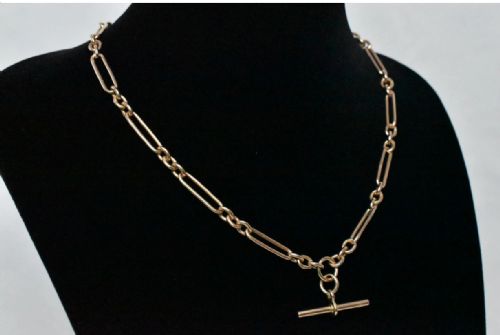


Albert Chain Pendant
These albert chain pendant pieces offer sturdy craftsmanship and classic pocket watch ancestry, bringing distinctive antique character to any modern neckline.
Albert Chain Pendant
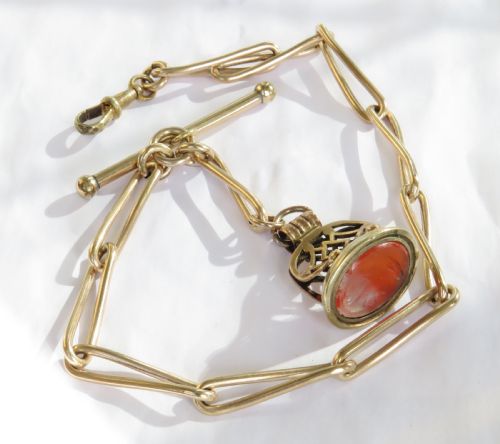
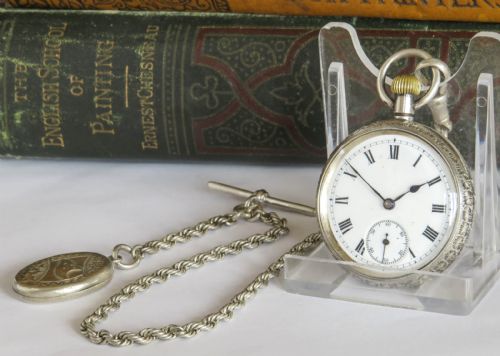
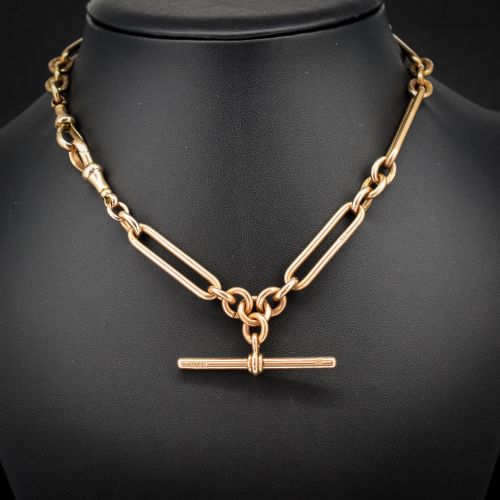
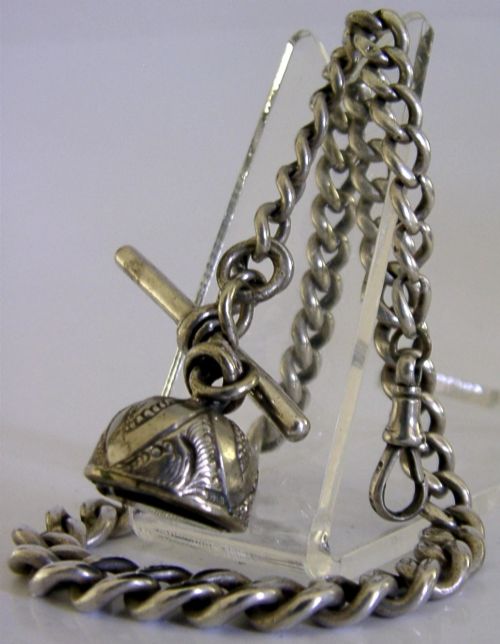
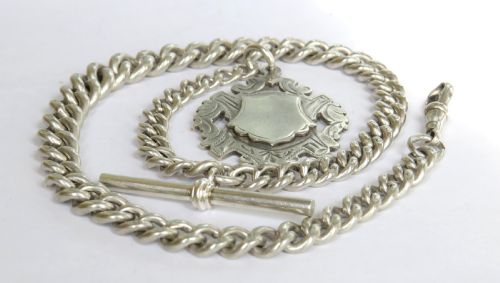
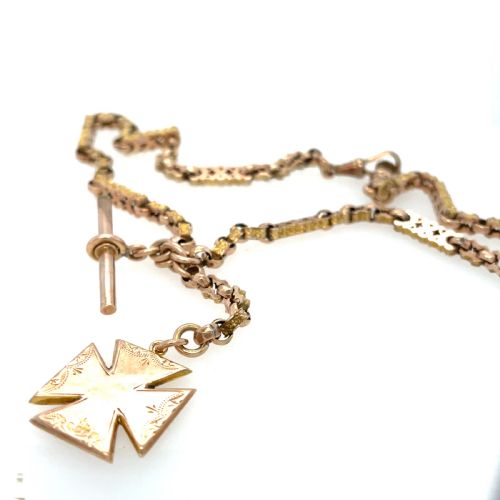
An albert chain pendant is a historic piece of jewellery adapted from functional Victorian and Edwardian pocket watch attachments. These items combine substantial link chains with decorative fobs, seals, or t-bars that now serve as striking necklaces.
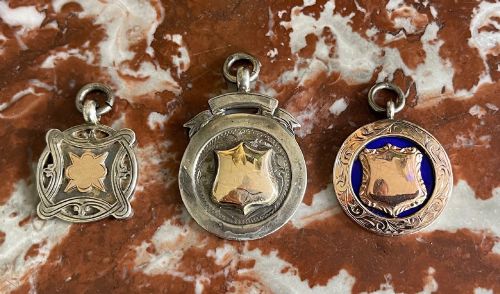
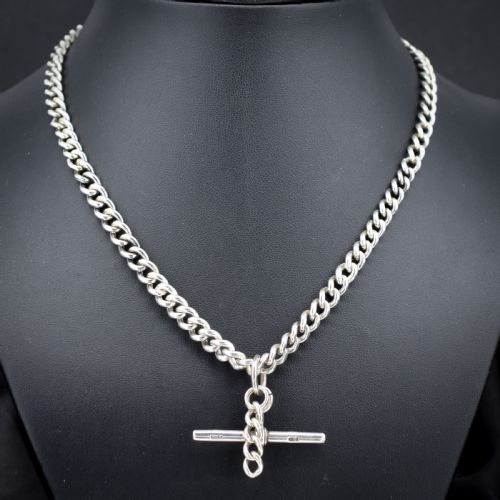
Most examples found here originate from the late nineteenth century through to the 1920s, spanning the Victorian, Edwardian, and Art Deco periods. Buyers encounter curb links, trombone links, and various pendants including cricket fobs, darts boards, and vesta cases.
The form bridges the gap between historical practicality and modern adornment. Original watch chains and fobs are regularly repurposed into wearable neckpieces while retaining their heavy metal clips and toggle bars.
How they were made
Makers utilised sterling silver and various purities of gold, including nine-carat yellow and rose gold alongside rolled gold. These metals were formed into interlocking curb or trombone links designed to withstand daily wear.
Pendants and fobs incorporated detailed metalwork, sometimes augmented with enamel decoration. Components such as dog clips and t-bars were mechanically joined to the main chain sections to secure the pocket watch or fob.
Listings span the Victorian, Edwardian, and Art Deco eras, utilising sterling silver, nine-carat gold, and enamel.
What varies in quality
The primary distinction lies in the weight of the metal and the complexity of the link construction. Solid sterling silver and substantial nine-carat gold pieces represent a heavier, more durable standard compared to rolled gold alternatives.
The intricacy of the attached fob or seal dictates the character of the piece. Intricately detailed enamel work or Birmingham hallmarked elements elevate the visual interest of the chain.
The Albert Chain Pendant Glossary
- Albert chain
- A short watch chain originally designed to attach a pocket watch to a waistcoat buttonhole. Modern wearers often convert these into necklaces.
- T-bar
- The crossbar fastener attached to the centre of an albert chain used to secure it through a garment buttonhole. On a necklace, it hangs as a decorative toggle feature.
- Dog clip
- A spring-loaded swivel clasp attached to the end of the chain. It originally fastened to a pocket watch or fob pendant.
- Vesta case
- A small pocket container designed to hold matches, frequently found attached to antique watch chains. These cases often feature engraved surface patterns.
- Trombone link
- A specific chain link design featuring alternating long rectangular links and small circular connectors. This style is characteristic of late nineteenth and early twentieth-century jewellery.
Albert Chain Pendant: Frequently Asked Questions
How do you wear an albert chain pendant?
These pieces are typically worn around the neck with the dog clip and t-bar functioning as the central fastening or dangling feature. The weight of the chain allows it to drape naturally as a substantial necklace.
Many wearers position the t-bar at the front to showcase the historical design of the original watch chain.
What is the difference between sterling silver and rolled gold?
Sterling silver denotes solid precious metal content conforming to strict fineness standards, often accompanied by hallmarks. Rolled gold consists of a thin layer of gold mechanically bonded to a base metal core.
Solid metal pieces maintain their composition throughout, whereas rolled gold offers the appearance of solid gold at a different weight and construction level.
Can I attach a different pendant to the chain?
The integrated dog clips make it straightforward to add or remove compatible fobs and pendants. This modular design reflects the original interchangeable nature of Victorian watch accessories.
Owners frequently customise the look by swapping between seals, lockets, and specialised fobs.
How do I date an antique albert chain?
Dating relies on hallmark stamps, link styles, and accompanying components such as specific fob designs. Pieces from the Victorian and Edwardian eras often display distinct manufacturing marks or commemorate specific sports and events.
Stylistic shifts from heavy curb links to lighter Art Deco forms help narrow down the decade of production.