



Aesthetic Movement Coat Rack
An aesthetic movement coat rack brings striking late-nineteenth-century linear design and exotic materials straight into your hallway.
Aesthetic Movement Coat Rack
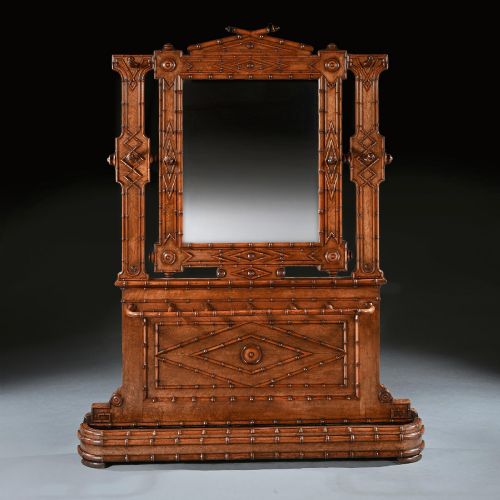
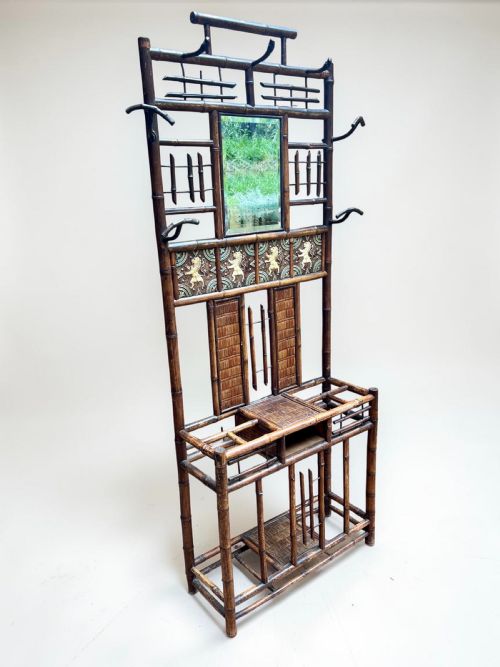
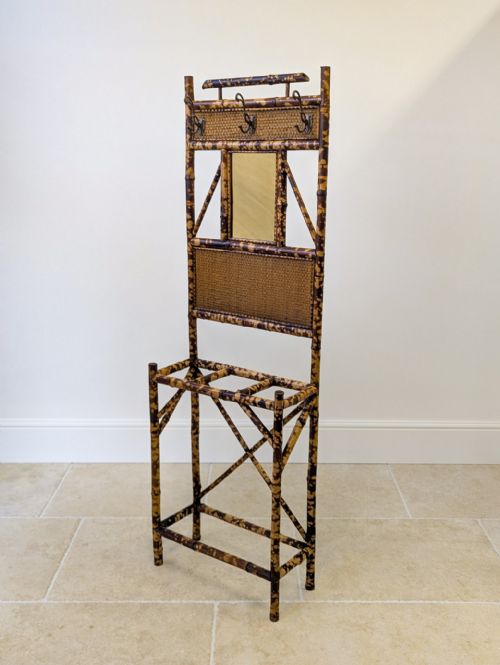
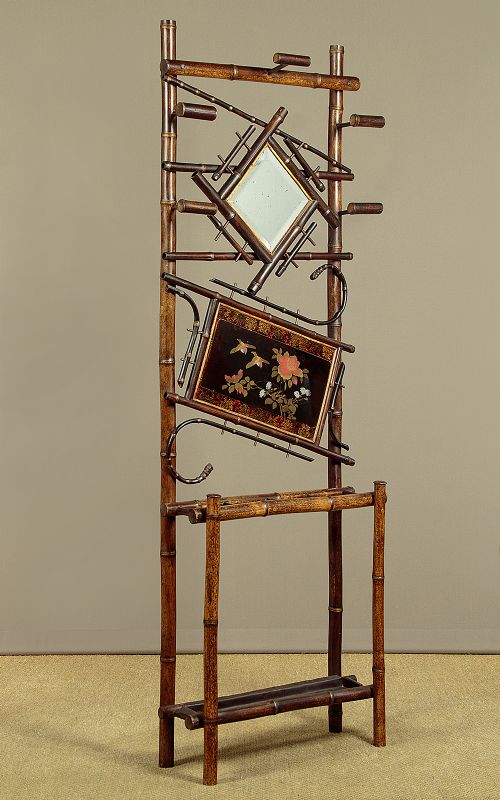
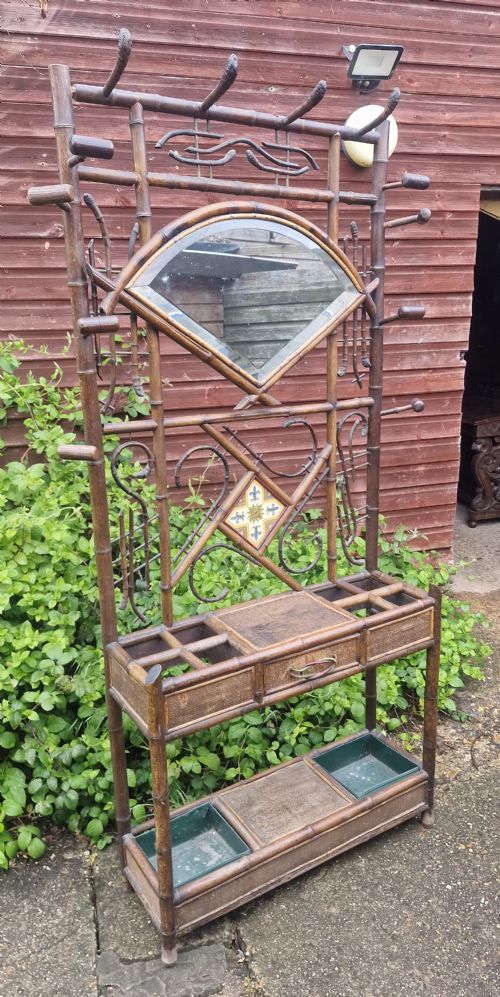
An aesthetic movement coat rack serves as a functional piece of hall furniture designed to hold garments while displaying distinct artistic influences of the late nineteenth century. These pieces appear frequently as bamboo or faux bamboo hall stands, often incorporating integrated mirrors and umbrella holders.
The objects listed on this page span the Victorian period, originating from around 1860 up to 1910. Makers utilised stylistic elements from the Arts and Crafts movement alongside Japanese-inspired motifs to create visually engaging hallway storage.
Materials and construction methods
Makers constructed these coat racks and hall stands primarily using natural bamboo, faux bamboo, mahogany, and oak. Structural integrity relied on traditional woodworking techniques adapted to lightweight and exotic materials.
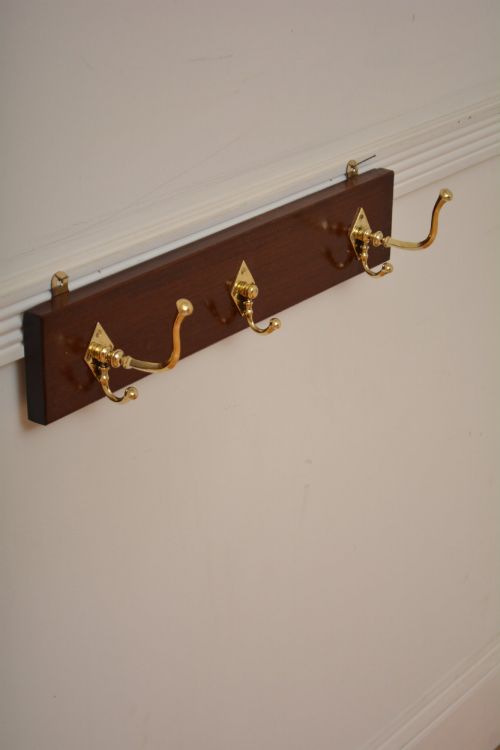
Makers integrated decorative elements such as brass coat hooks, glass panels, ceramic tiles, and lacquered panels into the wooden or bamboo framework. Several examples incorporate fitted mirrors and dedicated sections for umbrellas.
Aesthetic Movement Coat Rack Retail Price Guide 2026
Typical asking prices for aesthetic movement coat rack among the pieces listed under this phrase on Sellingantiques today, from the lower quarter to the upper quarter. They describe what is for sale here now, not the wider market.
The listings span the Victorian and Edwardian eras, incorporating materials from natural bamboo and rattan to ceramic tile, brass, and glass.
Assessing quality in design and materials
The integration of secondary functions, such as bevelled mirrors and sturdy umbrella wells, demonstrates superior workshop capability. Superior examples also show careful balance between the lightness of bamboo or faux bamboo and the durability required for daily hallway use.
Gillows·Ellen E Houghton·Minton
The Aesthetic Movement Coat Rack Glossary
- Aesthetic Movement
- A late-nineteenth-century design movement that emphasised art for art's sake and drew heavy inspiration from Japanese art. It rejected heavy Victorian moralising in favour of visual harmony and refined craftsmanship.
- Faux bamboo
- Turned and painted wood designed to imitate the jointed appearance of natural bamboo. This technique was popular in nineteenth-century furniture production for creating exotic visual effects using domestic timbers.
- Hall stand
- A large piece of hallway furniture combining coat hooks, a mirror, and umbrella storage. These items greeted visitors upon entry and kept outdoor wear organised.
- Chinoiserie
- European decorative style reflecting Chinese artistic influences. It often appears on panels and lacquerwork within nineteenth-century furniture.
- Japonisme
- The influence of Japanese art on Western culture during the late nineteenth century. This aesthetic informed the asymmetric compositions and motifs seen on many pieces of the period.
Aesthetic Movement Coat Rack: Frequently Asked Questions
What is an aesthetic movement coat rack?
An aesthetic movement coat rack is a hallway furnishing from the late nineteenth century that combines practical storage with artistic design. These items often feature bamboo, brass, and exotic decorative panels.
They reflect the artistic philosophies of the period, turning everyday hallway storage into a deliberate design statement.
How do I use one in a modern home?
These pieces fit naturally into entrance halls and corridors where guests arrive, functioning precisely as intended for hanging coats and storing umbrellas. The integrated mirrors also help bounce light into smaller hallways.
Ensure that wall-mounted racks are secured into proper anchors, and give freestanding bamboo stands adequate clearance from damp outerwear.
How can I tell the period?
Dating relies on observing construction methods, materials, and stylistic markers such as Japanese-inspired motifs or Arts and Crafts influences. Pieces range from mid-Victorian examples up to early twentieth-century interpretations.
Look for period-appropriate hardware like brass hooks and construction details typical of nineteenth-century cabinetmaking.
Were these items mass-produced?
Makers produced these hallway furnishings in various scales, ranging from standard workshop output to impressive, large-scale commissions. Some examples involve specialised artistic collaborations, such as hand-painted ceramic tiles.
Individual workshops utilised both traditional timbers like mahogany and fashionable alternative materials like bamboo to satisfy Victorian demand.