


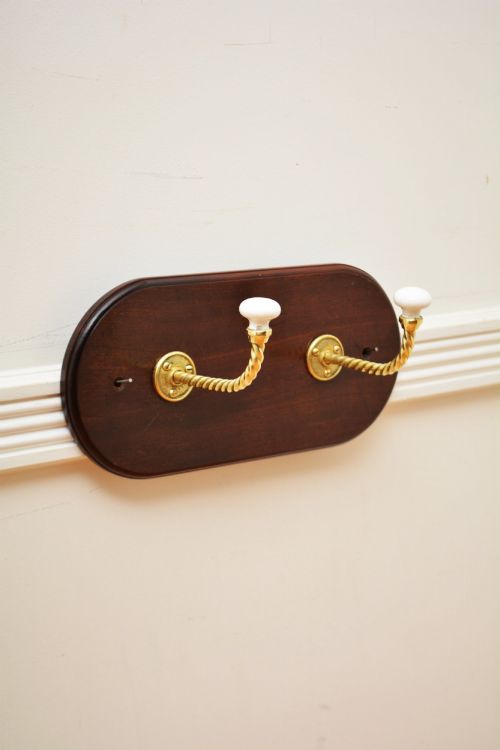


Mahogany Coat Hooks
These mahogany coat hooks bring practical utility and rich timber tones straight from the Victorian hallway into modern spaces.
Mahogany Coat Hooks
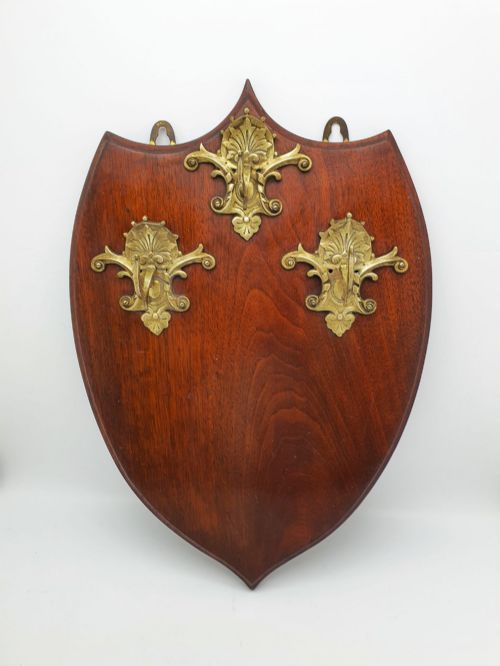
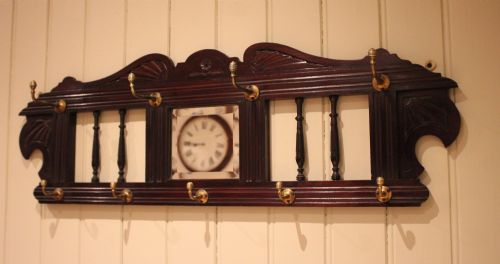
When searching for mahogany coat hooks, buyers encounter functional pieces designed for hallways, cloakrooms, and reception areas, ranging from simple hanging racks to substantial freestanding hall stands. The selection spans the Victorian, William IV, and Edwardian periods, showcasing the enduring appeal of dark timber combined with robust metal or ceramic fittings.
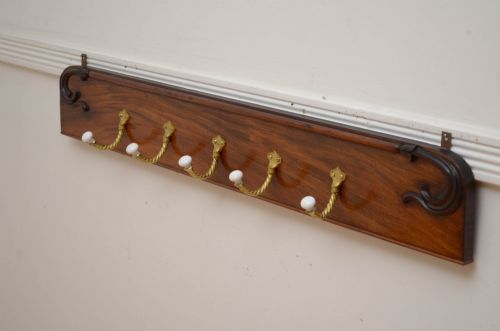
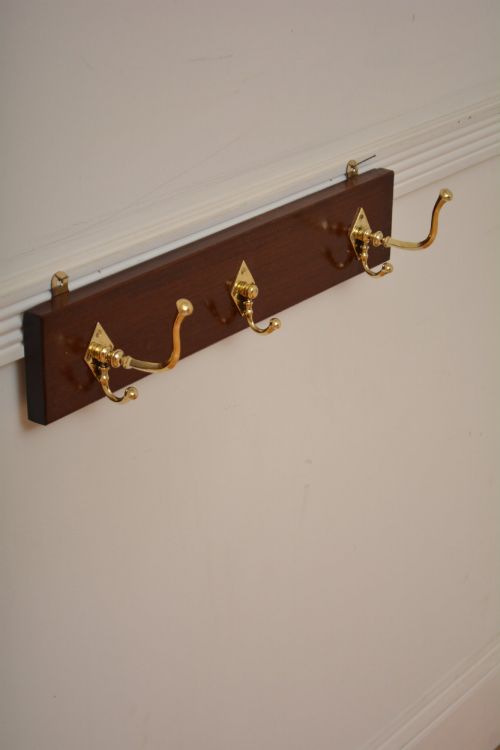
The most common forms on this page include wall-mounted wooden boards fitted with multiple hooks, alongside more elaborate variations incorporating mirrors, hat shelves, and umbrella stands. These pieces reflect the architectural and domestic needs of the nineteenth and early twentieth centuries, offering both utility and decorative presence.
Makers utilised dense timbers such as mahogany alongside beech and bentwood, pairing the wood with brass, ceramic, glass, and iron hooks. Styles stretch from restrained Victorian and Arts and Crafts designs to French bistro and Aesthetic Movement examples, providing diverse options for period interiors.
How they were made
Makers constructed these coat hooks using solid mahogany boards, often shaped with bevelled edges, carved mouldings, or turned framing. Timber selection focused on grain depth and durability, ensuring the wall-mounted rails could bear the weight of heavy winter garments.
Hooks and mounting plates were cast in brass, iron, or moulded from ceramic and glass, then secured directly into the timber backing. Many pieces integrated bevelled mirror plates, ceramic tiles, or bentwood elements, combining multiple materials into a single functional unit.
Mahogany Coat Hooks Retail Price Guide 2026
Typical asking prices for mahogany coat hooks among the pieces listed under this phrase on Sellingantiques today, from the lower quarter to the upper quarter. They describe what is for sale here now, not the wider market.
Listings span the Victorian, William IV, and Edwardian periods, utilising mahogany, brass, ceramic, glass, iron, bentwood, and beech.
What varies in quality
Quality in these pieces rests upon the solidity of the timber board and the cast finish of the metalwork. Substantial mahogany backplates paired with heavily cast brass or ceramic mounting fixtures represent the higher end of the range.
Design complexity also differentiates the items, with simple rows of hooks standing apart from architectural hall stands featuring deep bevels, mirrors, or specialised tile insets.
Ellen E. Houghton of Minton
The Mahogany Coat Hooks Glossary
- Mahogany
- A durable tropical hardwood known for its deep reddish-brown colour and fine grain. It served as the primary timber for quality furniture and interior fittings throughout the nineteenth century.
- Hall Stand
- A large freestanding piece of furniture placed in an entrance hall, combining coat hooks, a hat shelf, a mirror, and umbrella storage. These items often anchor the hallway space.
- Aesthetic Movement
- A late nineteenth-century design style that emphasised visual beauty over narrative content, often incorporating simple lines and contrasting materials.
- Bentwood
- Wood heated with steam and bent into curved shapes, commonly utilised for lightweight hooks and frames during the nineteenth century.
Mahogany Coat Hooks: Frequently Asked Questions
How are these coat racks mounted?
Most wall-mounted coat racks feature pre-drilled fixing holes or cast metal mounting plates designed to secure directly into wall studs or masonry.
Ensuring proper anchoring is essential, as the combined weight of solid mahogany and heavy garments requires sturdy support.
What periods do these pieces date from?
The listings predominantly feature pieces from the Victorian era, alongside examples from the William IV and Edwardian periods.
Stylistic markers such as turned wooden pegs, brass hooks, and bevelled mirror plates help indicate the approximate decade of manufacture.
Can these hold heavy winter coats?
Solid mahogany boards and robustly cast brass or iron hooks provide substantial weight-bearing capacity for heavy coats and cloaks.
Original hardware was engineered specifically for heavy outerwear used in nineteenth-century entrance halls.
How do I care for the mahogany timber?
Maintaining the wood involves occasional dusting and applying a quality wax to preserve the deep reddish-brown finish.
Avoiding direct sunlight prevents the mahogany from fading over time.