



Victorian Coat Hook Rail
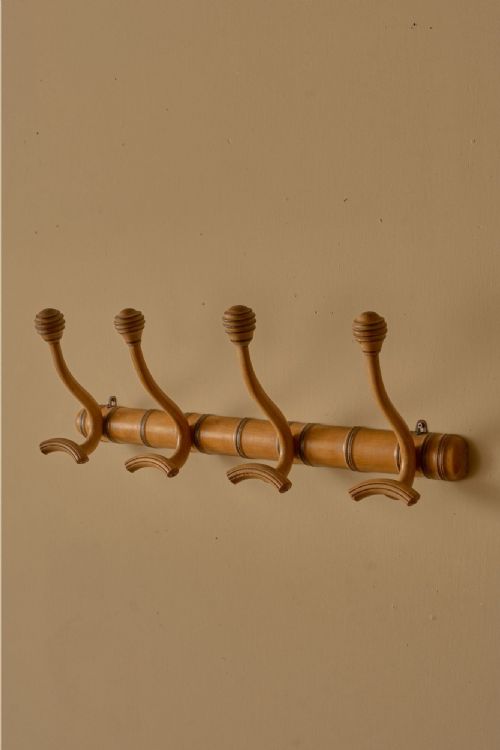
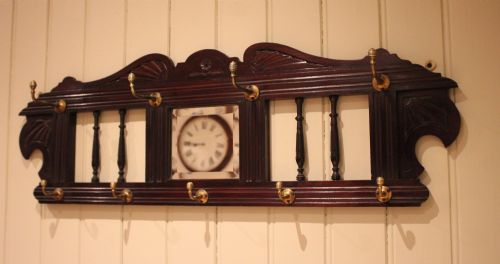
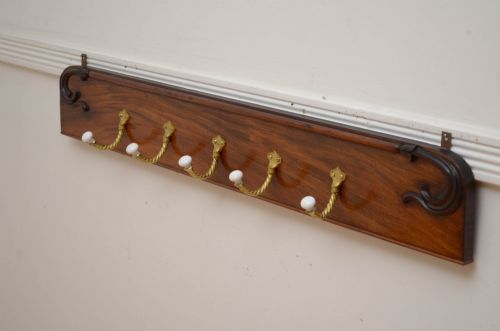
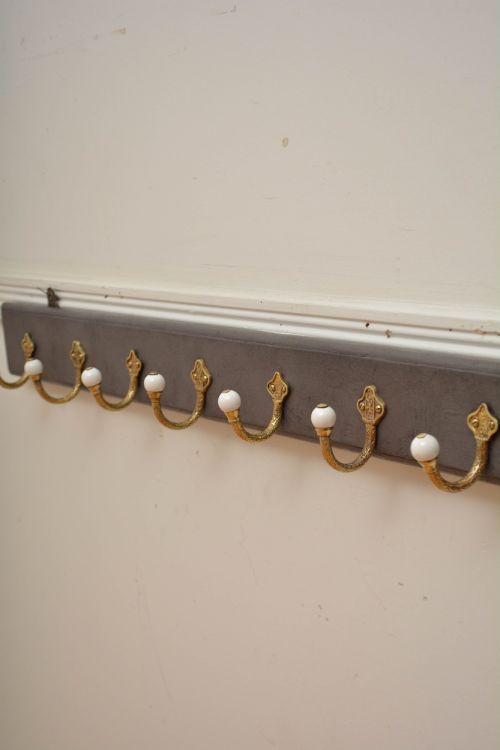
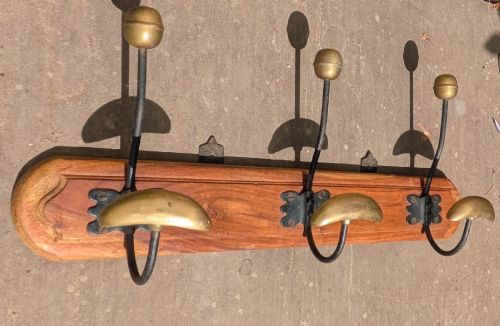
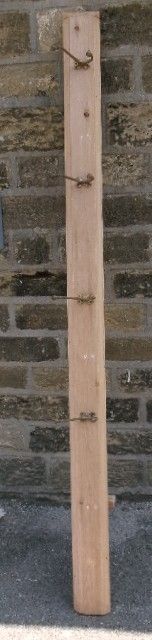
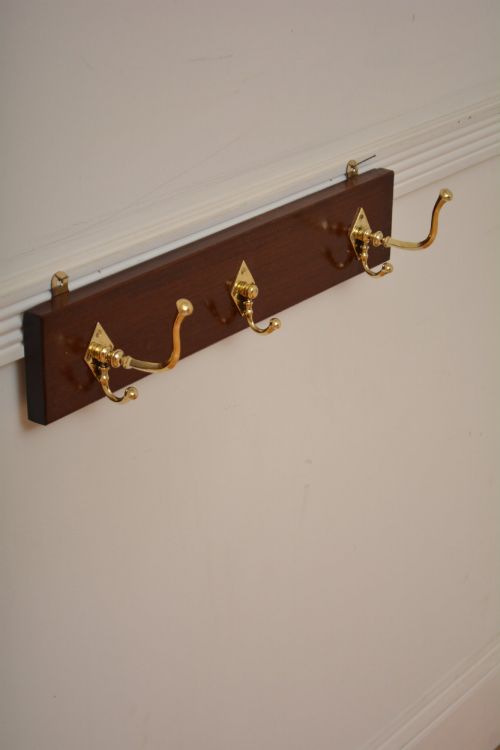
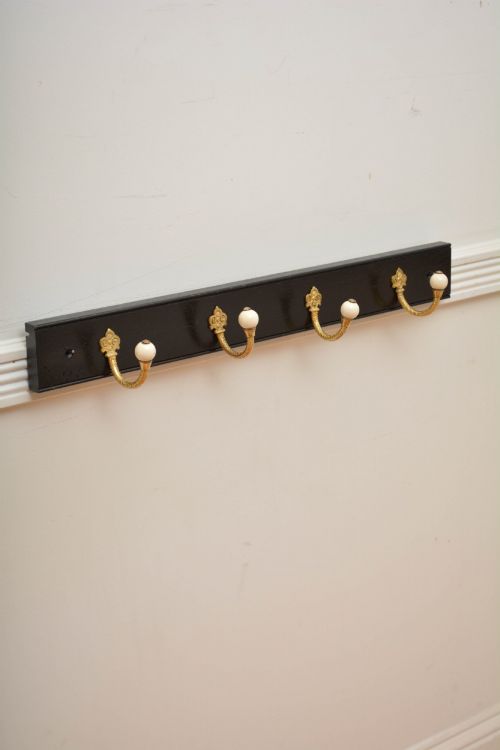
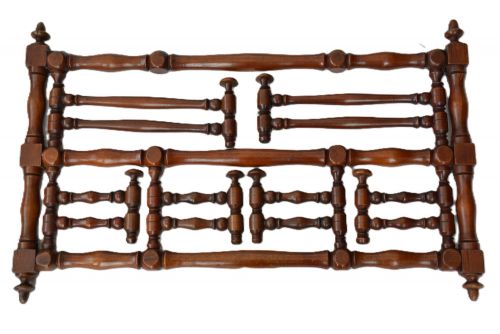
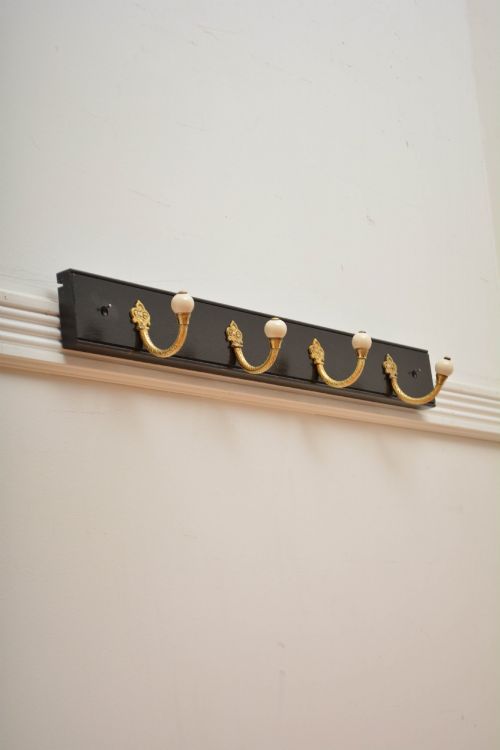
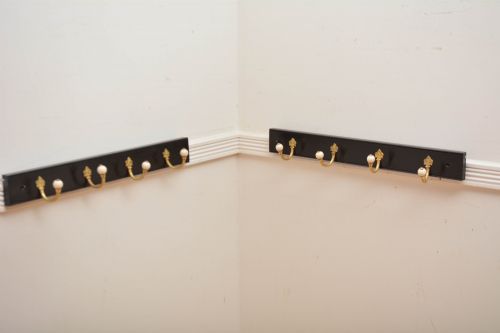
These Victorian coat hook rail pieces offer practical hallway storage fashioned from mahogany, pine, and ebonised wood.
Victorian Coat Hook Rail
A victorian coat hook rail is a wall-mounted board fitted with metal or ceramic hooks designed for hanging garments in a hallway or cloakroom. These practical furnishings range from simple timber battens with a row of hooks to substantial architectural pieces incorporating hat shelves and mirror panels.
The pieces on this page span the nineteenth century, including specific decades from the 1870s to the turn of the twentieth century. Mahogany and pine serve as the primary backboard materials, whilst brass and cast iron provide the structural strength for the hooks.
Regional and stylistic variations appear across the selection, encompassing English vernacular items alongside French chateau and Aesthetic Movement examples. Buyers most frequently encounter straightforward timber backboards fitted with double brass hooks or ceramic-tipped fixtures.
How they were made
Makers constructed these rails using solid timber backboards of mahogany, pine, or ebonised wood, often shaped with simple moulded edges. Backboards were drilled and countersunk for wall mounting, providing a stable foundation to bear the weight of heavy winter garments.
Hooks were cast from brass or iron, occasionally incorporating ceramic elements or twisted rope details for visual variety. These metal fittings were securely screwed directly into the timber backboard to withstand daily domestic use.
Victorian Coat Hook Rail Retail Price Guide 2026
Typical asking prices for victorian coat hook rail among the pieces listed under this phrase on Sellingantiques today, from the lower quarter to the upper quarter. They describe what is for sale here now, not the wider market.
Some nineteenth-century makers incorporated twisted rope motifs into brass hooks, proving that even a hallway peg deserved a nautical nod.
What varies in quality
Quality in a victorian coat hook rail depends upon the substance of the timber and the weight of the metalwork. Substantial mahogany or ebonised backboards paired with heavily cast brass or bronze hooks represent the higher tier of production.
Finer examples display careful attention to detail in the casting of the mounting plates and the quality of the ceramic inserts. Lighter pine boards with simpler iron hooks occupy a more utilitarian place in the historical range.
The Victorian Coat Hook Rail Glossary
- Backboard
- The horizontal timber plank that supports the mounted hooks and attaches to the wall. It distributes the weight of hanging garments evenly across the fixing points.
- Ebonised wood
- Timber treated with a dark stain or finish to imitate the appearance of ebony. This technique was popular in nineteenth-century cabinet making for a formal finish.
- Aesthetic Movement
- A late nineteenth-century design style that emphasised visual beauty over narrative subject matter. Pieces from this movement often feature refined brasswork and dark polished wood.
- Portmanteau
- A heavy framework combining coat hooks, hat storage, and sometimes umbrella stands or mirrors. These substantial pieces served as the central storage unit in a grand reception hall.
- Cast iron
- Molten metal poured into a mould to create rigid hardware. It provides durable strength for utility hooks on industrial or utilitarian rails.
Victorian Coat Hook Rail: Frequently Asked Questions
How do I hang a heavy coat rack securely?
These rails require sturdy wall fixings that engage directly with wall studs or appropriate masonry plugs. Because the backboards bear substantial weight when loaded with garments, reliable anchoring is essential for safety.
Position the rail at a height that allows family members and guests to reach the hooks easily. Ensuring the fixing screws match the countersunk holes in the timber prevents splitting during installation.
What is the difference between mahogany and pine rails?
Mahogany backboards offer a denser, heavier grain with a deep natural colour that suited formal Victorian reception halls. Pine boards are lighter in weight and grain, often painted or given a simpler finish for everyday cloakroom use.
Both timbers provide adequate support, but mahogany pieces generally reflect a higher status of interior decoration. The choice between them depends upon the desired formality of the hallway setting.
Can I use these rails in a modern bathroom?
These historical rails function well in contemporary spaces provided they are not exposed to excessive moisture that could damage antique timber or corrode unlacquered brass. Placing them in a dry hallway or bedroom preserves the original finish of the wood and metal.
Ensure that the wall fixings chosen are suitable for the specific wall type in the room. The sturdy construction of nineteenth-century hardware suits modern daily use when properly maintained.
How do I clean brass and ceramic hooks safely?
Cleaning antique brass requires a soft cloth and mild soapy water to remove dust without stripping the natural patina developed over time. Abrasive polishes should be avoided to preserve the historical surface character.
Ceramic elements on the hooks wipe clean with a damp cloth. Gentle care ensures the original fixings retain their authentic appearance while remaining hygienic for daily use.