
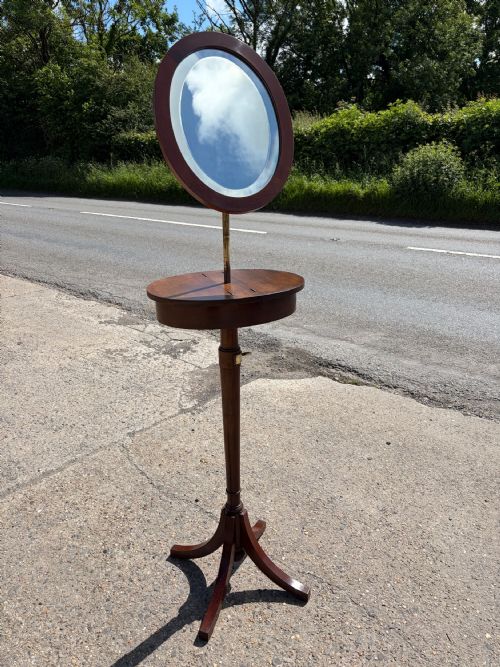
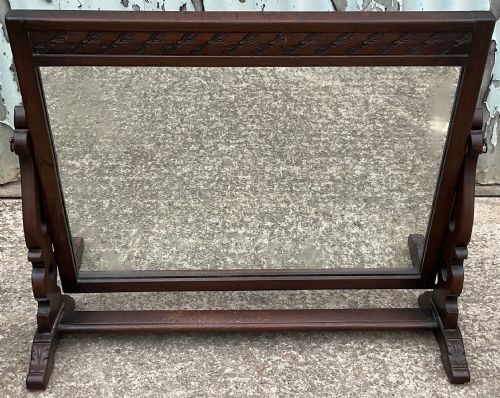


Adjustable Shaving Stand Mirror
These adjustable shaving stand mirror pieces offer the practical height adjustment and pivoting glass needed for daily grooming.
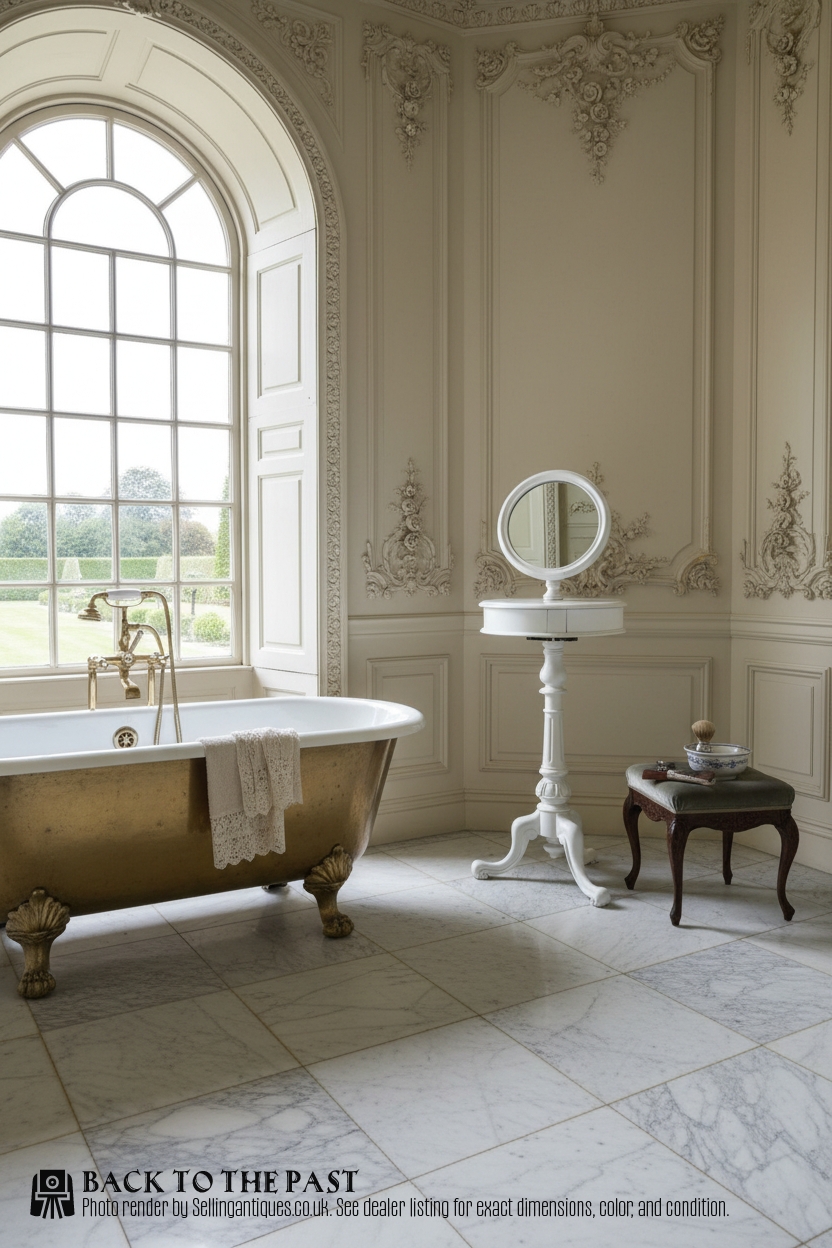
Adjustable Shaving Stand Mirror
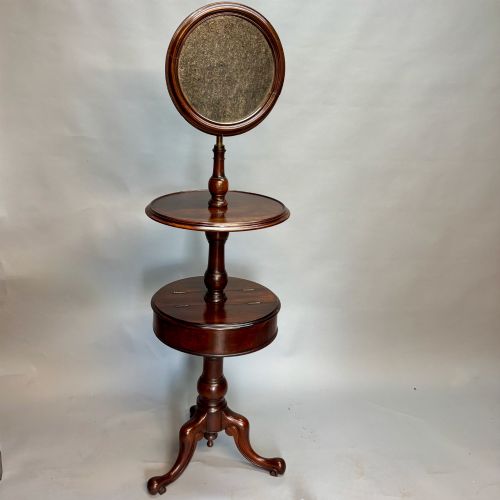
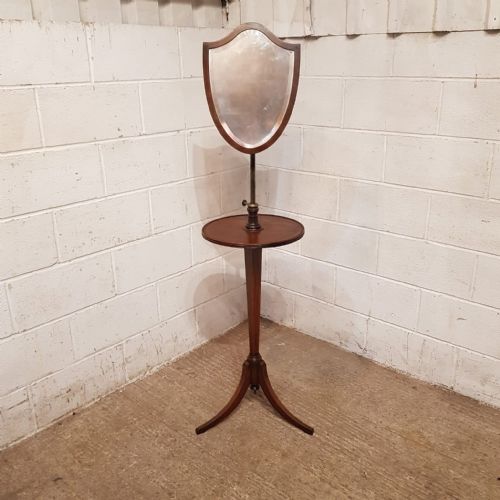
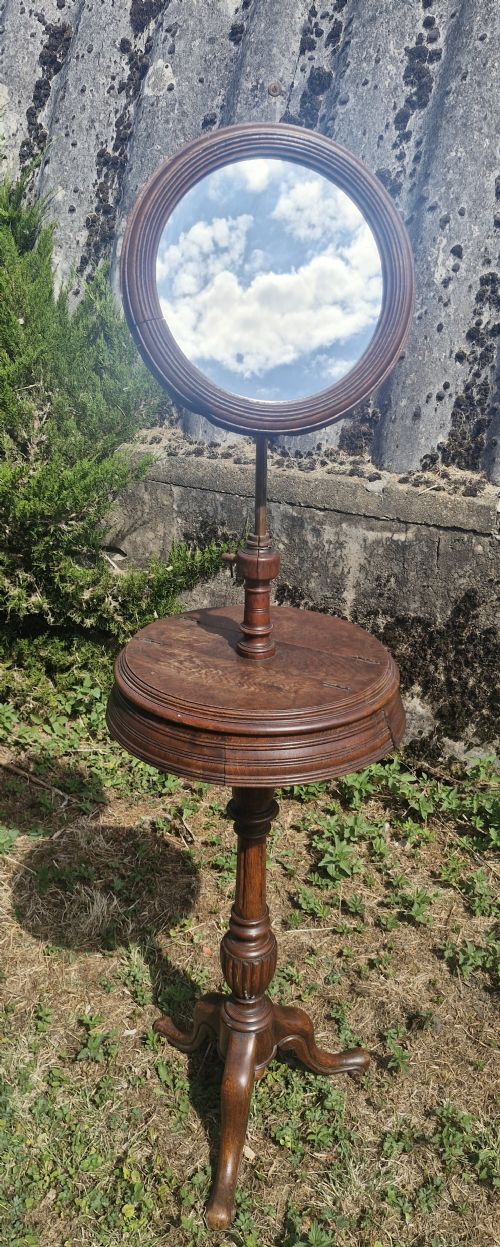
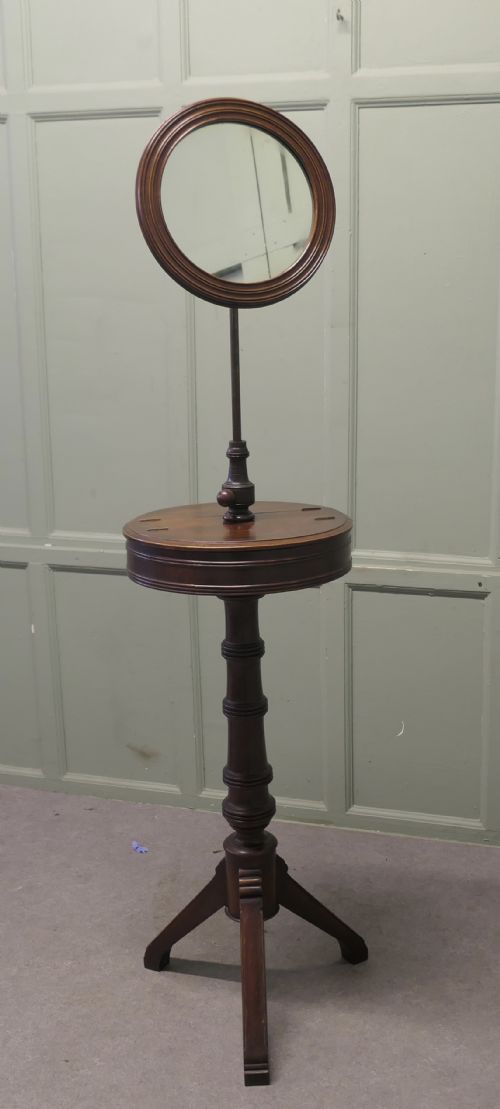
An adjustable shaving stand mirror is designed for personal grooming, combining a pivoting glass plate with a vertical support or dedicated piece of furniture. Buyers searching this phrase encounter examples ranging from compact tabletop designs to tall freestanding tripod units.
The pieces appearing here span the Victorian, Edwardian, and Art Deco periods, alongside later twentieth-century iterations. Mahogany and walnut are common woods, joined by oak, ash, brass, and chrome.
Most examples function through telescopic mechanisms or pivot brackets, allowing the user to alter the height and angle of the glass. These objects served primarily in bedrooms, dressing rooms, and barbers' spaces.
How they were made
Cabinetmakers constructed the wooden frames and stands using solid timbers like mahogany, walnut, oak, and ash, often incorporating turned columns and tripod bases. Brass and chrome components provided the sliding mechanisms and hinges necessary for height and angle adjustment.
Mirror glass was set into pivoted frames, sometimes supported by telescopic brass or wooden rods that locked into position with thumbscrews. Selected pieces featured inlaid details or painted metal finishes, reflecting the prevailing decorative styles of their respective decades.
Mahogany and walnut predominate among the wood materials, while brass and chrome appear frequently on nineteenth and twentieth-century telescopic stands.
What varies in quality
The distinction between standard and superior pieces rests on the precision of the mechanical joints and the stability of the base. Telescopic brass rods and screw fittings that hold their position securely indicate careful manufacture.
Timber selection and secondary detailing also differentiate the range. Examples utilising figured mahogany or walnut with neat turned work and original bevelled mirror glass represent the finer end of production.
J. Shoolbred
The Adjustable Shaving Stand Mirror Glossary
- Telescopic
- Describing a vertical shaft that extends and retracts to alter the height of the mirror. This mechanism is common in nineteenth-century examples.
- Tripod base
- A three-legged support structure frequently used on freestanding Victorian shaving stands to ensure stability on uneven floors.
- Bevelled mirror
- Glass featuring an angled edge cut around the perimeter, adding a decorative finish often found on higher-quality vanity and dressing mirrors.
- Dressing stand
- A piece of furniture incorporating storage or a surface alongside an adjustable mirror, serving a similar function to a shaving stand.
Adjustable Shaving Stand Mirror: Frequently Asked Questions
How do you adjust the height?
Most stands utilise a telescopic rod held by a thumbscrew or a sliding friction collar.
Loosening this fitting allows the mirror to slide up or down before being locked into the desired position.
Where were these used?
These pieces were positioned in bedrooms, dressing rooms, and barbers' shops for close-up personal grooming.
Their movable glass plates allowed users to catch the optimal light.
How do I date a piece?
Dating relies on the combination of timber, hardware, and stylistic details such as turned tripod bases or inlaid banding.
Victorian and Edwardian pieces typically show heavier wood turning, while later twentieth-century versions introduce chrome and painted metal.
Are the mirrors original?
Many older stands retain their original mirror glass, though replacement glass is not uncommon due to age.
Original plates often exhibit slight foxing or minor silvering losses consistent with long use.