



Adjustable Reading Armchair
An adjustable reading armchair offers mechanical comfort for the an active reader, built across the nineteenth and early twentieth centuries to tilt and recline.
Adjustable Reading Armchair
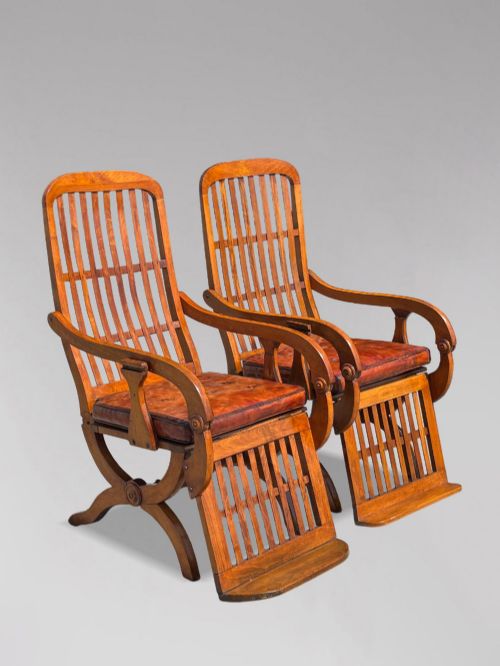
An adjustable reading armchair is a seating form engineered to shift angles for comfort, appearing in forms such as campaign chairs, library chairs, and steamer armchairs. These pieces emerge primarily from the nineteenth century and the early twentieth century, spanning periods like the Regency, William IV, Victorian, and Edwardian eras.
The most common examples on this page are mahogany and oak frames equipped with reclining mechanisms, often upholstered in brown leather, fabric, or hessian. Styles range from French Empire and George IV to Arts and Crafts and Art Deco designs.
Makers and designers referenced in the evidence include Robert Daws, Foot and Sons, and pieces in the manner of Heals of London. Buyers find both pairs and single armchairs, some accompanied by footstools.
How they were made
Makers utilised solid timbers including mahogany, walnut, oak, teak, and ebonised wood to build the robust frames required to support moving backrests and seat actions. Brass fittings, iron mechanisms, and castors were incorporated to facilitate smooth adjustment and mobility.
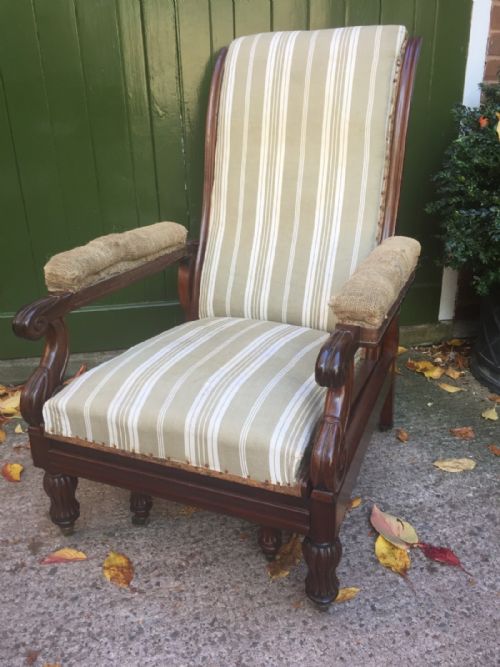
Upholstery materials such as leather, fabric, and hessian were paired with internal padding to provide support for extended periods of reading. Patent actions and mechanical ratchets were integrated directly into the timber frames.
Listings feature mahogany, walnut, oak, and teak frames paired with leather, hessian, and fabric upholstery across the nineteenth and early twentieth centuries.
What varies in quality
The sophistication of the mechanical adjustment mechanism distinguishes standard production from high-end patented designs like those by Daws or Foot and Sons. Ingenious ratchets and smooth pivoting actions require precision engineering that survives centuries of use.
Timber selection and cabinetwork execution separate ordinary frames from superior examples, particularly where carved details, ebonised finishes, or figured mahogany veneers are present. The integrity of the original timber structure underpins the long-term durability of the reclining action.
Heals of London·Foot and Sons·Robert Daws
The Adjustable Reading Armchair Glossary
- Patent chair
- A reclining armchair manufactured under a registered mechanical design, often incorporating brass ratchets or screw adjustments. These pieces frequently bear the stamp or style of known makers like Robert Daws.
- Campaign chair
- A portable folding or dismantling armchair designed for travel, constructed with sturdy frames and durable materials for military or colonial use. Many examples feature adjustable backs and folding footrests.
- Steamer armchair
- A lounging chair with a ladderback frame and extending footrest, traditionally utilised on ship decks and verandas. They are typically fitted with castors for easy movement across uneven surfaces.
- Metamorphic armchair
- Seating furniture engineered to transform into alternative configurations, such as a chaise longue or a chair with an integrated footstool. These pieces rely on concealed mechanical linkages within the wood frame.
- Wing back
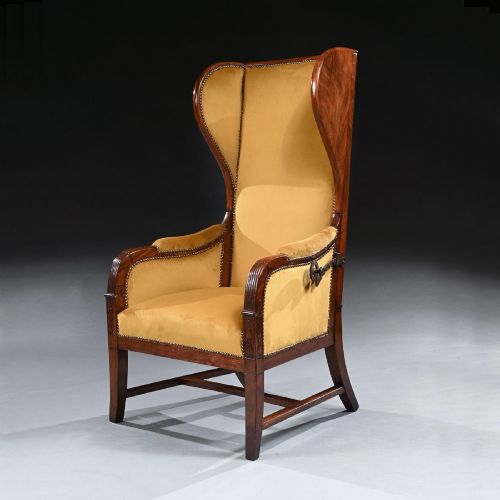
- An upholstered armchair with side panels attached to the backrest designed to shield the occupant from drafts. In reclining variants, this upper structure tilts in unison with the seat mechanism.
Adjustable Reading Armchair: Frequently Asked Questions
How do adjustable reading armchairs work?
These armchairs utilise mechanical ratchets, brass hinges, or pivoted frame designs operated by levers or armrests. The occupant shifts the backrest or seat angle to achieve a preferred reclining position for reading.
Internal linkages and metal supports hold the wooden framework securely in place at various angles. Many models include extending footrests or matching footstools to complete the reclined posture.
What is a patent reclining chair?
A patent reclining chair incorporates a specific, legally registered mechanical innovation designed by a cabinetmaker or inventor. Examples include the designs associated with Robert Daws or Foot and Sons.
These mechanisms represent advanced nineteenth-century engineering, often featuring brass plates, stamped makers marks, or complex linkages hidden within the timber frame.
How do I identify a Victorian reading chair?
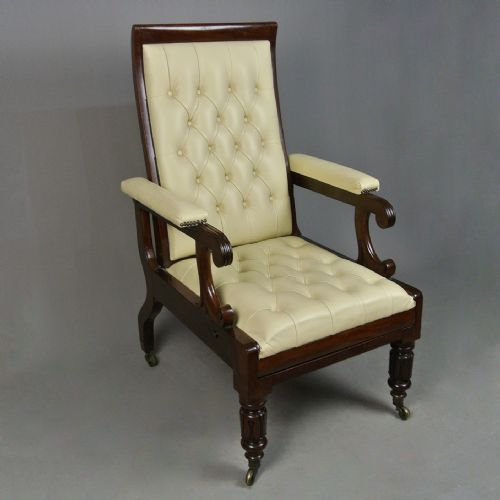
Victorian reading chairs generally appear in heavy woods like mahogany and walnut, frequently upholstered in buttoned brown leather. They often incorporate brass castors and robust adjustable frames dating from the mid to late nineteenth century.
Later Victorian and Edwardian examples shift towards oak and lighter Arts and Crafts aesthetics. Examining the hardware, timber patina, and upholstery technique helps determine the exact period.
Are these chairs comfortable for daily use?
These armchairs were specifically engineered for prolonged sitting, featuring ergonomic reclining angles and padded upholstery in leather or fabric. Their adjustable nature allows users to customise the seating position.
Original mechanisms require gentle handling to preserve the antique ironwork and brass ratchets. Many examples have been restored with traditional materials to ensure structural support for modern living.