


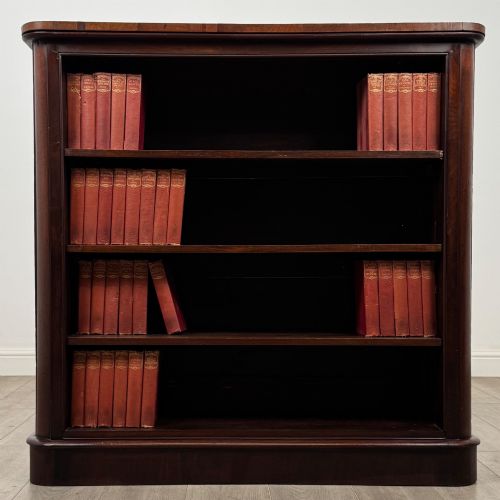
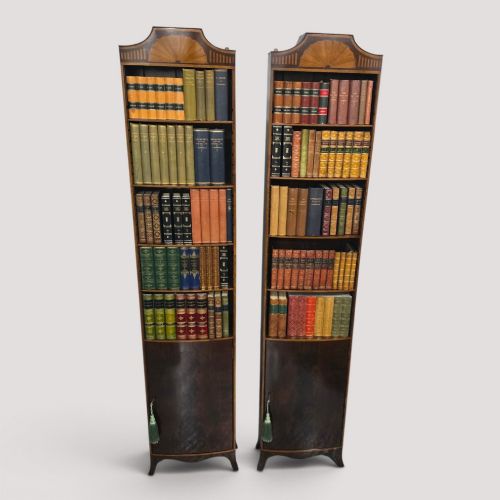
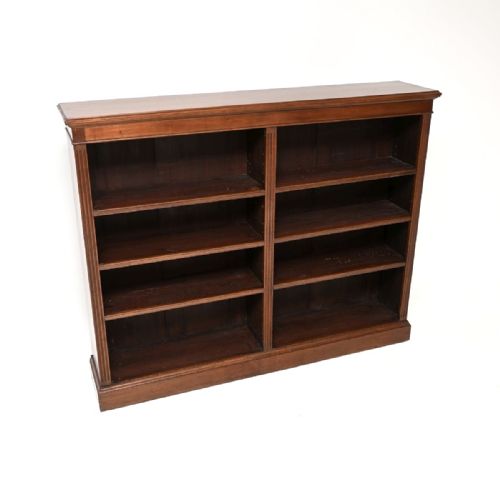
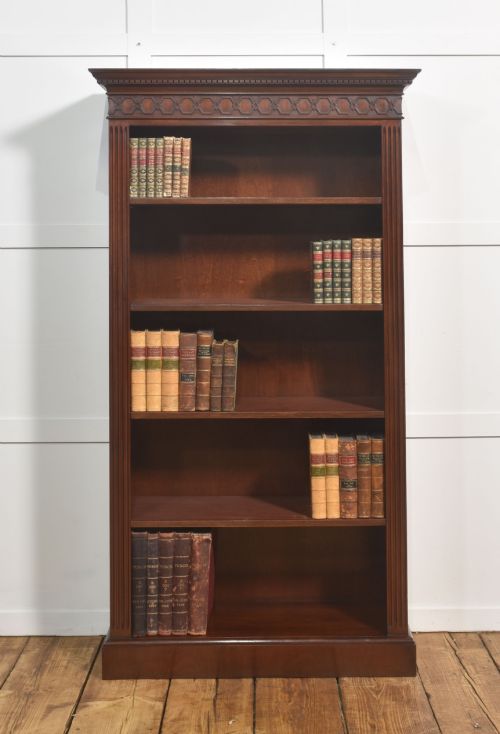
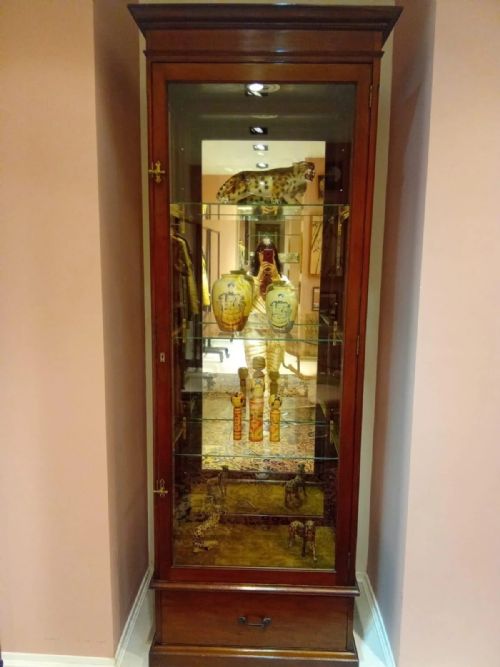
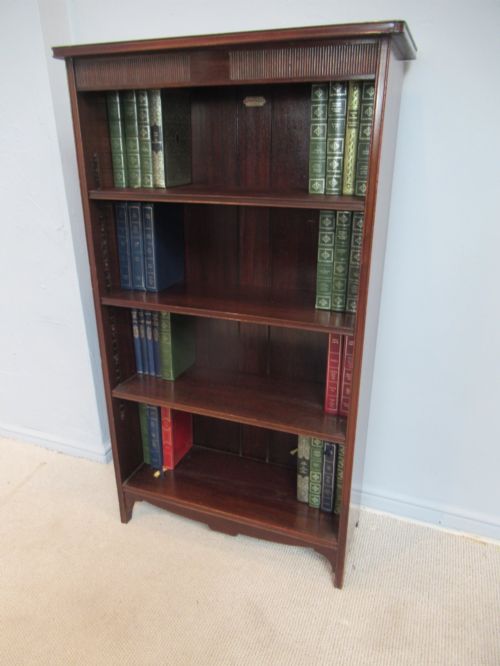

Adjustable Mahogany Shelves
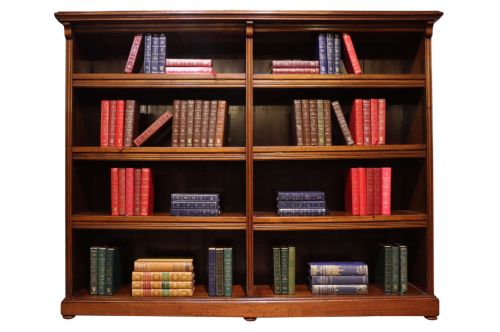
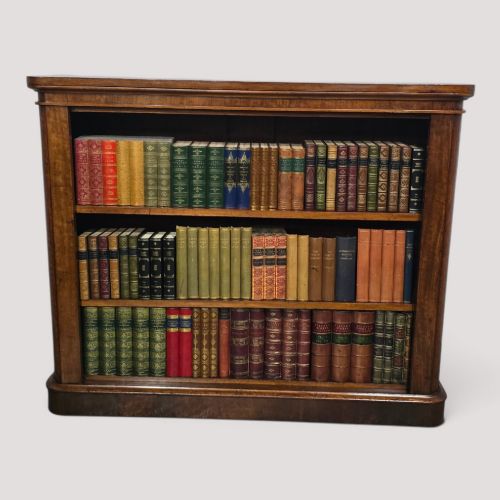
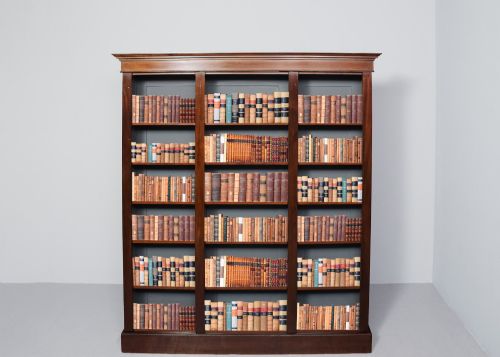
Adjustable mahogany shelves offer adaptable storage for books and display, combining rich timber grain with practical height variation.
Adjustable Mahogany Shelves
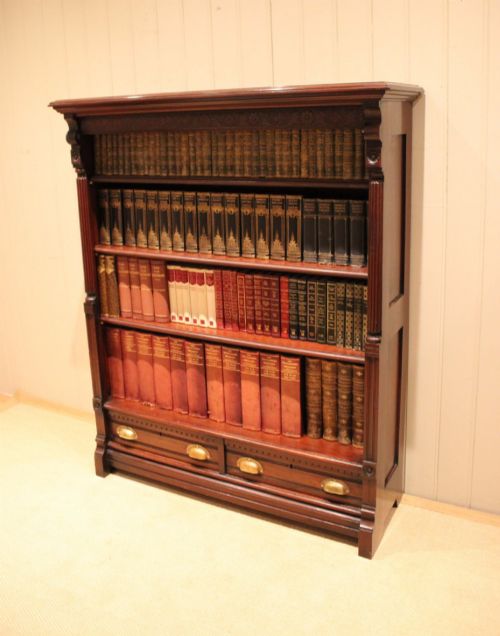
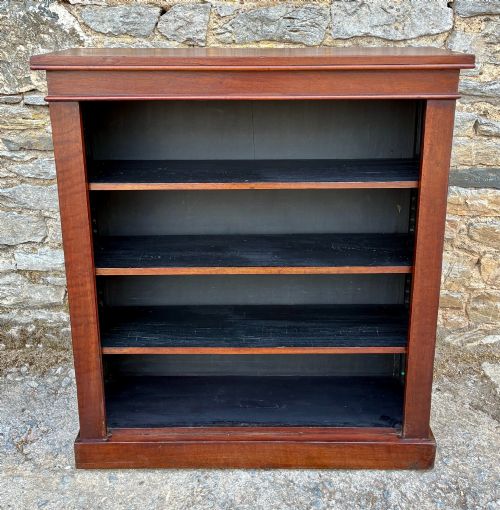
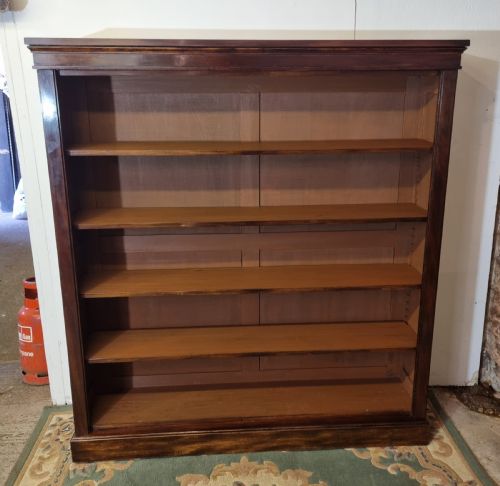
Adjustable mahogany shelves primarily appear in open bookcases, glazed display cabinets, and library furniture dating from the Victorian and Edwardian eras. Buyers searching this phrase most commonly encounter tall open-front bookcases and breakfront designs built to house growing collections.
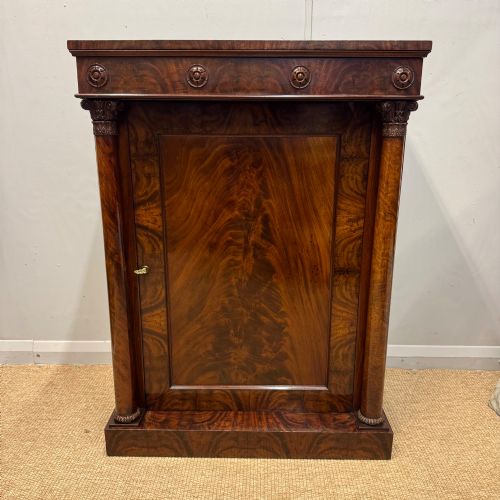
The pieces range from compact early Victorian three-tier buffets and small dwarf cabinets to large freestanding two-part library bookcases. Origins span the nineteenth century through the early twentieth century, showing both plain utilitarian formats and formal glazed configurations.
Makers and designers utilise rich timbers paired with functional interior shelving systems that allow owners to modify shelf heights. These items served libraries, studies, and drawing rooms, evolving from bespoke cabinetmaker commissions to standard Edwardian household furnishings.
Materials and Construction
Cabinetmakers integrated adjustable shelf mechanisms using vertical side slots, wooden ratchets, or metal strip supports screwed into the interior walls. Joinery techniques included robust dovetailed drawers and panelled construction to support the heavy weight of bound volumes.
Adjustable Mahogany Shelves Retail Price Guide 2026
Typical asking prices for adjustable mahogany shelves among the pieces listed under this phrase on Sellingantiques today, from the lower quarter to the upper quarter. They describe what is for sale here now, not the wider market.
Listings span the nineteenth and early twentieth centuries, featuring mahogany, glass, brass, and pine across open bookcases and glazed cabinets.
Evaluating Quality
Quality separates along the lines of timber selection, such as figured mahogany grain and inlaid satinwood banding, contrasted against plain utilitarian softwood-backed carcases. The presence of original stamped maker details, matching brass hardware, and intact glazed doors distinguishes superior pieces from standard workshop output.
Proportion and scale dictate the tier of the piece, with neat-sized dwarf bookcases and grand breakfront library cabinets representing opposite ends of domestic utility. Refined details like astragal glazing bars and fine bracket feet indicate higher craftsmanship than basic open shelving units.
waring and gillows·EDWARDS and ROBERTS·Gillows
The Adjustable Mahogany Shelves Glossary
- Breakfront
- A cabinet design where the central section projects forward from the flanking outer sections. This configuration adds architectural depth to large library bookcases.
- Astragal
- Moulding strips that divide panes of glass within a cabinet door. These wooden bars form geometric patterns typical of glazed bookcases.
- Dwarf bookcase
- A low shelving unit designed to sit below dado height. These shorter cabinets keep wall space open above while providing accessible book storage.
- Secretaire
- A desk disguised as a cabinet drawer or cupboard with a drop-front writing surface. It often forms the central section of a tall bookcase.
- Concertina door
- Folding door hardware allowing wide access to cabinet interiors. This mechanism appears on specialised glazed Victorian bookcases.
Adjustable Mahogany Shelves: Frequently Asked Questions
How do adjustable shelves work on antique bookcases?
Antique bookcases utilise various internal systems to change shelf heights, including slotted wooden sides, metal rack strips, or wooden peg supports. These mechanisms allowed owners to alter shelf spacing to fit books of different sizes.
Most systems require lifting the shelf slightly to disengage it from the vertical supports. Users then reposition the shelf pegs or slide the board into a new slot at the desired height.
Are these bookcases suitable for modern homes?
These pieces provide practical storage for books, ceramics, and display items while adding warmth through dark timber tones. Open front formats allow easy access, while glazed versions protect contents from dust.
Placement requires measuring wall space and ceiling height carefully, particularly for tall Victorian or Edwardian library units. Freestanding designs sit directly against walls without permanent installation.
How can I tell a Victorian bookcase from an Edwardian one?
Victorian pieces generally feature heavier proportions, deeper mahogany tones, and simple open fronts or arched glazed doors. Edwardian examples often display lighter construction, satinwood banding, and refined neoclassical revival styles.
Construction details also provide clues, as machine-sawn backing boards and standardised brass shelf brackets become common by the Edwardian period. Earlier nineteenth-century examples rely more heavily on hand-planed timbers and bespoke joinery.