

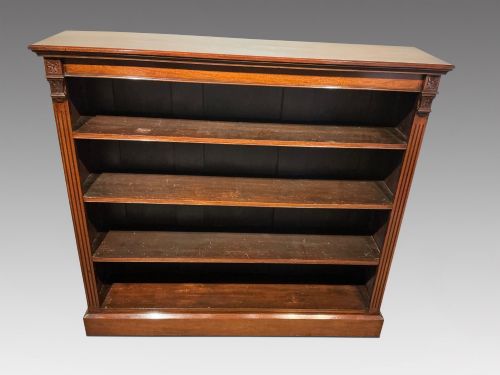
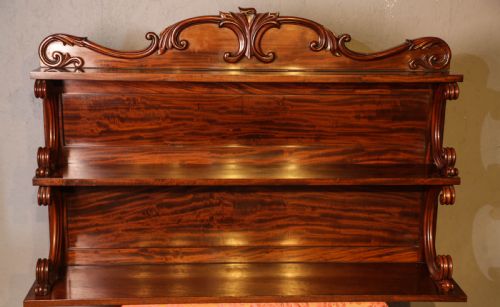


Rich Mahogany Bookshelf
A rich mahogany bookshelf brings dense grain and architectural presence into a room, offering sturdy housing for volumes while anchoring the walls with classic timber tones.
Rich Mahogany Bookshelf
A rich mahogany bookshelf represents a category of practical and display furniture designed to hold libraries, collections, and papers in domestic settings. When you search for a rich mahogany bookshelf, you encounter items spanning the nineteenth century, the Victorian era, the Edwardian period, and the Regency style.
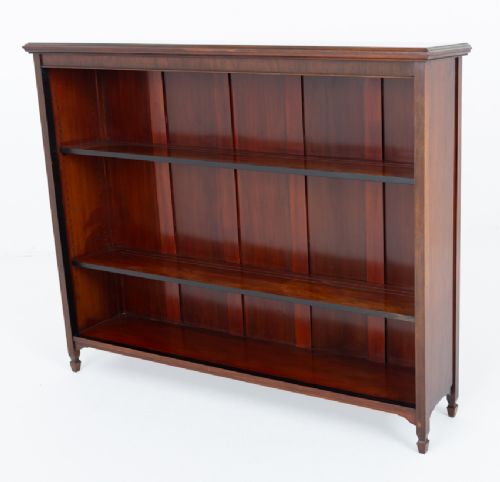
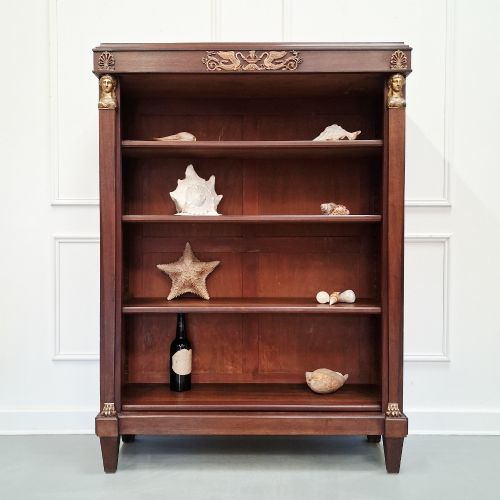
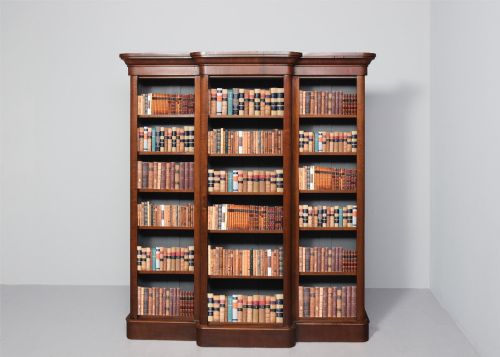
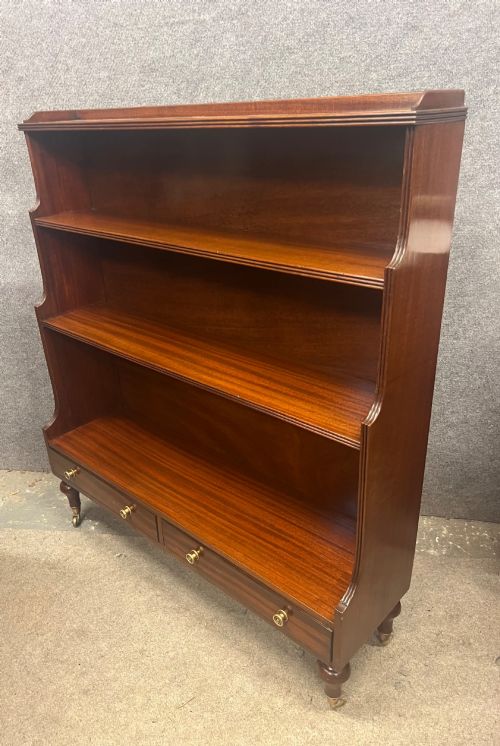
The objects on this page take various forms, including freestanding open bookcases, revolving shelves, dwarf bookcases, wall shelves, whatnots, and library waterfall bookcases. The Victorian and nineteenth-century examples dominate the selection, bringing substantial timber construction and varied tier arrangements into homes.
Makers and designers from these periods utilised the deep red and brown tones of the wood to create functional pieces that suited studies, parlours, and drawing rooms. Each piece demonstrates how cabinetmakers adapted shelving formats to fit the domestic storage needs of past centuries.
Materials and construction methods
The primary material across the listings is mahogany, often selected for its durability and rich natural warmth, occasionally enhanced with flame mahogany veneer to create striking figure patterns on flat surfaces. Cabinetmakers combined solid timber framing with fine wood inlay to add subtle decorative contrast to borders and panels.
Functional metal elements appear in specific designs, notably brass fittings used for adjustable shelf mechanisms and the rotating pivots of revolving bookcases. These construction choices ensured that the shelves could support heavy volumes while allowing practical adjustments for different book sizes.
Rich Mahogany Bookshelf Retail Price Guide 2026
Typical asking prices for rich mahogany bookshelf among the pieces listed under this phrase on Sellingantiques today, from the lower quarter to the upper quarter. They describe what is for sale here now, not the wider market.
Listings feature nineteen-century, Victorian, Edwardian, and Regency pieces constructed from solid mahogany, flame mahogany veneer, wood inlay, and brass.
Distinguishing quality in mahogany shelving
Quality in these pieces rests upon the selection of the timber, particularly where figured flame mahogany veneer is matched across drawer fronts or friezes to create symmetrical patterns. The depth of the grain and the richness of the polished finish separate standard utility pieces from finer cabinet work.
Construction details also dictate the tier of craftsmanship, visible in the precision of the wood inlay, the smoothness of adjustable brass shelf supports, and the stability of architectural mouldings. Pieces that retain their original proportions and sound structural joinery stand apart from heavily altered examples.
Shoolbred & Co
The Rich Mahogany Bookshelf Glossary
- Waterfall bookcase
- A graduated shelving unit where each successive tier is narrower than the one below, creating a stepped profile reminiscent of a cascading waterfall. This form became popular during the nineteenth century for displaying books and decorative objects.
- Flame mahogany veneer
- A thin slice of wood cut from the fork of a mahogany tree where the branch meets the trunk, producing a distinctive flame-like pattern. Cabinetmakers applied this veneer to prominent surfaces to showcase dramatic figuring.
- Dwarf bookcase
- A low-standing bookcase designed to sit below window height, allowing light to pass across the room while providing accessible shelf space. These pieces were standard additions to Victorian and Edwardian libraries.
- Revolving bookcase
- A compact shelving unit mounted on a concealed central pivot, allowing the whole structure to spin for easy access to books from any angle. Edwardian examples often feature decorative wood inlay on the top surface.
- Whatnot
- A multi-tiered piece of open shelving used for displaying ornaments, books, or small collections in nineteenth-century interiors. The form relies on slender vertical supports dividing each horizontal platform.
Rich Mahogany Bookshelf: Frequently Asked Questions
How do I care for mahogany shelves?
Maintenance involves dusting regularly with a soft, dry cloth and occasionally applying a traditional beeswax polish to nourish the timber and preserve the polished finish. Avoid placing mahogany furniture in direct sunlight or near heat sources to prevent the wood from drying out.
Ensuring consistent room humidity protects both the solid timber elements and any delicate wood inlay or veneer work from warping.
Where were dwarf bookcases used?
Dwarf bookcases were designed for Victorian and Edwardian sitting rooms, studies, and drawing rooms where full-height shelving would block natural light from windows. Their lower profile kept walls open and provided reachable storage for everyday reading material.
Many examples include adjustable shelves, allowing owners to customise the tier heights for different sizes of books and ledgers.
How do I identify a revolving bookcase?
A revolving bookcase is a square or circular shelving unit set upon a heavy internal pivot base that permits the entire structure to turn smoothly. Edwardian makers frequently added decorative wood inlay to the top platform of these spinning pieces.
Their compact footprint made them ideal for placing beside an armchair or desk to keep reference volumes close at hand.