


Adjustable Library Bookcase
An adjustable library bookcase offers adaptable storage for growing collections, combining sturdy timber construction with flexible shelf placement.
Adjustable Library Bookcase
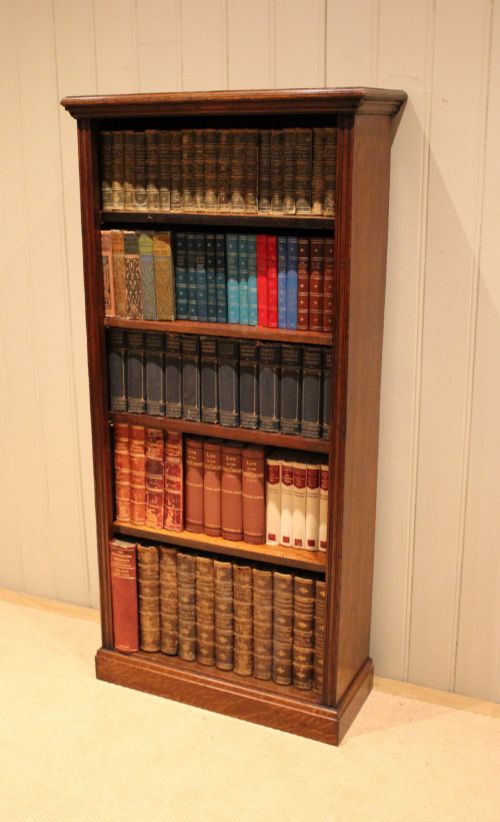
An adjustable library bookcase is a practical piece designed to house volumes of varying heights through movable shelves. When you search for an adjustable library bookcase, you meet solid mahogany, oak, and walnut constructions spanning the Victorian and Edwardian periods.
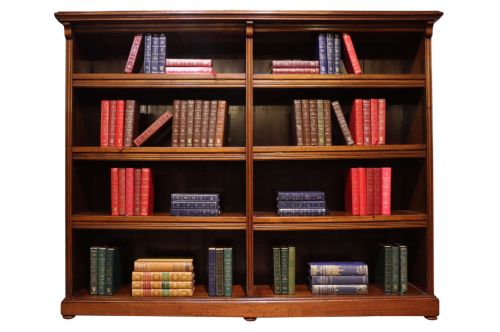
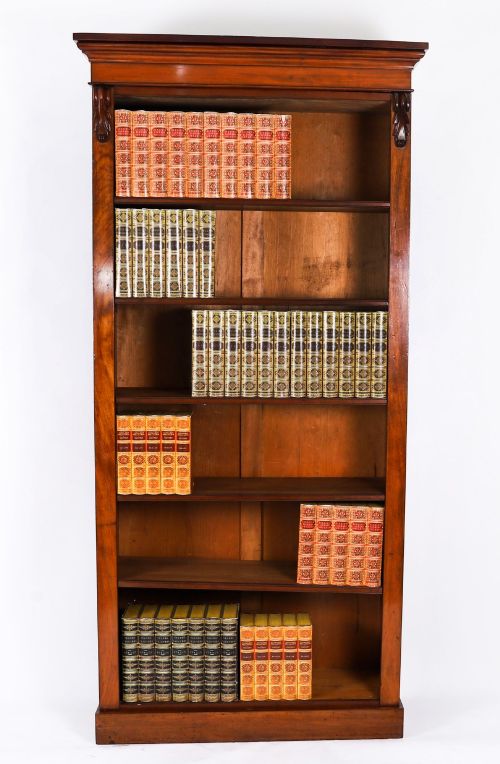
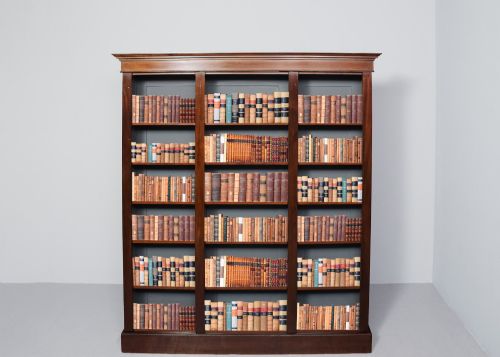
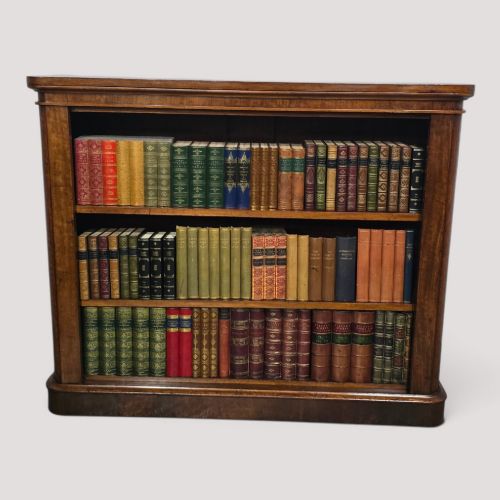
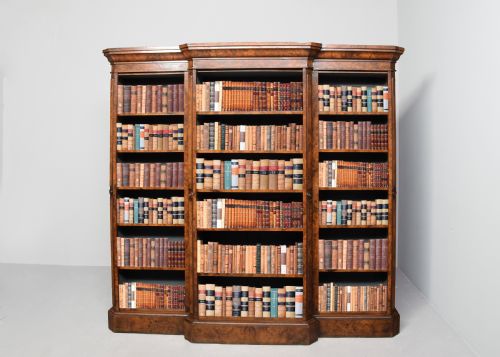
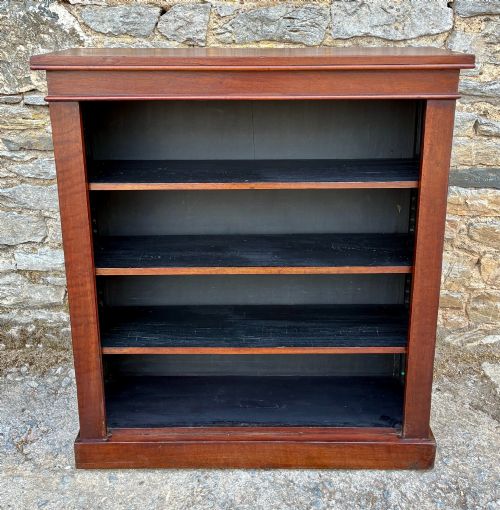
The most common version on this page is the open bookcase, often found in sections or breakfront configurations. These pieces range from small dwarf heights up to large tall formats suited to extensive household libraries.
Materials and construction methods
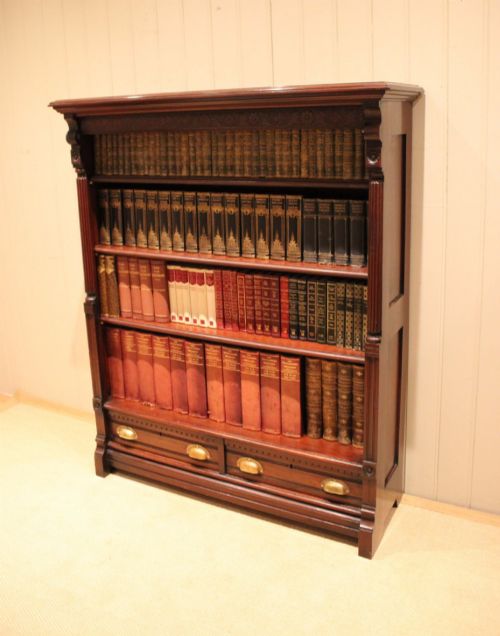
Cabinet makers utilised dense hardwoods such as mahogany, oak, and walnut to build these functional storage pieces. Burr walnut and inlaid veneers appear on finer examples, adding decorative grain patterns to the frontal surfaces.
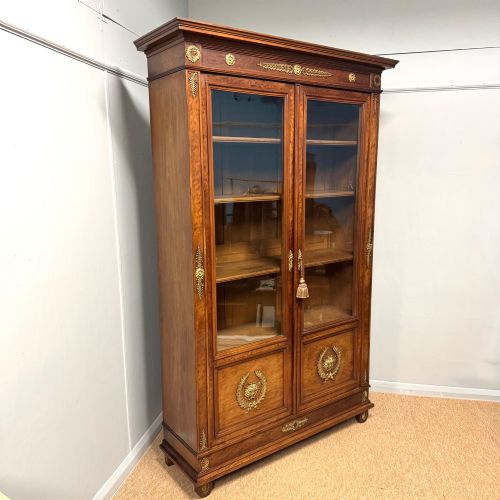
Brass fittings support the adjustable shelving mechanisms within the carcasses. Glass doors feature on glazed variants, protecting the contents while keeping volumes visible.
Adjustable Library Bookcase Retail Price Guide 2026
Typical asking prices for adjustable library bookcase among the pieces listed under this phrase on Sellingantiques today, from the lower quarter to the upper quarter. They describe what is for sale here now, not the wider market.
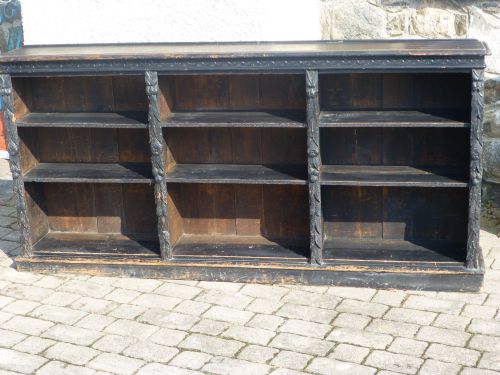
A green man carving peers out from an ebonised low dwarf bookcase, watching over the library.
Assessing quality in construction
The distinction between standard utility pieces and top quality examples lies in the selection of timber and the sophistication of the cabinetry. Breakfront forms and three-section layouts require greater joinery skill than simple single-bay open bookcases.
Carved detailing, ebonised finishes, and maker attribution separate exceptional commissions from straightforward domestic furniture. The execution of the adjustable shelf mechanism and internal linings also marks the grade of the piece.
Bowman Brothers·Waring and Gillows
The Adjustable Library Bookcase Glossary
- Breakfront
- A piece of furniture where the central section projects forward from the flanking wings. This configuration appears frequently in larger library bookcases.
- Dwarf bookcase
- A low bookcase, often standing under waist height, designed to fit beneath windows or in smaller rooms.
- Glazed bookcase
- A cabinet fitted with glass doors to enclose and protect the contents. These keep dust away from paper bindings while maintaining visibility.
- Open bookcase
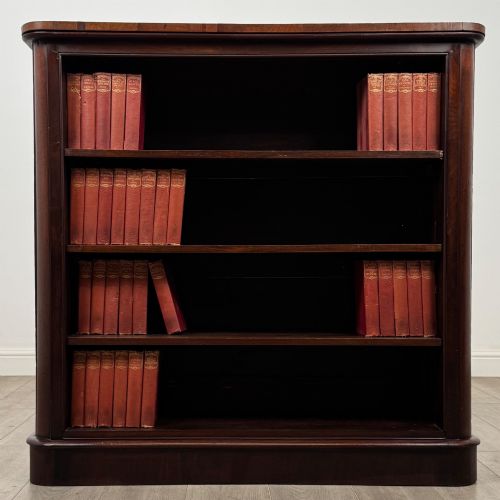
- A bookcase without doors, providing direct access to the shelves. This form dominates the available listings for adjustable library storage.
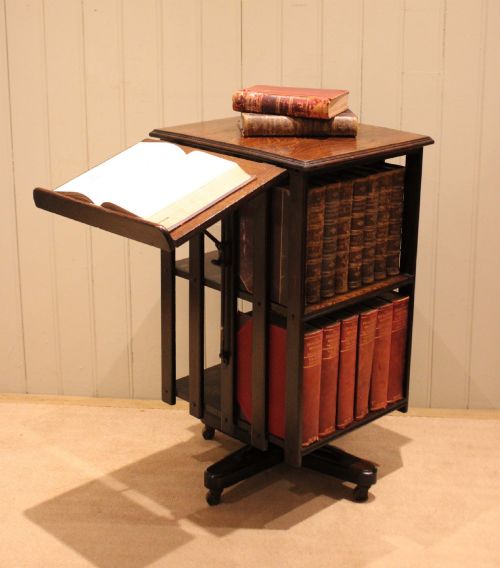
- Revolving bookcase
- A compact bookcase mounted on a rotating base to allow access from multiple angles. Some examples incorporate an integrated reading stand on top.
Adjustable Library Bookcase: Frequently Asked Questions
How do adjustable shelves work?
Adjustable shelves rest on movable supports fitted into vertical tracks or rows of peg holes inside the bookcase carcass. This allows the user to change shelf heights to accommodate books of different sizes.
Older pieces rely on wooden ratchets, brass studs, or notched pilasters to hold the weight of heavy volumes securely.
Where should I place a large bookcase?
Large bookcases suit studies, living rooms, and libraries with stable environmental conditions away from direct heat sources. Placing them against solid interior walls protects the timber from warping.
Ensure adequate floor clearance and check ceiling heights before bringing tall or multi-section breakfront models into a room.
How do I date a Victorian bookcase?
Victorian bookcases exhibit design traits specific to their decade, shifting from heavy solid mahogany in the mid-nineteenth century to lighter walnut or inlaid Edwardian styles later on. Construction marks, screw types, and backboard construction also help determine the era.
Stylistic revivals like Jacobean or Queen Anne often blend period motifs with later nineteenth or early twentieth-century manufacturing techniques.