




Adjustable Brass Table Lamp
An adjustable brass table lamp brings focused illumination and mechanical utility to a desk or reading table, spanning Victorian, Edwardian and Art Deco designs.
Adjustable Brass Table Lamp
An adjustable brass table lamp serves as a functional desk or reading light, engineered with pivoting arms, telescopic stems, or swivel joints to direct illumination precisely where needed. These pieces emerge from periods spanning the nineteenth century through the 1930s, encompassing domestic, maritime, and office environments.
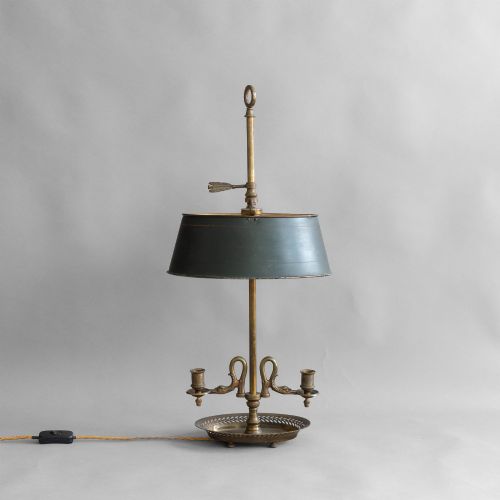
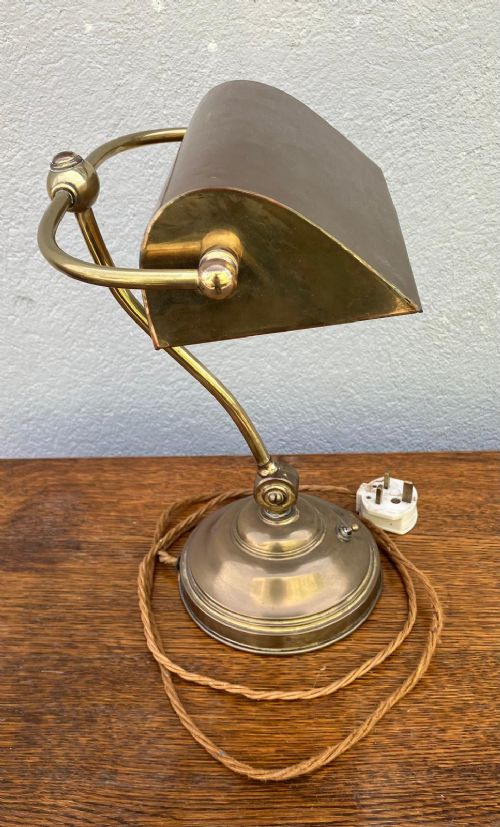
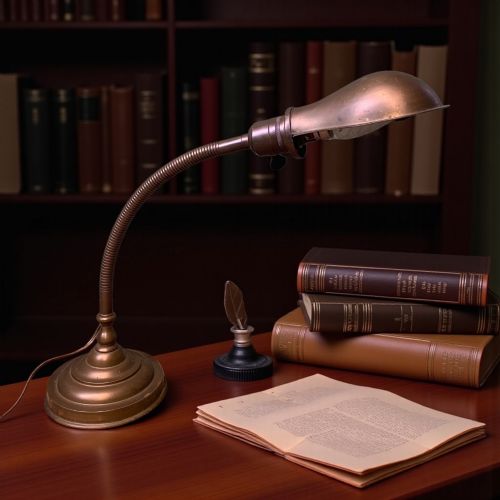
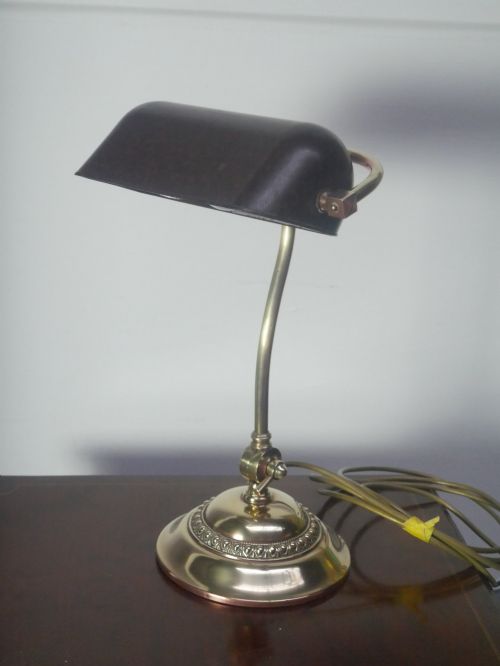
The version most commonly encountered on this page is the Edwardian or 1920s desk lamp, often styled as a bankers lamp with a green shade, or a flexible swan neck model in polished brass. Alongside these sit heavier Arts and Crafts pieces and French bouillotte lamps featuring painted toleware shades.
Makers and designers of the period adapted standard domestic lighting for specialised tasks, producing student lamps complete with inkwells or implements, and railway or ship gimble lamps designed to remain level on moving vessels.
How they were made
Construction relies primarily on cast and spun brass, frequently combined with copper, bronze, or cast iron bases to provide stability for articulated arms. Metals are polished, patinated, or gilt, reflecting the industrial and decorative techniques of Victorian and twentieth-century workshops.
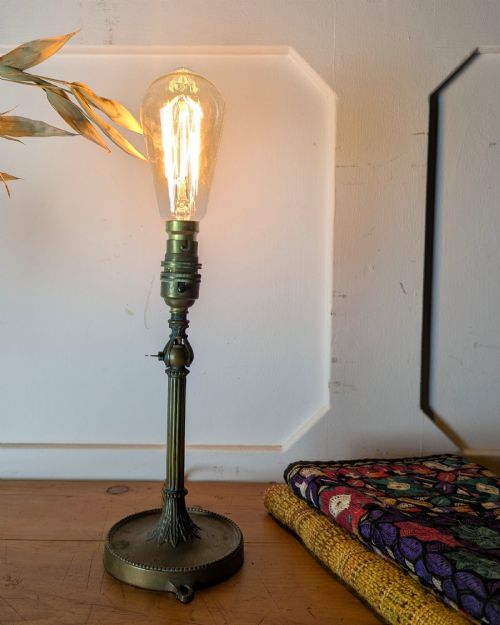
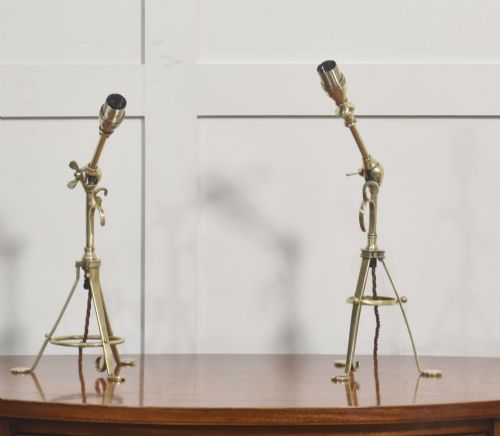
Shades introduce contrasting media, utilising blown glass such as cranberry glass, painted toleware, porcelain, or shell-shaped metal bases. Joints and extension mechanisms utilise threaded screws, sliding telescopic tubes, and weighted counterbalances to achieve adjustability.
Adjustable Brass Table Lamp Retail Price Guide 2026
Typical asking prices for adjustable brass table lamp among the pieces listed under this phrase on Sellingantiques today, from the lower quarter to the upper quarter. They describe what is for sale here now, not the wider market.
Listings feature adjustable brass table lamps paired with glass, toleware, onyx, and porcelain elements across Victorian, Edwardian, and Art Deco periods.
What varies in quality
Quality rests in the precision of the mechanical joints and the weight of the casting, where solid brass assemblies with smooth, secure articulation outlast lighter, stamped sheet metal alternatives. The retention of original components, such as specialised shades, burners, or fitted implements, distinguishes well-preserved examples.
The integrity of surface finishes and the refinement of stylistic details - such as cast Corinthian columns or hand-painted toleware - separate standard utility lighting from superior pieces produced by recognised workshops.
W.A.S. Benson·Wild and Wessel·Faraday and Son·Hinks and Sons
The Adjustable Brass Table Lamp Glossary
- Bouillotte lamp
- A traditional French table lamp featuring multiple candle arms or a single central light beneath an adjustable painted metal shade. It originates from eighteenth-century card games bearing the same name.
- Swan neck
- A curved tubular metal arm that allows the lamp head to sweep outward and downward. This profile is frequently found on early twentieth-century desk lighting.
- Toleware
- Lacquered or painted sheet metal used historically for decorative trays and lamp shades. It is commonly found in green, red, or black finishes with gilt accents.
- Telescopic
- An adjustable vertical shaft design where one metal tube slides inside another to alter height. A thumbscrew or internal friction mechanism secures the position.
- Gimble
- A pivoting ring mounting that allows a lamp to remain upright despite the motion of a ship or train. It provides stability in transit.
Adjustable Brass Table Lamp: Frequently Asked Questions
Were these lamps originally electric or oil?
Many nineteenth-century examples began as oil-burning student lamps or candle holders before conversion to electricity during later modernization. Edwardian and later twentieth-century iterations were frequently manufactured for electric bulbs from the outset.
Examining the internal collar and base wiring reveals whether a piece retains its original fuel reservoir or has been adapted for modern domestic wiring.
How do I care for antique brass?
Polishing should be approached with caution to preserve the natural aged patina accumulated over decades of use. A soft, dry cloth removes dust without stripping the surface character.
Harsh chemical cleaners can permanently alter the finish and diminish the historical appearance of Victorian and Edwardian metalwork.
What distinguishes a bankers lamp from a student lamp?
Bankers lamps typically feature a heavy weighted base and a characteristic green glass or metal shade designed to project light across a desk. Student lamps often incorporate multiple candle sockets, oil fonts, or integrated pen trays and implements.
Student lamps generally date from the Victorian era, whereas bankers lamps become prominent around the Edwardian period and the 1920s.