
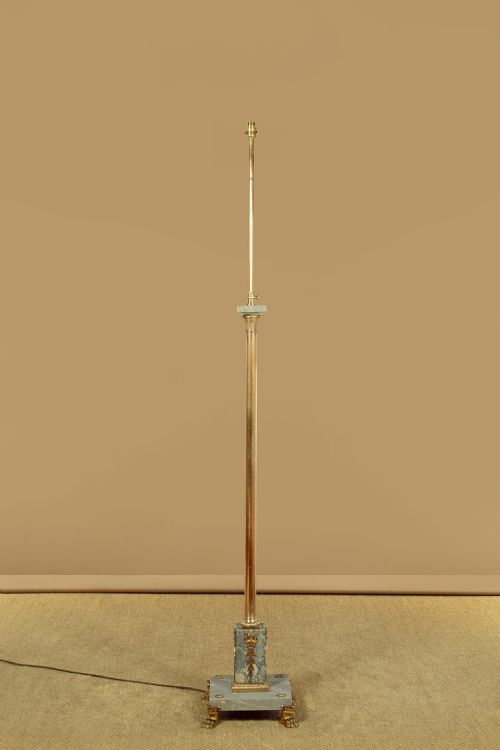
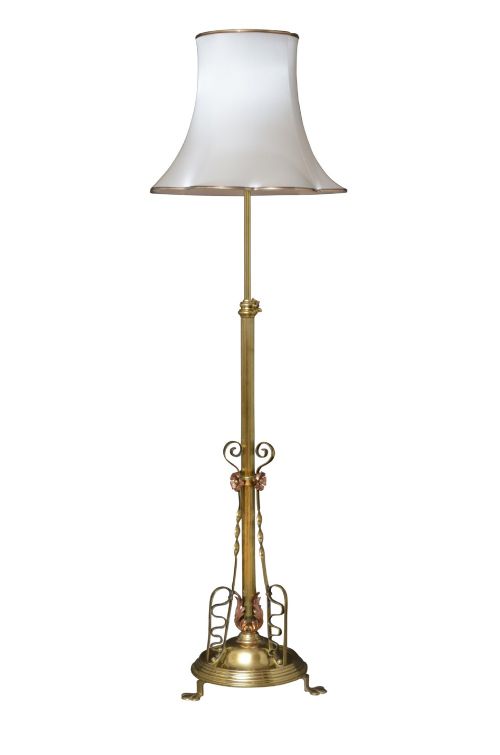
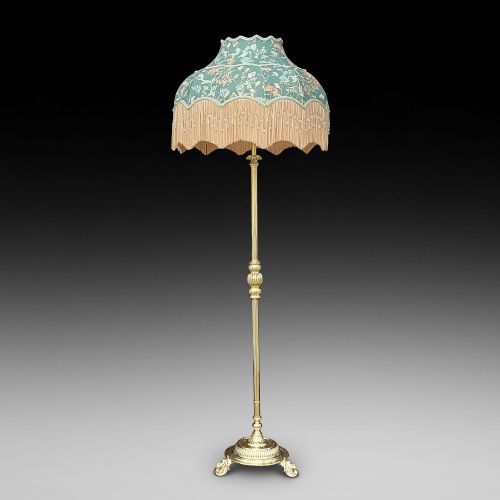
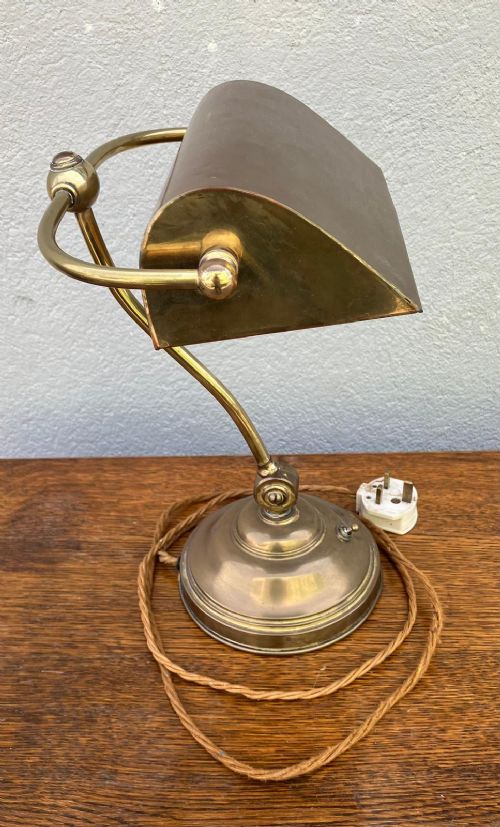
Adjustable Brass Lighting
Adjustable brass lighting brings mechanical flexibility to domestic spaces through telescopic stems, articulated arms and rise and fall mechanisms.
Adjustable Brass Lighting
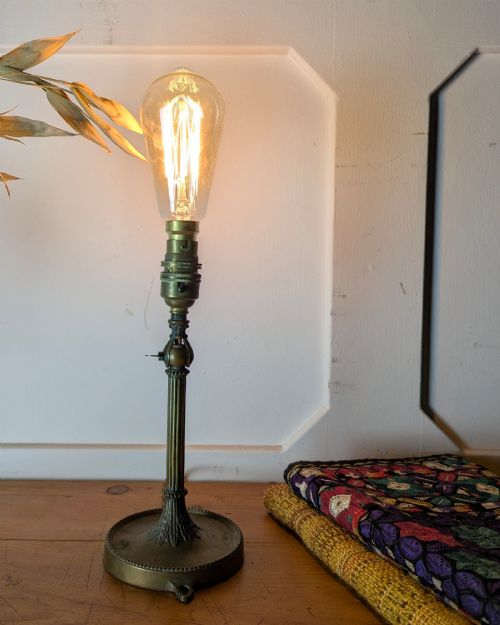
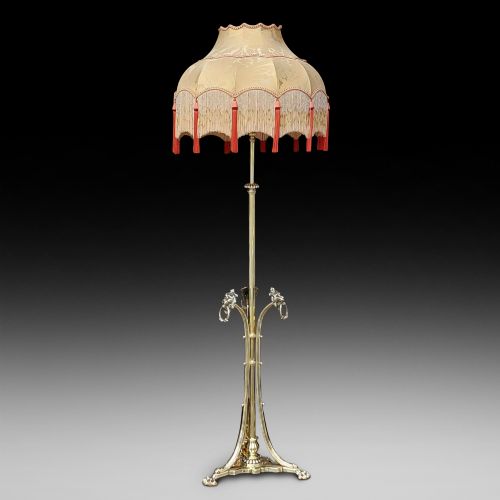
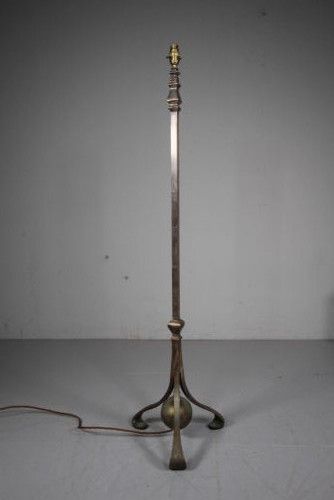
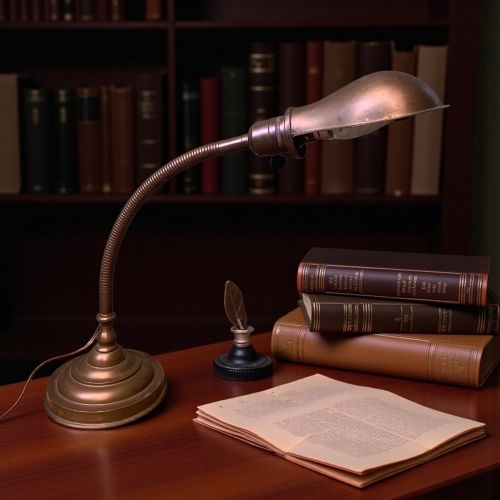
When you search for adjustable brass lighting, you encounter functional task pieces and floor-standing lamps designed to direct illumination precisely where required. The selection spans the Victorian period through to the 1930s, encompassing Edwardian designs, Art Nouveau creations and Arts and Crafts examples.
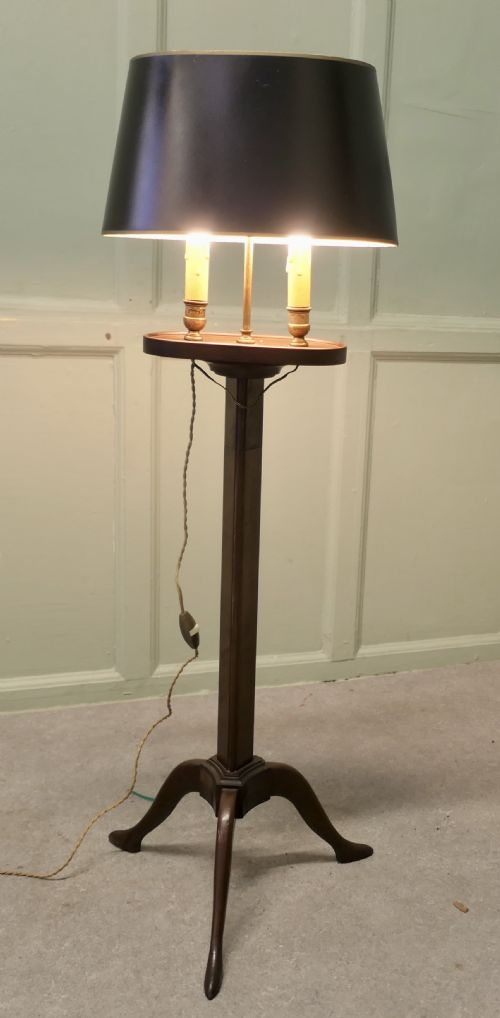
Floor lamps, standard lamps and telescopic oil lamps dominate the larger pieces, while desk lamps, students lights and wall lights make up the smaller formats. These objects originate from English, French and Continental workshops, reflecting domestic, maritime and railway use across the nineteenth and early twentieth centuries.
Materials and Construction
Construction relies primarily on brass, often paired with copper, bronze, steel or silver plate to achieve varied tonal warmth and structural rigidity. Fabric, glass and toleware shade elements introduce contrasting textures and colour to the metal frames.
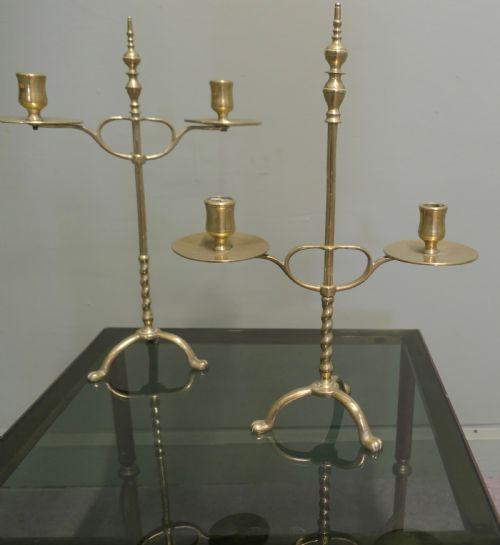
Makers utilised mechanical joints, sliding telescopic stems, screw keys and counterweights to permit physical movement without losing stability. Many surviving pieces show conversions from oil or candle to electric power while retaining their original adjusting mechanisms.
Listings incorporate designs spanning the Victorian period, Edwardian era, Art Nouveau, Arts and Crafts and Art Deco movements.
Distinctions in Quality
The standard of engineering dictates the worth of these mechanisms, separating fluid, precise telescopic action from stiff or loose movement. Superior pieces exhibit substantial metal gauge, solid bases and well-finished joints that hold position securely.
Detailing in the casting and finishing of the metalwork defines the upper tier of production. Original components, uncompromised stems and intact shades carry greater merit than later replacements or heavy alterations.
W.A.S. Benson·Osler·Harrison Patent·AFC·M Pillischer of London
The Adjustable Brass Lighting Glossary
- Telescopic
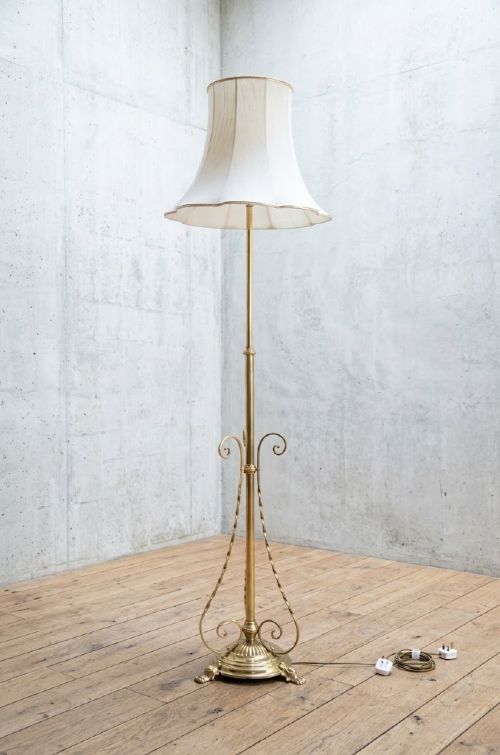
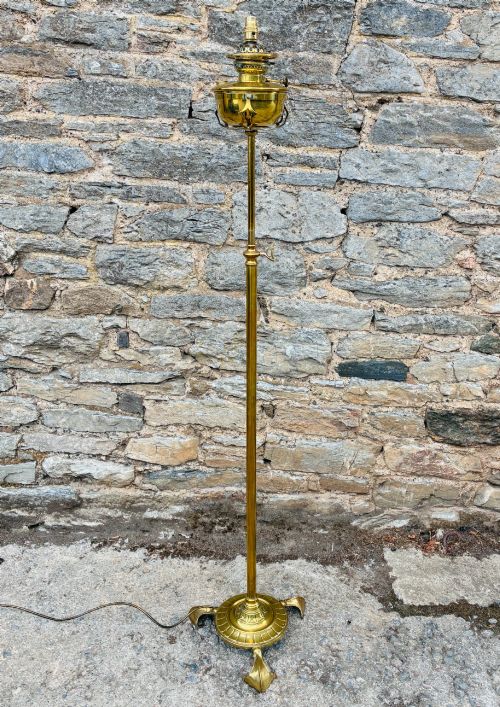
- A sliding tubular construction allowing a stem to extend or retract in height. This mechanism is common in standard lamps and floor lamps.
- Rise and fall
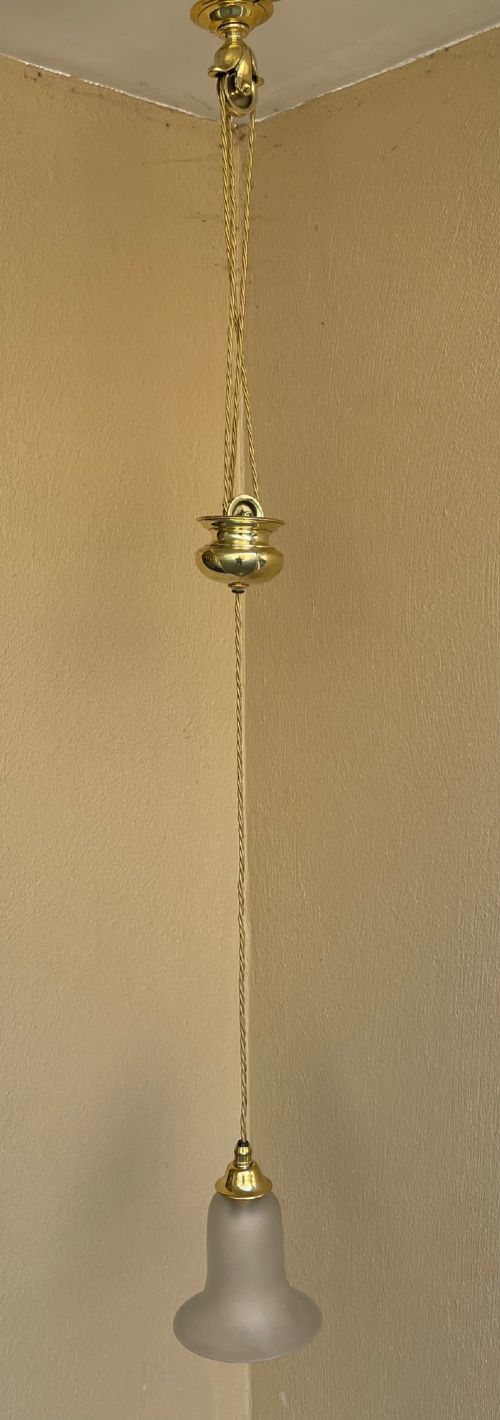
- A counterweighted cord or pulley system enabling a pendant or light fixture to move vertically. It permits easy adjustment of illumination over a table or desk.
- Articulated
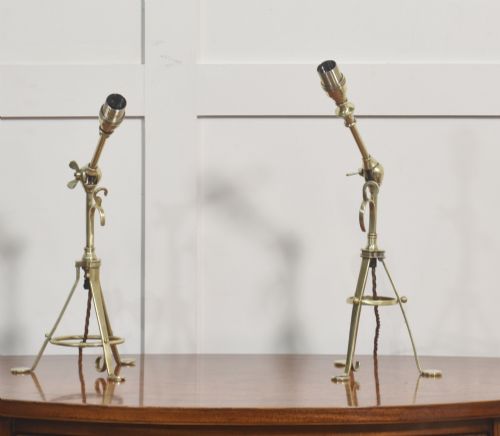
- Jointed or hinged to allow flexible positioning of the arm or shade. Such movement characterises task lighting and desk lamps.
- Toleware
- Painted or lacquered sheet metal, frequently used for lamp shades in green, red or black. It provides a durable, coloured surface diffusing the light output.
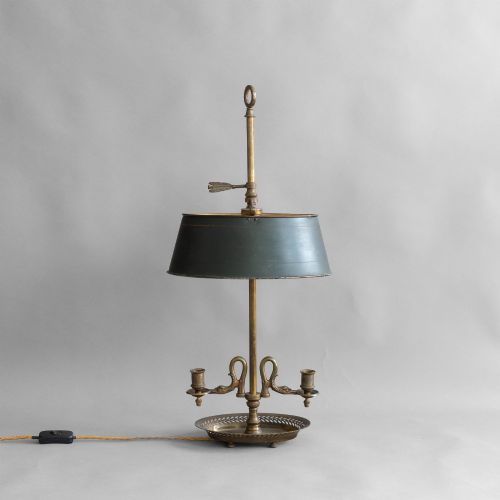
- Bouillotte
- A traditional French table lamp featuring a central standard, adjustable metal shade and a shallow dish base. It originally held candles before later conversions to electricity.
Adjustable Brass Lighting: Frequently Asked Questions
How do telescopic brass lamps work?
Telescopic lamps use nested metal tubes that slide smoothly to alter the overall height of the standard. A thumb screw or internal friction collar secures the stem at the desired level.
This physical adjustment allowed Victorian and Edwardian readers to direct illumination precisely where needed across desks and reading rooms.
Were these lamps originally electric?
Many nineteenth-century examples started life as oil lamps, gas fixtures or candle holders before undergoing conversion to electricity later in their lifespan. Such conversions often retain the original sliding mechanisms and weighted bases.
Twentieth-century pieces from the 1920s and 1930s more frequently incorporate electrical wiring from their initial production.
What is a students light?
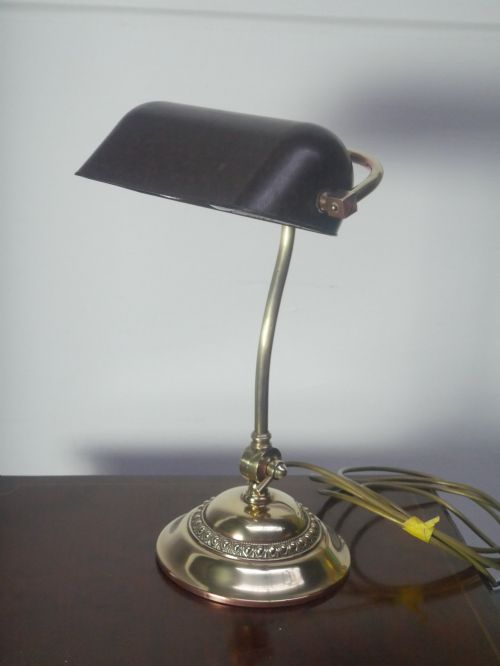
A students light is an adjustable desk or table lamp designed to focus light downward for reading, writing or detailed work. They often feature articulated arms or sliding collars to shift the focal point.
These functional pieces draw on Arts and Crafts or Victorian utilitarian designs, prioritising mechanical utility over ornament.
How do I identify an Arts and Crafts lamp?
Arts and Crafts lighting displays honest construction, visible hammer marks, unpolished brass or copper surfaces, and straightforward geometric lines. Ornamentation remains minimal, focusing instead on the utility of the adjustable arm or bracket.
These pieces date predominantly from the late nineteenth century through to the Edwardian era.
Can I adjust the angle on a gimble lamp?
A gimble lamp incorporates pivoting rings that allow the light source to remain level regardless of the angle of the mounting surface. Originally utilised on ships and trains, they maintain stability on moving foundations.
Their brass construction and swinging brackets make them distinct mechanical items within domestic interiors.