





![Pen and Ink Sketch - Female Nudes by William Edward Frost [1810-1877]](https://www.sellingantiques.co.uk/photosnew/dealer_kendallhouse/dealer_kendallhouse_full_1758970795762-8493507346.jpg)

Academic Nude Drawing
An academic nude drawing captures the rigorous human form study favoured by classical academies, offering collectors a direct window into traditional draughtsmanship.
Academic Nude Drawing
An academic nude drawing represents the foundational training of artists working within classical traditions, capturing the human figure from life or antique sculpture. These works frequently depict mythological figures, historical subjects, or straightforward life studies rendered in varied periods from the eighteenth century to the mid-twentieth century.
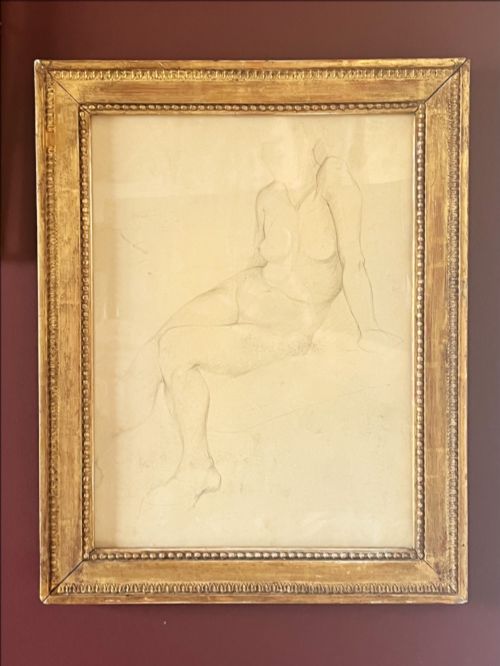
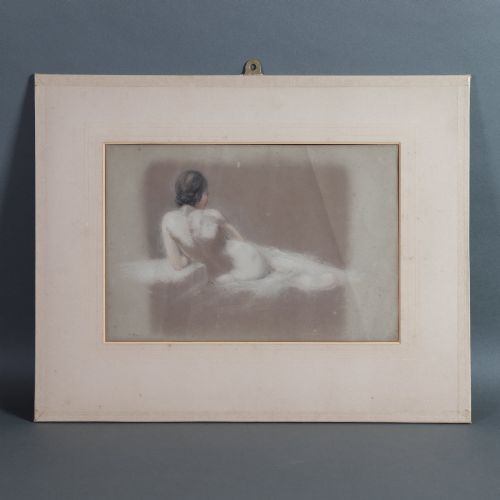
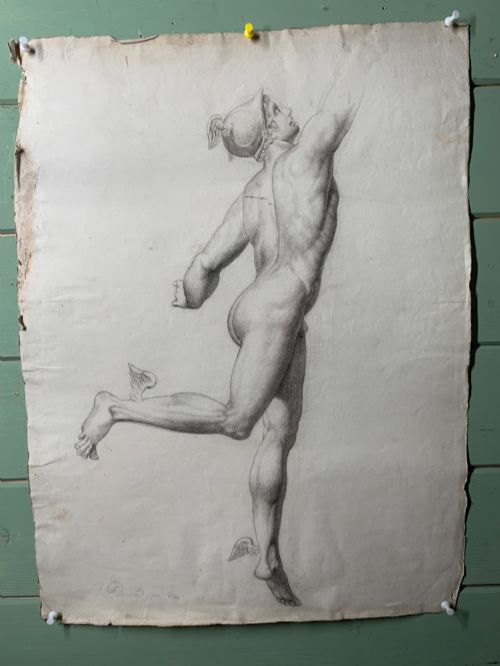
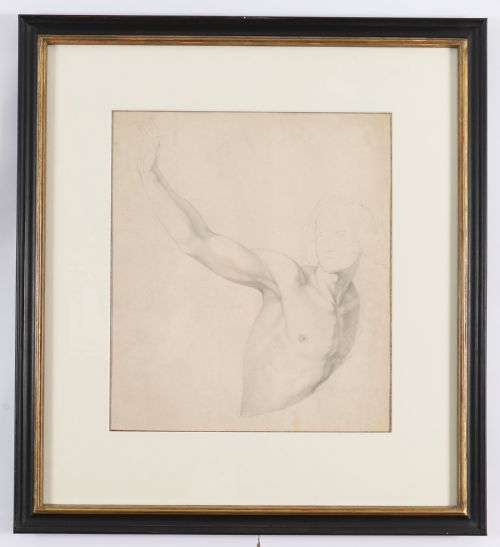
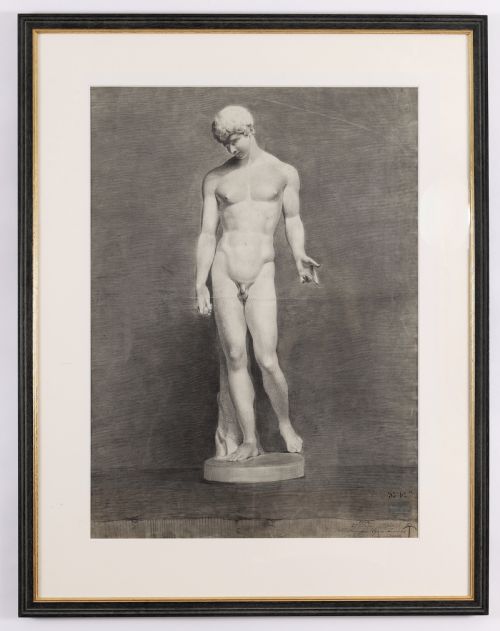
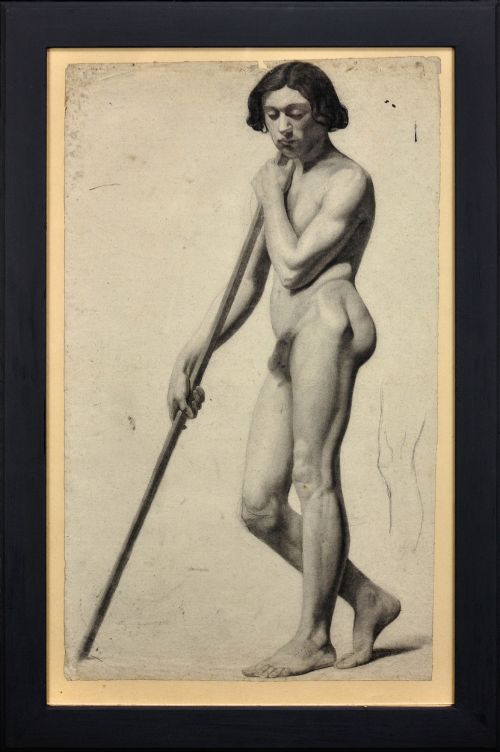
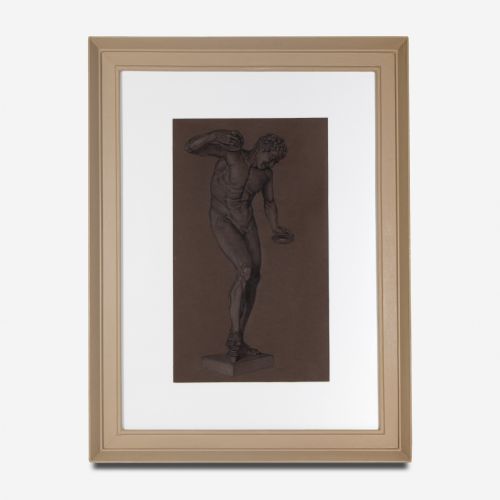
Buyers browsing this selection encounter framed artworks and unframed drawings executed on paper, often housed in antique gilt wood frames. The subjects range from male and female life studies to interpretations of classical statuary such as the Capitoline Antinous and the Farnese Hercules.
The pieces on this page bridge multiple eras, spanning Georgian and nineteenth-century examples alongside later twentieth-century interpretations. English and continental schools are well represented, showing the enduring European methodology of studying anatomy through charcoal, graphite, and chalk.
Materials and execution
Artists relied primarily on paper supports, sometimes utilising toned paper to heighten contrast and depth. Mediums typically include charcoal, graphite, chalk, and occasionally pen and ink or mixed media, allowing for delicate tonal gradations and sharp contour lines.
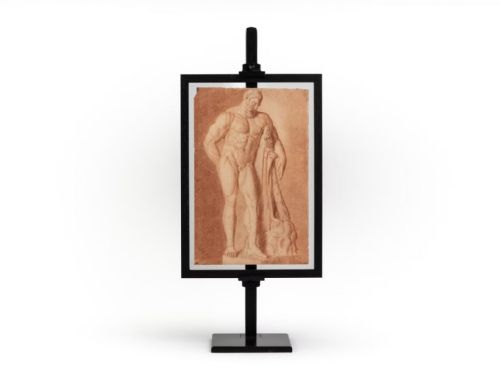
Techniques prioritize precise anatomical accuracy, careful shading, and the rendering of light and shadow over surface detail. Many works build form through layered red chalk or dense charcoal strokes, reflecting the rigorous standards imposed by institutional art schools.
Several pieces document specific academic exercises, including Grand Prix de Rome submissions and direct studies after renowned classical sculptures like the Farnese Hercules.
Distinctions in quality
The upper tier of works demonstrates superior command of human anatomy, proportion, and volume, where the draughtsman captures musculature and bone structure with absolute confidence. Lesser examples often reveal stiff lines, hesitant shading, or a rigid adherence to formulaic proportion without true anatomical understanding.
Preservation of the delicate paper surface and the integrity of the original medium significantly influence the standing of a piece. Works retaining their period frames, clear provenance, and strong, unfaded contrast command greater respect among serious collectors.
William Etty·Augustus John·Henry Arthur Roberts·William Edward Frost·Winifred Eugene Ballard·L Ducourant
The Academic Nude Drawing Glossary
- Academic Art
- A style of painting and drawing produced under the influence of European academies of art. It emphasises classical standards, historical subjects, and meticulous life drawing.
- Life Study
- A drawing or painting executed directly from a live model. These studies form the core of traditional art education and anatomy practice.
- Recto and Verso
- Terms describing the front and back of a single sheet of paper. Works featuring drawings on both sides often reflect the practical economy of the historic artist's studio.
- Toned Paper
- Paper manufactured or prepared with a neutral tint rather than pure white. This allows the artist to build up highlights with white chalk while establishing deep shadows rapidly.
Academic Nude Drawing: Frequently Asked Questions
What is an academic nude drawing?
An academic nude drawing is a traditional study of the human form created as part of an artist's rigorous training within an institutional academy.
These works focus on precise anatomical accuracy, shading, and proportion, often referencing classical sculptures or live models.
How were these drawings used?
Historic artists created these studies to master human anatomy, light, and shadow before executing large-scale historical or mythological paintings.
They served as working tools and reference pieces within the artist's studio rather than finished exhibition pieces.
How should I frame and display them?
These works on paper require conservation-grade framing with UV-protective glass to prevent the delicate charcoal, chalk, or graphite from fading.
Display them away from direct sunlight and high humidity to preserve the fragile paper and original mounting.
How do I tell different periods apart?
Georgian and eighteenth-century works often employ red chalk and focus heavily on classical statues, while nineteenth-century pieces lean towards graphite life studies.
Twentieth-century examples frequently incorporate bolder charcoal marks and broader modernist interpretations of the human figure.