





Academic Figure Drawing
Academic figure drawing captures human form meticulously through traditional study, offering collectors profound insight into historical art education and draughtsmanship.
Academic Figure Drawing
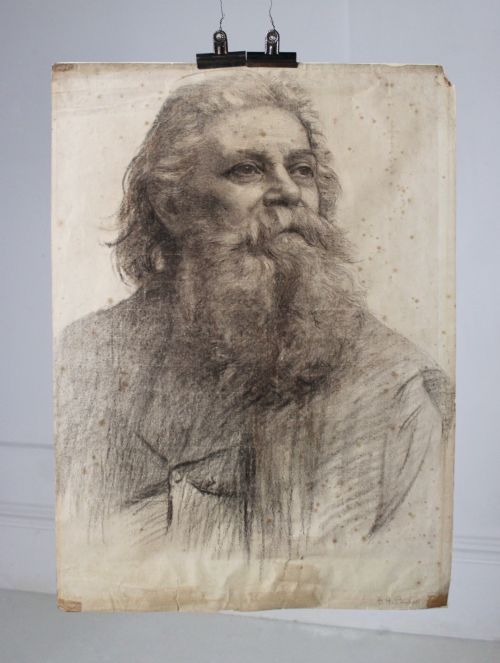
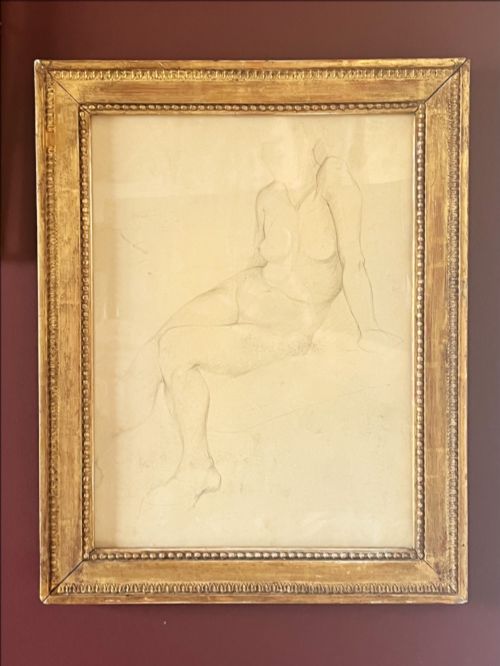
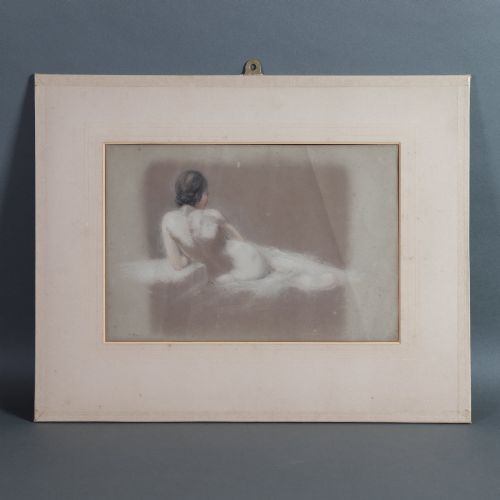
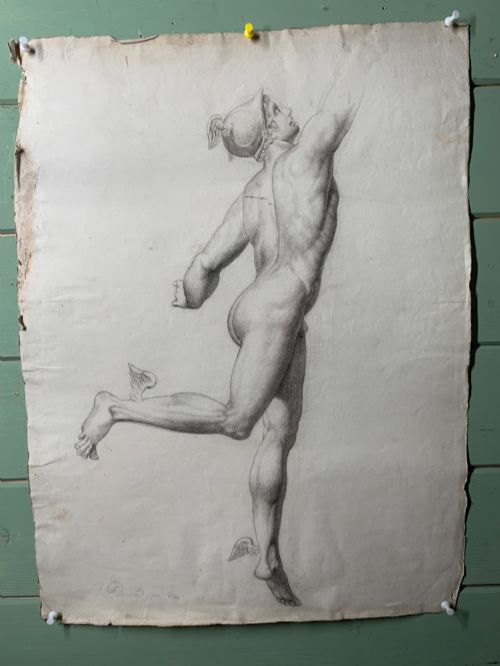
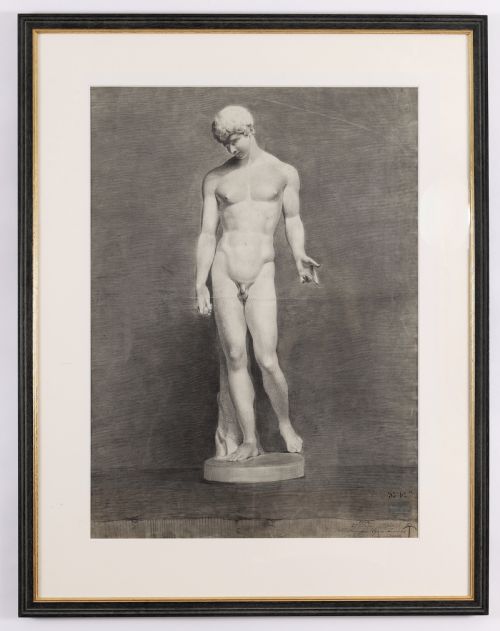
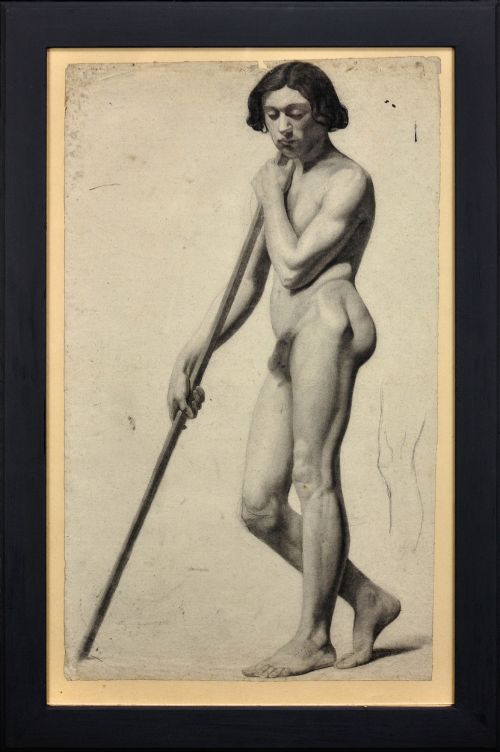
Academic figure drawing comprises detailed studies of human anatomy produced within formal artistic traditions, spanning from the eighteenth century through to the mid-twentieth century. These works frequently record the rigorous training regimens of art schools, capturing nude and clothed models through observation.
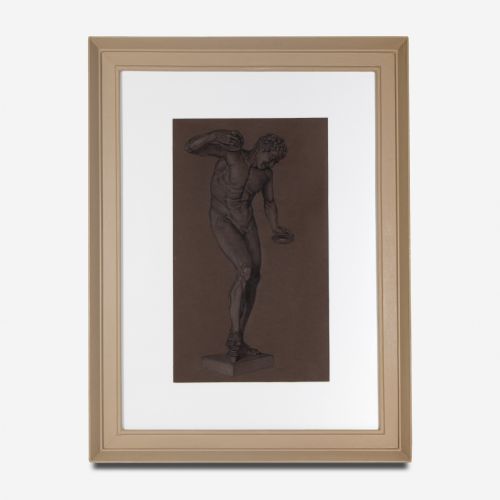
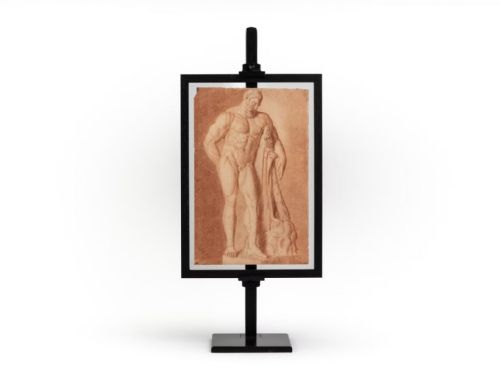
The selections available here range from eighteenth-century Italian red chalk sketches to nineteenth-century graphite studies and twentieth-century charcoal compositions. Framed artworks on paper dominate the selection, often preserved in period gilt wood frames that complement the draughtsmanship.
Collectors encounter works attributed to distinct European schools, including French, English, and Italian traditions, alongside submissions linked to institutional prizes such as the Grand Prix de Rome. Subjects extend from mythological figures like Hercules Farnese to intimate life studies and portraits.
Materials and Techniques
Draughtsmen utilised graphite, charcoal, red chalk, and sanguine on paper or toned paper to build volume and shadow through precise hatching and blending. Mixed media and pen and ink also appear in period studies, demonstrating varied approaches to capturing light and form.
Support materials primarily consist of delicate paper surfaces, occasionally oil on paper, housed behind glass within wooden framing. Many of the nineteenth-century and earlier sheets show the handling marks and corrections inherent in direct studio observation.
Periods represented span from the eighteenth century through to the mid-twentieth century, including Georgian and 1930s works.
Distinctions in Quality
Quality rests upon the anatomical precision, the subtlety of tonal gradation, and the expressive confidence of the draughtsman's line. Superior examples demonstrate a profound understanding of underlying bone structure and musculature rather than rigid adherence to outline.
The preservation of the paper surface, the clarity of the medium against toned grounds, and the contextual importance of a documented school or named artist elevate individual sheets within the field.
William Etty·Augustus John·Henry Arthur Roberts·William Edward Frost·Winifred Eugene Ballard·George Richmond
The Academic Figure Drawing Glossary
- Academic Art
- The style of painting and sculpture produced under the influence of European academies of art, prioritising strict adherence to classical standards.
- Sanguine
- A chalk of a reddish-brown colour used extensively for sketching and life drawing from the Renaissance onwards.
- Recto and Verso
- Terms denoting the front and the back respectively of a single sheet of paper or drawing medium.
- Toned Paper
- Paper that has been given a light tint, usually grey, blue, or tan, allowing artists to work up highlights in white chalk alongside dark mediums.
Academic Figure Drawing: Frequently Asked Questions
What is an academic figure drawing?
An academic figure drawing is a detailed study of the human body created during formal art training, focusing on proportion, anatomy, and light.
These pieces reflect the rigorous educational methods historically employed in European art academies.
How should I frame antique paper art?
Antique drawings require conservation framing with acid-free mounts and ultraviolet-filtering glass to protect fragile paper and chalk mediums from degradation.
Maintaining a stable indoor environment away from direct sunlight preserves the integrity of graphite and charcoal.
How do I identify the period of a drawing?
Stylistic conventions, paper watermarks, and framing types often provide clues to a drawing's chronological origin.
Eighty-century works frequently utilise red chalk and mythological subjects, while nineteenth-century pieces lean towards rigorous graphite life studies.
What is a life study?
A life study is an artwork executed directly from a live, usually nude, human model positioned in the studio.
These exercises formed the cornerstone of classical artistic instruction and draughtsmanship development.