




Abstract Oil Painting
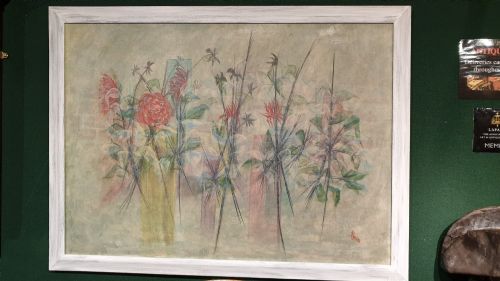
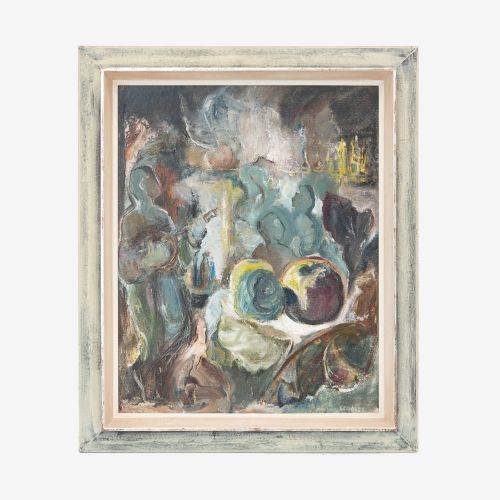
An abstract oil painting brings mid-century modernism and expressive brushwork straight onto the wall.
Abstract Oil Painting
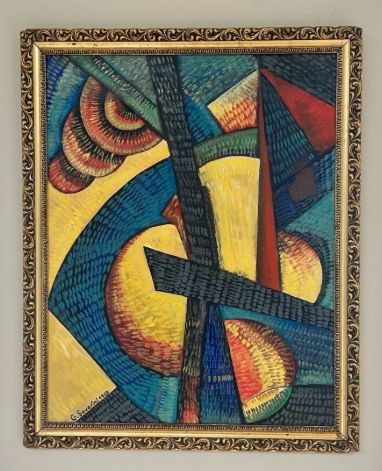
When searching for an abstract oil painting, collectors encounter mid-century works spanning the 1930s to the 1960s, featuring styles such as Mid-Century Modernism, French Modernism, Op Art, and Mid-Century Expressionism.
The compositions on this page range from abstracted still lifes, cityscapes, and landscapes to figurative studies and geometric op art, created by named artists and regional schools across Britain, France, and beyond.
Most pieces date from the 1950s and 1960s, reflecting a period of bold experimentation with form, colour, and texture in twentieth-century painting.
How they were made
These works are executed in oil paint applied to stretched canvas, wooden board, or paper, frequently employing thick impasto techniques to build physical depth and relief on the surface.
Many are housed within original wood frames, occasionally protected beneath glass, with substrates ranging from loose canvas to rigid board prepared for modernist compositions.
Listings feature works executed on canvas, board, and paper, utilising oil paint, wood frames, and occasional glass protection.
What varies in quality
Quality in an abstract oil painting rests on the strength of the composition, the handling of pigment, and the confidence of the brushwork rather than the subject matter alone.
Works by established artists or those associated with known regional groups display a more rigorous command of colour harmonies and structural balance within the modernist idiom.
Denis Mitchell·Raymond Picque·William Littlejohn·William McCance·Richards Rubin·William Ernst Burwell·Arthur Bell Foster·Jacques Carelman·Edward Burra·Claude Lagouche·Janet Duchesne·Olle Bonniér·John Kenneth Long
The Abstract Oil Painting Glossary
- Impasto
- Paint laid on an area of the surface in very thick layers, usually thick enough that the brush or painting-knife strokes are visible. This technique adds tactile relief and catches the light across the canvas.
- Op art
- A style of visual art that uses optical illusions, employing abstract patterns with stark contrast and geometric precision. These compositions create a sense of movement or swelling on a flat plane.
- Cubist
- A modernist approach where subjects are broken up, analysed, and re-assembled in an abstracted form. Instead of depicting objects from a single viewpoint, the artist depicts the subject from a multitude of perspectives.
- Board
- A rigid flat panel used as a painting support instead of woven fabric. Artists in the mid-twentieth century frequently utilised wood or composition board for oil paintings.
Abstract Oil Painting: Frequently Asked Questions
What periods do these paintings cover?
The selection spans the 1930s through to the 1960s, capturing the height of mid-century modernism and expressionism. Most pieces date from the post-war decades of the 1950s and 1960s.
Earlier works from the 1930s lean towards French modernist and art deco sensibilities, while later pieces embrace op art and geometric abstraction.
How do I hang a heavy oil painting?
Ensure your wall fixings are secured directly into masonry or wall studs rather than relying solely on plasterboard. Large canvases and framed board works carry substantial weight.
Use heavy-duty picture wire and rated hooks that match the combined weight of the painting and its wooden frame.
What is impasto texture?
Impasto is a technique where oil paint is applied thickly to the canvas or board, leaving visible brush or palette knife marks. This creates a tactile, three-dimensional surface that catches the light.
It is a defining feature of many mid-century expressionist and abstract works on this page.