
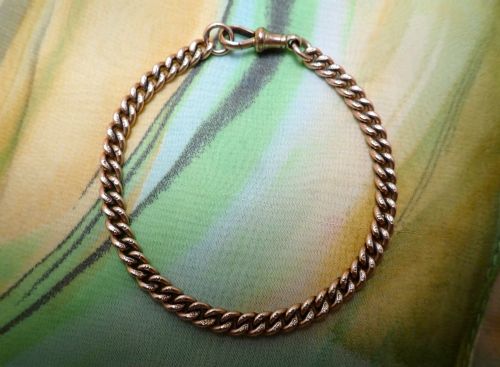
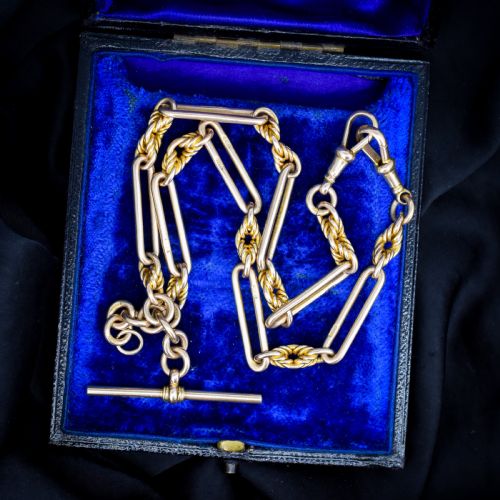
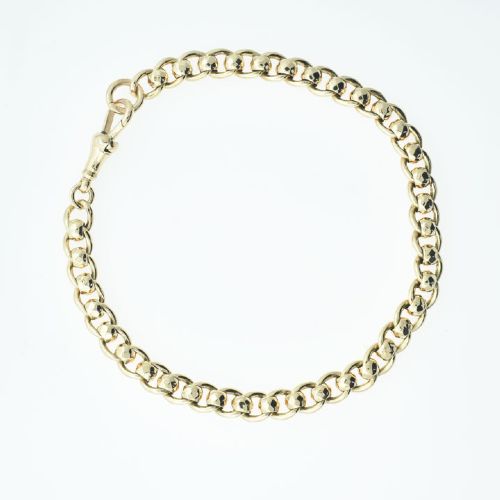
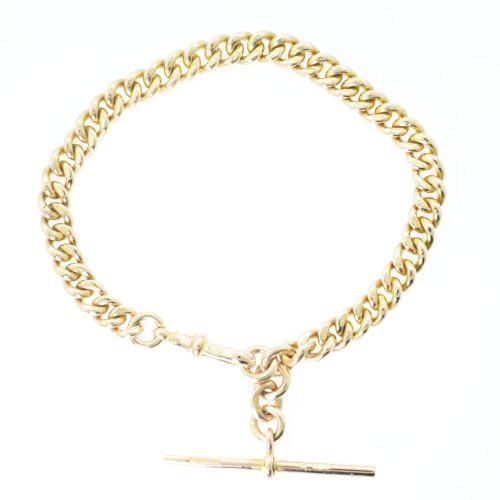
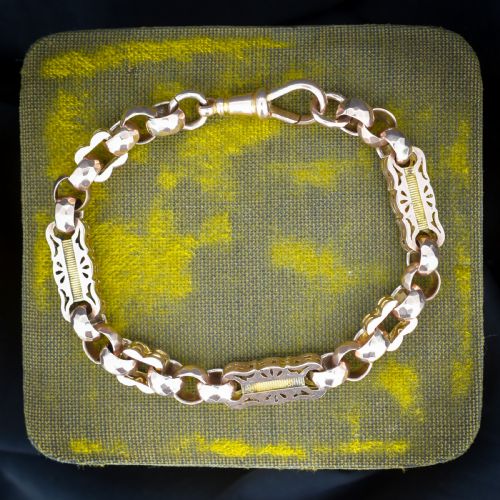


9ct Gold Swivel Clasp Chain
These 9ct gold swivel clasp chain pieces are dependable antique links in rose, yellow and white gold, valued for their versatile everyday wear.
9ct Gold Swivel Clasp Chain
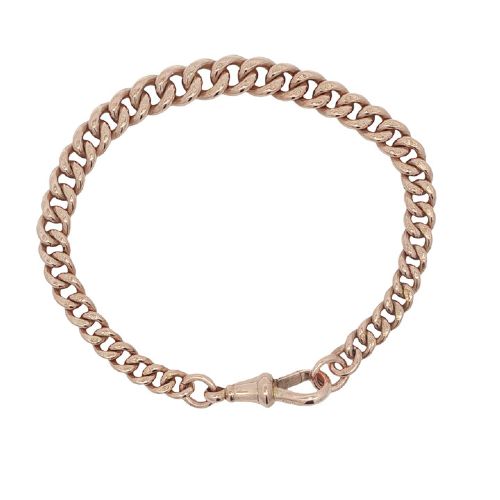
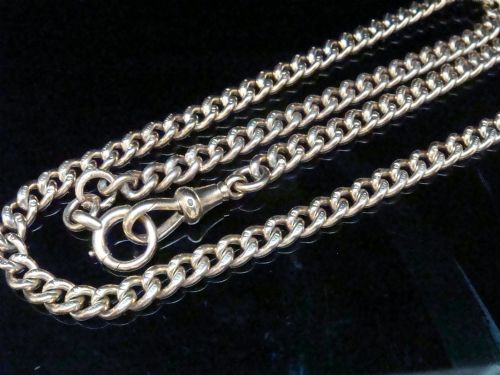
A 9ct gold swivel clasp chain bridges the gap between historical utility and modern ornament, originating as functional pocket watch and Albert attachments. When you search for this phrase, you encounter substantial Victorian and Edwardian pieces designed to secure timepieces or wear as neck chains and bracelets.
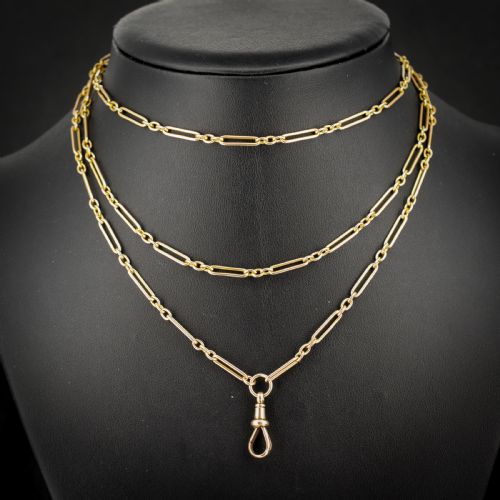
The material predominantly appears in 9ct rose gold, 9ct yellow gold, and occasional white gold variations. These items survive in forms such as heavy watch chains, graduated pocket watch chains, and trombone link necklaces.
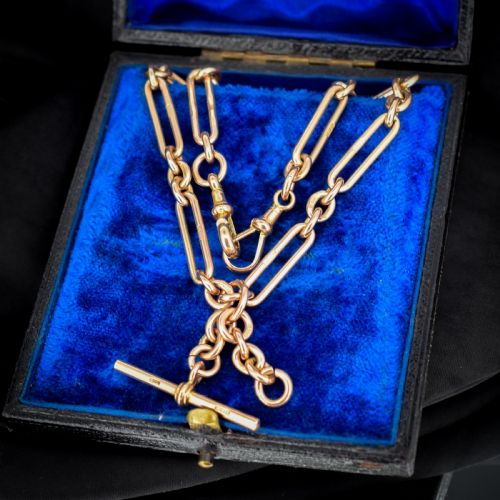
You meet pieces featuring dog clips and swivel clasps alongside T-bars and love knot links. The selection spans distinct eras including the Victorian period, the Edwardian era, and the 1920s.
How they were made
Craftsmen constructed these chains using 9ct gold alloys in rose, yellow, and white shades, often achieving remarkable heft through solid link fabrication. Many examples display hallmarking on every individual link, reflecting meticulous goldsmithing standards of the nineteenth and early twentieth centuries.
Makers formed distinct link patterns such as trombone, rollerball, paper link, curb, and stars and bars by hand or with early mechanical assistance. Secure fastenings like dog clips and swivel clasps were integrated to withstand the daily strain of pocket watch usage.
Listings feature 9ct rose gold, 9ct yellow gold, and 9ct white gold across Victorian, Edwardian, and 1920s periods.
What varies in quality
Quality rests upon the structural integrity of the individual links and the original tightness of the swivel mechanisms. Substantial weight and hallmarking on every link separate exceptional survivor pieces from lighter, less robust examples.
The complexity of the link pattern, from standard curb to intricate trombone or fancy link stars and bars, dictates the desirability of the piece. Preservation of the original dog clips and swivel clasps without replacement parts maintains historical authenticity.
The 9ct Gold Swivel Clasp Chain Glossary
- Albert chain
- A pocket watch chain named after Prince Albert, worn across the waistcoat or adapted as a bracelet and necklace. It typically includes a T-bar at one end and a swivel clasp at the other.
- Swivel clasp
- A fastening mechanism with a revolving loop that prevents the attached chain from twisting during use. It serves as the primary connector for watch pendants and charms.
- Dog clip
- A spring-loaded snap hook resembling a small bolt snap, frequently paired with swivel clasps on antique watch chains. It provides a secure method of attaching pocket timepieces.
- T-bar
- A short transverse bar attached to the end of a watch chain, designed to slip through a waistcoat buttonhole. It anchors the chain securely while the watch sits in the pocket.
- Trombone link
- An elongated rectangular metal link with rounded ends, resembling the slide of a trombone. This pattern appears frequently in Edwardian and 1920s watch chains.
9ct Gold Swivel Clasp Chain: Frequently Asked Questions
How do I wear an antique watch chain?
These pieces function readily as multi-wrap bracelets or layered necklaces depending on their length. The integrated swivel clasps allow you to attach pendants or secure the ends together.
Shorter lengths suit wristwear, while longer chains wrap comfortably around the neck. You can also clip the T-bar into a pendant bail for a custom drop configuration.
What is the difference between an Albert chain and a standard chain?
An Albert chain incorporates specific functional components like a T-bar and a swivel clasp designed for timekeeping. Standard necklaces lack these specific watch-securing additions unless modified.
Traditional Albert chains often show heavier link construction because they needed to support solid silver or gold pocket watches. Their proportions reflect this historical utility.
How can I tell the Victorian pieces from the 1920s ones?
Victorian examples tend to feature heavy rose gold hues, substantial watch chains, and elaborate fancy links like stars and bars. Edwardian and 1920s pieces often introduce cleaner geometric forms such as trombone links.
Hallmarks and assay office stamps provide the most reliable dating evidence alongside typical link styles. Examining the construction of the dog clips and swivel clasps also offers clues to the decade of manufacture.
Are all links hallmarked on these chains?
Not every piece carries full hallmarks on every single link, though premier examples from the Edwardian period do feature stamps throughout. Partial marks often appear on the T-bar, the dog clip, or a single designated link near the clasp.
Import marks and standard 9ct gold stamps verify the metal purity even if individual links remain unmarked. Birmingham and Chester assay offices frequently appear on British pieces from this era.