


Victorian Long Gold Necklace
A victorian long gold necklace is an extended guard or muff chain designed to loop multiple times, offering remarkable versatility and period elegance.
Victorian Long Gold Necklace
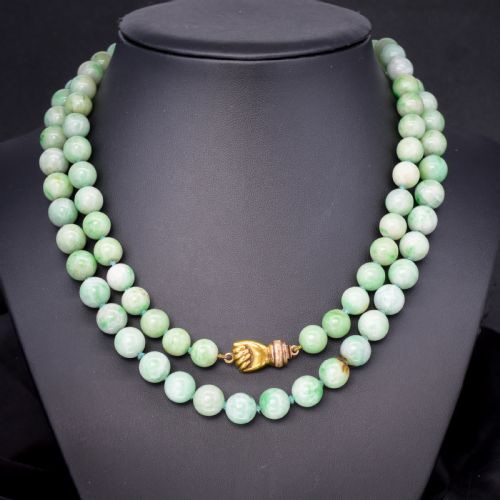
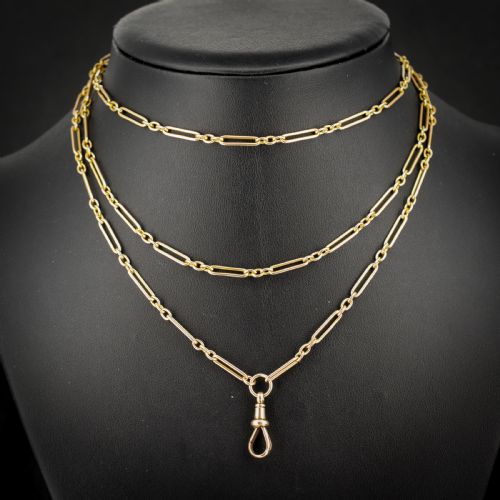
A victorian long gold necklace spans substantial lengths, frequently exceeding thirty inches to facilitate doubling or tripling around the neck. These pieces primarily manifest as guard chains, muff chains, or longuards designed to secure pocket watches, lorgnettes, or pendants.
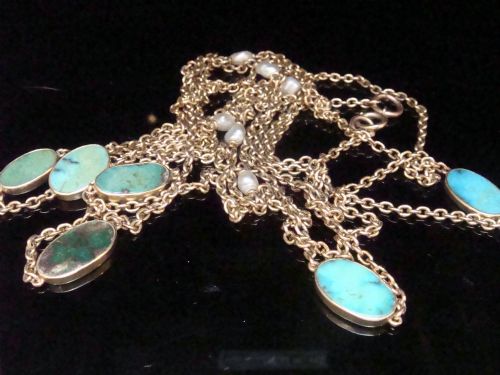
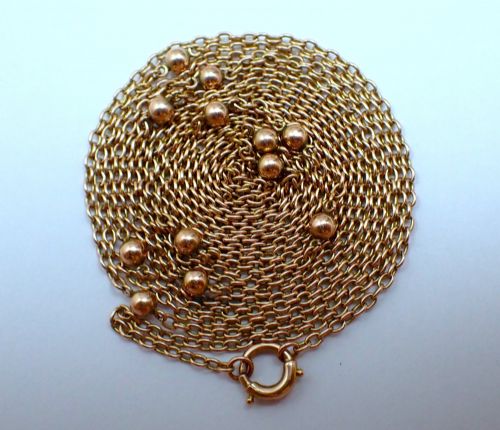
The material composition ranges from nine carat and fifteen carat yellow or rose gold to rolled gold variants. Many examples incorporate decorative stations such as turquoise, natural pearls, or sliding elements along the link work.
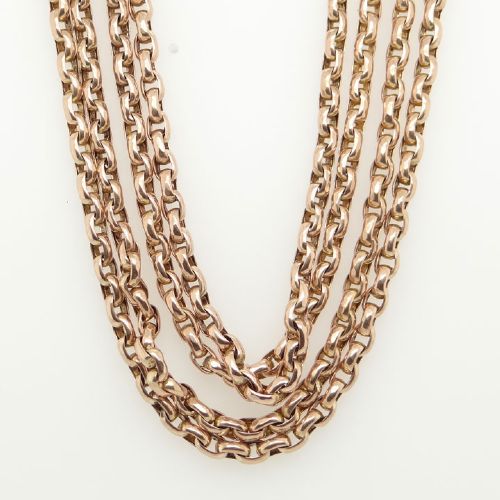
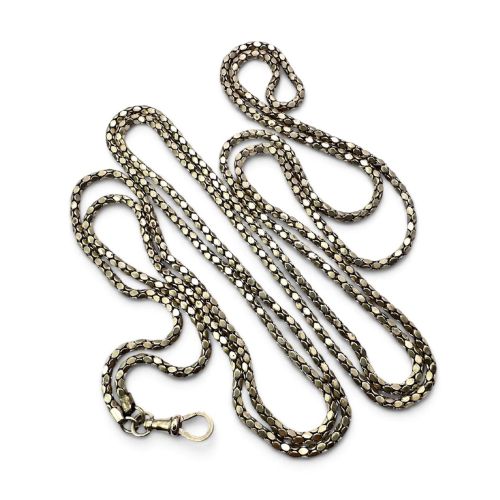
Link formations vary distinctly across the selection, featuring paper links, belcher links, trombone links, and oblong links. Surviving fasteners commonly include dog clips or Albert clips that originally anchored functional accessories.
Construction and Materials
Goldsmiths utilised solid nine carat and fifteen carat gold, alongside rolled gold sheeting, to fabricate the elongated strands of links. Individual links were hand-formed, soldered, and assembled into flexible chains capable of withstanding daily wear.
Gemstone integration involved bezel or flush settings for turquoise and garnet accents, while natural pearls were drilled and strung or pegged onto decorative stations. Clasp mechanisms such as dog clips and spring ring bolt rings incorporated internal steel springs to ensure secure fastening.
Some chains stretch past sixty inches, proving that Victorian owners were fully prepared to loop themselves in gold several times over.
Factors of Quality
The purity of the gold alloy dictates the baseline quality, with fifteen carat pieces offering a richer gold content than nine carat or rolled gold alternatives. Solid construction throughout the entire length distinguishes superior examples from those with hollow or plated components.
The complexity and uniformity of the link work elevate an item, particularly when chains feature intricate trombone, paper, or fancy faceted links alongside matched gemstone stations. Original clasps, such as fully marked dog clips or sliding elements, preserve the integrity and collectability of the piece.
The Victorian Long Gold Necklace Glossary
- Guard chain
- A long chain historically used to secure a pocket watch, lorgnette, or eye glasses. These pieces were worn draped around the neck and often tucked into a waistband or pinned to a garment.
- Muff chain
- A decorative long chain designed during the nineteenth century to pass through a fur muff for warmth while keeping attached accessories secure. They share the extended proportions characteristic of guard chains.
- Longuard
- An alternative term for a long guard chain worn by women during the Victorian and Edwardian eras. They frequently incorporate slides or gemstone stations.
- Dog clip
- A spring-loaded snap fastener attached to the end of a watch chain or necklace. This mechanism allows the wearer to easily attach and detach charms, pendants, or pocket watches.
- Trombone link
- A specific style of watch chain link modelled after the geometric shape of a trombone slide. It typically consists of alternating long rectangular links connected by smaller circular rings.
Victorian Long Gold Necklace: Frequently Asked Questions
How were long gold chains worn?
Victorian long gold chains were typically doubled or tripled around the neck to create layered looks. They often held functional items like pocket watches or lorgnettes suspended from a dog clip.
Alternatively, they were worn as a single long strand hanging down the front of a dress or coat. The substantial length provided multiple styling options depending on fashion and practical requirements.
What is a dog clip on a chain?
A dog clip is a spring-loaded swivel clasp attached to the end of a watch chain or necklace. It earned its name from its resemblance to the snap hooks used on dog leashes.
On antique chains, this mechanism allowed the wearer to secure pocket watches, pendants, or charms safely. Finding an original dog clip intact adds to the authenticity of the piece.
How can I tell nine carat from fifteen carat gold?
British gold items from the Victorian period often bear hallmarks indicating the gold purity. Fifteen carat gold typically displays a warmer, richer yellow hue compared to the paler tone of nine carat gold.
Assay marks and crown stamps stamped onto the metal provide definitive proof of the alloy standard. Examining the links near the clasp usually reveals these small stamped impressions.
What are slide chains used for?
Slide chains feature a moveable decorative slide element positioned along the strands of gold. The slide could be pushed up or down to adjust the tension or placement of the chain.
These pieces often incorporated gemstones like turquoise, garnets, or pearls on the slide itself. They combined ornamental appeal with adjustable functionality for the wearer.