
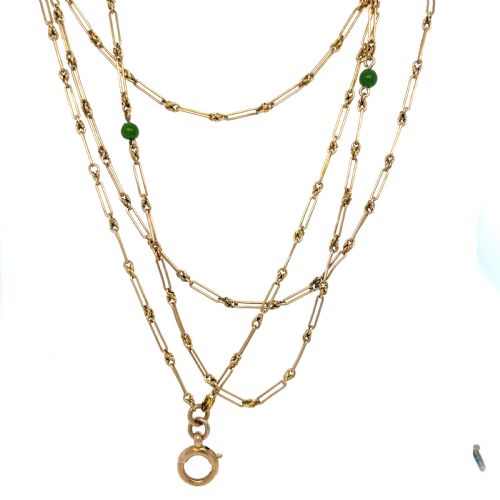


Gold Guard Chain
A gold guard chain is a long, versatile piece designed to secure pocket watches or muffs, prized for its sheer length and substantial presence.
Understanding the Gold Guard Chain
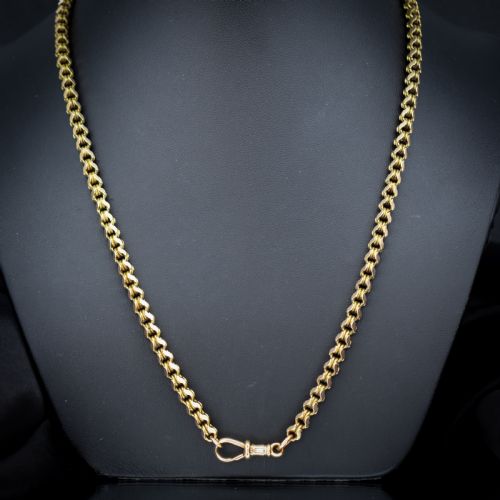
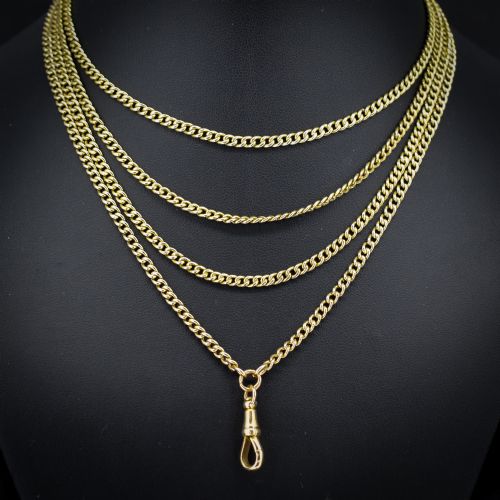
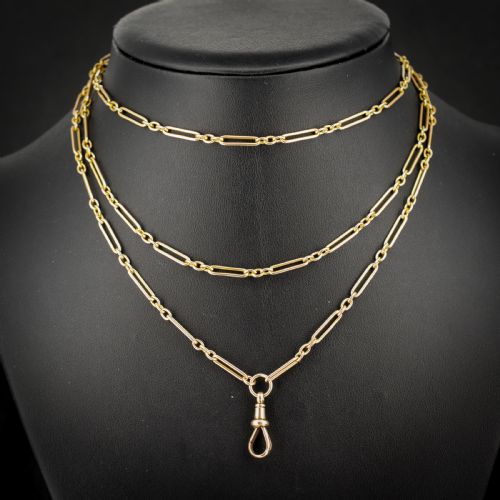
A gold guard chain is a long, continuous necklace traditionally worn suspended with a watch, locket, or muff. These pieces originate predominantly from the Victorian and Edwardian eras, spanning into the early twentieth century around 1904. The versions most commonly encountered on this page are exceptionally long necklaces fashioned in yellow gold.
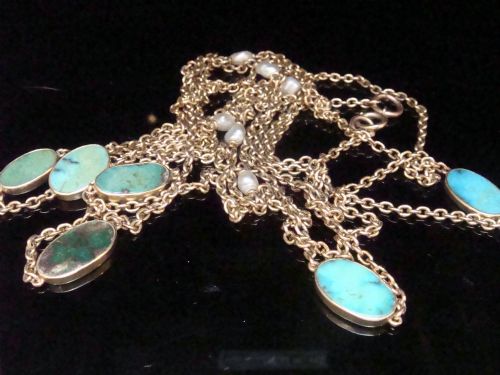
The historical function of a guard chain was practical, serving to secure valuable pocket watches or keep hands warm inside a fur muff. Over time, the utility shifted as wearers began doubling the chains or adorning them with fobs, pearls, or citrine drops. Today, buyers seek them out for their striking length and the rich craftsmanship of past centuries.
Materials and Construction
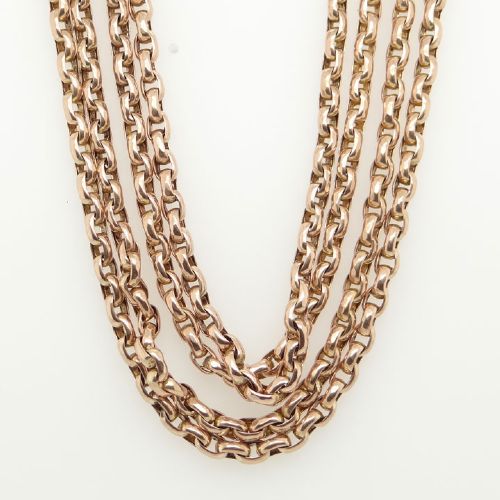
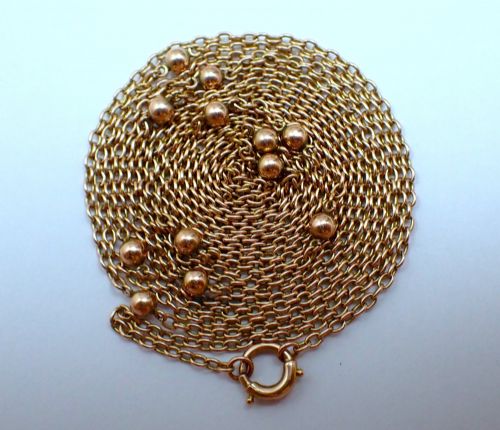
These chains are constructed primarily from nine-carat yellow gold, alongside examples in rose gold, rolled gold, and eighteen-carat gold. Goldsmiths employed various wire-working and linking techniques to build durability into such extended lengths without sacrificing flexibility. The resulting structures include curb links, rolo links, belcher links, cube links, and intricate filigree patterns.
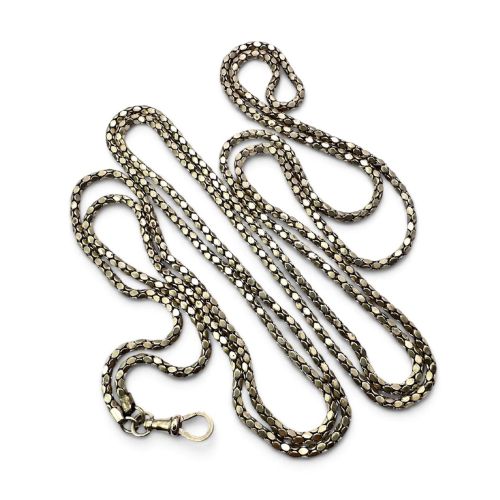
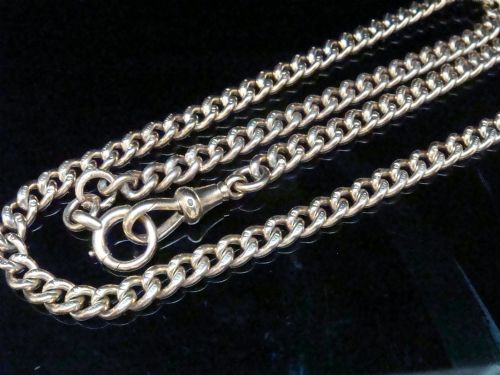
A defining mechanical feature of the construction is the inclusion of a secure dog clip or Albert clip. These swivel clasps allowed the wearer to attach and detach watches or fobs with ease while preventing twists in the long chain. Additional decorative elements such as star motifs, turquoise stones, pearls, and citrine fobs were frequently integrated into the design.
Assessing Quality and Distinction
The distinction at the upper end of the range lies in the weight, link complexity, and material purity of the piece. Heavier solid gold examples with fancy or diamond-cut links demonstrate superior goldsmithing compared to lighter or rolled gold variants. The presence of original gemstone fobs, pearls, or distinct maker marks further elevates the standing of a chain.
Proportion and length also dictate the desirability and versatility of the piece. Extremely long chains reaching up to sixty-eight inches offer multiple styling options, from doubling around the neck to draping fully. The crispness of the link casting and the secure snap of the original dog clip complete the measure of a superior example.
The Gold Guard Chain Glossary
- Dog clip
- A spring-loaded swivel clasp attached to the end of a chain, designed to secure pocket watches or charms.
- Longuard chain
- An exceptionally long Victorian necklace traditionally worn doubled over or hanging low down the torso.
- Belcher link
- A chain link formed from wire of a uniform circular cross-section, slightly wider than it is thick.
- Curb link
- A type of chain link that has been twisted and flattened so that it lies neatly against the skin.
- Fob
- A small ornamental pendant attached to a watch chain, sometimes set with hardstones like citrine or turquoise.
Frequently Asked Questions
How were gold guard chains originally worn?
Victorian and Edwardian wearers used these long chains to secure pocket watches tucked into waistcoats or muffs held during cold weather. The generous length allowed the chain to be draped once around the neck or doubled over for a layered effect.
Over time, the practical association with timepieces faded, and the chains transitioned purely into decorative necklaces. Wearers often attached lockets, fobs, or charms to the swivel clips to personalise the look.
What is the difference between a guard chain and a muff chain?
Guard chains and muff chains both share the characteristic long length of the period, but muff chains were specifically designed to thread through a cylindrical fur muff to keep watches secure and accessible. In practice, the terms overlap heavily in antique jewellery.
Both types utilise the same sturdy link construction and dog clip fastenings. Today, collectors use the terms interchangeably for any continuous long chain from the nineteenth century.
How can I date an antique gold chain?
Dating relies heavily on hallmarks, metal standards, and the specific style of the links and clips. Victorian examples often display distinct nine-carat or fifteen-carat gold marks, while Edwardian pieces lean towards lighter rose or yellow gold tones with delicate filigree work.
The presence of specific clasps, accompanying fobs, or documented hallmarks helps narrow the era of production down to a specific decade. Comparing the link geometry against known period styles provides further confirmation.
Can these long chains be worn doubled around the neck?
The substantial length of these pieces makes them well-suited for doubling around the neck to create a layered necklace effect. The flexibility of links like belcher, curb, and rolo allows the metal to curve smoothly without kinking.
When doubled, the dog clip can be fastened back onto the chain itself or left dangling as a decorative feature at the front. This versatility remains a primary reason collectors seek them out.