
Solid Gold Necklace
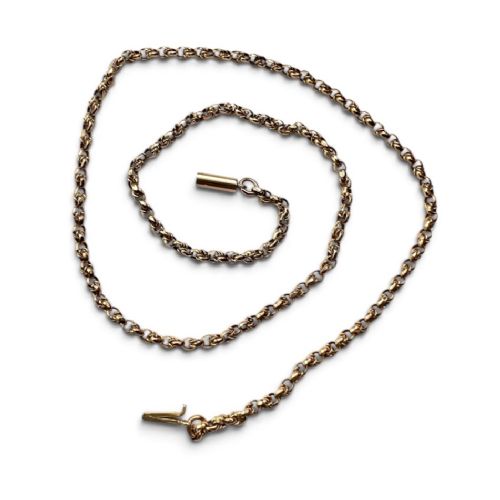
Solid gold necklace designs span sturdy pocket watch chains adapted for the neck alongside bespoke pendants from the Victorian era onward.
Solid Gold Necklace
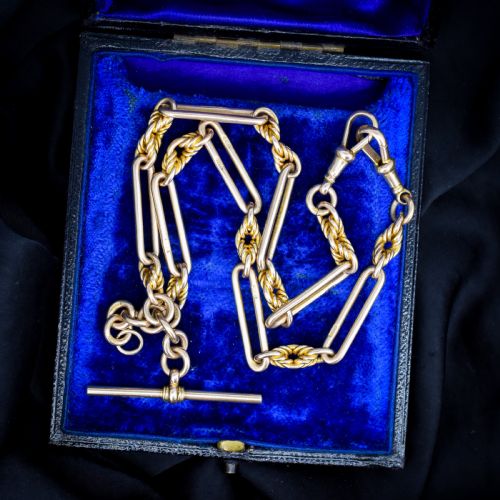
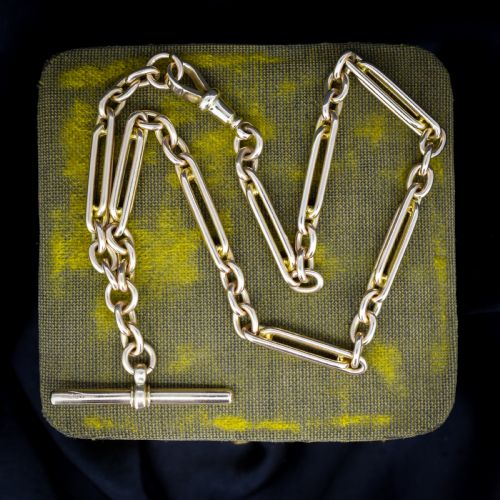
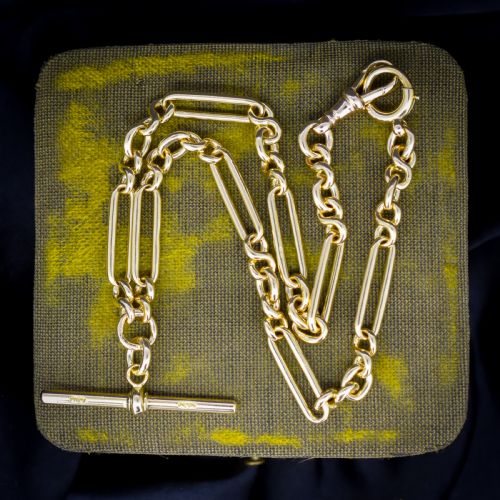
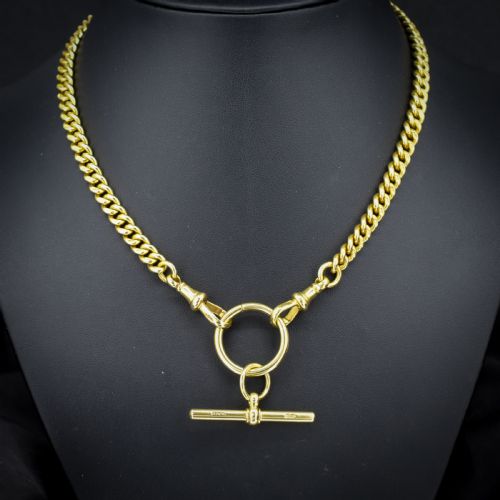
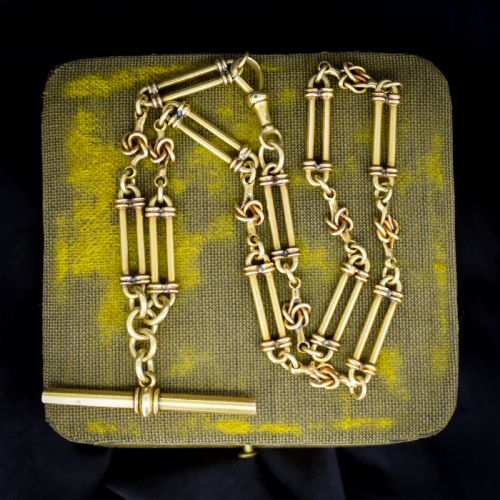
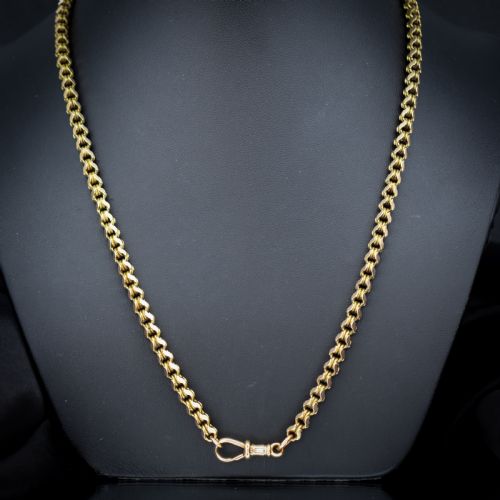
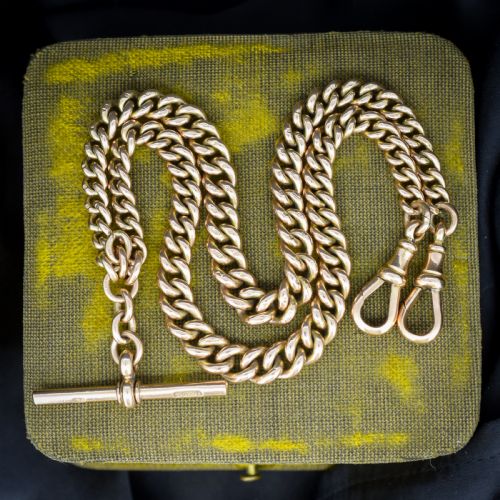
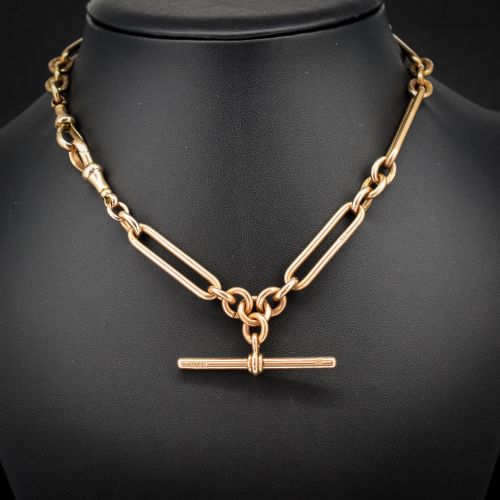
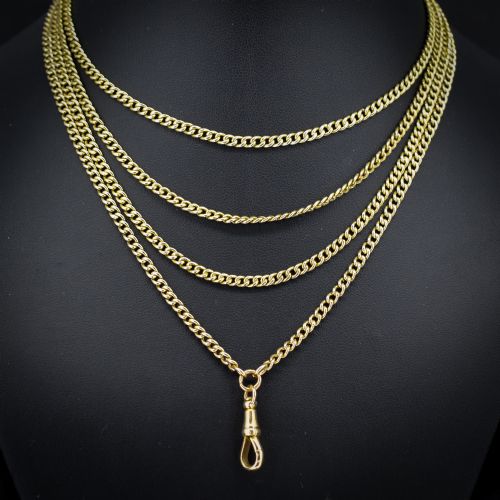
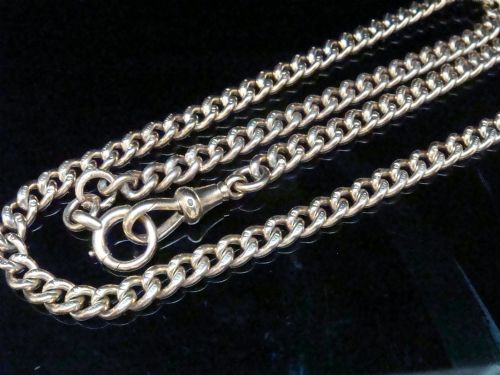
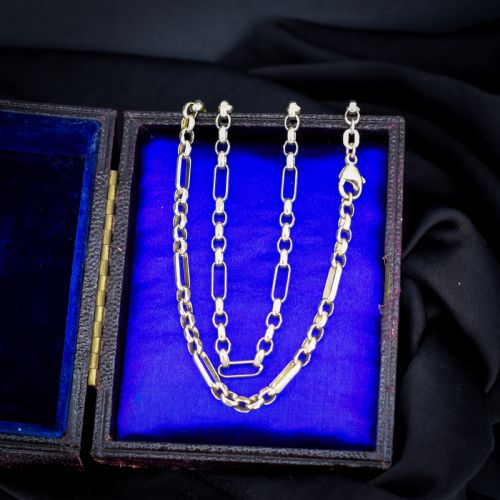
A solid gold necklace typically appears in forms originally designed as watch chains, guard chains, or Albert chains during the nineteenth and early twentieth centuries. These pieces frequently feature substantial link constructions such as curb, trombone, and oval patterns, often retained with original dog clips and T-bars.
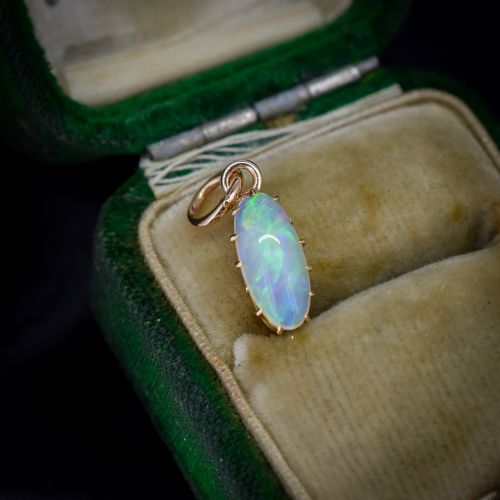
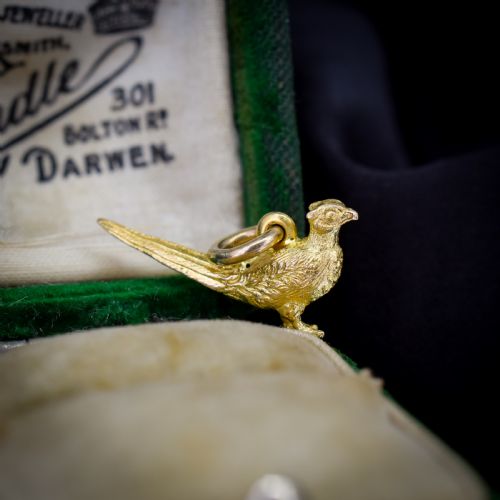
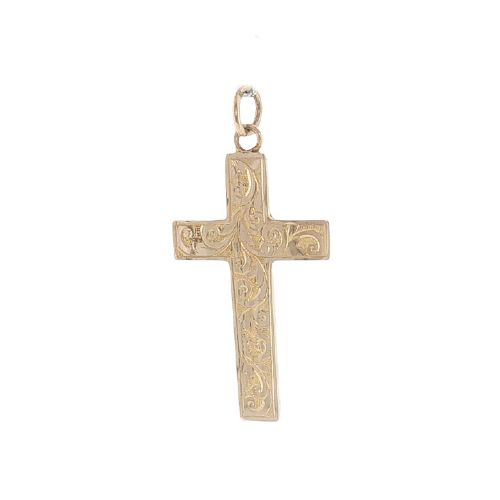
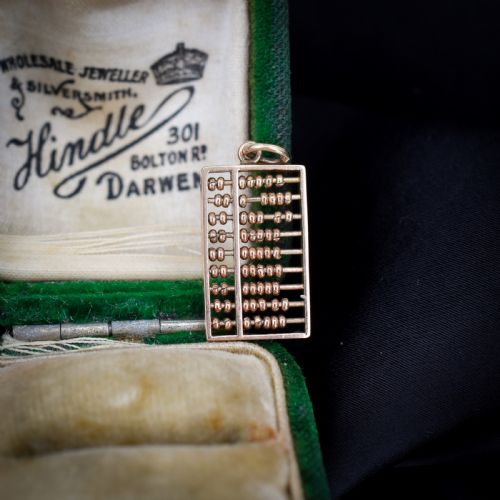
Beyond converted watch chains, the selection includes standalone pendant necklaces featuring charms, lockets, and gem-set motifs from the Edwardian, Art Deco, and mid-century periods. These items utilise various purities of yellow, rose, and white gold.
The inventory ranges from long guard chains to shorter choker lengths, reflecting both utilitarian origins and decorative purposes across successive decades.
Materials and construction methods
Metals are recorded across multiple gold purities, predominantly nine carat, fifteen carat, eighteen carat, and occasional higher or lower standards, worked in yellow, rose, and white hues. Goldsmiths fabricated these items using hand-assembled individual links, hollow stampings, or solid wirework.
Many historical pieces incorporate functional components such as swivel dog clips, split rings, and fixed or removable T-bars soldered or hinged into the primary chain structure. Gemstone pendants set into these chains utilise bezel or prong settings to secure stones like opals and diamonds.
Factors influencing quality
Quality separates through the weight and gauge of the metal, where heavier, graduated curb and trombone links demonstrate superior substance compared to lighter hollow alternatives. The integrity of individual link connections and the firmness of spring mechanisms in dog clips govern overall durability.
Hallmarking clarity and maker attribution contribute significantly to an item's distinction. Pieces bearing full hallmarks on every individual link or secure, well-defined chased engraving on pendants and lockets represent higher tiers of craftsmanship.
The Solid Gold Necklace Glossary
- Albert chain
- A heavy watch chain originally designed to secure a pocket watch in a waistcoat pocket, now frequently worn as a necklace. These chains often feature graduated links and dog clips.
- Dog clip
- A spring-loaded swivel clasp attached to the ends of watch chains, used to secure fobs, pendants, or the chain ends together.
- T-bar
- A short transverse metal bar attached to a watch chain by a short length of chain, originally designed to pass through a buttonhole.
- Trombone link
- A watch chain link design alternating between elongated rectangular links and small circular or oval connecting links.
- Guard chain
- An exceptionally long chain worn looped around the neck, often fitted with a slide or dog clip for securing watches or pendants.
Solid Gold Necklace: Frequently Asked Questions
Can I wear a pocket watch chain as a necklace?
Many historical pocket watch chains feature lengths and weights well-suited for direct wear around the neck as chokers or collars. The inclusion of dog clips allows the ends to be joined easily.
Converting these utility items requires no structural alteration, making them a popular choice for contemporary necklace wear.
What does nine carat gold mean?
Nine carat gold consists of thirty-seven point five percent pure gold alloyed with other metals like copper, silver, or zinc to increase durability. This alloy provides a robust material suitable for daily wear.
It appears frequently in British pieces from the Victorian and Edwardian periods onwards.
How do I identify the period of a gold chain?
Dating relies heavily upon official assay office hallmarks stamped onto the metal, which record the year of manufacture and the purity standard. Stylistic clues such as link geometry and clasp types also offer strong indicators.
Consulting individual link stamps often reveals precise Chester, Birmingham, or London assay office records.
What is the difference between rose and yellow gold?
Yellow gold achieves its warm hue through an alloy mixture primarily balanced with silver and copper. Rose gold incorporates a higher proportion of copper to produce a distinct reddish or pink tint.
Both colour variants were widely utilised across the nineteenth and twentieth centuries.