
Antique Link Chain
An antique link chain brings together structural utility and personal adornment, offering the enduring craftsmanship of the nineteenth and early twentieth centuries.
Antique Link Chain
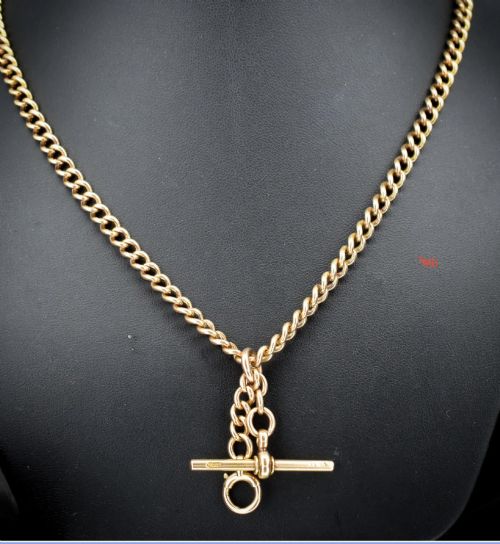
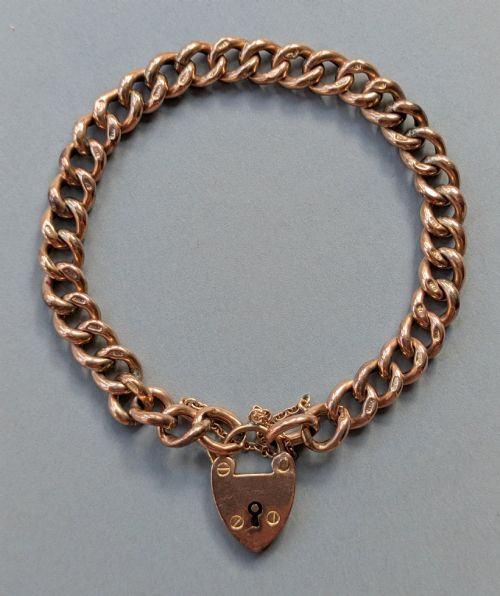
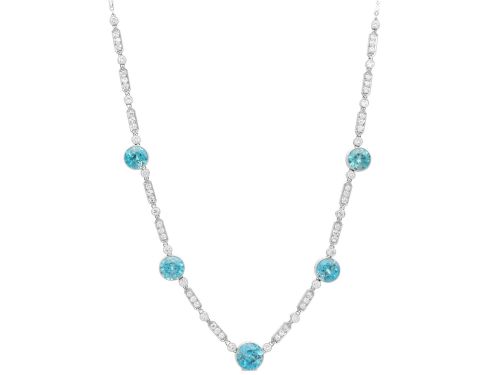
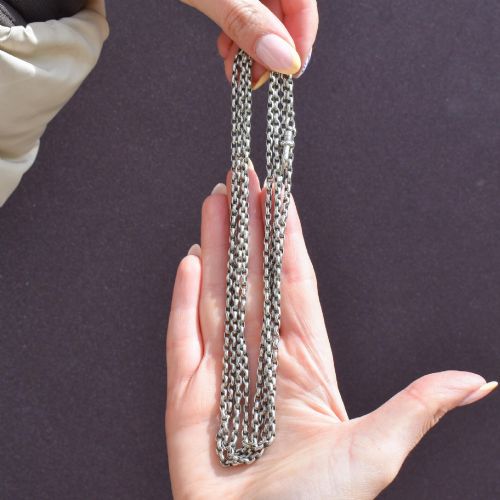
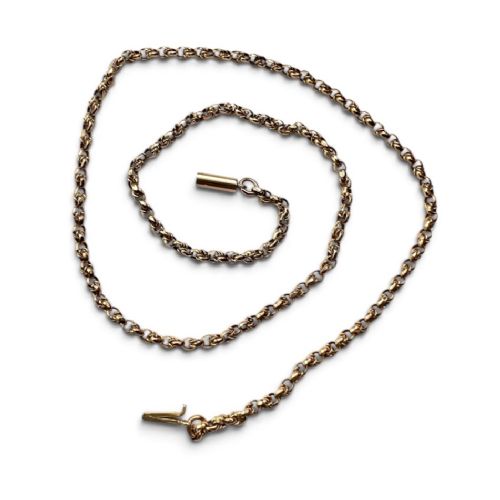
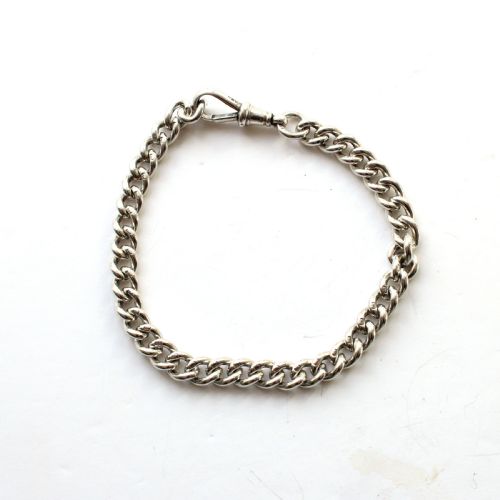
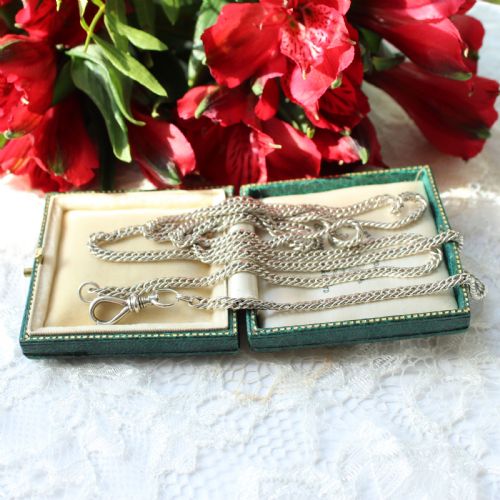
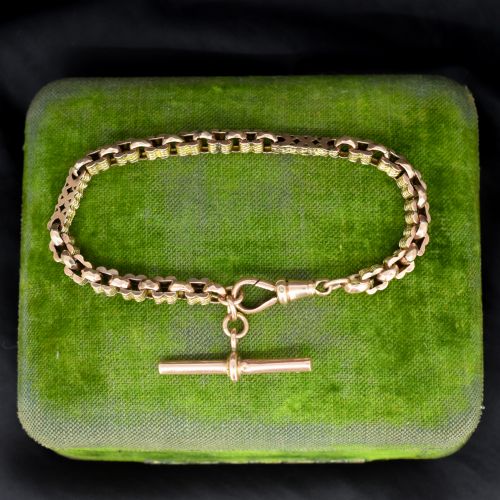
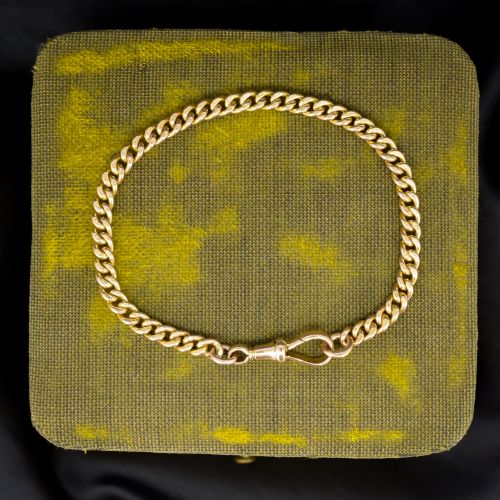
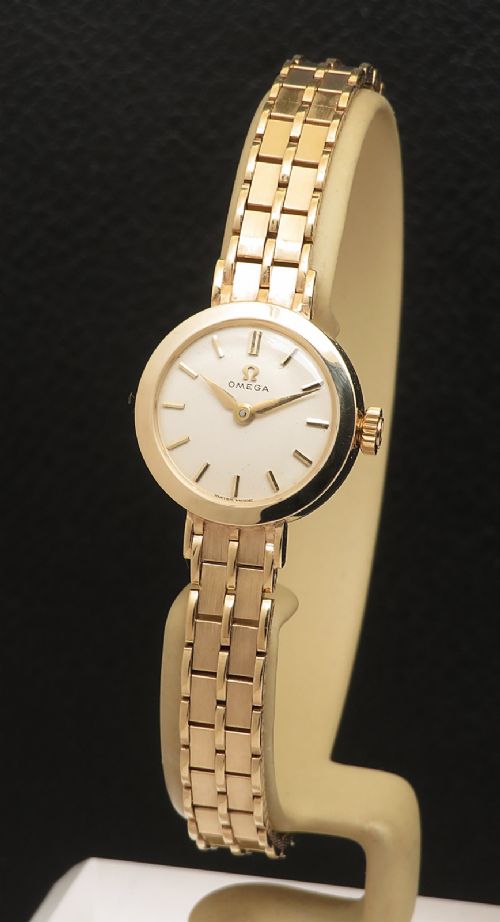
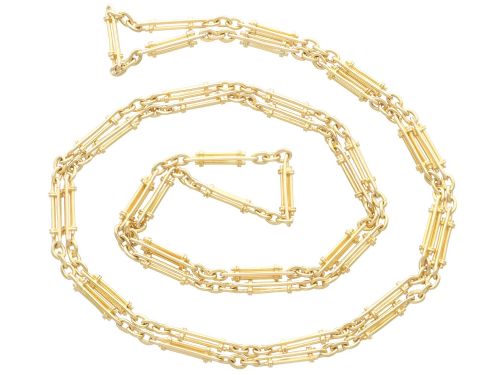
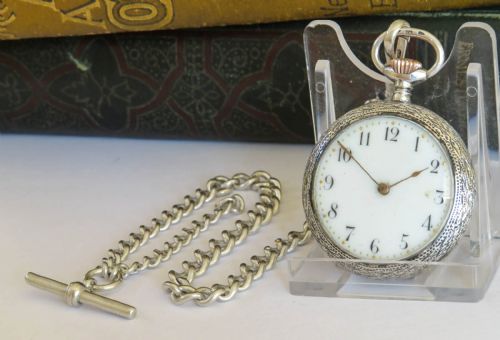
An antique link chain encompasses wearable gold and silver items designed to secure timepieces or adorn the neck and wrist. Buyers investigating this category encounter pocket watch albert chains, guard chains, gate bracelets, and necklaces dating from the late nineteenth century through the Art Deco era.
The material palette spans sterling silver and various carats of yellow and rose gold, often accented with gemstones such as turquoise, pearls, and garnets. Pieces range from substantial, graduated curb links meant for waistcoats to long guard chains and delicate cocktail purses.
Victorian and Edwardian examples dominate the selection, reflecting a period when metalwork combined utilitarian fastenings like dog clips, T-bars, and heart padlocks with decorative link patterns.
How They Were Made
Metalsmiths constructed these chains using sterling silver and solid or rolled gold in distinct carats, shaping wire and sheet into repetitive geometric components. Individual units like trombone bars, love knots, and curb links were soldered or mechanically joined to create flexible strands.
Surface decoration involved hand-engraving, texturing, and polishing, frequently paired with bezel or prong settings for natural stones like aquamarines and seed pearls. Functional terminals such as dog clips, swivel links, and barrel clasps were integrated directly into the assembly during manufacture.
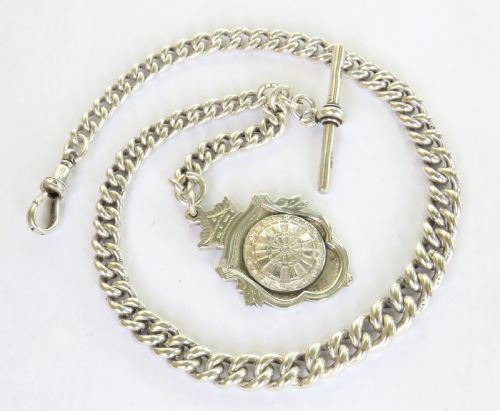
Certain pocket watch chains retain their original miniature silver fob shields engraved with long-forgotten athletic victories.
What Varies in Quality
Quality rests upon the integrity of the individual links and the presence of complete hallmarks across the components. Substantial weight and consistent gauge grading along the length distinguish superior examples from lighter variations.
The sophistication of the link pattern and the original condition of integrated mechanisms, including dog clips and T-bars, determine the overall execution. Pieces retaining original matched components and crisp hand-engraved detailing demonstrate superior craftsmanship.
The Antique Link Chain Glossary
- Albert chain
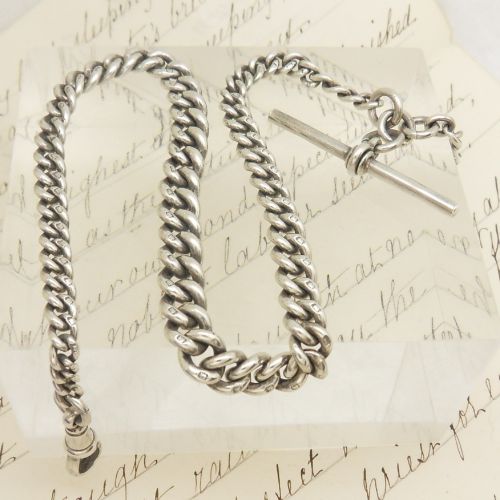
- A watch chain designed to secure a pocket watch in a waistcoat pocket, typically featuring a T-bar at one end and a dog clip at the other.
- Dog clip
- A spring-loaded snap hook used to fasten pocket watch chains and bracelets securely to fobs or loops.
- T-bar
- A transverse metal bar attached to the end of a watch chain, passed through a buttonhole to anchor the chain.
- Gate bracelet
- A wide bracelet constructed from parallel metal bars connected by small links, mimicking the gate of a field.
- Guard chain
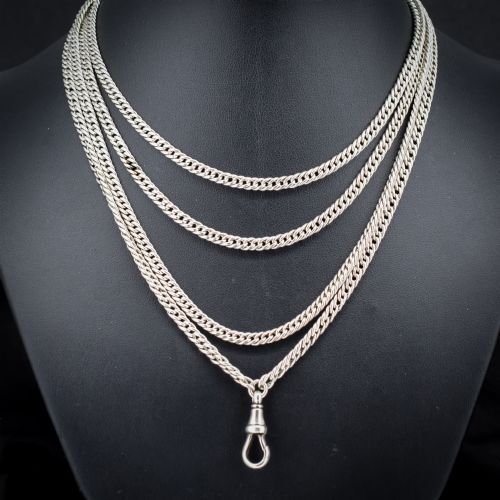
- An exceptionally long chain worn looped around the neck, originally used to secure pocket watches, eyeglasses, or muffs.
Antique Link Chain: Frequently Asked Questions
What is an albert chain?
An albert chain is a specific type of watch chain designed during the nineteenth century to secure a pocket watch to a gentleman's waistcoat.
These pieces typically feature a T-bar anchor at one end and a dog clip at the other, often accompanied by secondary drops for fobs.
How do I wear an antique chain?
Antique chains adapt easily to modern wardrobe choices, functioning as necklaces, wrapped bracelets, or layered accessories depending on their original length.
Long guard chains can double around the neck, while shorter albert chains transition well when worn with the T-bar acting as a pendant fastening.
What is a trombone link?
A trombone link is a distinctive elongated rectangular metal link with rounded ends, resembling the slide of a trombone instrument.
These links frequently alternate with smaller circular components or love knots in Victorian and Edwardian neckwear.
Are all links hallmarked?
Not every individual link on an antique chain receives a full hallmark stamp due to space constraints on smaller components.
Maker marks and standard assay office stamps commonly appear on the T-bar, dog clips, or select adjacent links rather than on every single unit.