





Edwardian Dog Clip Necklace
An edwardian dog clip necklace is a functional link chain adapted from pocket watch hardware to wear as a necklace.
Edwardian Dog Clip Necklace
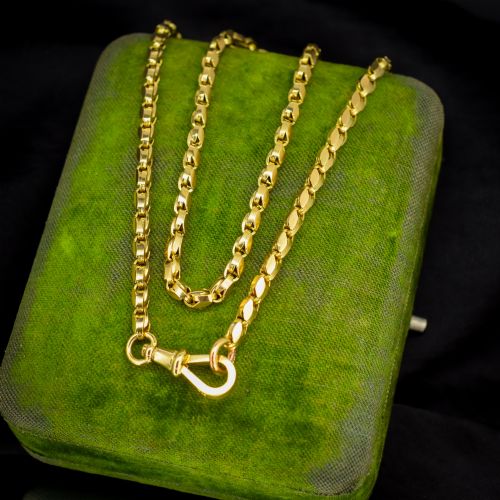
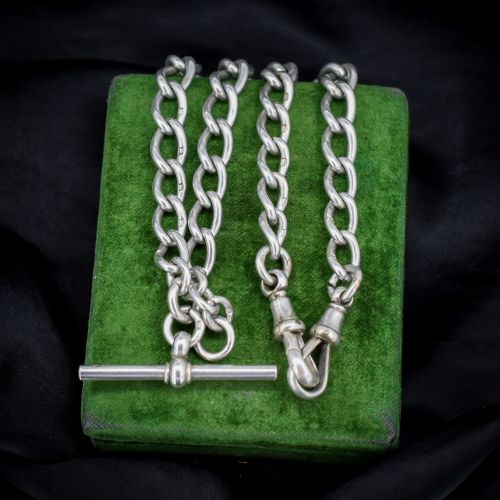
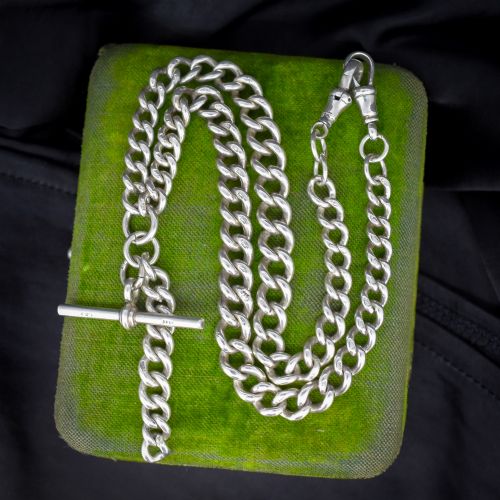
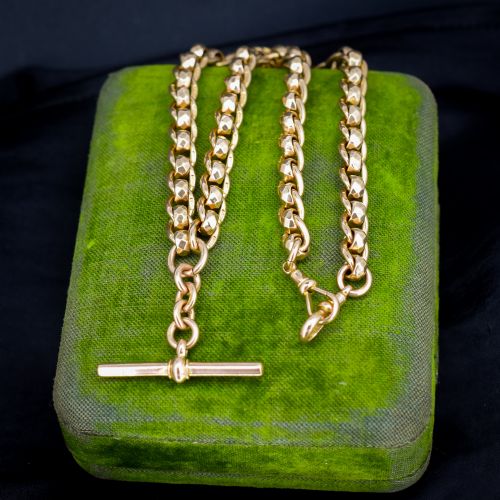
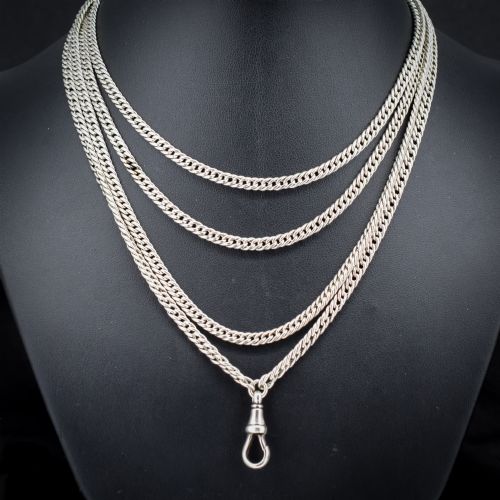
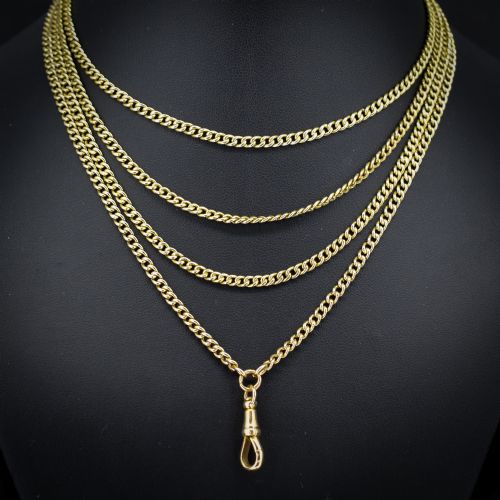
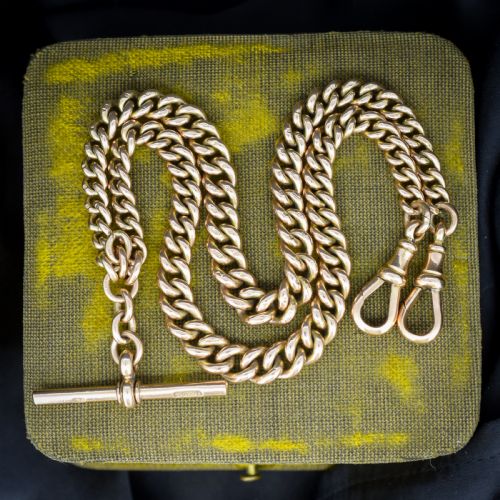
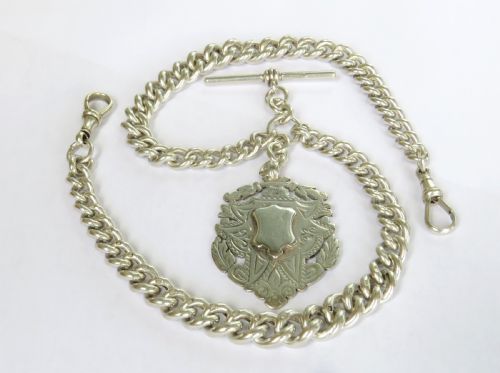
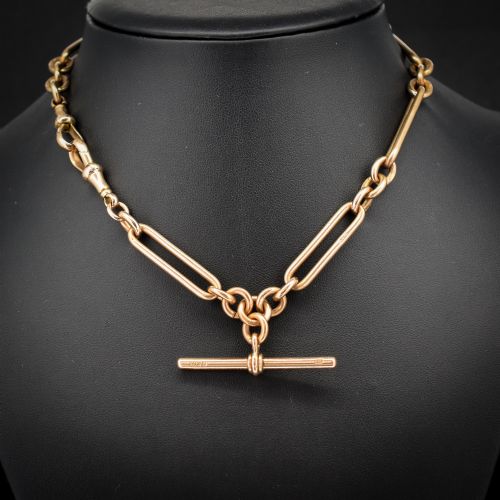
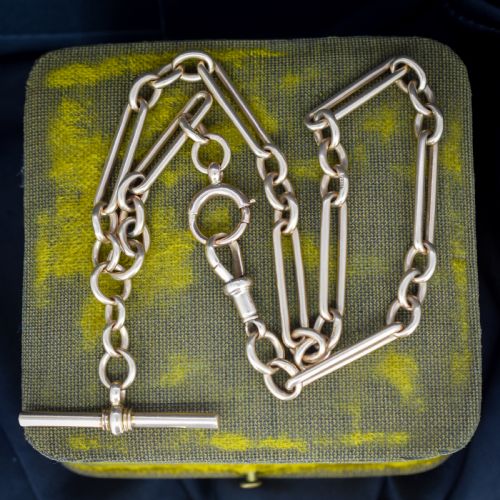
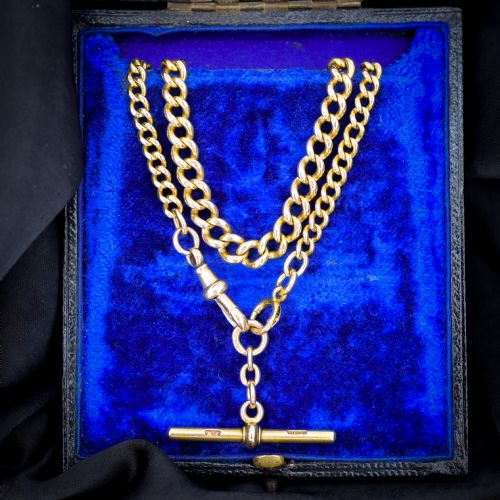
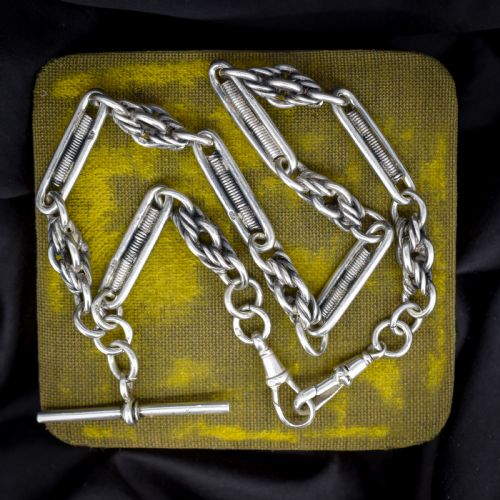
An edwardian dog clip necklace is essentially a pocket watch or albert chain repurposed for the neck, often complete with a swivel dog clip fastening and a t-bar. These pieces originate from the nineteenth century into the nineteen-twenties, spanning the Victorian, Edwardian, and Art Deco periods.
You are most likely to encounter gold or silver chains featuring curb, trombone, oval, or fancy links. Many examples retain their original length variations, ranging from short guard chains to long muff chains designed to drape in multiple loops.
The defining characteristic remains the spring-loaded dog clip, originally intended to secure a pocket watch to a waistcoat buttonhole. Today, this mechanism serves as the primary clasp or allows pendants to attach directly to the link structure.
Materials and construction
The physical construction relies on precious metals including sterling silver, rolled gold, and nine-carat or eighteen-carat yellow and rose gold. Goldsmiths and silversmiths formed individual links by hand or machine, soldering each connection to endure daily practical use.
Edwardian Dog Clip Necklace Retail Price Guide 2026
Typical asking prices for edwardian dog clip necklace among the pieces listed under this phrase on Sellingantiques today, from the lower quarter to the upper quarter. They describe what is for sale here now, not the wider market.
Factors of quality
Quality rests upon the gauge of the metal and the structural integrity of the individual links. Substantial weight and solid gold or silver construction distinguish superior examples from lighter, hollow, or rolled gold alternatives.
The mechanical condition of the swivel dog clip dictates overall desirability. A strong internal spring that snaps shut securely ensures the clasp functions reliably during everyday wear.
The Edwardian Dog Clip Necklace Glossary
- Dog clip
- A spring-loaded swivel clasp designed to attach pocket watches or charms. This mechanism forms the primary closure for the necklace.
- Albert chain
- A heavy watch chain originally secured to a pocket watch and worn across a waistcoat. These chains form the basis of many converted necklaces.
- T-bar
- A short transverse bar attached to a chain via a short drop. It was originally used to anchor the chain through a buttonhole.
- Curb link
- A chain pattern composed of uniform, flattened links that lie flat against the skin. It provides a sturdy foundation for daily wear.
- Trombone link
- A fancy link style alternating elongated rectangular bars with small circular connector rings. This pattern is characteristic of the period.
- Muff guard chain
- An exceptionally long chain originally worn around the neck to secure a fur muff against loss. They often measure over fifty inches in length.
Edwardian Dog Clip Necklace: Frequently Asked Questions
How do I wear an edwardian dog clip necklace?
You can wear shorter lengths as a standard choker or collar, or loop longer guard chains multiple times around the neck.
The dog clip allows you to attach pendants or secure the clasp to any link for a custom length.
Were these originally made as necklaces?
Most of these pieces started life as pocket watch chains or albert chains worn by men and women in the nineteenth and early twentieth centuries.
Jewellery makers and wearers later repurposed them to be worn around the neck.
What is a t-bar used for now?
The t-bar is a decorative remnant from when the chain secured through a waistcoat buttonhole.
Today it hangs as a pendant drop against the chest, adding a distinct period detail.
How do I date an edwardian dog clip necklace?
Dating relies on hallmarks stamped onto the metal links, assay office marks, and stylistic clues like trombone links or specific gold colours.
Victorian, Edwardian, and Art Deco periods each brought distinct link shapes and proportions.