
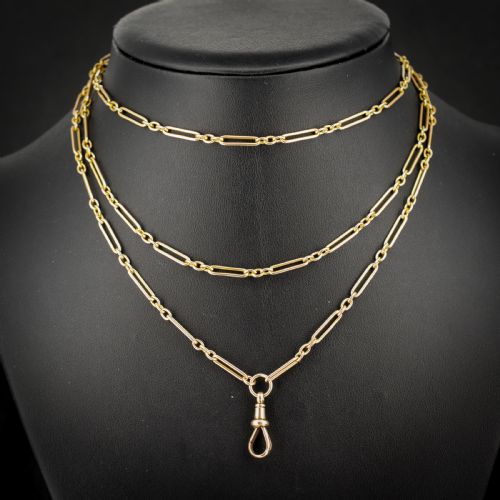


Victorian Long Chain Necklace
A victorian long chain necklace offers versatility and elegance, worn looped or draped as practical jewellery from the nineteenth and early twentieth centuries.
Victorian Long Chain Necklace
A victorian long chain necklace spans substantial lengths, often designed to be doubled or tripled around the neck. These pieces include guard chains, muff chains, and longuards originally intended to secure pocket watches, lorgnettes, or pendant watches.
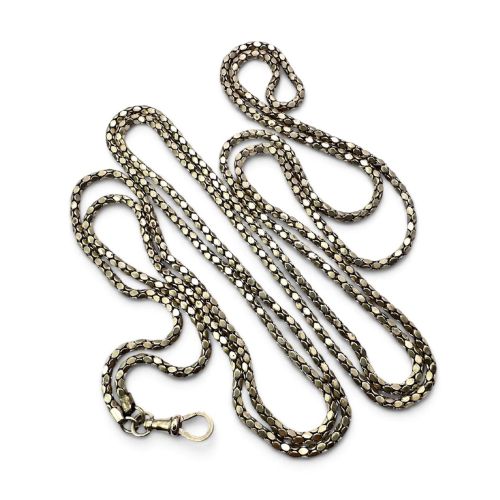
The selection ranges from robust gold links to silver and rolled gold variants, featuring functional dog clips and Albert clasps. Shorter neck chains with slide mechanisms also appear, alongside substantial multi-foot lengths designed for continuous draping.
Materials and Construction
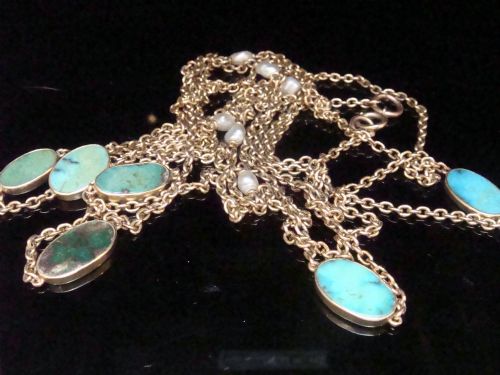
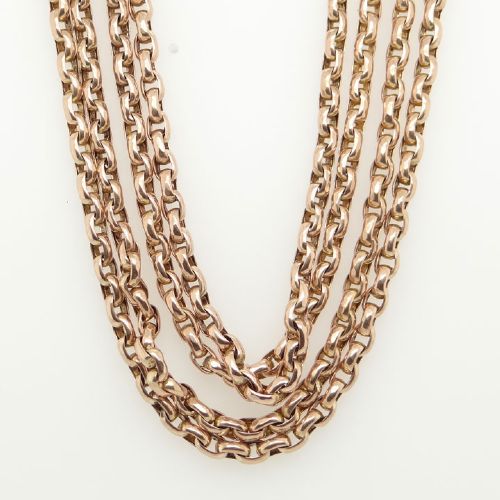
Goldsmiths utilised varied purities of yellow and rose gold, predominantly nine-carat, fifteen-carat, and eighteen-carat, alongside silver, platinum, and rolled gold. Some examples incorporate natural pearls and turquoise gemstones set directly into the links or slide mechanisms.
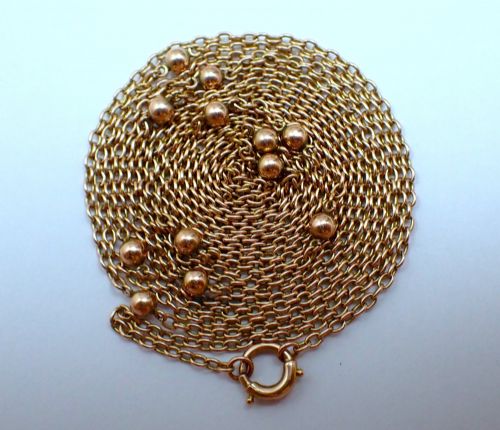
Links were fashioned into distinct patterns including belcher, trombone, oval, paper, and curb designs. Secure fastenings such as dog clips, spring rings, and bolt rings were integrated to hold charms or suspend watches securely.
Some chains come complete with antique watch keys, ready to wind clocks that vanished a century ago.
Evaluating Quality and Construction
The calibre of a victorian long chain necklace rests on the weight and integrity of its metalwork. Solid fifteen-carat or eighteen-carat gold and substantial silver constructions represent finer work than hollow or rolled gold alternatives.
Original fixings, clear hallmarks, and undamaged links dictate the distinction between everyday utility pieces and superior examples. The presence of matched gemstone accents like turquoise or natural pearls further elevates the standard.
The Victorian Long Chain Necklace Glossary
- Guard chain
- A long chain historically worn around the neck to secure a pocket watch, lorgnettes, or other valuables. These pieces often measure over fifty inches in length.
- Dog clip
- A spring-loaded clasp shaped like a small hook, commonly utilised on watch chains and longuards to attach pendants or secure the chain to itself.
- Muff chain
- A long necklace traditionally passed through a fur muff to keep a timepiece secure and accessible during cold weather. They share the extended proportions of guard chains.
- Slide chain
- A necklace featuring a moveable decorative slide mechanism that adjusts the drop or holds a pendant in place. These often incorporate gemstones like garnets.
- Albert clip
- A specific type of terminal swivel or spring clip designed for attachment to waistcoats or watch pockets. It frequently accompanies long chains in historic jewellery.
Victorian Long Chain Necklace: Frequently Asked Questions
How were long chains originally worn?
These chains were draped around the neck either as a single long strand or doubled over to create a layered effect. They secured practical items such as pocket watches, eyeglasses, or decorative pendants.
In daily Victorian life, the functional clips allowed owners to anchor the ends securely to garments or within pockets. Today, they are worn simply as long necklaces or wrapped to suit different necklines.
What is the difference between a guard chain and a muff chain?
Guard chains and muff chains both provide extended lengths designed for looping or suspension. Guard chains specifically earned their name from guarding valuable timepieces against loss.
Muff chains share the same overarching category of long neckwear but reference the specific historical practice of passing the chain through a winter muff. Both types frequently utilise dog clips and varied link patterns.
How can I date my long chain necklace?
Dating relies on examining gold carat marks, hallmarks, link styles, and accompanying clasps. Pieces marked fifteen-carat gold typically point towards the Victorian and Edwardian eras.
Stylistic cues such as trombone links or the inclusion of dog clips help narrow the period between the mid-nineteenth century and the nineteen-thirties. Maker marks and registration numbers stamped on the metal provide further chronological clues.
Can I attach modern pendants to these chains?
Most antique long chains feature original dog clips, bolt rings, or spring rings that easily accommodate charms and pendants. The sturdy construction of nineteenth-century links supports contemporary additions.
Care should be taken with lighter rolled gold or hollow link examples to ensure the weight of a modern pendant does not strain the antique metal.