


9ct Gold Gate Link
These 9ct gold gate link bracelets are enduring wrist ornaments combining substantial metalwork with secure fastenings, prized for their classic hinged construction.
9ct Gold Gate Link
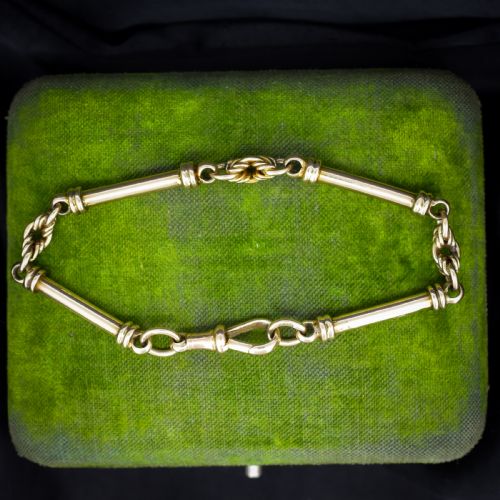
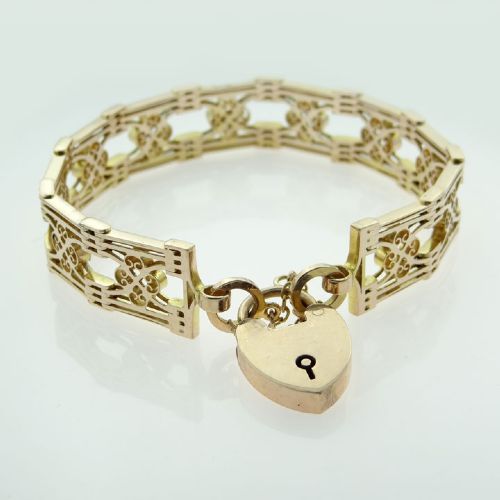
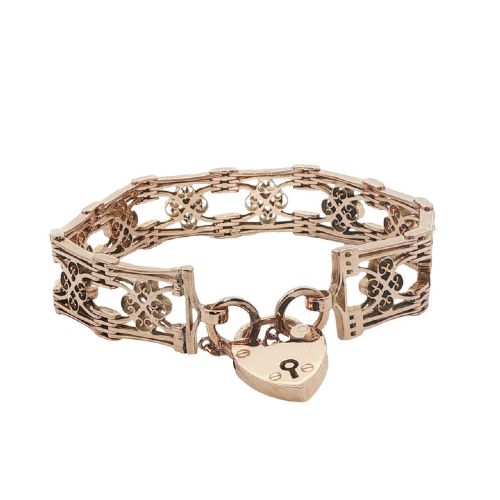
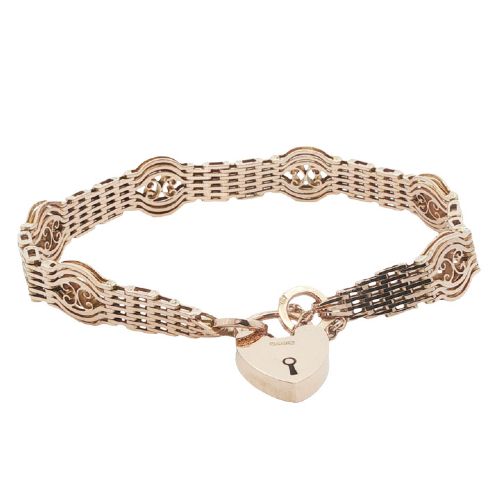
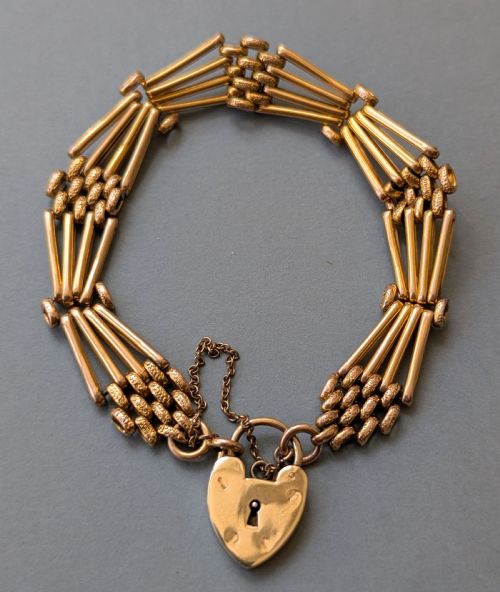
When you search for 9ct gold gate link, you encounter flexible wristbands formed from rows of parallel metal bars connected by vertical links, mimicking the appearance of a physical gate. These bracelets span the Victorian, Edwardian, and vintage mid-century periods, showing considerable variety in their formation.
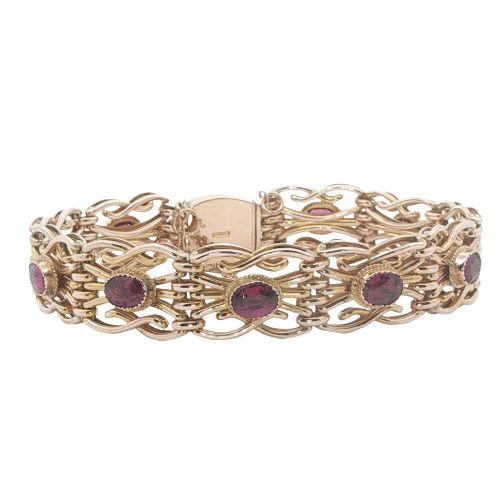
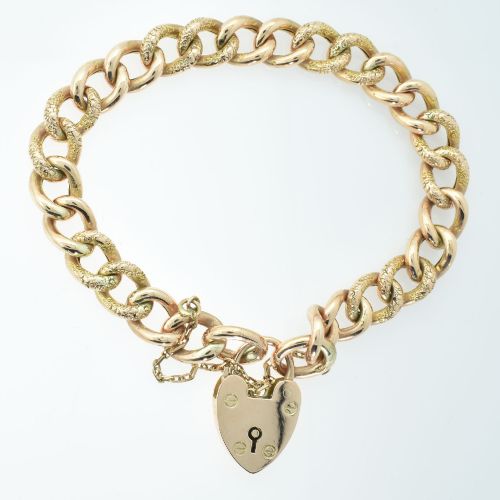
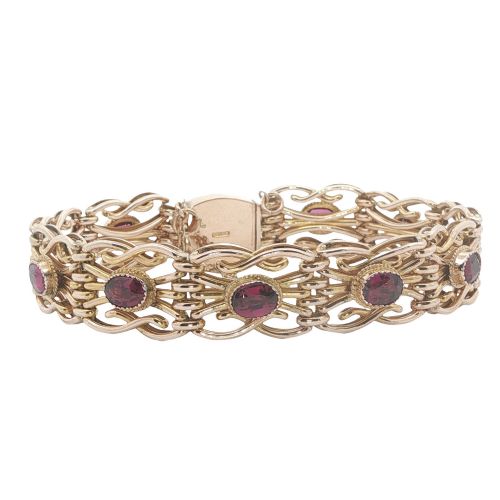
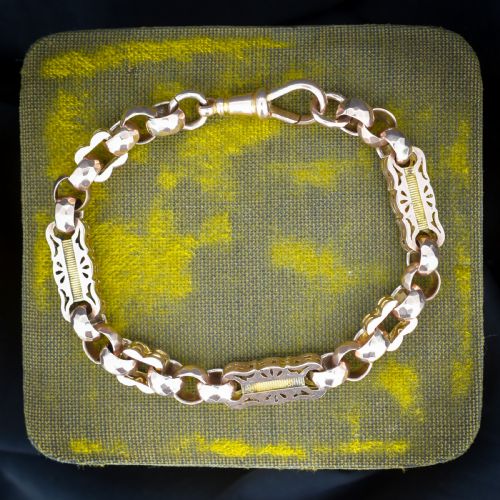
You are most likely to meet rose gold variants featuring heart padlocks or dog clips. Many incorporate gemstones such as almandine garnets, amethysts, opals, seed pearls, and rubies set directly into the design or onto central clasps.
The format ranges from simple multi-bar configurations to fancy links interspersed with stars, bars, or love knots. These pieces serve as both decorative items and functional historical jewellery items.
How they were made
The construction relies on hollow or solid tubular 9ct gold bars linked together meticulously by small interwoven metal rings. This layout creates a flexible, tactile textile-like movement across the wrist.
Gems including almandine garnet, amethyst, opal, seed pearl, and ruby are bezel or prong set into gold mounts. Fastenings such as heart padlocks and dog clips are cast, engraved, and fitted with functional internal springs.
Listings feature 9ct gold, 9ct rose gold, and yellow gold, paired with gemstones including almandine garnet, amethyst, seed pearl, opal, and ruby across Victorian and Edwardian eras.
What varies in quality
The standard of a piece depends heavily on the robustness of the individual bar construction and the tightness of the connecting links. Solid gold bars endure daily wear better than lighter hollow alternatives.
Design complexity also separates examples, with multi-bar widths, intricate half-engraving, and matched gemstone accents demanding higher levels of goldsmithing skill than plain utilitarian versions.
RC Co
The 9ct Gold Gate Link Glossary
- Gate link
- A style of bracelet constructed from parallel metal bars joined by vertical links. This design originates from Victorian textile and physical gate motifs.
- Heart padlock
- A heart-shaped clasp used to secure antique bracelets. These often double as decorative centerpieces.
- Dog clip
- A spring-loaded snap hook fastening commonly found on watch chains and antique bracelets. It allows for secure attachment to loops or rings.
- Almandine garnet
- A deep red variety of garnet frequently utilised in Victorian and Edwardian cluster and bar jewellery. It provides strong contrast against 9ct rose gold.
- Seed pearl
- Very small natural or cultured pearls used in delicate configurations. They accent floral and love knot motifs on nineteenth-century pieces.
9ct Gold Gate Link: Frequently Asked Questions
What is a gate link bracelet?
A gate link bracelet is a flexible piece of jewellery made from parallel metal bars connected by small vertical links, resembling a garden gate.
Victorian and Edwardian jewellers favoured this robust structure for everyday wear, frequently pairing the links with secure padlocks.
How do you open a heart padlock?
Heart padlocks on these bracelets typically operate via a small internal spring mechanism opened by pressing a tiny lever or springing the bail.
Many antique padlocks are decorative or fixed shut, meaning the bracelet slips over the hand while the clasp remains attached to a jump ring.
Are these bracelets solid gold?
These bracelets are formed from 9ct gold, which contains thirty-seven point five percent pure gold alloyed with other metals for durability.
Listings specify solid construction where applicable, though historical manufacturing techniques often utilised hollow tubular bars to reduce weight.
How do I date a gate link bracelet?
Dating relies on stylistic clues such as the presence of heart padlocks, dog clips, engraved patterns, and accompanying gemstones like garnets and opals.
Victorian and Edwardian examples often display specific hallmarks for assay offices and years, pointing to makers active around the turn of the twentieth century.